
 Routine · 5 min
When Your Baby Needs Nursing or Holding to Fall Asleep
Write down what helps your baby fall asleep. Decide what to keep and what to reduce gradually before taking away familiar help in the middle of the night.
Routine · 5 min
When Your Baby Needs Nursing or Holding to Fall Asleep
Write down what helps your baby fall asleep. Decide what to keep and what to reduce gradually before taking away familiar help in the middle of the night.
Topic
Daily routine
How we approach daily scenes like sleep, meals, and morning routines.
Routine · 5 min
When Your Baby Needs Nursing or Holding to Fall Asleep
Write down what helps your baby fall asleep. Decide what to keep and what to reduce gradually before taking away familiar help in the middle of the night.
 Routine · 6 min
What to Track First When Your Baby Wakes Often at Night
Counting wake-ups alone makes it hard to understand why they happen. For three days, record waking times, the most recent feeding, falling-asleep conditions, the surroundings, and your response.
Routine · 6 min
What to Track First When Your Baby Wakes Often at Night
Counting wake-ups alone makes it hard to understand why they happen. For three days, record waking times, the most recent feeding, falling-asleep conditions, the surroundings, and your response.
 Routine · 7 min
How to Decide Whether to Reduce Night Feedings
Age in months alone cannot tell you when to reduce night feedings. Record growth, daytime intake, diapers, illness, and sleep, then ask your child's healthcare professional.
Routine · 7 min
How to Decide Whether to Reduce Night Feedings
Age in months alone cannot tell you when to reduce night feedings. Record growth, daytime intake, diapers, illness, and sleep, then ask your child's healthcare professional.
 Routine · 7 min
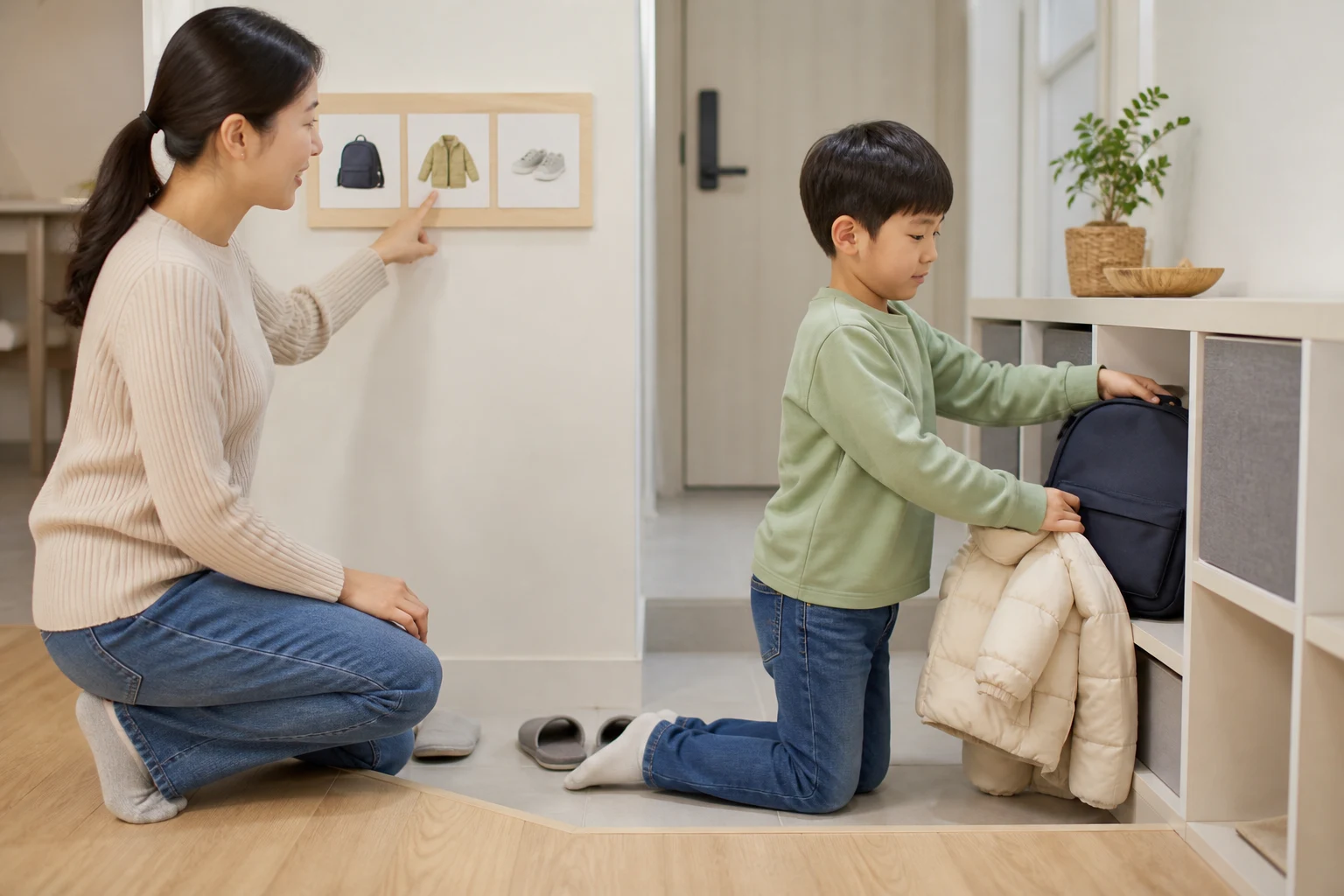
Getting ready for daycare or preschool: what your child can do and where to help
Show one step at a time: the bag, coat and shoes, then a check before leaving. Separate these three steps from the safety checks an adult must handle.
Routine · 7 min
Getting ready for daycare or preschool: what your child can do and where to help
Show one step at a time: the bag, coat and shoes, then a check before leaving. Separate these three steps from the safety checks an adult must handle.
 Routine · 5 min
A practical routine for less conflict over toothbrushing
Briefly separating your child's turn from the caregiver's finish can make the daily brushing routine easier to repeat.
Routine · 5 min
A practical routine for less conflict over toothbrushing
Briefly separating your child's turn from the caregiver's finish can make the daily brushing routine easier to repeat.
 Routine · 7 min
How to Shorten the Bedtime Routine When You Get Home Late
On late nights, instead of recreating the whole evening, keep medication, toothbrushing, bathroom needs, a safe sleep space, and a brief goodnight while reducing stimulation.
Routine · 7 min
How to Shorten the Bedtime Routine When You Get Home Late
On late nights, instead of recreating the whole evening, keep medication, toothbrushing, bathroom needs, a safe sleep space, and a brief goodnight while reducing stimulation.
 Routine · 9 min
Are snoring and restless sleep just habits?
Do not assume that snoring and restless sleep are just habits. Note your child's breathing, daytime sleepiness, or trouble focusing to share with the pediatrician. If you see an emergency warning sign, stop recording and get help right away.
Routine · 9 min
Are snoring and restless sleep just habits?
Do not assume that snoring and restless sleep are just habits. Note your child's breathing, daytime sleepiness, or trouble focusing to share with the pediatrician. If you see an emergency warning sign, stop recording and get help right away.
 Routine · 7 min
Keeping a Sleep Routine While Traveling or Staying with Relatives
Instead of recreating every step of the usual routine in an unfamiliar place, bring just two or three bedtime cues. On travel days, put a safe sleep space and family recovery first.
Routine · 7 min
Keeping a Sleep Routine While Traveling or Staying with Relatives
Instead of recreating every step of the usual routine in an unfamiliar place, bring just two or three bedtime cues. On travel days, put a safe sleep space and family recovery first.
 Routine · 8 min
Making bath time less of an evening battle
If every evening bath turns into a struggle, decide what needs washing and let your child choose the towel, toy, or washing order. Near water, direct supervision and burn prevention come before ways to reduce conflict.
Routine · 8 min
Making bath time less of an evening battle
If every evening bath turns into a struggle, decide what needs washing and let your child choose the towel, toy, or washing order. Near water, direct supervision and burn prevention come before ways to reduce conflict.
 Routine · 7 min
When naps are fine but nighttime sleep stays unsettled
Napping does not point to one clear answer for nighttime sleep. For 3 days, put wake time, light, activity, naps, and bedtime cues on one line. Then look first at the conditions that change at night.
Routine · 7 min
When naps are fine but nighttime sleep stays unsettled
Napping does not point to one clear answer for nighttime sleep. For 3 days, put wake time, light, activity, naps, and bedtime cues on one line. Then look first at the conditions that change at night.
 Routine · 5 min
Practicing Table Manners Without Nagging
Separate words that control how much a child eats from actions expected at the table. Choose one role per meal and respect your child's signs of fullness.
Routine · 5 min
Practicing Table Manners Without Nagging
Separate words that control how much a child eats from actions expected at the table. Choose one role per meal and respect your child's signs of fullness.
 Routine · 9 min
Designing Routines for Dual-Income or Shift-Work Families
If the same time is hard to keep every day, choose one or two things to do after waking, after meals, and after a caregiver handoff. Check medication, medical care, and school travel times separately and precisely.
Routine · 9 min
Designing Routines for Dual-Income or Shift-Work Families
If the same time is hard to keep every day, choose one or two things to do after waking, after meals, and after a caregiver handoff. Check medication, medical care, and school travel times separately and precisely.
 Routine · 8 min
What to do first when nightmares or night terrors seem likely
Do not label a nighttime crying episode based on memory alone. First prevent injury. If there are emergency signs such as abnormal breathing or stiffening, medical help comes before taking notes.
Routine · 8 min
What to do first when nightmares or night terrors seem likely
Do not label a nighttime crying episode based on memory alone. First prevent injury. If there are emergency signs such as abnormal breathing or stiffening, medical help comes before taking notes.
 Routine · 7 min
What to do about picky eating without forcing one bite
Instead of fighting over one bite, repeatedly place a small amount of an unfamiliar food beside a familiar one. This can make meals less exhausting. Discuss concerns about growth and health separately with a medical professional.
Routine · 7 min
What to do about picky eating without forcing one bite
Instead of fighting over one bite, repeatedly place a small amount of an unfamiliar food beside a familiar one. This can make meals less exhausting. Discuss concerns about growth and health separately with a medical professional.
 Routine · 9 min
When washing up, homework, and dinner get tangled after school
When you list washing up, homework, and dinner all at once after your child walks in, the next step can get lost. Check what their body needs first, then choose one first step for the evening.
Routine · 9 min
When washing up, homework, and dinner get tangled after school
When you list washing up, homework, and dinner all at once after your child walks in, the next step can get lost. Check what their body needs first, then choose one first step for the evening.
 Routine · 8 min
When your baby seems to have days and nights reversed
It is common for a newborn to wake often at night and sleep for long stretches during the day. Make daytime and nighttime feel different while continuing to follow feeding and safe sleep guidance.
Routine · 8 min
When your baby seems to have days and nights reversed
It is common for a newborn to wake often at night and sleep for long stretches during the day. Make daytime and nighttime feel different while continuing to follow feeding and safe sleep guidance.
 Routine · 7 min
When starting child care disrupts nighttime sleep
When sleep changes after starting child care, tiredness and an unfamiliar day may both play a part. Compare the day at home and at child care, and keep just one or two steady evening cues.
Routine · 7 min
When starting child care disrupts nighttime sleep
When sleep changes after starting child care, tiredness and an unfamiliar day may both play a part. Compare the day at home and at child care, and keep just one or two steady evening cues.
 Routine · 8 min
When your child keeps forgetting to wash hands after coming home
If you keep reminding your child to wash their hands as soon as they pass the door, make the single action from the entryway to the sink easy to see. A sign supports memory. It is not a test.
Routine · 8 min
When your child keeps forgetting to wash hands after coming home
If you keep reminding your child to wash their hands as soon as they pass the door, make the single action from the entryway to the sink easy to see. A sign supports memory. It is not a test.
 Routine · 7 min
When your child refuses to get dressed every morning
Morning dressing starts with separating what your child can choose from what you are responsible for.
Routine · 7 min
When your child refuses to get dressed every morning
Morning dressing starts with separating what your child can choose from what you are responsible for.
 Routine · 6 min
When your child refuses the toilet or starts having accidents again
Do not assume that accidents or refusal after toilet training are deliberate. Calmly take care of clothes and the floor while also looking at body signals and changes in daily life.
Routine · 6 min
When your child refuses the toilet or starts having accidents again
Do not assume that accidents or refusal after toilet training are deliberate. Calmly take care of clothes and the floor while also looking at body signals and changes in daily life.
 Routine · 7 min
When mealtime lasts more than an hour
Instead of treating a meal that lasts over an hour as a problem with your child's attitude, look separately at start and end cues, snack and activity timing, and physical discomfort. Ending a meal is a boundary that makes the next eating opportunity predictable, not a punishment through hunger.
Routine · 7 min
When mealtime lasts more than an hour
Instead of treating a meal that lasts over an hour as a problem with your child's attitude, look separately at start and end cues, snack and activity timing, and physical discomfort. Ending a meal is a boundary that makes the next eating opportunity predictable, not a punishment through hunger.
 Routine · 7 min
When you keep replacing the pacifier all night
When a sleeping baby's pacifier falls out, you may wonder whether to put it back every time. You can offer it at naps or bedtime, but do not force it if your baby does not want it. You do not need to replace it after the baby falls asleep. Do not use a cord or clip in the sleep space.
Routine · 7 min
When you keep replacing the pacifier all night
When a sleeping baby's pacifier falls out, you may wonder whether to put it back every time. You can offer it at naps or bedtime, but do not force it if your baby does not want it. You do not need to replace it after the baby falls asleep. Do not use a cord or clip in the sleep space.
 Routine · 9 min
When should potty training begin?
Look beyond age on the calendar. Consider your child's awareness and communication of body signals, ability to sit on the potty, and how much capacity your family has. Accidents are part of learning, not a reason for punishment. Do not wait to seek care for constipation or pain.
Routine · 9 min
When should potty training begin?
Look beyond age on the calendar. Consider your child's awareness and communication of body signals, ability to sit on the potty, and how much capacity your family has. Accidents are part of learning, not a reason for punishment. Do not wait to seek care for constipation or pain.
 Routine · 7 min
When the family routine falls apart every weekend
Repeated late mornings and meals on weekends can make Monday morning harder. Choose just one major difference between weekdays and weekends to adjust: wake time, the first meal, or a morning activity.
Routine · 7 min
When the family routine falls apart every weekend
Repeated late mornings and meals on weekends can make Monday morning harder. Choose just one major difference between weekdays and weekends to adjust: wake time, the first meal, or a morning activity.
 Routine · 6 min
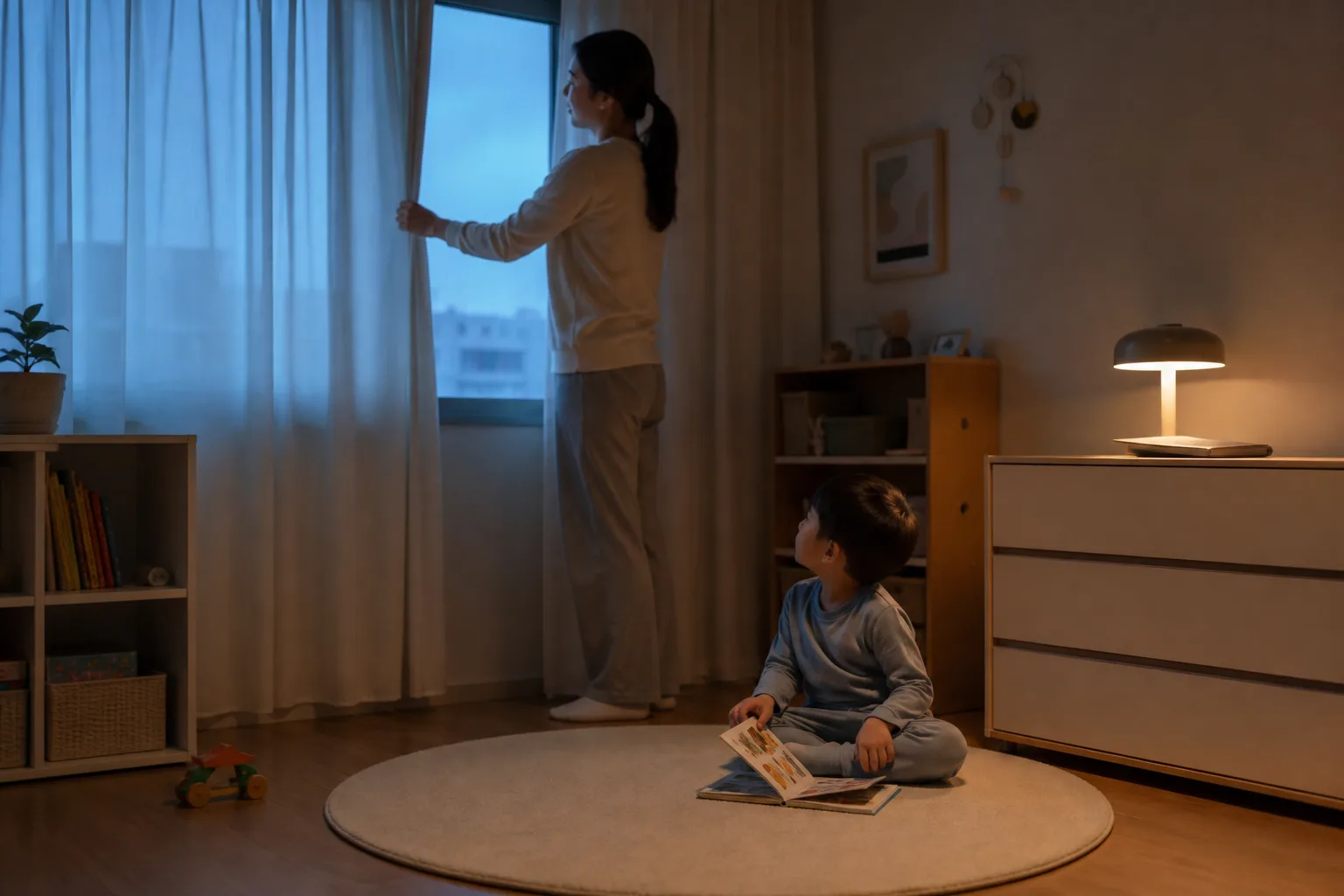
What can you change when your child wakes too early?
Do not focus only on changing wake time. For 3 days, look at light and sound, naps, sleep time, and your response after waking. Change only one condition at a time so you can tell what fits your family.
Routine · 6 min
What can you change when your child wakes too early?
Do not focus only on changing wake time. For 3 days, look at light and sound, naps, sleep time, and your response after waking. Change only one condition at a time so you can tell what fits your family.
 Routine · 6 min
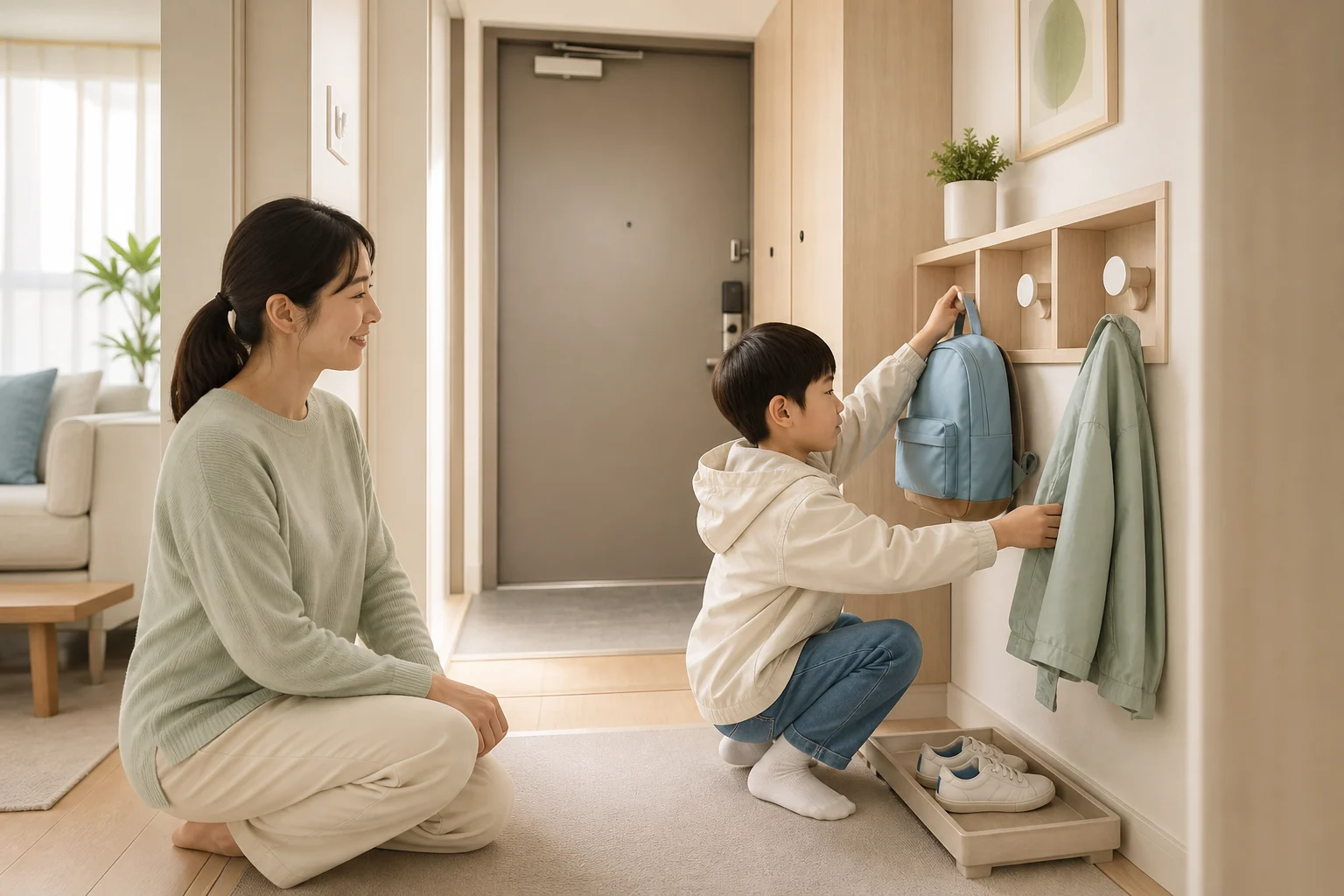
Where to put bags and coats after coming home
When bags and coats move among the table, couch, and floor, create low, fixed storage spots near the entryway instead of scolding your child. Check the child's reach, clear paths, and the weight of each item before giving one direction.
Routine · 6 min
Where to put bags and coats after coming home
When bags and coats move among the table, couch, and floor, create low, fixed storage spots near the entryway instead of scolding your child. Check the child's reach, clear paths, and the weight of each item before giving one direction.
 Routine · 7 min
How to Make Mornings Before Daycare or Preschool Less of a Battle
Get clothes and bags ready the night before, then show the morning tasks in order. Start with one moment where your child gets stuck each day.
Routine · 7 min
How to Make Mornings Before Daycare or Preschool Less of a Battle
Get clothes and bags ready the night before, then show the morning tasks in order. Start with one moment where your child gets stuck each day.
Explore more topics
Parent mindset
We start with how parents stabilize themselves during daily uncertainty.
29 articles →
Play and development
Language, senses, and relationships grow through play in ordinary routines.
26 articles →
Discipline
We prepare calm language that sets boundaries without shouting.
26 articles →
Family travel
Plan an outing around your child's interests, travel time, and rest.
22 articles →