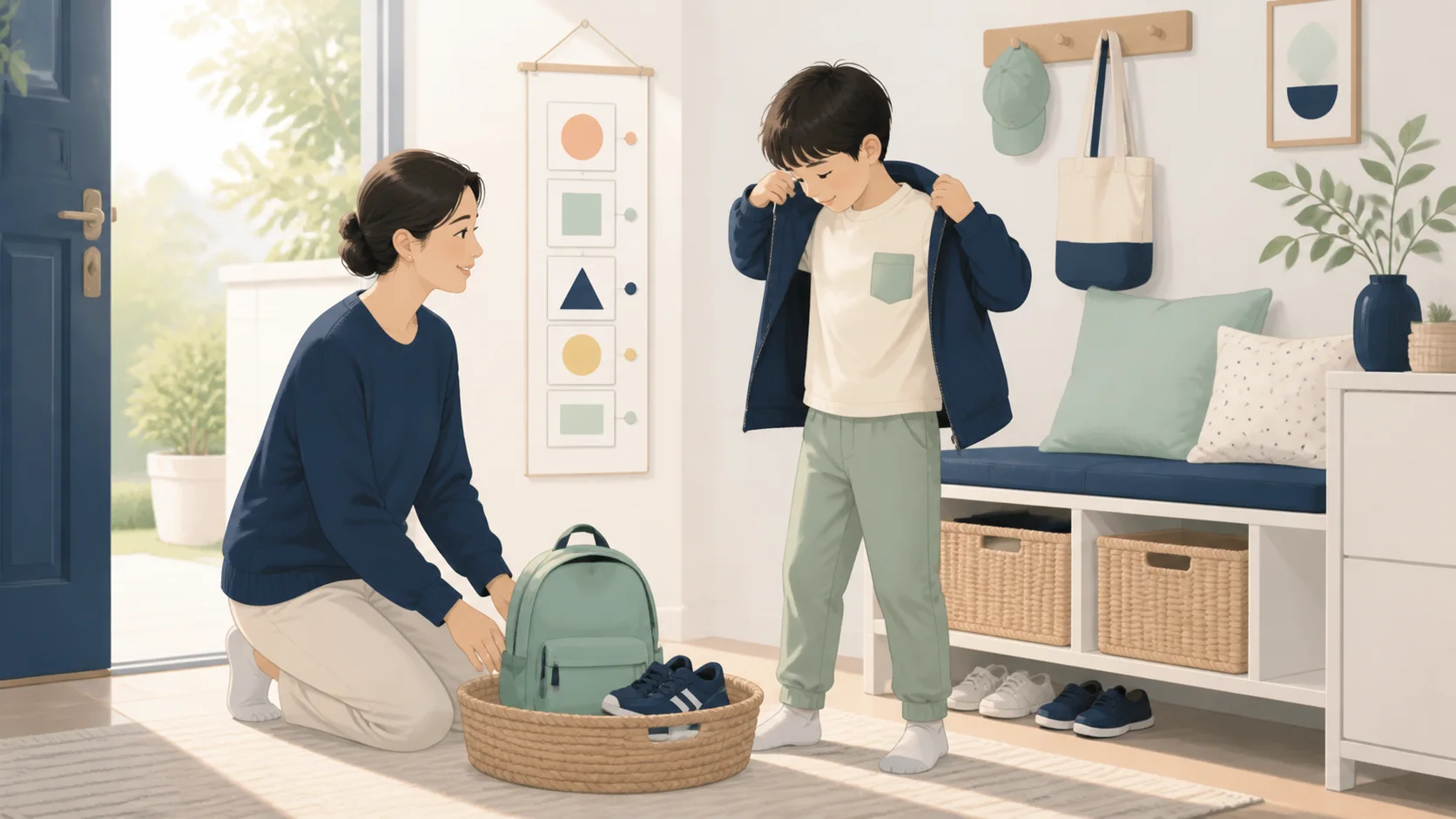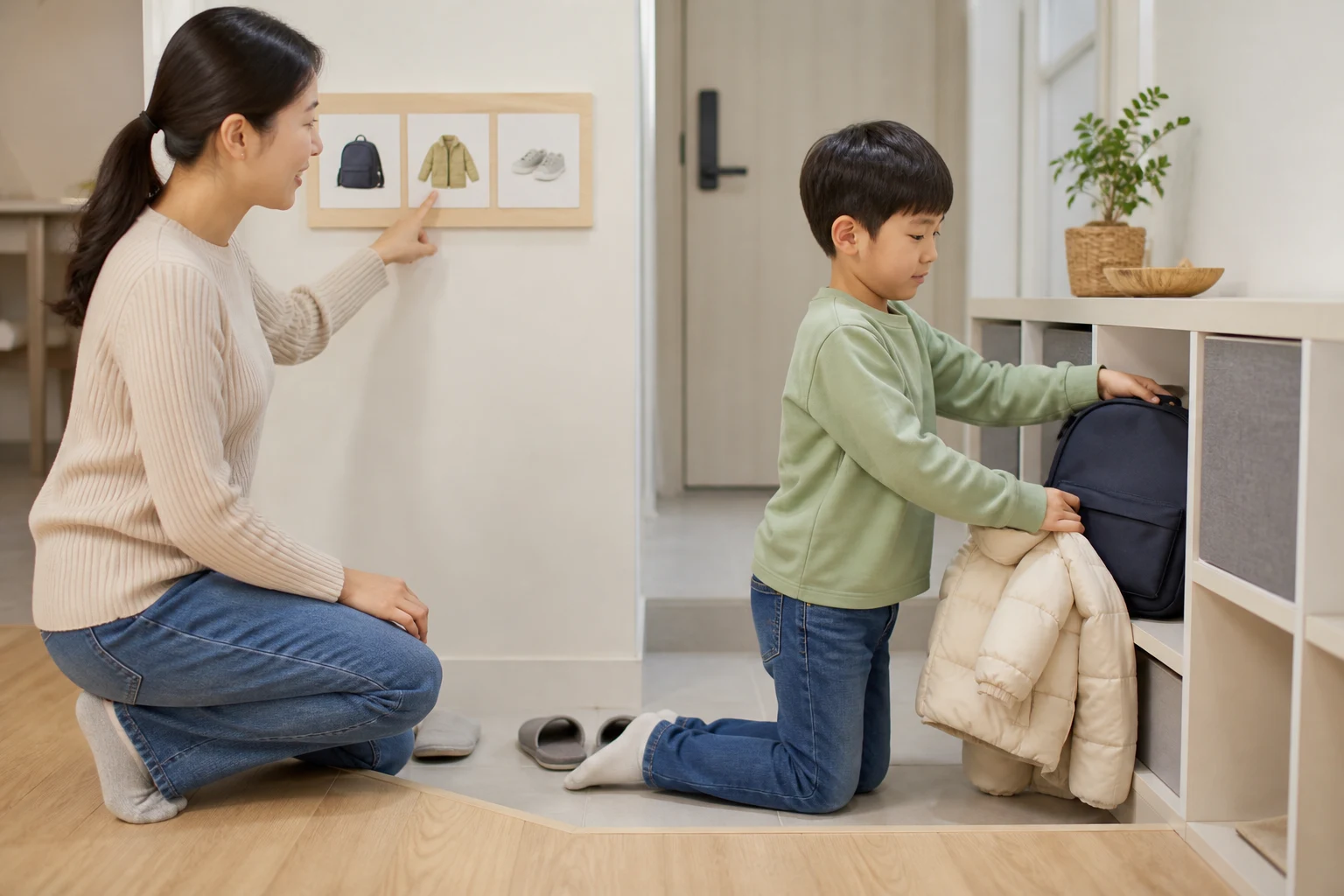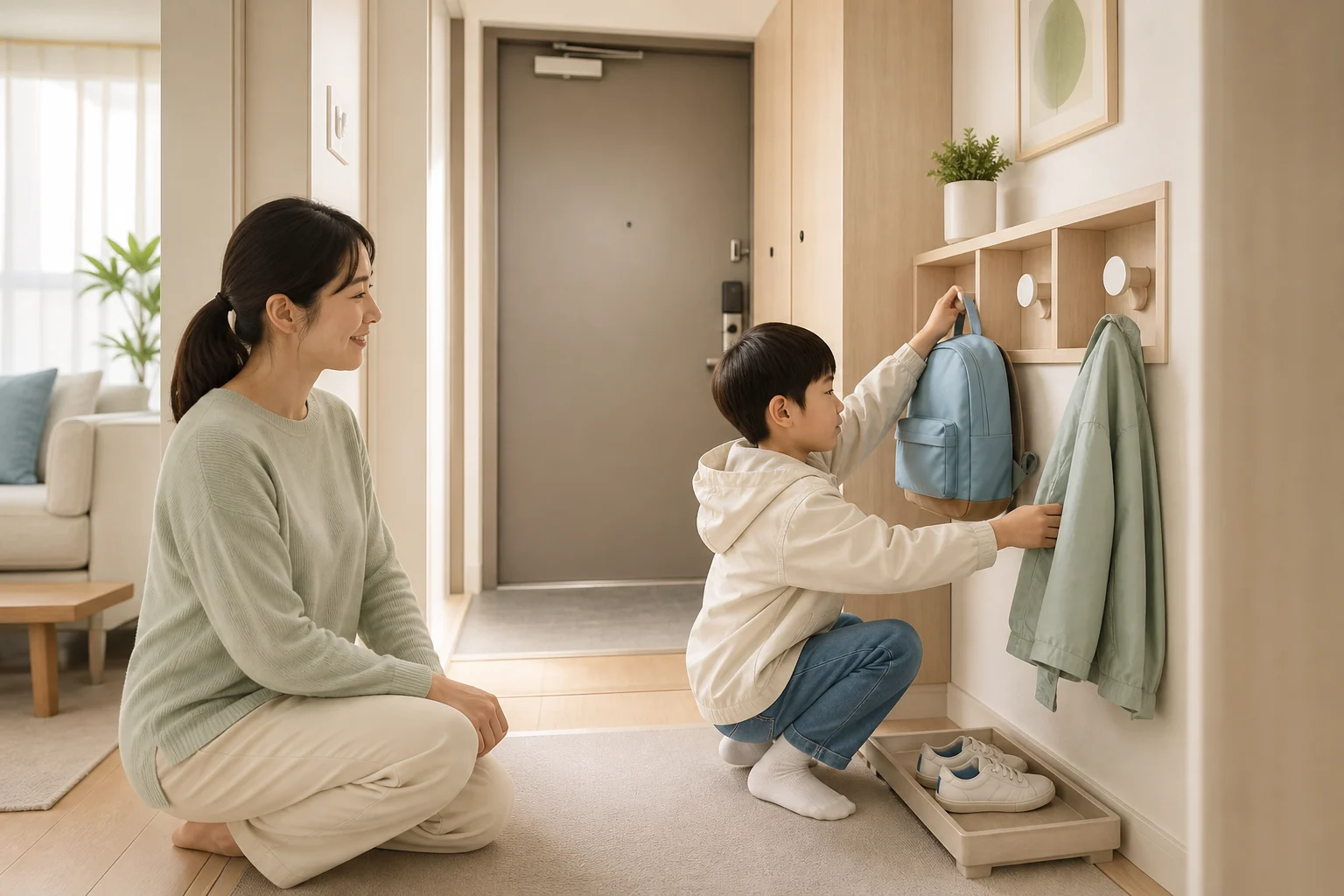
After an outing, a bag may land on a dining chair, a coat on the couch, and shoes in the middle of the entryway. Before repeating "Put it where it belongs," check whether that place is visible and within your child's reach.
Key point
Give bags, coats, and shoes low, fixed spots near the entryway, and guide one item at a time. Keep doors and paths clear. Adults handle items that are heavy, wet, or sharp.
What to remember
- Choose storage spots that do not block a doorway, exit, or walking path.
- Add one low basket, hook, or shoe spot at a time at your child's height.
- Give one direction such as, "Put your bag in the low cubby," and carry heavy items together.
Clear the path before finding a place for belongings
Do not use the middle of the entryway, the space behind a door, or the area in front of an exit for storage. Clear the family's walking path, then choose a place along a wall or beside a shoe cabinet where no one will trip. Secure hooks and shelves so they do not wobble.
If a bag contains medicine, batteries, or small parts, an adult removes them first and stores them out of a young child's reach.
Give each of three kinds of belongings one place
Put bags in a basket or low cubby near the floor, light coats on a secured hook your child can reach, and shoes on a tray that does not block the door. A basket that is too deep or a hook that is too high sends the child walking through the house with the item again. Start with the three things your family uses most often on outings.
Ease of use matters more than appearance. If your child sits to remove clothes or uses a mobility aid, widen the path and provide a small chair or basket.
Give one action at a time
A child may miss the first step when told all at once to put away the bag, hang the coat, arrange the shoes, and wash their hands. This plan covers the storage spot for one item, not the whole schedule after coming home. Say only what to do now: "Put your bag in the low cubby." Mention the next item briefly only when needed.
Specific directions given one at a time are easier to follow. When your child puts down the bag, you can say, "You put it in the low cubby." Do not block bathroom use, meals, rest, or another need because your child forgot, and do not throw the bag away.
Put away heavy or wet items together
Do not ask a young child to handle a heavy bag, wet coat, item with long straps, plastic bag, or sharp umbrella alone. State the adult's part first: "We'll carry this bag together" or "I'll open the wet umbrella to dry." Keep umbrella tips and straps out of the path.
If your child often stops at a zipper or coat hook, do not assume laziness or a bad habit. Check grip, weight, noise, light, a cramped entryway, and whether the movement of taking the item off is hard. Choose another action with the same purpose, such as using a basket instead of a hook or setting something down instead of hanging it.
Change the place or action when difficulty continues
If bags, coats, or shoes always stop in the same place, lower one bag spot before changing the whole storage system. Use a basket when hanging is hard, or have an adult open a difficult zipper.
If using the hands remains difficult across dressing, eating, and school preparation, or if you keep seeing pain or balance problems, note the movements where your child stops and tell the pediatrician.
Worksheet
Choosing entryway spots
Choose a place for each item with your child.
- Path
- Areas to keep clear around the door, exit, and walking route
- Bag
- A low cubby or basket and the person who checks the contents
- Coat
- A hook or basket at your child's height
- Shoes
- A tray that does not block the door
- Do together
- Heavy or wet items, including umbrellas, for an adult to handle
Notes
- Secure hooks, shelves, and furniture against falling, and keep paths clear.
- Keep medicine, batteries, and small parts out of a young child's reach even when they are inside a bag.
- The same setup does not fit every home. If the entryway is too narrow, use the same approach at the next point on the route, such as outside a bedroom. When siblings arrive together, guide them one at a time or take just one coat first.
References
- CDC: Creating predictable routines and rules
- CDC: Steps for giving children good directions
- US Consumer Product Safety Commission: Home safety checks
This is general guidance for entryway setup and returning belongings. It does not replace an individual motor, sensory, or developmental evaluation or a home safety inspection.