When your child cries or screams at night and seems to have open eyes but does not recognize you, you may want an immediate explanation. Whether they remember a dream the next day can be a clue, but it cannot confirm a nightmare, night terror, or seizure. In that moment, focus on your child and the surroundings being safe before naming the event.
Key point
During a nighttime episode, make the area safe and briefly note the time, behavior, and next-day memory. Respond immediately to emergency signs such as abnormal breathing or lips, tongue, or face suddenly turning blue or grey.
What to remember
- Observe whether your child is fully awake and accepts comfort or seems confused and does not recognize you, but do not diagnose at home.
- During what looks like a night terror, block access to stairs, windows, and sharp objects, and do not force your child awake.
- Seek medical help promptly for abnormal breathing, lips, tongue, or face suddenly turning blue or grey, severe stiffening, one-sided movements, injury, or prolonged confusion.
Memory is a clue, not a label
After a nightmare, children can usually wake, accept comfort, and describe the dream. Night terrors may occur during deep sleep early in the night, with a child not fully awake, not recognizing a caregiver, and not remembering the next day. But timing or next-day memory alone cannot distinguish a nightmare, night terror, or seizure.
First observe what is happening and keep your child safe. Discuss repeated or concerning episodes with a clinician. Do not press your child with "Why can't you remember?" or interpret dream content as fact, prediction, or proof of trauma.
Start with safety, not waking
If your child gets out of bed, moves around, or screams, stay calm and close while checking the surroundings. Block stairs, windows, sharp objects, and things they could trip over, and keep other children from bumping into them. During what looks like a night terror, do not shake your child awake, splash cold water on them, or hold them down. Guide them quietly to prevent injury and watch as the episode passes.
If your child is fully awake, anxious, and wants comfort, briefly reassure them and help them settle. These two responses are ways to help your child get through the moment safely, not a home diagnostic test. Do not wake them at set times or give supplements or medicine on your own to address sleep loss.
Record only facts about nighttime episodes
Afterward, note the approximate time, duration, behavior, whether your child seemed to recognize you, any injury, next-day memory, and daytime condition. Include changes a clinician should know about, such as recent sleep loss, fever, or medicines. Instead of "It was a night terror," describe what you saw: "Around 11 at night, cried and walked around the room; responded little when called."
A record cannot confirm nightmares, night terrors, or seizures. If a video is needed, take it only without waking or repositioning your child, and never delay safety measures or emergency help. You can contact a clinician even if some fields are blank.
Sometimes you need to stop recording and get help
Do not use an observation sheet to judge abnormal breathing, lips, tongue, or face suddenly turning blue or grey, severe stiffening, movement on only one side, injury, or prolonged confusion afterward. Use local emergency services immediately. On brown or black skin, color changes may be easier to see on the lips, gums, or inside the eyelids. Do not delay emergency help to check the color. Feeling that the situation is urgent is also a reason to seek help.
Even if it does not appear to be an emergency, talk with a pediatrician if episodes become more frequent or worse, or if changes in daytime sleepiness, behavior, or school life continue. Share the record along with information about sleep, fever, medicines, and daytime changes. The clinician can guide the evaluation and next steps.
Use words that do not shame your child
Do not tease or punish your child for the previous night's behavior, even if they do not remember. If they do remember, avoid demanding details and ask about how they feel now: "Last night must have been scary. Are you okay now?" If you live with family, briefly share who handled which safety steps so the next night feels less confusing.
Do not keep retelling the episode as a frightening story or frame it as a personality problem. You can create a safe environment and a way to seek medical advice without deciding on a cause.
Worksheet
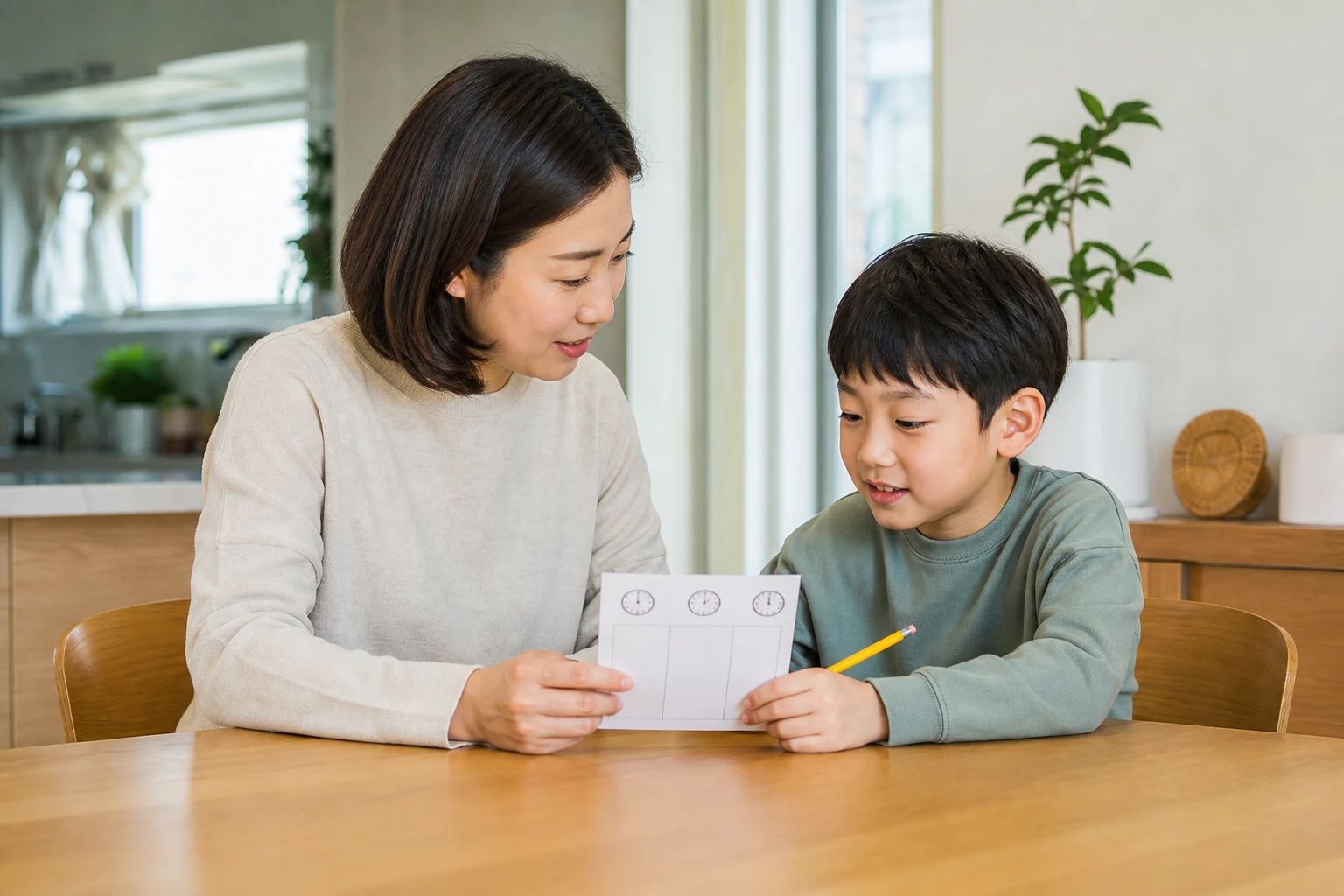
Nighttime episode observation sheet
This is not a diagnostic form. It records actual events to share with a clinician when there are no emergency signs.
- Time and duration
- About when it started and how long it lasted
- Observed behavior
- What you actually saw, such as crying, movement, and response to being called
- Safety
- Whether stairs, windows, and sharp objects were blocked, and any injuries
- The next day
- Memory of the event, daytime sleepiness, and behavior changes
- Immediate response
- Emergency help for abnormal breathing, lips, tongue, or face suddenly turning blue or grey, severe stiffening, or one-sided movements
Notes
- This sheet does not diagnose nightmares, night terrors, or seizures, and it is not a reason to wait before seeking emergency help.
- Some nights cannot be fully recorded. If you only heard the episode or another adult was caring for your child, write one line about what you heard. Do not wake your child to fill in blanks.
References
- NHS: Sudden blue or grey lips, tongue, or face and when to seek emergency help
- American Academy of Pediatrics: Nightmares, night terrors, and sleepwalking in children
- American Academy of Pediatrics: Healthy sleep guidance
- American Academy of Pediatrics: Choosing the emergency room, urgent care, or pediatrician
This is general guidance on safety and preparing for a medical visit. It does not replace diagnosis or treatment of nightmares, night terrors, or seizures, or emergency medical care.