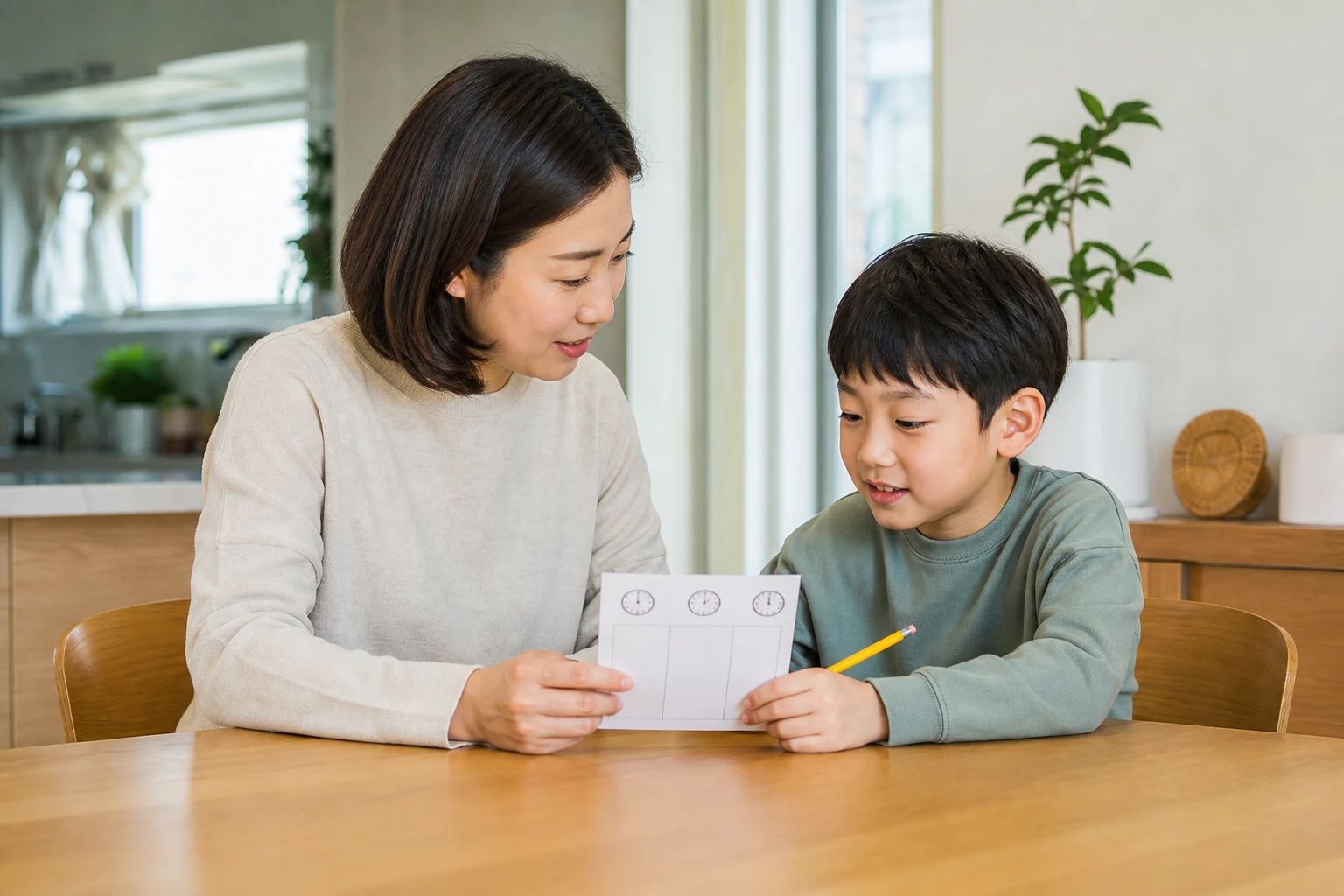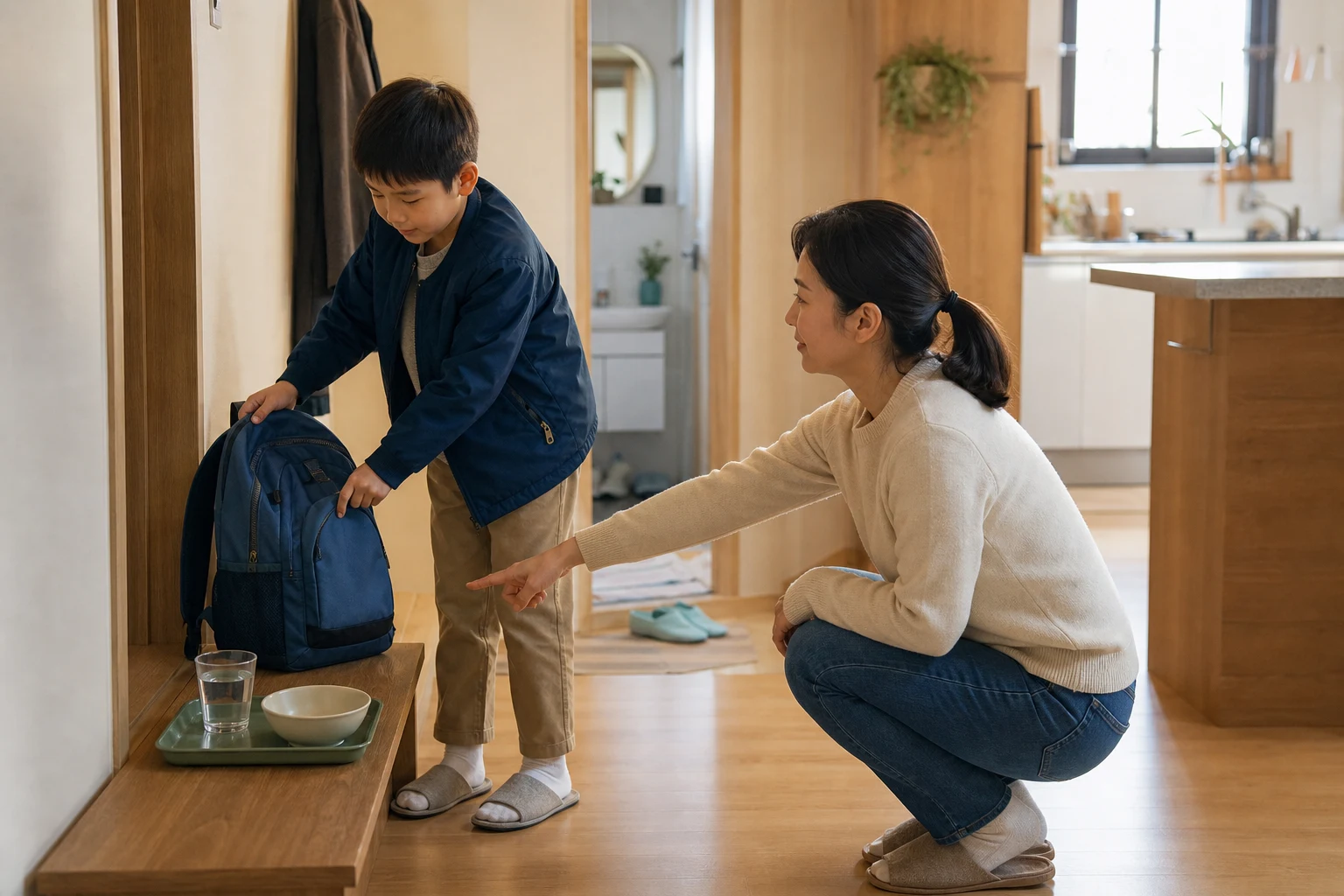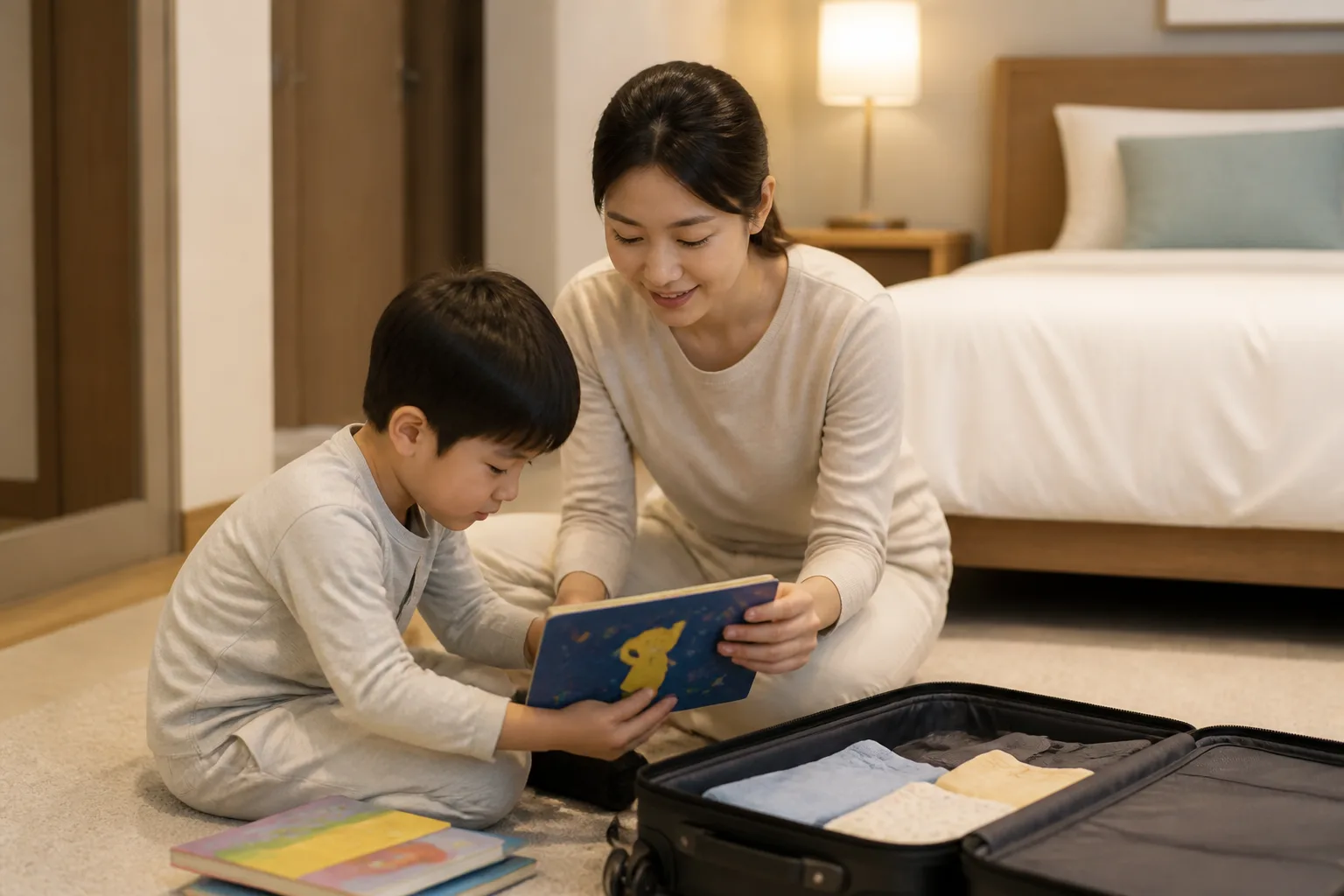
Before packing, check where your child can sleep safely. Then choose two or three things you usually do before bed, such as reading a book or singing a short song. When unfamiliar bedding, many people, and a long journey leave everyone tired, you can keep to this shorter routine.
Key point
When traveling, check for a safe sleep space first. Then keep two or three familiar steps in the same order, such as reading, singing, or dimming the lights.
What to remember
- Check the safety and location of the sleep space before leaving.
- Choose a short bedtime routine your family can manage during the trip.
- For travel across time zones, you can gradually shift your child’s sleep time starting 2 to 3 days before departure while watching how your child feels.
Check where your child will sleep when you arrive
When you arrive at a hotel or relative's home, first check where your child will sleep. For a baby under 12 months, place them on their back to start sleep and confirm that there is a separate, firm, flat sleep space without soft objects. Even if you brought a familiar blanket or stuffed animal, do not place it in an infant's sleep space.
If your baby falls asleep in a car seat or stroller, move them onto their back in a separate, firm, flat sleep space as soon as possible. Do not take your baby out of the car seat while the vehicle is moving; the driver must park somewhere safe, away from traffic, before attending to them. After arriving, do not keep using the car seat or stroller as a bed. Avoid having a tired adult fall asleep while holding a child on a couch or armchair.
Choose two or three familiar bedtime steps
If you cannot follow every step from home, such as bath, snack, book, song, and lights out, choose the cues your child recognizes most. For example, keep the order of one familiar book, the same short song, and dimming the lights.
If a gathering at a relative's home will run late, tell your child first, "We will read a book, then go to the room." You can also tell the other adults, "I will read with my child, then we will head to the room." Having the words ready may ease the pressure to fit in with everyone else.
Look for what may be keeping your child awake
If your child sleeps poorly while traveling, check whether the room is too bright or noisy, or the bedding feels unfamiliar. A nap or dinner may have run late. Your child may also still be excited after spending time with many people. Do not assume that missing the usual routine is the reason.
If the room is bright, try closing the curtains and dimming the lights. If the day ran late, start the next day with morning light and a meal. If your child is still excited, allow some time to settle in a quiet room before beginning the bedtime steps.
Shorten the bedtime routine after a late arrival
If you arrive late, do not stretch out washing, reading, and singing to catch up with the usual routine. Keep only essential steps, such as using the restroom, putting on pajamas, and saying a brief goodnight. Restart the day with light, food, and outdoor activity the next morning.
For travel across time zones, you can shift your child's sleep time gradually starting 2 to 3 days before departure. If the trip is not far away, prioritize rest and a predictable order instead.
Do not dismiss signs of illness as travel effects
If your child has a fever, pain, trouble breathing, or severe unusual lethargy, check for medical help before adjusting the routine. Do not assume a cause if your child wakes often in an unfamiliar place.
After the trip, allow a few days to return to the familiar routine at home. If parents are exhausted, also plan to take turns so one person does not handle every nighttime response.
Worksheet
Travel Sleep Cue Card
Write this on one card before the trip and follow the same order after arriving.
- Check the sleep space
- Your child's sleep space and needed safety items
- Cues to bring
- Two or three among a book, song, and lighting
- After a late arrival
- Minimum steps even after a late arrival
- Ask for help
- Who can take a night shift and which health care professional to contact
Notes
- Place every baby on their back to start each nap and nighttime sleep until their first birthday, including babies born preterm and those with reflux. If reflux or another medical condition makes you concerned about sleep position, talk with your healthcare provider rather than choosing side or stomach sleeping yourself.
- On the first night in a new place, your child may take longer to fall asleep or wake often even when you keep the cues. Do not treat this as a failed routine. Repeat the same order starting on the second night.
- Do not judge feeding, growth, or illness from a change in sleep during travel alone. Also check how well your child feeds and whether there are unusual symptoms.
References
- NICHD Safe to Sleep: Back sleeping before the first birthday, including preterm babies and babies with reflux
- American Academy of Pediatrics: Safe sleep environments for babies under 12 months old
- American Academy of Pediatrics: Car safety, breaks, and sleep timing during family travel
This is general preparation guidance for sleep while traveling. It does not replace diagnosis or treatment related to infant sleep, feeding, illness, or sleep disorders.