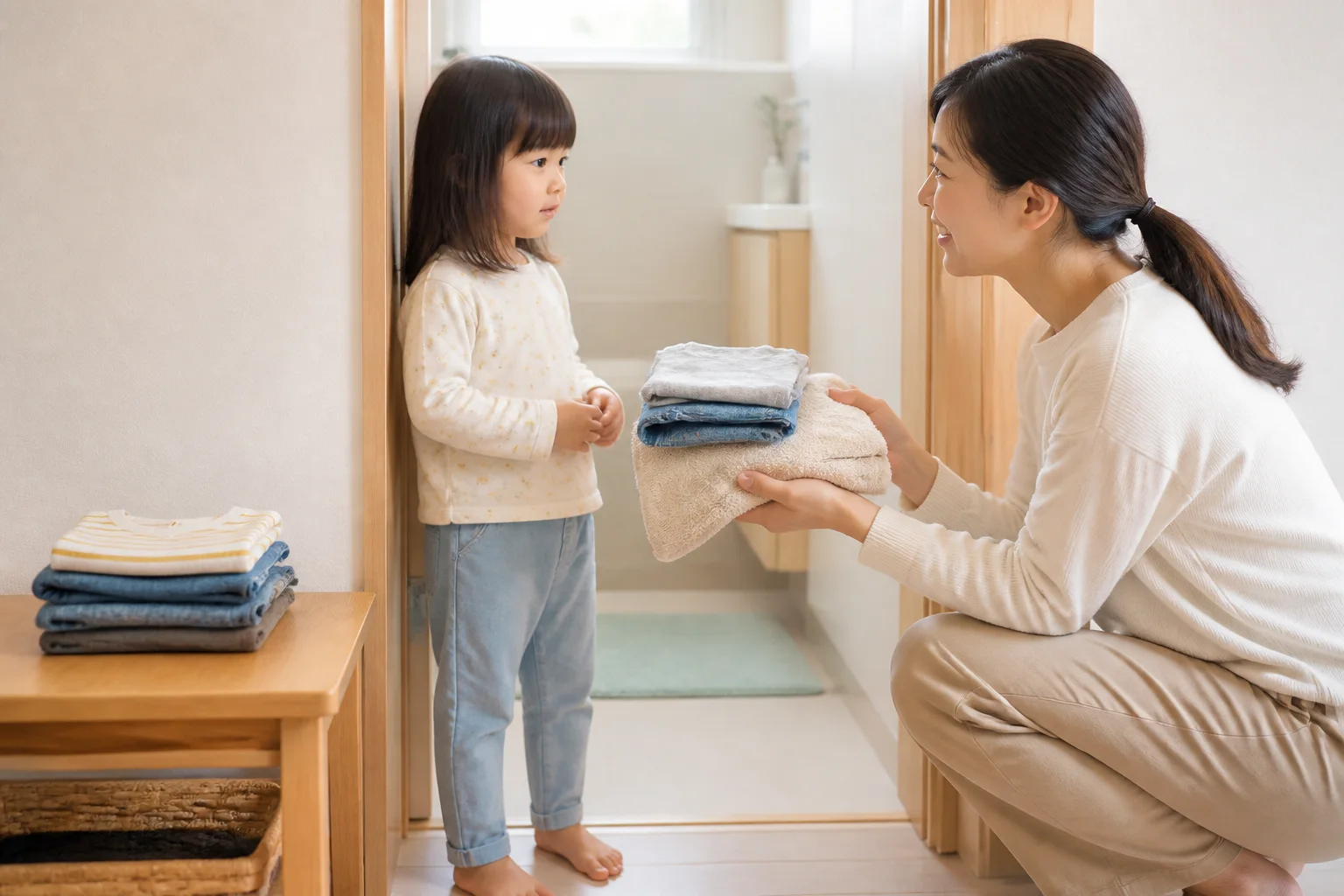
On mornings when your child pulls off socks and keeps looking for different clothes, make the conditions for leaving and the first action clear. If there are signs of pain, skin irritation, or clothing unsuited to the weather, check the discomfort before rushing.
Key point
Offer two acceptable choices while keeping responsibility for getting ready, weather, and safety with the parent.
What to remember
- Prepare two outfits together the night before, and give one action at a time in the morning.
- Your child can choose colors and order, but getting ready to leave is not negotiable.
- Do not assume a bad habit if pain, strong sensory reactions, or movement difficulties persist.
Name the first action instead of asking, "Do you want to get dressed?"
Asking "Do you want to get dressed?" before child care can open up the option not to. Name one action at a time: "Let's put on pants," or "Let's put on one sock." Short, specific directions and a predictable routine can help young children move through the morning.
Three things to check when your child refuses
If the same morning repeats, look at conditions instead of calling it stubbornness. A child who is not fully awake and finds any request hard, a child uncomfortable with clothing texture or tightness, and a child who wants to choose may look similar but need different responses.
Respond differently to each. If your child is not fully awake, start with a transition such as waking them a little earlier or carrying them to the living room. If clothing is uncomfortable, remove it from the morning choices. If they want to decide, keep the two-outfit choice. If you are unsure, ask, "Are you sleepy, or are the clothes uncomfortable?" and let them choose.
Two choices are enough
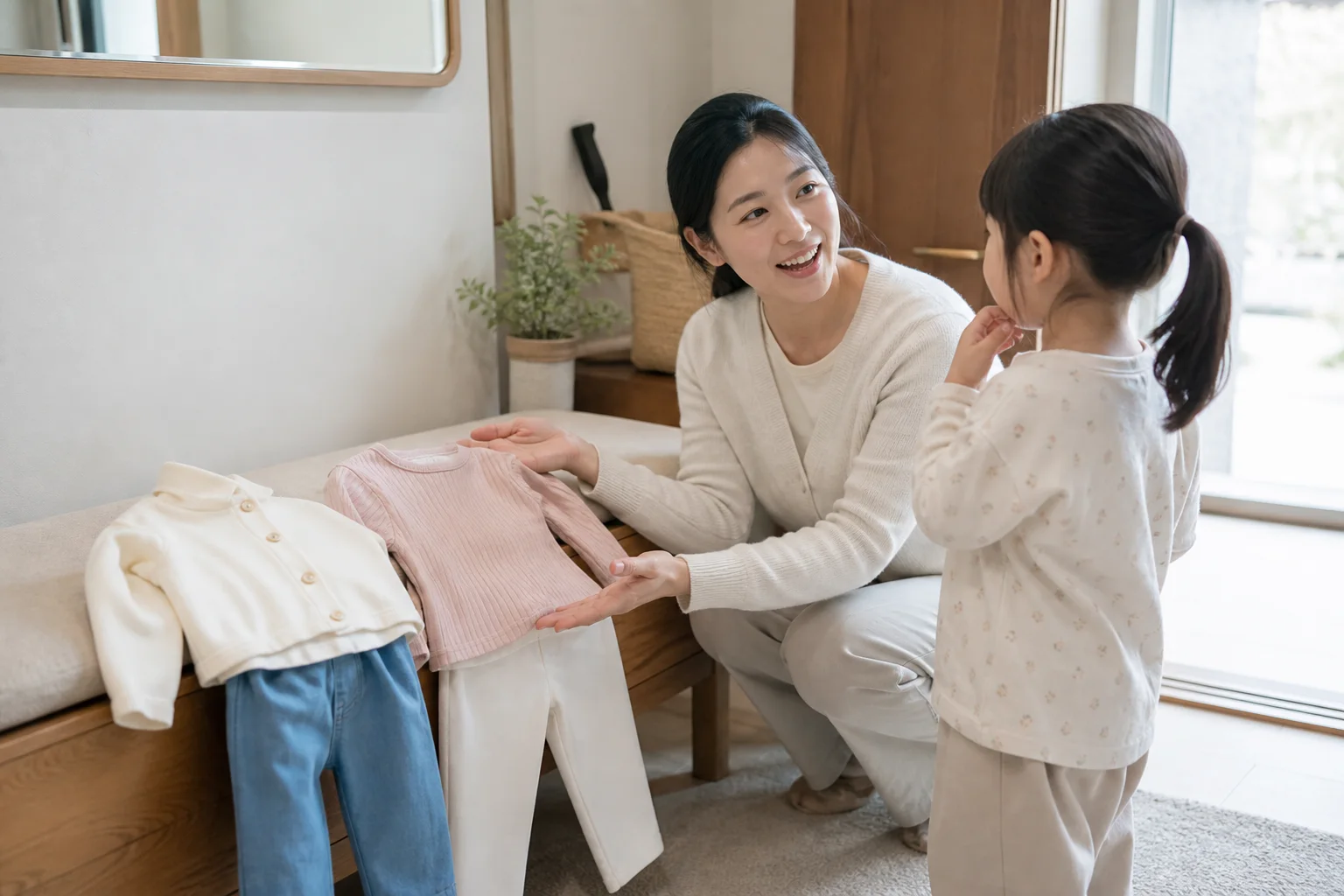
Set out two suitable outfits the night before and ask, "The striped shirt or the yellow one?" If your child brings out something else, repeat, "Today, choose one of these two." Choices are neither a way to eliminate all conflict nor a developmental test.
Parents are responsible for the conditions for leaving
Parents decide on warmth, rainy-day footwear, and clothes needed for school activities. Do not compromise car seat safety by putting a thick coat under the harness. Calmly explain that you leave once ready, without threats or rough pulling.
Make the dressing order a small choice, too
If the whole outfit feels overwhelming, let your child choose only the order, such as pants or socks first. You can also share tasks: you fasten buttons while your child puts an arm through a sleeve. As departure approaches, return to the original two options instead of continually adding choices.
On days when independent dressing is slow, do not time your child or compare them with a sibling. Notice what they managed alone today and leave just one movement to practice tomorrow.
Check whether refusal is a physical signal
If tags, seams, or certain fabrics cause pain or fear-like avoidance, your child struggles to use one arm or leg, or difficulties occur elsewhere in daily life, do not call it stubbornness. Note when discomfort occurs and what your child says, and consult a pediatrician or relevant professional. Changing clothes because of heat or itching does not mean abandoning boundaries.
Leave one line for tomorrow
After leaving, note something like, "Spent a long time stuck on socks." Change only one thing, such as the choice, reminder, or socks, and observe for a few days. If there is pain or ongoing difficulty in daily life, tell the pediatrician or school what you actually see.
If you are late, finish with the minimum safe steps
Being late is no reason to prolong the dressing fight or leave your child alone. Choose the necessary clothes, help briefly as much as possible, and leave. Do not continue a delayed lecture on the way.
That evening, choose one condition to change. Preparing tomorrow's two outfits and first action is often more realistic than moving the alarm earlier or reducing clothing options.
Worksheet
Night-before clothes and a 4-part morning card
Separate tomorrow morning's choices from its requirements.
- Two outfits
- Today's two choices
- First action
- One movement to do right away
- Requirements for leaving
- Warmth, safety, timing
- Observation
- Where your child stopped and physical signals
Notes
- Separate choices from the conditions for leaving.
- Two outfits do not suit every child. If choosing itself is stressful, pick one outfit and let your child choose the order of dressing. During a phase of wanting the same clothes every day, having several identical items may reduce morning conflict.
- Pain, strong sensory responses, or movement difficulties may need assessment.
References
- CDC: Using routines and rules
- CDC: Steps for giving good directions
- CDC: Positive parenting tips for ages 1 to 2
This is general guidance on morning preparation. It does not replace sensory, motor, or developmental assessment, medical diagnosis, or individual instructions for vehicle safety equipment.