When you mention a bath in the middle of play, your child may hide or cry, and your own end-of-day exhaustion can make your voice rise. Before finding words to make baths appealing, separate what needs washing today from what your child can decide. A bath is time to wash safely and move to the next evening activity, not a ritual that guarantees sleep.
Key point
Put the start of a bath or shower in a predictable evening sequence, and offer small choices such as a toy, song, or washing order. Never leave your child alone for even a moment near a tub or water. Skin pain, fear, and burn risks cannot be resolved through bargaining or discipline.
What to remember
- Give a brief heads-up and explain what comes next. Offer only two options.
- Take responsibility for getting into the water, while separating out choices your child can make about toys and order.
- Supervise directly within arm's reach at the tub, and check water temperature and slipping hazards first.
Make bathing part of the evening sequence
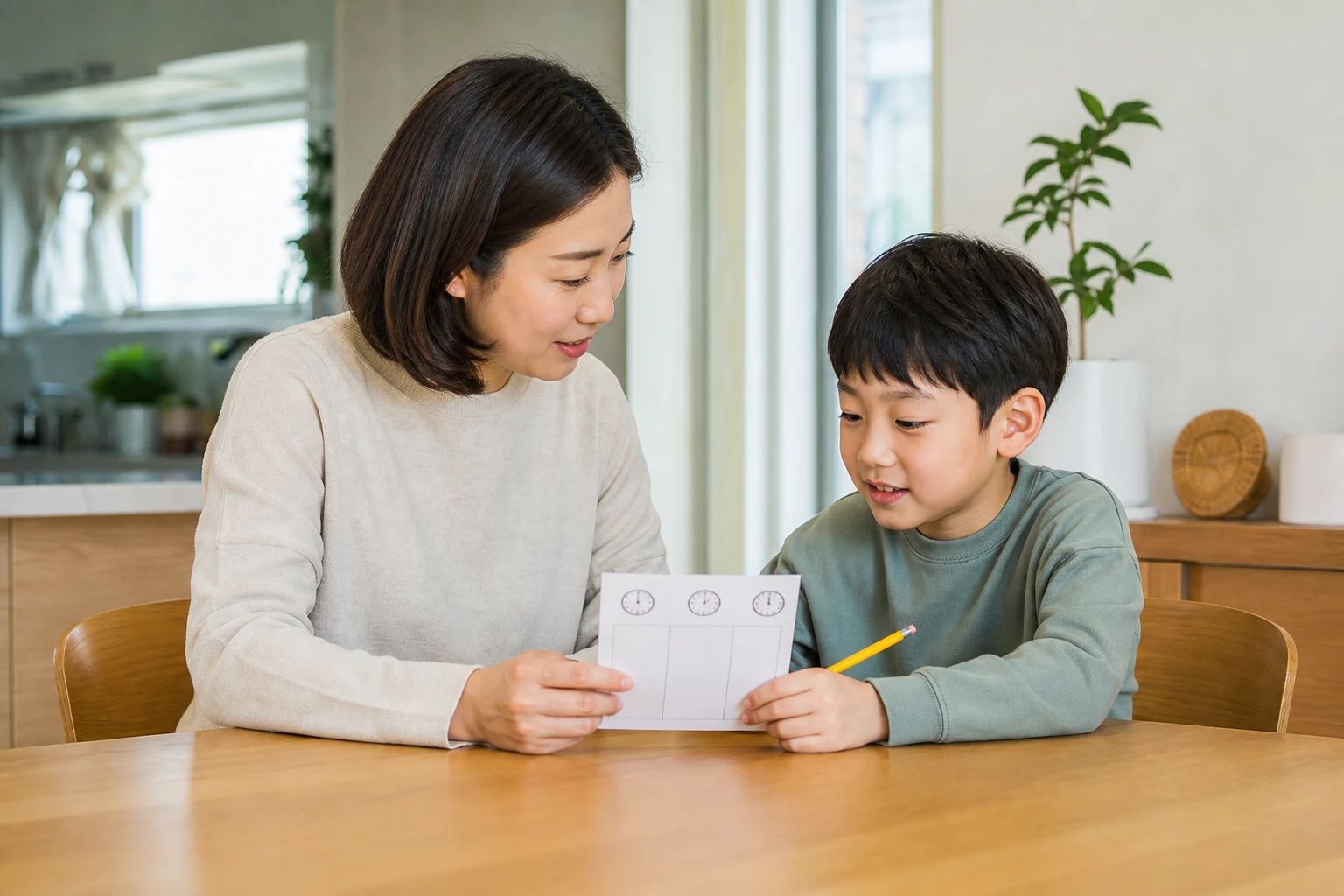
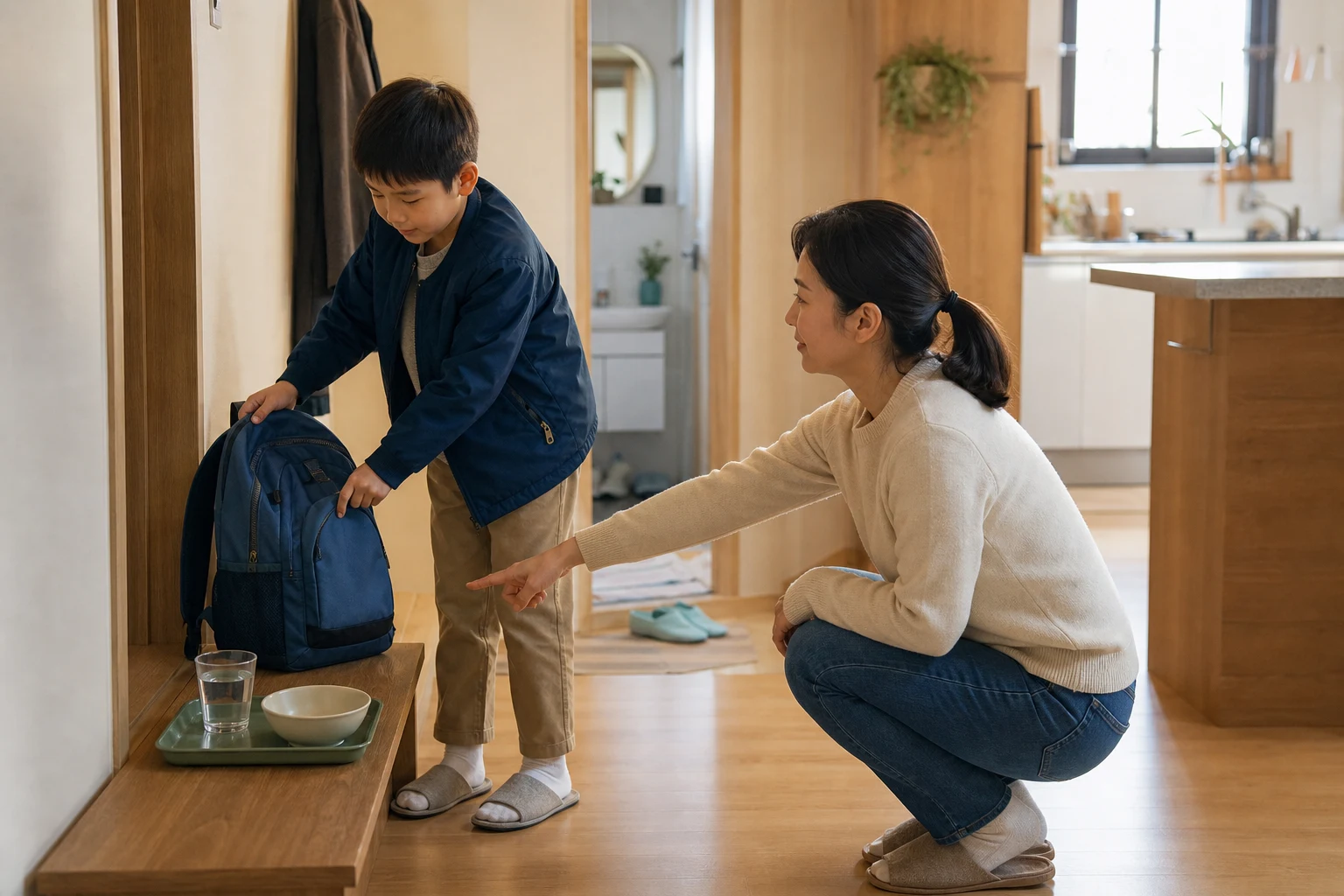
Instead of trying to start at the exact same time every evening, describe a sequence your family can follow: "After dinner, let's put the blocks away, take a bath, and put on pajamas." Add a short transition, such as choosing one thing to put away and getting ready for the bathroom, rather than moving straight from play.
A heads-up is not a long explanation meant to persuade. Make the next step clear: "When this tower is finished, let's go to the bathroom," or "After one song, let's choose a towel." Do not expect the warning to end resistance. Use it to help you repeat the same sequence, too.
Decide what needs washing and let your child choose how
On days when a bath or shower is needed, take responsibility for safety and decide what to wash and how based on your child's skin and how dirty they are. You can still offer acceptable choices: "Blue towel or yellow towel?" "Hair first or feet first?" "Duck or cup for the bathroom?"
Do not add too many choices or ask, "Do you want to wash or not?" If your child's chosen order is safe, try following it even if you would prefer another. A choice is not a bargain to skip bathing. It gives your child a part in the transition.
Gather supplies before entering the bathroom
Put towels, clean clothes, and washing supplies within reach before starting. This keeps you from leaving your child near water or in the tub to get something. Never leave babies or young children alone near water, even for a moment, or put another child in charge of supervision.
Keep your child in direct view while filling the tub, too. Once a young child is in the water, watch continuously within arm's reach. If possible, finish other tasks and reduce notifications beforehand so a doorbell, phone, or another child calling does not pull you away from the water.
Reduce water and bathroom hazards first
Check the water temperature by hand before putting your child in, and check that very hot water will not come straight out of the faucet. Address slippery floors and remove cords and breakable objects around the tub. Do not rush to splash water on a reluctant child or force them into it. Help them get in and out safely.
If anxiety rises during bathing, briefly describe what to do now: "That felt scary. We're done with the water. Let's use the towel." Staying in the water longer does not guarantee they will get used to it. Do less that day or try again another time, but keep direct supervision even when shortening the bath.
Do not treat skin or sensory signals as a bad habit
If your child struggles especially with running water, wet hair, or the feel of a towel, observe what is difficult. Note whether it is the water temperature, shower noise, soap scent, or pain when skin is touched. This lets you adjust one sensation at a time next time. Do not assume stubbornness from an angry expression.
Do not routinely suggest strongly scented products or bubble baths when there is eczema, a wound, a rash, itching, or pain. Follow the clinician's care instructions for your baby's skin and bathing. If pain recurs or fear of water makes everyday activities such as handwashing or bathing very difficult, share your notes at a pediatric visit.
Move briefly to the next step after bathing
After the bath, move straight to the usual next step, such as a towel, pajamas, or a book. Describe the sequence: "The water is done. Now let's dry off," instead of evaluating with "You didn't cry today" or "You fussed again." Simplify bathing when your child is tired, but do not use shaming or the withdrawal of love or play as consequences.
If a few days of notes reveal conditions that make conflict worse, change one thing at a time. Give an earlier heads-up, choose just one toy, or replace a shower with a safe, simple wash. Routines can change with your child's responses and family circumstances. No particular frequency or order guarantees better sleep or behavior.
Worksheet
Tonight's bath sequence
Write separately what you decide for safety and what your child can choose.
- Today's heads-up
- The last activity before the bath and a short sentence
- Your child's choice
- Two options involving towels, songs, or washing order
- Safety preparation
- Check towel, clothes, water temperature, and bathroom floor
- Observation
- What was difficult about the water, sound, or skin sensations
Notes
- Do not leave your child alone near a tub or water, or put another child in charge of supervision.
- This transition approach will not fit every child or every day. When everyone gets home late and tired, a simple, safe wash may be enough. For a child who struggles with water sounds or feeling wet, first remove one source of discomfort at a time rather than adding choices.
- This guidance covers transitions to baths and showers only. It does not cover toothbrushing or cavity prevention.
References
- American Academy of Pediatrics: Baby bathing and skin care
- American Academy of Pediatrics: Infant drowning prevention and water safety
- CDC: Using routines and rules
This is general guidance on bath transitions and water safety. It does not replace diagnosis or treatment for skin conditions, burns, drowning incidents, or sensory difficulties.