Hearing that another child uses the potty can make it seem as if yours should start too. But leaving diapers behind is not a test children pass at a set age. Look at whether your child notices and communicates body signals, can sit briefly on the potty, and has caregivers with enough capacity to handle accidents calmly.
Key point
Do not count readiness signs like test scores. Consider physical control, communication, and the family's current capacity together, then offer opportunities without pressure. You can wait during major changes or when there is pain. Do not treat constipation or pain with urination as a behavior problem.
What to remember
- Notice whether your child recognizes being wet or dry and can understand and express simple needs.
- Offer brief chances to sit on the potty, but do not keep your child there for a long time.
- Hard or painful stool, blood, stomach pain, pain with urination, or ongoing loss of previously learned potty skills calls for pediatric care.
No single sign determines readiness
Rather than using calendar age alone, look at whether your child notices being wet or dry, understands simple directions, can express a need, and can sit on the potty. A family's ability to handle accidents for several days and use the same words each time is also part of readiness.
A readiness checklist is not a diagnostic tool. Checking several boxes does not mean your child will be out of diapers within days. Keep a child care schedule or a relative's advice from taking priority over your child's physical readiness. Separate what your child can try now from what remains hard.
Decide on a brief opportunity and simple words before you start
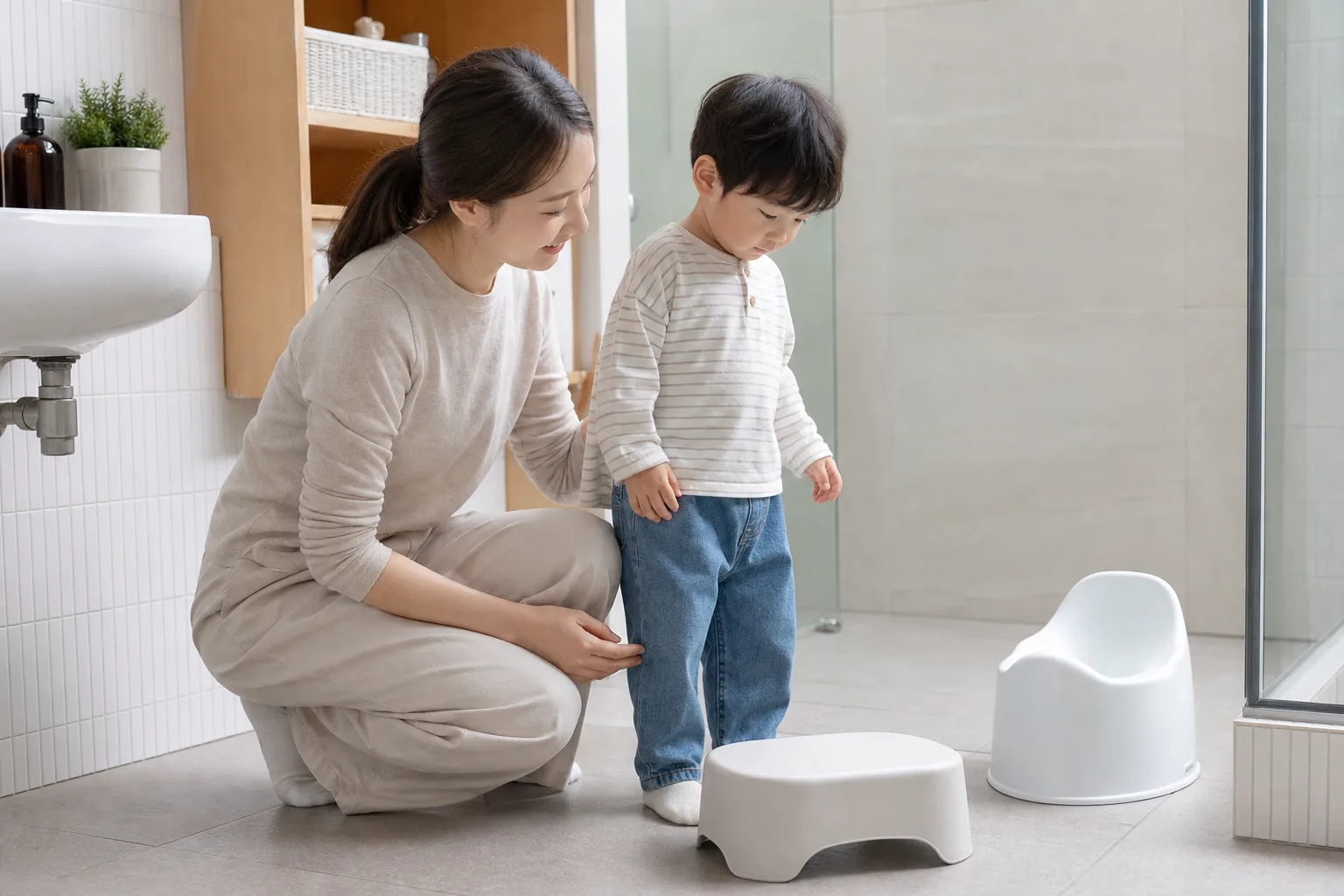
At a predictable time, such as morning or before bed, ask, "Would you like to sit on the potty for a moment?" If your child says no, do not force their body onto it. Do not expect pulling down clothes, sitting, and washing hands to go perfectly all at once. Help with the one part they can try that day.
After success, state what happened: "You sat on the potty." After an accident, say, "Your clothes are wet. Let's change, and we can try again next time." Do not raise the tension with words such as dirty, public comparisons, punishment, or rewards.
During the first week, note both preparation and response
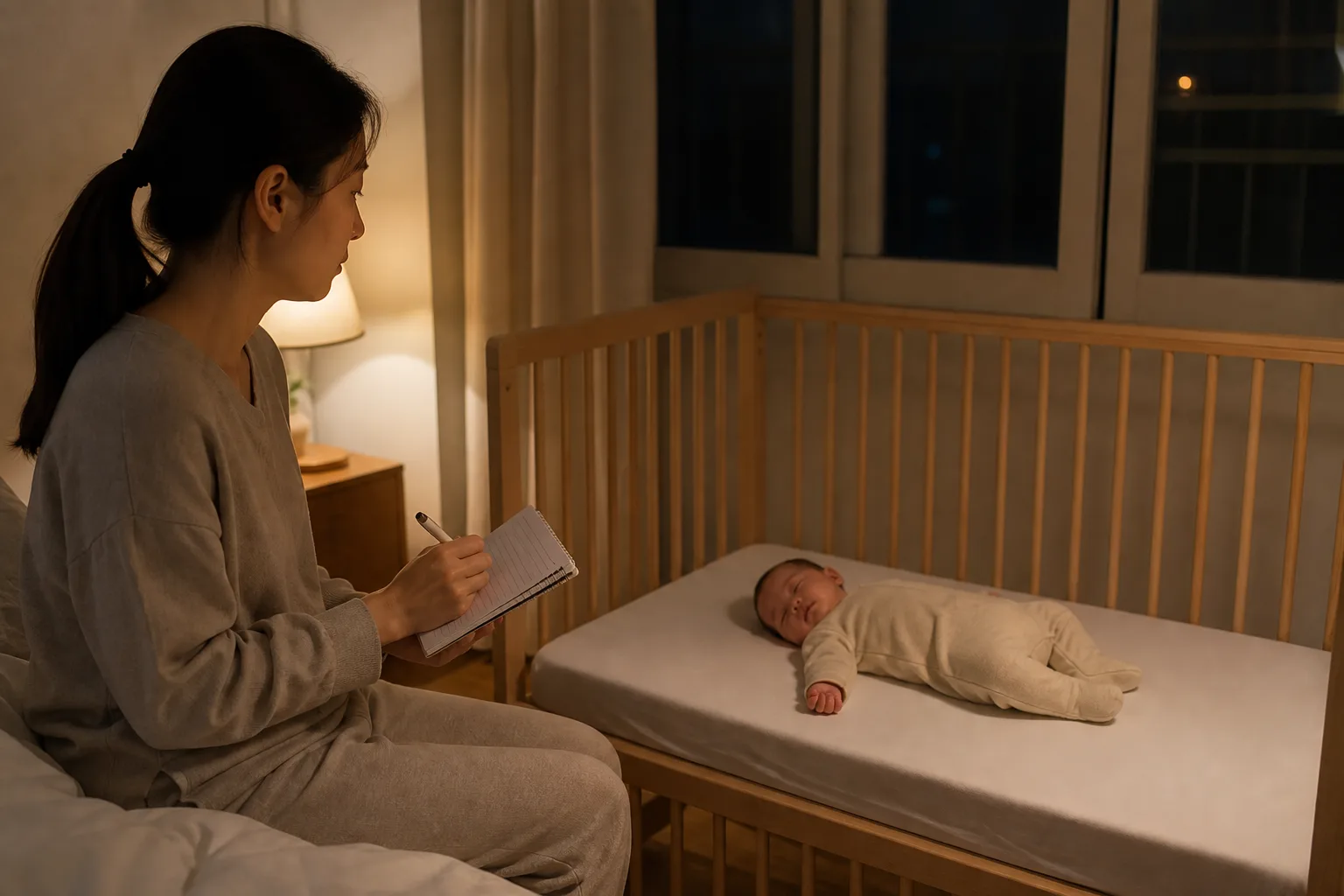
Before starting, keep a change of clothes, the potty or a step stool, and cleaning supplies nearby. This helps keep your child from having to hold it or wait for help. During the first week, pay less attention to the number of successes and briefly note when your child noticed a wet diaper or clothes, how they responded to a potty invitation, and whether bowel movements were comfortable.
After an accident, change your child and clean the floor first. Do not ask why they could not hold it or give a long explanation. If repeated invitations wear your child out, offer fewer and wait for your child to show a signal again.
Build pauses into the plan
During a move, a new child care arrangement, a new sibling's arrival, travel, or another major change, you can delay starting or return to diapers for a while. Pausing is not failure. It lets the family look at the child's signals again. Do not reduce fluids or suddenly remove diapers because accidents increase.
Daytime potty learning and staying dry at night may happen at different speeds. Rather than making early removal of nighttime diapers the goal, allow time for your child's body to develop nighttime control separately.
Do not push through constipation or pain
If your child has hard, painful stool, blood, stool withholding, stomach pain or swelling, or pain while urinating, do not try to solve it with more potty practice. Constipation can affect both daily life and potty training, so physical discomfort may be behind what looks like a training problem.
If a child who had been doing well has ongoing accidents or becomes afraid of the potty, note when it started and any pain or life changes, then discuss them during pediatric care. Diet, medication, and fluids depend on the child's condition and should not be prescribed through general advice.
Decide in advance when to stop and try again
Pause if approaching the potty causes intense fear, your child begins holding stool, or a major family change has left everyone exhausted. Do not call returning to diapers a failure. Try again when the child and family are settled, starting with the smallest opportunity, such as a brief sit.
If your child tells you about wetness or a bowel movement and is comfortable sitting briefly, keep using the same sequence. Daytime and nighttime dryness can develop at different speeds, so do not make nighttime diaper removal a race.
Protect privacy and safety, too
Do not turn your child's accidents into a story for siblings or visitors. Provide a quiet place to change. Caregivers can give necessary help without teasing the child's body or taking photos. Check for slipping hazards around the potty and make sure handwashing is accessible. Tell your child they can call for help.
During a few days of observation, do not score only the hours your child stayed dry. Note the words or gestures they used, whether they were comfortable on the potty, and whether there was pain. Use the notes to choose the next opportunity, not to grade the child.
Worksheet
Readiness and pause signals
Write down current body signals and your family's capacity, not a target date for success.
- Body signals
- How your child showed awareness of wetness, dryness, or a bowel movement
- Communication and posture
- Words, gestures, and response to sitting on the potty
- Family capacity
- Major changes this week and available caregiving help
- Notes for care
- Facts about pain, blood, withholding, or loss of previously learned potty skills
Notes
- Accidents are not a reason for shame or punishment.
- When there are signs of pain or constipation, seek medical care before focusing on potty training.
References
- American Academy of Pediatrics: The right time to start potty training
- American Academy of Pediatrics: Readiness skills for potty training
- American Academy of Pediatrics: Constipation in children
This is general guidance on beginning potty training. It does not replace diagnosis or treatment for constipation, urinary symptoms, or stomach pain.