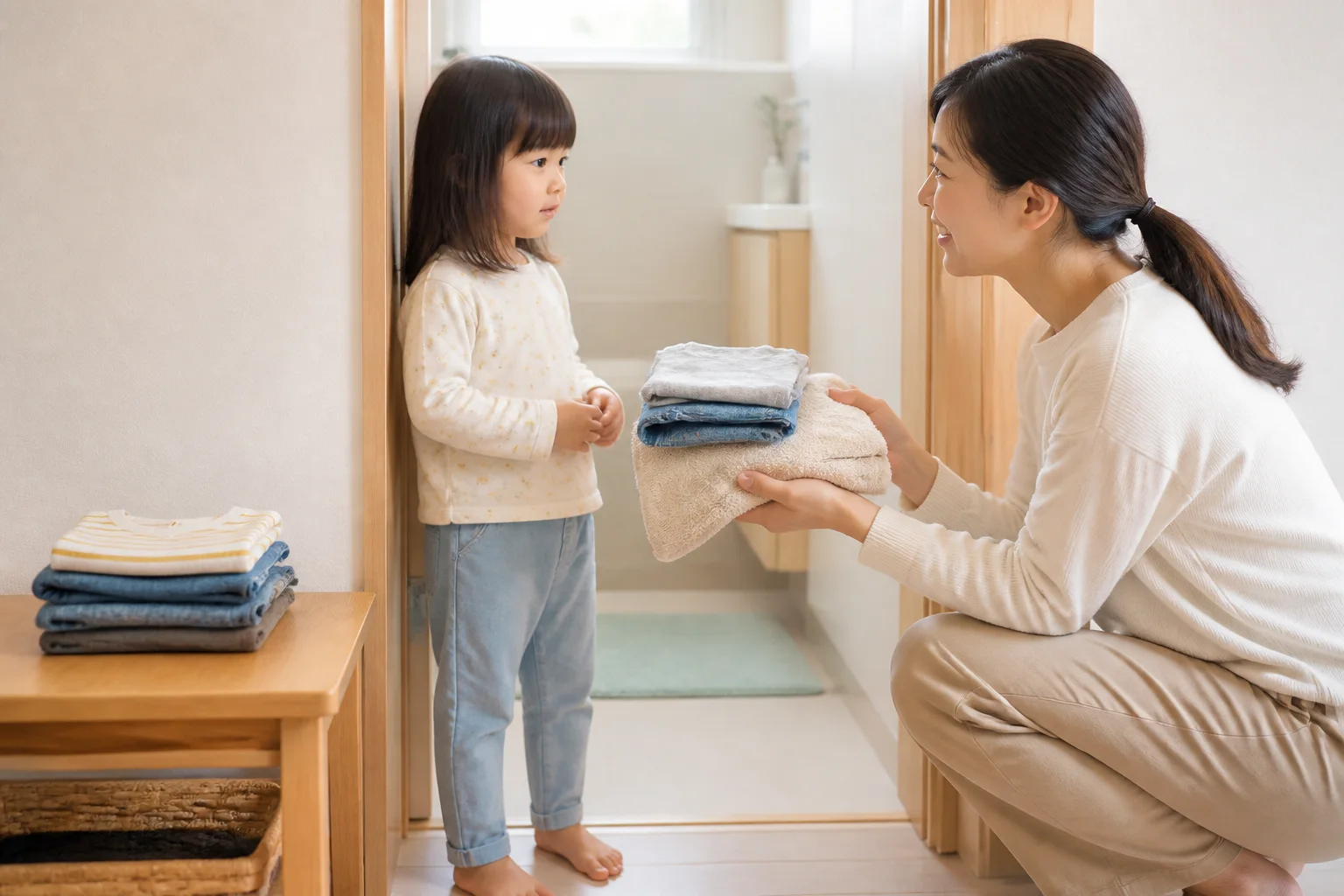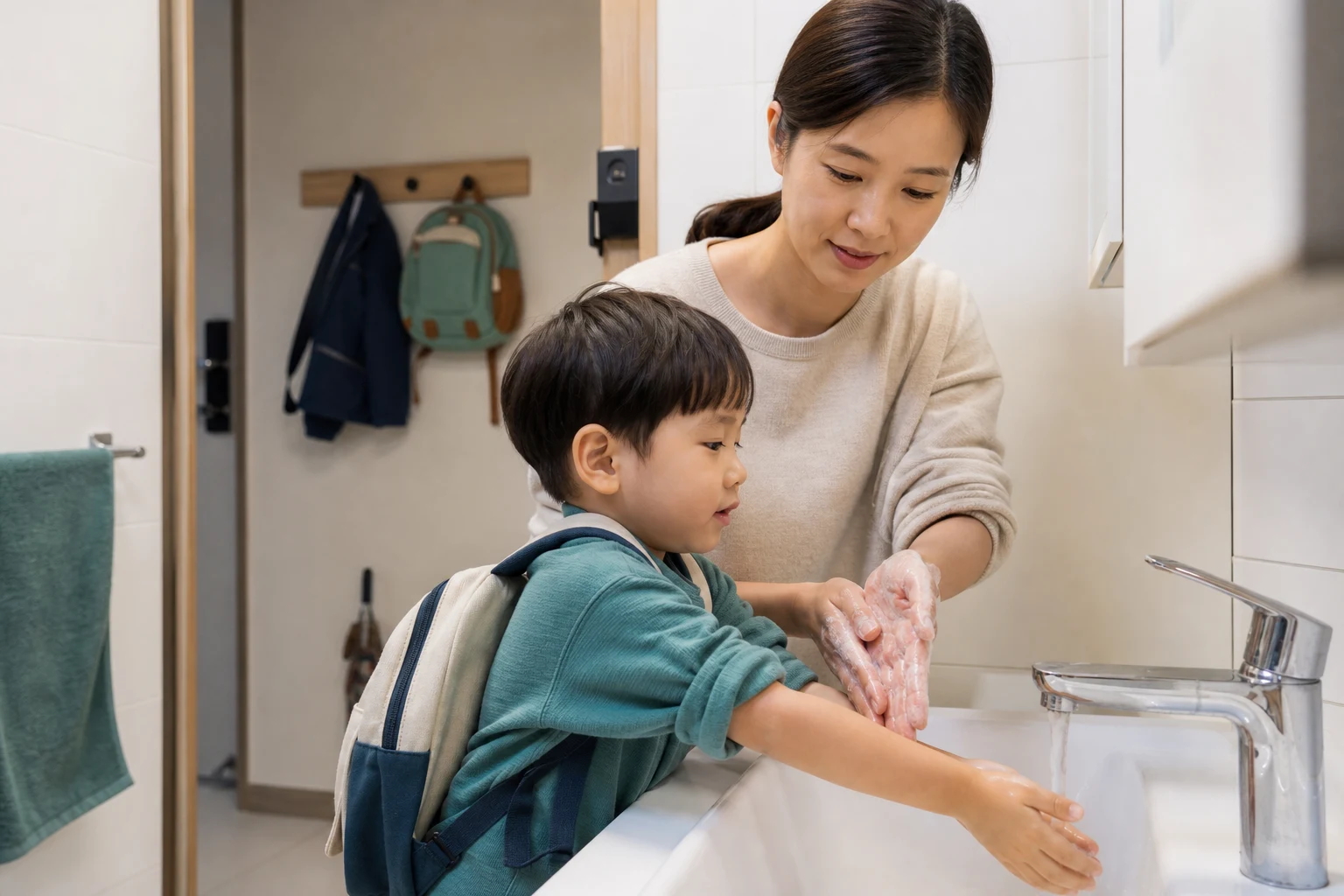
When a child drops their bag after an outing and goes straight to toys or a snack, a parent may say, "Hands first," several times. Instead of turning handwashing into a long explanation, agree on where to go after taking off shoes. When your child forgets, show the connection again rather than scaring them or scrubbing harder.
Key point
Use a sign that connects the entryway and sink to simplify the first route after coming home, and practice the basic handwashing steps with soap and running water. Skin problems, allergies, and safe supervision come before a memory chart.
What to remember
- Choose one action after coming home: take off shoes, then go to the sink.
- Wet hands, lather with soap, scrub for at least 20 seconds, rinse, and dry.
- Consider hand sanitizer with at least 60% alcohol only when soap and water are unavailable, and supervise young children.
Connect the entryway and sink in one line
Place a small picture or strip of colored tape your family recognizes inside the door or above the shoe rack, then agree that the sink comes next. State one action, such as, "Take off your shoes and follow the blue sign to the sink," instead of, "Put down your bag and wash your hands." The sign is a cue for remembering the next place.
Explain that the order can change on a late day or when someone urgently needs the bathroom. If your child forgets once, do not send them back to the door to repeat the route as a punishment. From where you notice it, say, "Now let's go to the sink."
Practice the five actions with soap and running water
The basic sequence has five actions: wet hands under running water, lather with soap, scrub the palms, backs of hands, between fingers, and under nails for at least 20 seconds, rinse, and dry with something clean. Your child does not have to memorize them all. At first, a caregiver can demonstrate one or two steps together.
Use the same sequence at key times your family chooses, such as after coming home, after using the bathroom, and before eating. Instead of turning handwashing into a score for praise, make it easy to turn on the water and reach the soap.
Hand sanitizer is an option when soap and water are unavailable
When you cannot use a sink, you may use hand sanitizer with at least 60% alcohol. Apply it over the whole hand and rub until dry. Do not use sanitizer in place of washing when hands have visible dirt or grease or when soap and water are available. Sanitizer does not solve every situation.
An adult should closely supervise a child under age 6 using hand sanitizer to prevent swallowing it or getting it in the eyes. Do not keep it in a backpack pocket or on a low shelf where a child can repeatedly dispense it alone. Check the cap and storage place after use.
A safe sink comes first
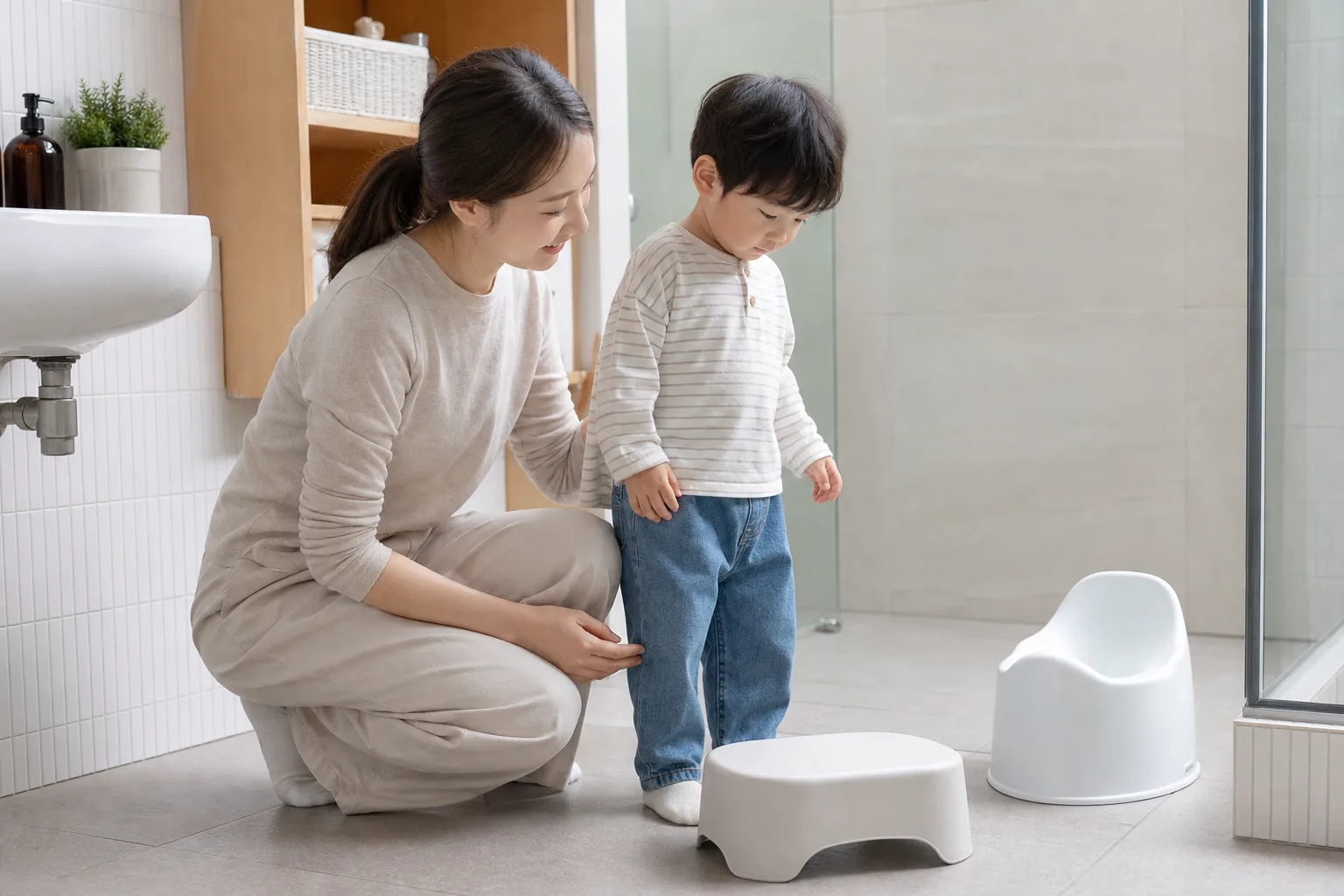
For a young child, an adult should first check that the water is not too hot, a step stool is stable and not slippery, and soap does not get in the eyes. Stay nearby and help as much as needed while your child washes. Do not put a child on a chair because the sink is too high or pull their arm in a hurry.
Name the starting action instead of asking, "Do you want to wash your hands?" You might say, "Stand at the sink and turn on the water first." If your child dislikes lather or fears the sound of water, do not call the reaction a bad habit. Look at the water temperature, soap scent, towel, and step stool, then change one condition.
Do not respond to skin or allergy signs by washing harder
If hands are cracked, sore, or itchy, or if redness, pain, or eczema continues, do not try to solve it by increasing the length or frequency of handwashing. Record the soap, towel, and sanitizer in use and when symptoms appear, then share that information with a pediatrician or dermatologist. Follow your family's existing medical guidance for a child with fragrance or ingredient sensitivities or allergies.
A sign cannot correct a wound or possible infection. If pain makes your child avoid washing or a skin problem interferes with daily life, do not assume poor hygiene caused it. Ask for needed medical care and advice about product choices.
Briefly observe when forgetting happens
For three days, record only where your child went after coming home, whether they saw the sign, and which step was hard at the sink. The next day, remove one object between the shoe rack and sink or change the location of the soap. When your child goes on their own, you can state the fact: "You saw the sign and went to the sink."
Handwashing does not guarantee complete protection from infection and is not a score for cleanliness. Keep one action your family can continue safely, and promptly adjust anything causing skin pain or a risk from water or the step stool.
Worksheet
Entryway to sink sign
Choose the route to the sink and needed help at a glance.
- Entryway sign
- A color or picture beside the shoe rack
- First action
- One thing to do after taking off shoes
- Sink help
- What is needed among water, soap, a towel, and a step stool
- Body signals
- Whether there was stinging, itching, or fear
Notes
- A connecting sign is an environmental cue that supports memory. It does not guarantee infection prevention.
- Hand sanitizer is an option when soap and water are unavailable, and an adult should supervise children under age 6.
References
This is general hand hygiene guidance. It does not replace diagnosis or treatment for a skin condition, allergy, or infection, or individual product or medical guidance.