When a child who had been using the toilet has another accident or refuses to sit on it, a parent may want to restart training quickly. First clean the child's clothes and skin, then separately check for pain or constipation.
Key point
After an accident, clean clothes, skin, and the floor without shame. If you notice constipation, pain with urination, or continuing accidents, do not push training. Consult a pediatrician.
What to remember
- Respond to an accident with calm cleanup instead of punishment or humiliation.
- Check for hard and painful stool, blood in the stool, stomach pain, or pain with urination.
- The cleanup sequence is not treatment or a deadline for success.
Clean up first after an accident
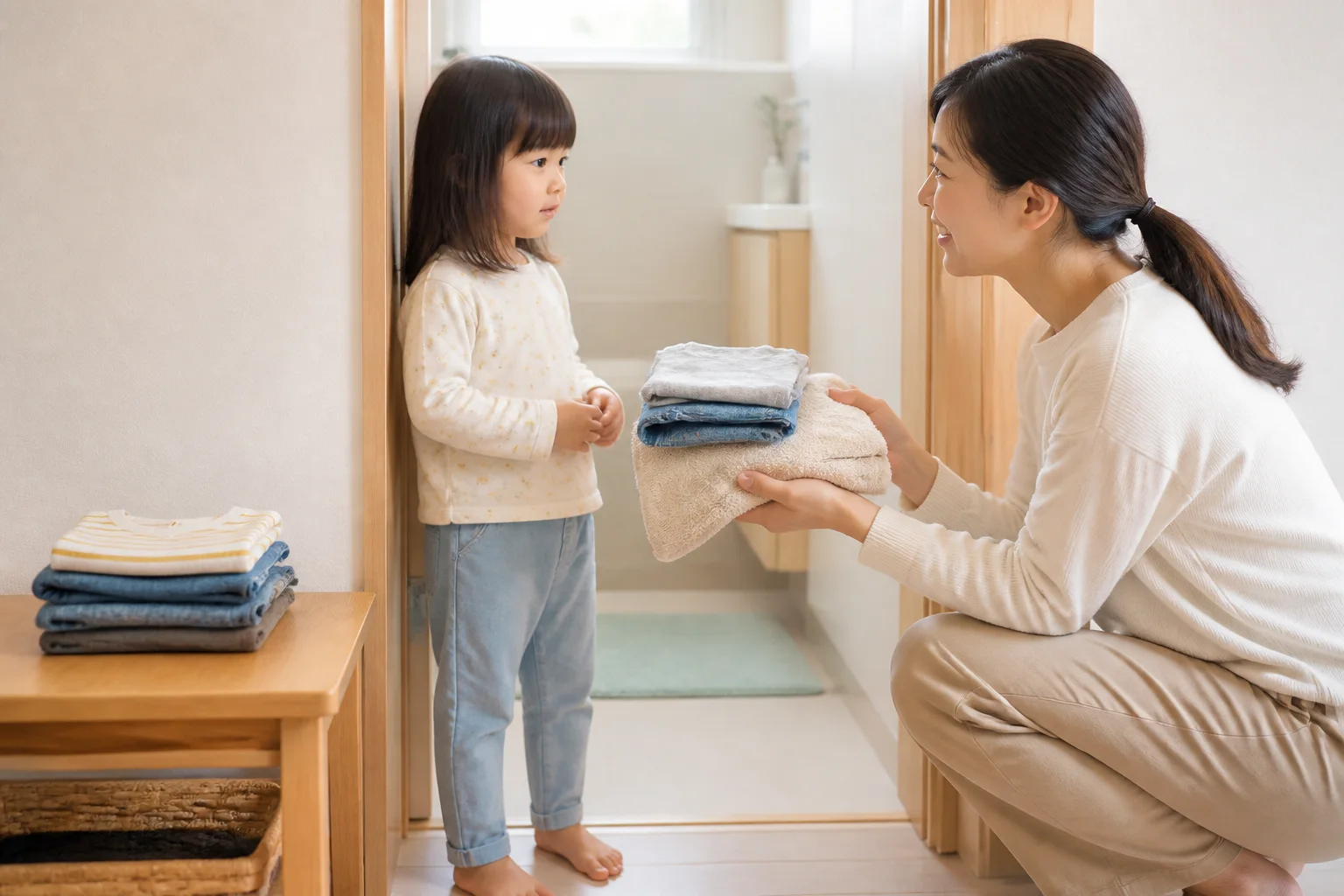
Say briefly, "You had an accident. Let's change your clothes and clean up." Help your child put on clean clothes and clean the skin. An adult should clean the floor safely. Do not make the child clean as punishment or shame the child about smell or mess. If you need to record an accident, note only the time and what the child was doing before it.
Body signals may be part of refusal or regression
Check for hard and painful stool, holding in stool, blood in the stool, stomach pain or swelling, pain with urination, and increased thirst. Repeated stool accidents after toilet training may be linked to chronic constipation or encopresis (soiling underwear with stool), and a child may not notice the accident. Rule out physical causes first even when there has been a major change in the child's life.
Do not force sitting on the toilet. Leave another chance
On a day when your child refuses, do not make the child sit for a long time or force an end to diapers. Briefly leave the next chance open: "You do not want to right now. Shall we look again the next time we pass the bathroom?" Do not use an enema or laxative that has not been prescribed or restrict fluids as a general method.
Make daily transitions and signals easy to see
Look for situations when accidents happen more often, such as an unfamiliar bathroom, a schedule change at child care, or a long trip. Show your child the bathroom location in advance and explain that spare clothes are available if needed. This preparation is not a promise to prevent accidents. It helps your child know what to do in an uncertain moment.
Record body changes instead of scoring accidents
Instead of counting accidents like a score, briefly note whether stool hurt, urination was uncomfortable, or daily life changed from normal. Do not read the notes in front of your child or compare the child with other family members. The notes can help explain the current situation at a medical appointment.
Tell the pediatrician what is actually happening if accidents continue
Tell the pediatrician what is happening if accidents are frequent or do not decrease, or if pain or fear makes daily life hard. Urine and stool accidents may not have the same cause. Instead of promising that the child will regain control within a few days, decide what information the medical professional and school or care setting need to know.
Worksheet
Steps after an accident
This chart is for choosing the next action, not rushing the child to succeed again.
- Words
- One sentence without shame
- Cleanup
- Clothes, skin, and floor
- Body signals
- Stool, pain, and urine changes
- Support
- When to record and whom to contact
Notes
- Do not assume an accident comes from laziness, defiance, or testing the parent.
- Consult a pediatrician about pain, blood in stool, stomach pain, or continuing accidents.
- This cleanup order does not fit every situation. A child who fears the toilet or flushing sound may need reassurance before cleanup. If your child is already receiving medical care, follow the plan made with the medical professional before this sequence.
References
- American Academy of Pediatrics: Emotional issues in toilet training
- American Academy of Pediatrics: Encopresis
- American Academy of Pediatrics: Constipation in children
- American Academy of Pediatrics: Daytime urine accidents
This is general guidance for getting back on track with toilet training. It does not replace diagnosis or treatment for constipation, encopresis, or urinary problems.