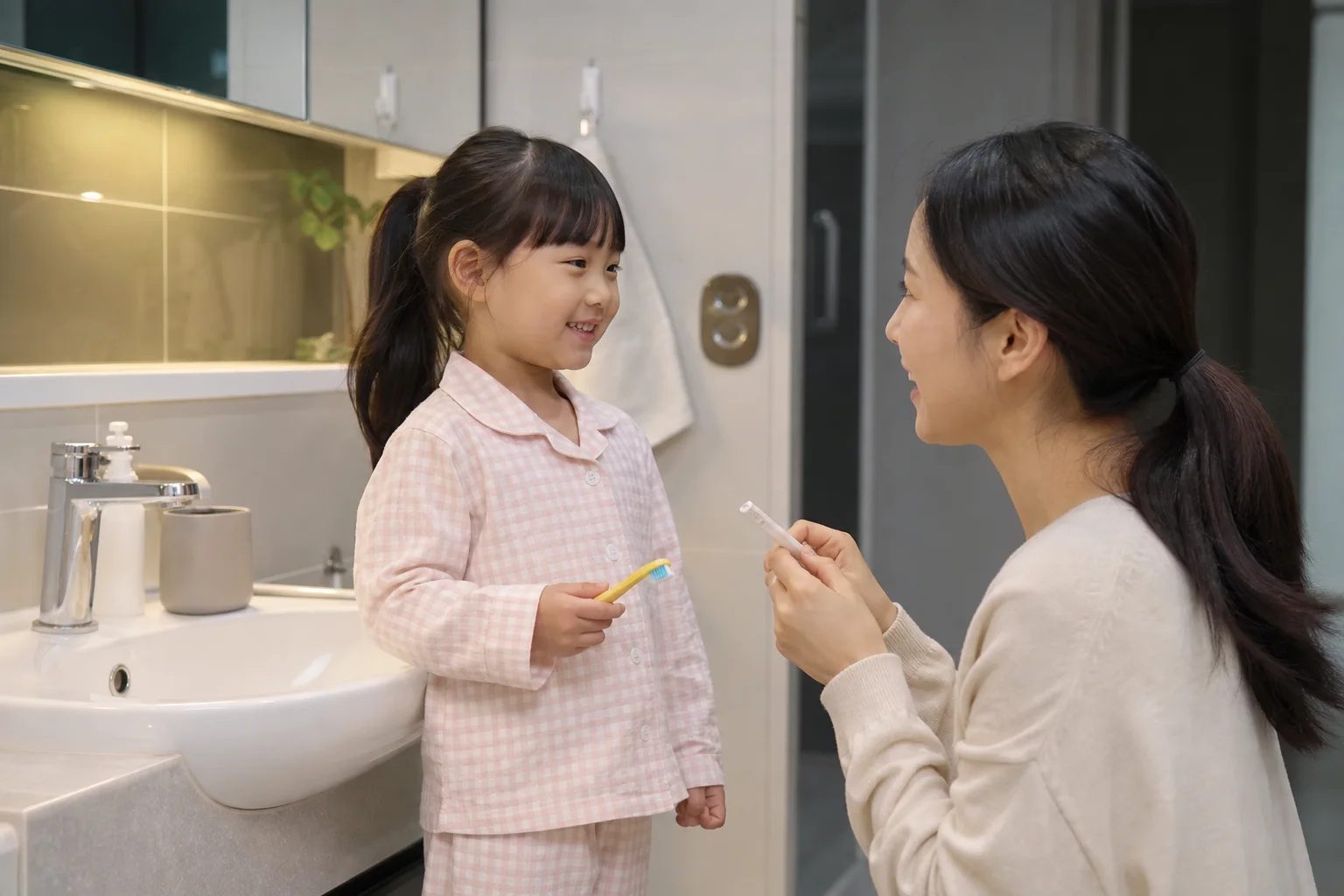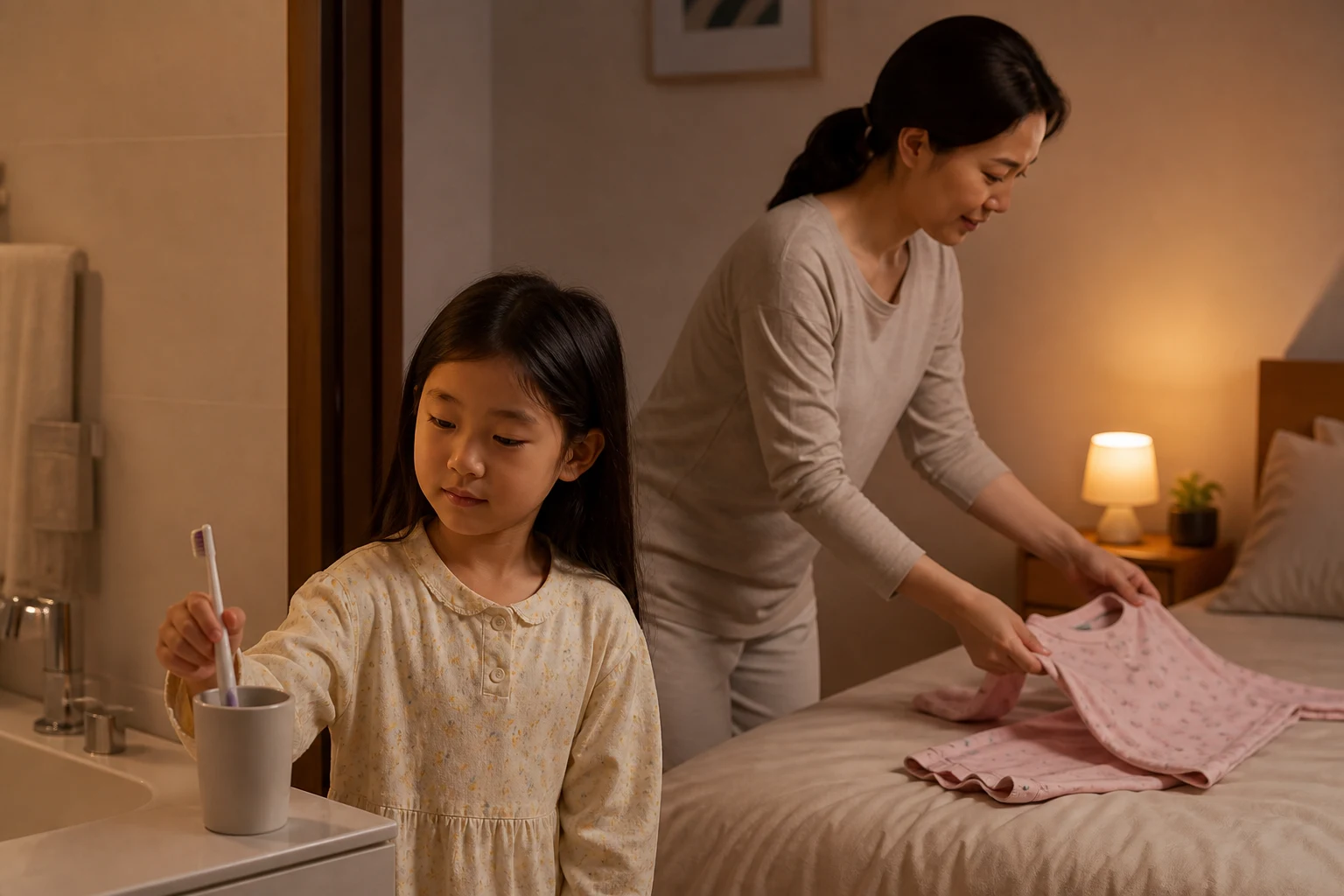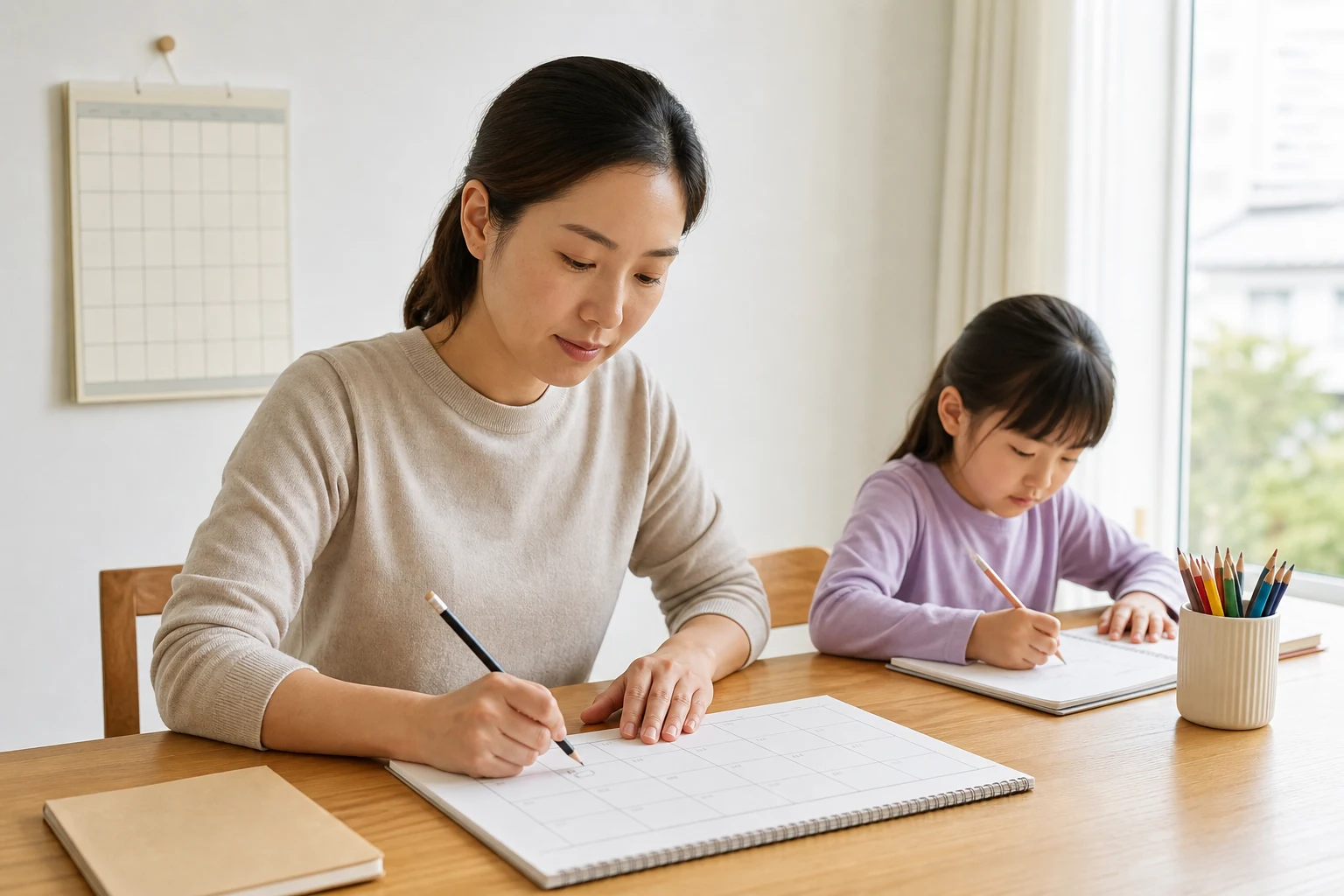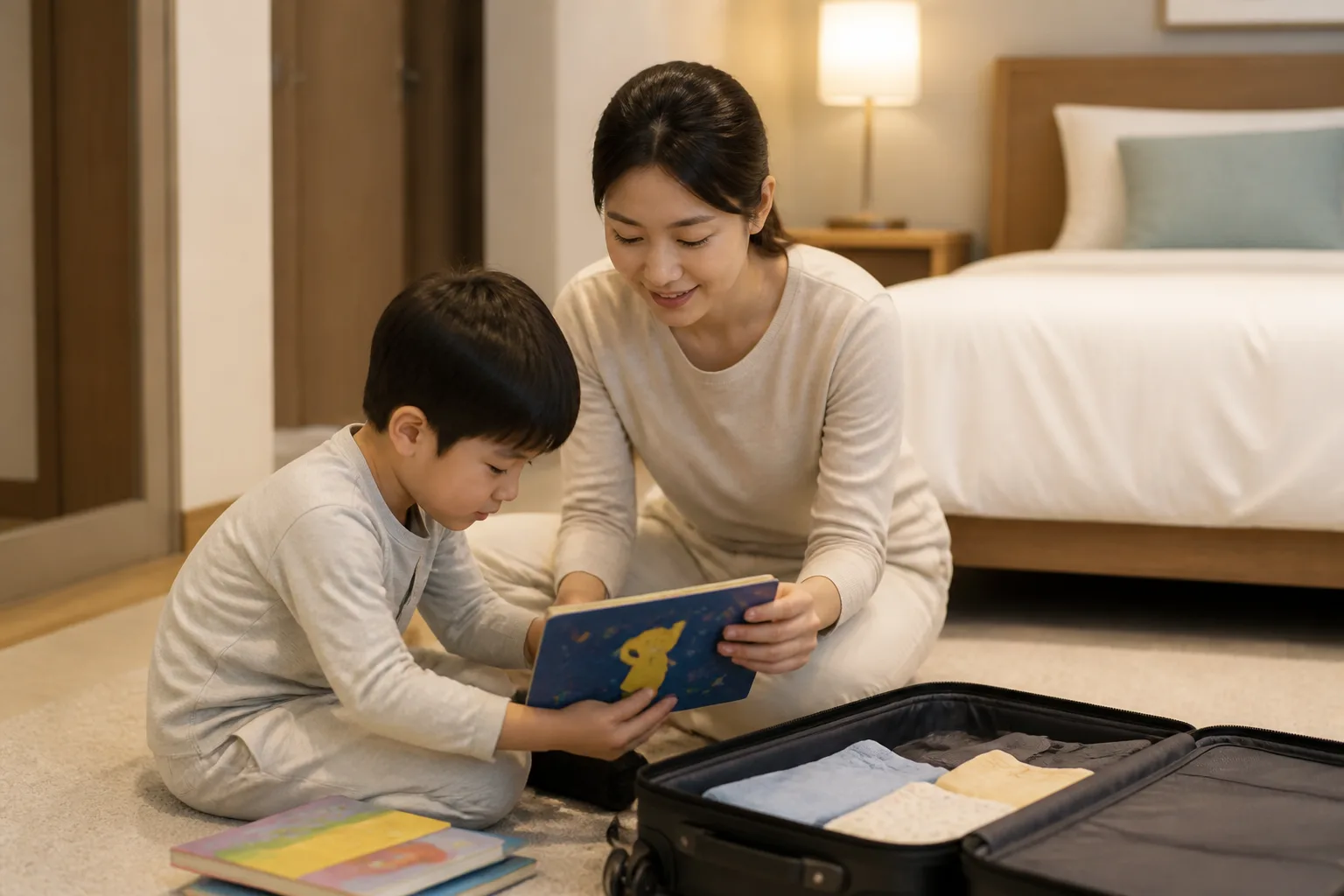
Repeating reminders about bags, coats, and shoes each morning can leave you wishing your child would get ready alone. But there is no age by which they must finish independently. Small, visible steps are more practical, with room for how they feel and the help they need that day.
Key point
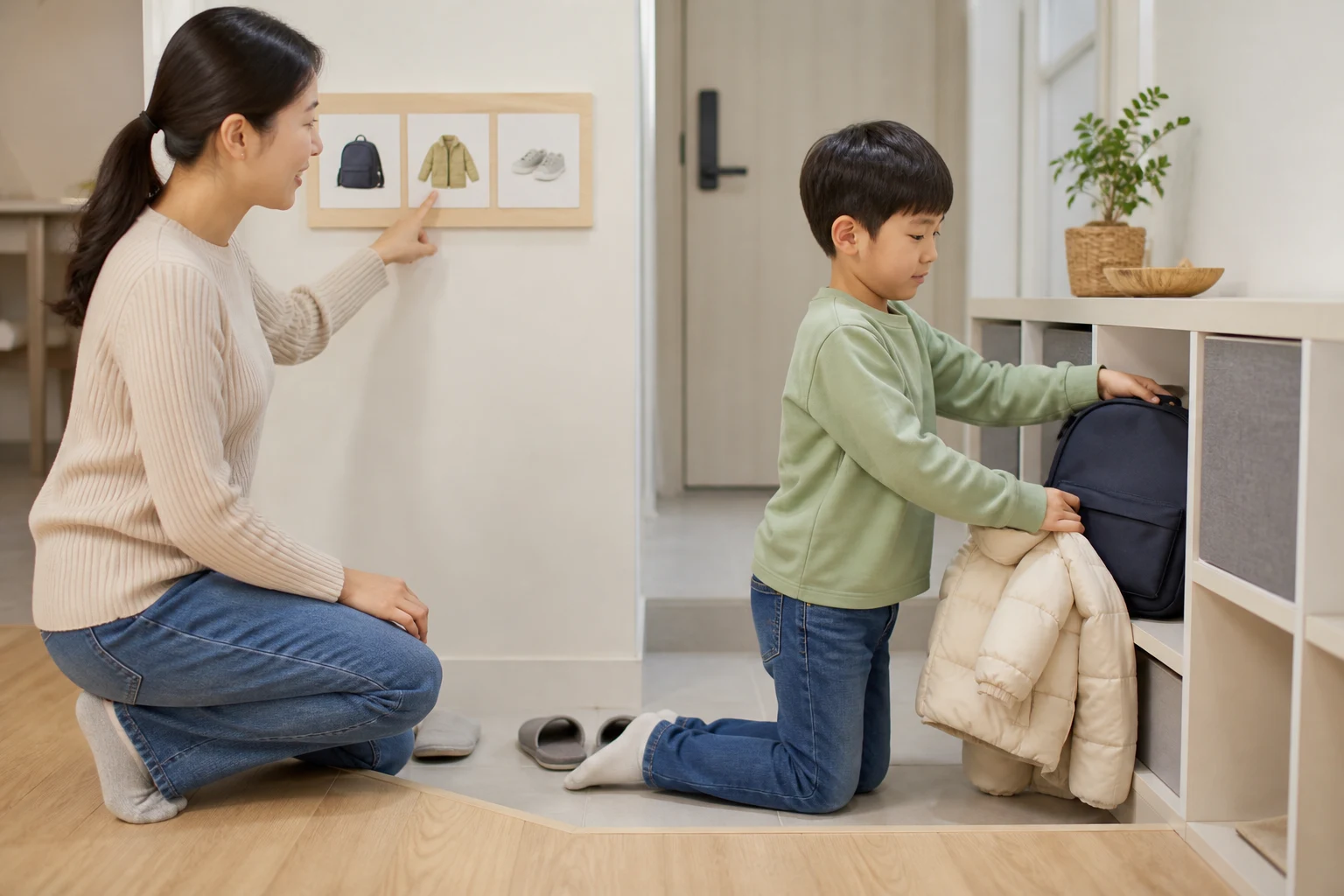
At the entryway, show one step at a time: bag, coat and shoes, then a check before leaving. An adult makes the final check of medication, road safety, and emergency contact details.
What to remember
- Put supplies together the night before and guide one step at a time in the morning.
- Acknowledge what your child did without demanding speed or complete independence.
- An adult makes the final check of medication, allergy supplies, weather, travel safety, and emergency contacts.
Break preparation into three small steps
Near the door, set up a place for the bag, a place for coats and shoes, and one picture to check before leaving. Pick up the bag first, choose coat and shoes next, then check readiness with an adult. Instead of the broad instruction "Get ready," name one action: "Let's go to your bag first."
Putting clothes and the bag together the night before reduces morning choices. If your child is slow or forgets something, do not assume laziness or defiance. Notice whether they got stuck at the bag, clothes, or shoes.
Separate your child's check from the adult's check
Your child can pick up their bag, find shoes, and point to something they chose. An adult makes the final check of medication, allergy supplies, weather-appropriate clothes, information for the school, and emergency contacts. Even after the child completes every step, an adult checks medication and safety supplies again.
The caregiver also remains responsible for getting into a car or crossing a road safely. Locking the door, moving through parking lots and roads, and checking car seats or restraints are not independence exercises. Keep participation to small actions under adult supervision.
Point to the next action, not the clock
Instead of "Why aren't you done yet?" try "Your bag is ready. Now let's find your shoes." Name what is done and one next step. If your child wants help, you could start a zipper and let them pull it, or choose suitable shoes together from two pairs. Their level of participation can vary from day to day.
Keep pictures or lists simple enough for your child to recognize immediately. If they need to read or remember too many boxes, remove a step. Repeated difficulties give you information for adjusting the setup and instructions, not testing willpower.
The last 30 seconds are the adult's safety check
Before leaving, check safe clothing, necessary medication and contacts, and readiness for the weather and transport. This is a moment for the caregiver to review easily missed safety details, not a test the child must pass. Do not hand over responsibility by saying, "You packed everything, so it's fine."
If your child reports feeling ill, seems unusually low in energy, or has concerning changes in breathing, allergies, or medication needs, do not insist on finishing. Follow school and medical guidance and seek needed help. Getting out the door must not delay health or safety needs.
Adapt the steps to your child and family
Children with movement, language, sensory, or attention difficulties or disabilities may need a different order and different help. They can handle only one part, such as the bag today and the bag and shoes another day. Needing more adult help is not a setback or failure.
If getting ready remains very difficult after several days of notes and creates a major strain at home or school, share specific situations with the school and your child's healthcare professional. Explaining where help was needed with the bag, clothes, or shoes is more useful than saying, "They can't do it independently."
Worksheet
Three steps by the door
Write down the next morning action where your child can see it.
- Bag
- Find the bag in the low spot chosen the night before
- Coat and shoes
- Choose between two weather-appropriate options and ask for help
- Ready to leave
- Check the next part of the journey with an adult
- Adult's final check
- Medication, allergy supplies, contacts, weather, and travel safety
- Adjustment note
- The step that was difficult and one thing that helped
Notes
- Even when children take part in preparation, adults make the final check of medication, travel safety, and emergency contacts.
References
- CDC: Back-to-school tips for caregivers
- CDC: Steps for giving clear directions
- CDC: Creating structure through routines and rules
- CDC: Keeping children safe outside the home
This is general guidance on getting ready for school or childcare. It does not replace decisions about health, medication, travel safety, or individual developmental support.