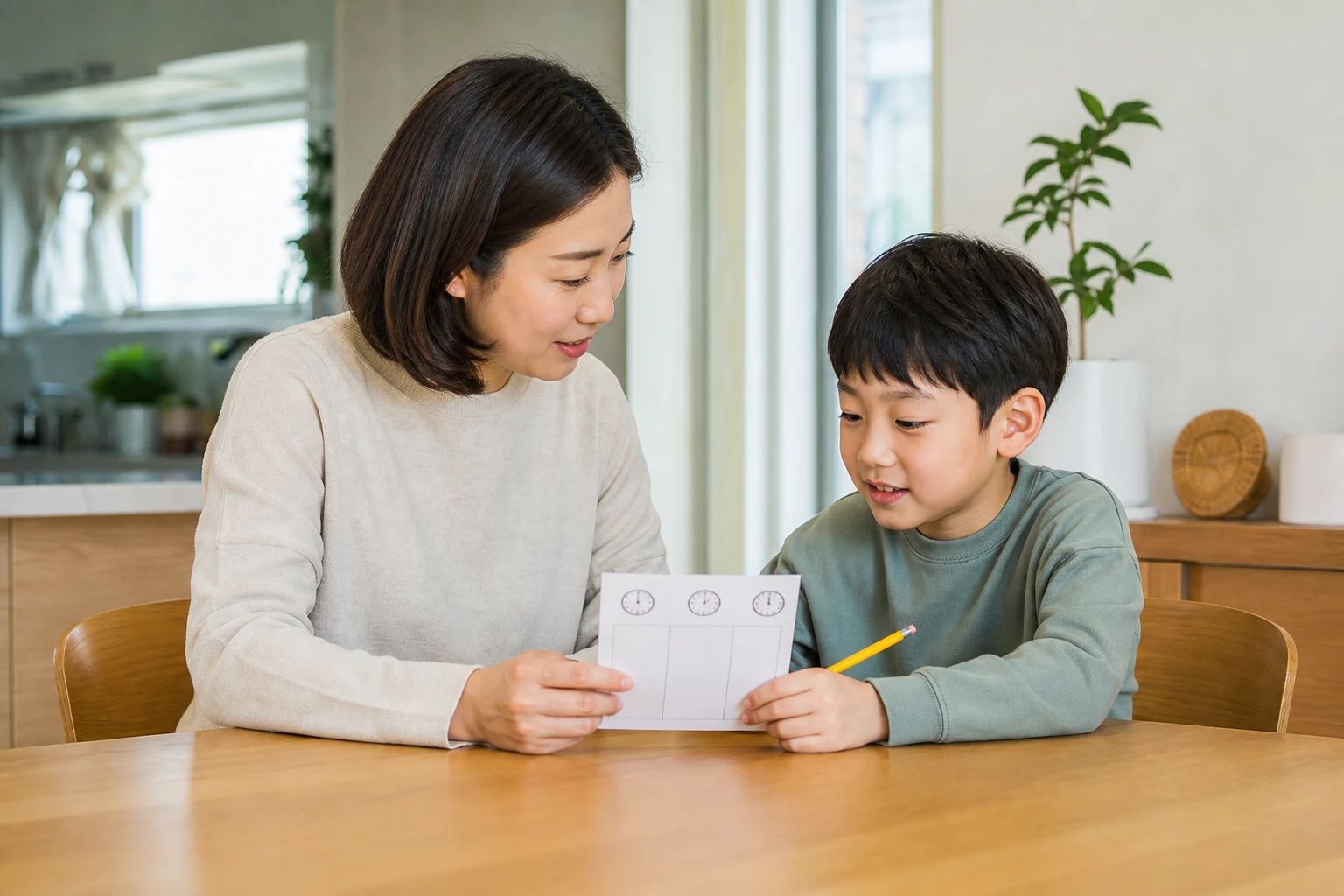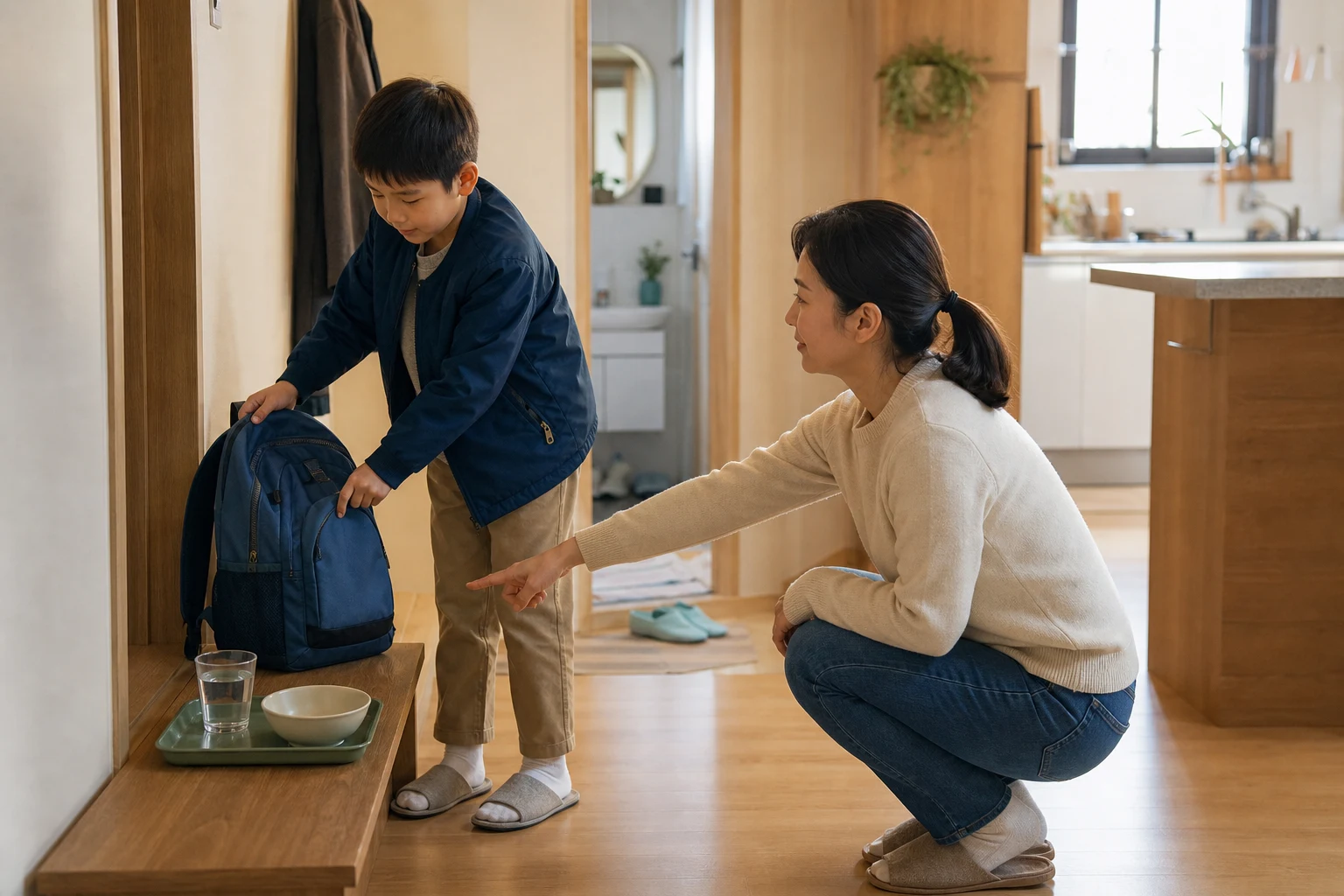
When a child keeps hearing, "Sit properly" and "Eat faster," meals can feel more like enduring criticism than eating. You can practice manners without controlling how much or how quickly your child eats.
Key point
Practice only one table action per meal, such as setting down a water cup or returning utensils to their place. Consider how much your child eats separately, based on signs of fullness and health needs.
What to remember
- Give your child one table role at a time.
- Do not make food quantity a trade for manners.
- Do not try to train away pain, trouble swallowing, or growth concerns. Seek advice.
Define manners as small, visible actions
Choose one goal today, such as, "Carry the water cup with two hands." If your child does it, say, "You set the cup down slowly." If they do not, do not stop the meal.
Do not call sitting at the table for a long time or eating every food good manners. Children may need different amounts of movement and food based on age and how they feel.
Repeated nagging at meals usually has a reason
Think about meals when the same correction keeps coming up. Often several conditions overlap: the meal has many goals for sitting, utensils, speed, and quantity; the child is not hungry after a snack; or the child is already tired after school or child care. Adults may also have different standards, correcting today what they allowed yesterday.
Each condition calls for a different change. If there are too many goals, keep only one for today. If your child is full, try moving snack time. If your child is tired, practice manners at another meal. If you do not know what is getting in the way, ask after the meal, "What did you least want to do while eating?"
The amount eaten is neither punishment nor reward
There is no reason to pressure a child to eat if there are no health or developmental concerns. If your child eats less at one meal, offer food again at the next meal without increasing conflict.
Connecting food to a reward, as in, "Finish everything and you can have dessert," can put the reward ahead of fullness. Parents decide what to serve, while children decide how much to eat.
Roles can happen before and after eating
Before eating, a child can set out napkins. Afterward, they can put their dish beside the sink. If your child refuses, say briefly, "I will do it today. At the next meal, you can choose the water cup or napkin."
When adults put away their phones and do not interrupt, manners become visible rules rather than commands.
Keep eating concerns separate from manners
Get pediatric care if your child seems to have trouble swallowing, frequently chokes or coughs while eating, has pain, vomiting, or weight changes, or suddenly eats far fewer kinds of food. Do not respond by forcing one bite or using punishment.
Sensory needs, allergies, or neurodevelopmental traits can also make eating difficult. Do not explain needed support as laziness or poor manners.
Worksheet
One Small Job at a Meal
Choose one job before, during, or after the meal. Do not evaluate how much your child ate.
- Prepare
- Set out one napkin or water cup
- During the meal
- Wait while food is in the mouth or ask for help
- Finish
- Choose where to put the dish
- Adult's words
- You did the job you chose. Thank you.
Notes
- Check choking hazards and eating posture for your child's age.
- Follow the health care professional's plan for eating disorders or medical dietary restrictions.
References
This is general guidance on table roles. It does not replace diagnosis or treatment for eating disorders, allergies, growth concerns, or swallowing problems.