After a sleepless night, comparing yesterday with today accurately is difficult. A three-day log is not meant to help you choose a sleep-training method. It helps you explain to a healthcare professional whether your baby wakes at the same times, needs the same conditions to fall asleep and return to sleep, or shows signs of a health concern.
Key point
Alongside sleep times, record feedings, falling-asleep conditions, responses after waking, and health signs. A safe sleep environment always comes before any experiment with tracking.
What to remember
- Times: Record when your baby fell asleep, woke up, and went back to sleep.
- Conditions: Note the most recent feeding and sleep conditions such as holding, nursing, or sound.
- Responses: Write down your baby's cues and your actions in order.
On the first day, record what happens without changing it
If you change bedtime, feeding, and soothing methods all at once on the first day, it is hard to tell what made a difference. Follow your usual routine and record when your baby falls asleep, wakes, and returns to sleep.
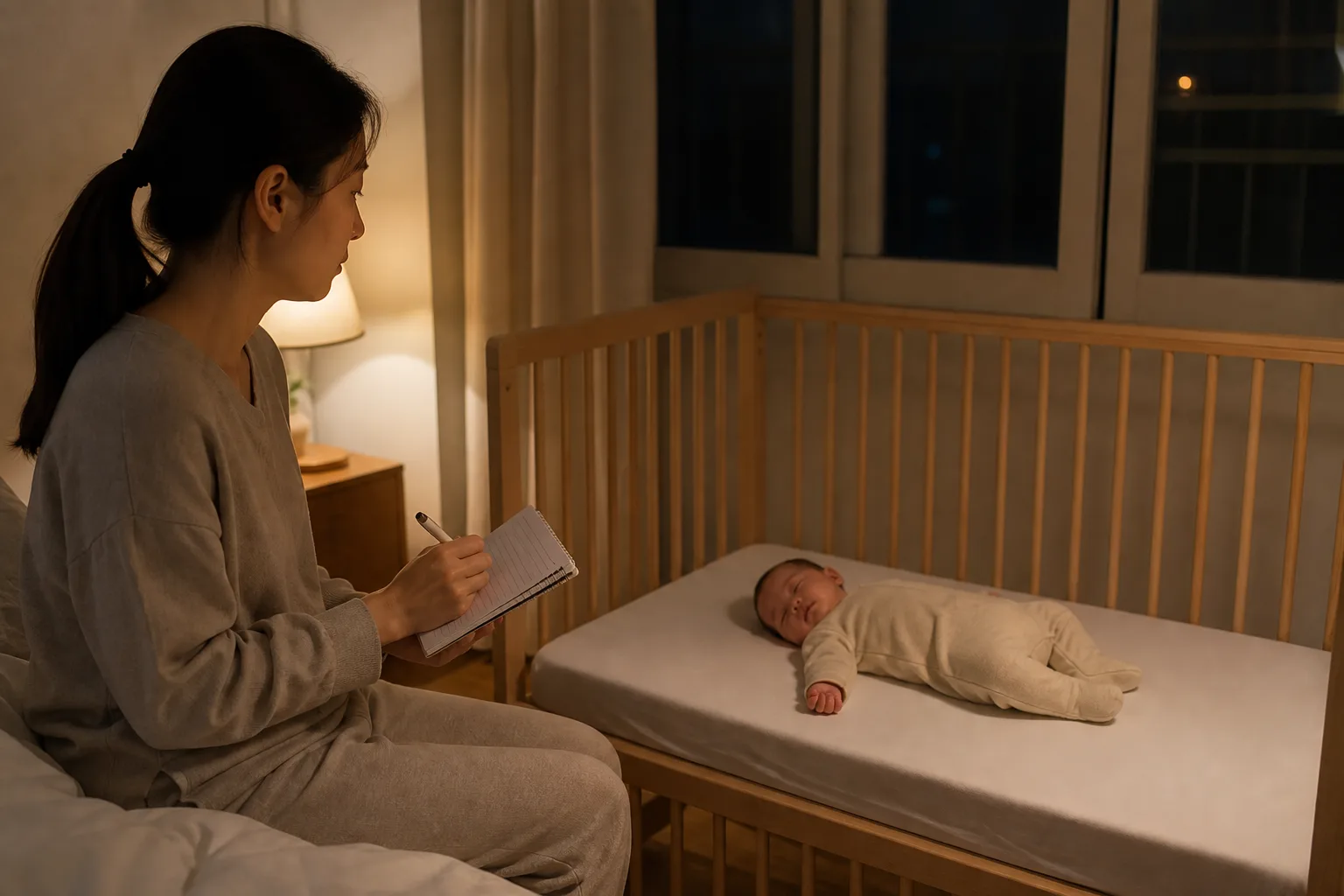
Use paper or a phone note you can reach easily. Beside each time, note feeding, light and sound in the room, the help needed to fall asleep, and your response after waking.
Include what happened before and after each wake-up
Beside "Woke three times," add the most recent feeding time and what the caregiver did. Use a separate field for unusual signs such as congestion, coughing, fever, vomiting, or pain.
After three days, look for recurring connections rather than every difference. A log alone cannot tell you whether your baby is hungry, in pain, or needs the same help they had when falling asleep.
Keep the same safe sleep standards every night
Place babies under 1 year old on their backs on a flat, firm sleep surface used only by the baby. Remove pillows, loose blankets, bumpers, stuffed animals, and other soft objects.
Use a car seat to keep your baby safe during car travel, not as a regular sleeping place. If your baby falls asleep during a trip, move them to a flat, firm sleep surface as soon as possible after arriving. Do not use sofas, armchairs, or swings as sleep spaces.
When to bring the log to a healthcare professional
If your baby seems to struggle to breathe, changes skin color, or is hard to wake, do not wait to finish the log. If you are concerned about growth, intake, pain, or development, talk with your child's healthcare professional before reducing night feedings yourself.
At the appointment, share the three-day chart along with your baby's age in months, feeding method, recent illnesses, and changes in daily life.
Worksheet
A 3-Day Sleep Observation Chart
Beside falling-asleep and waking times, record these four conditions in the same way for three days.
- Feeding
- Time and method of the most recent feeding, and anything unusual
- Falling-asleep conditions
- Holding, nursing, singing, light, and sound
- Responses after waking
- Your baby's cues and your actions, in order
- Health signs
- Anything unusual, such as congestion, coughing, fever, vomiting, or pain
Notes
- Before their first birthday, babies should be placed on their backs to sleep, including babies born preterm or with reflux. If reflux or another medical condition makes you concerned about sleep position, speak with the treating clinician rather than changing it yourself.
- During periods of frequent feeding, such as the first few weeks after birth, or a week when your child is sick, put off the three-day log and focus on immediate care and any needed medical advice.
- A sleep log does not replace medical judgment or individualized feeding advice.
References
- NICHD: Back sleeping before the first birthday, including babies born preterm or with reflux
- American Academy of Pediatrics: A safe sleep environment for babies under 1 year old
This is general observation guidance. It does not replace diagnosis or treatment for an infant's health conditions, growth, feeding, or sleep difficulties.