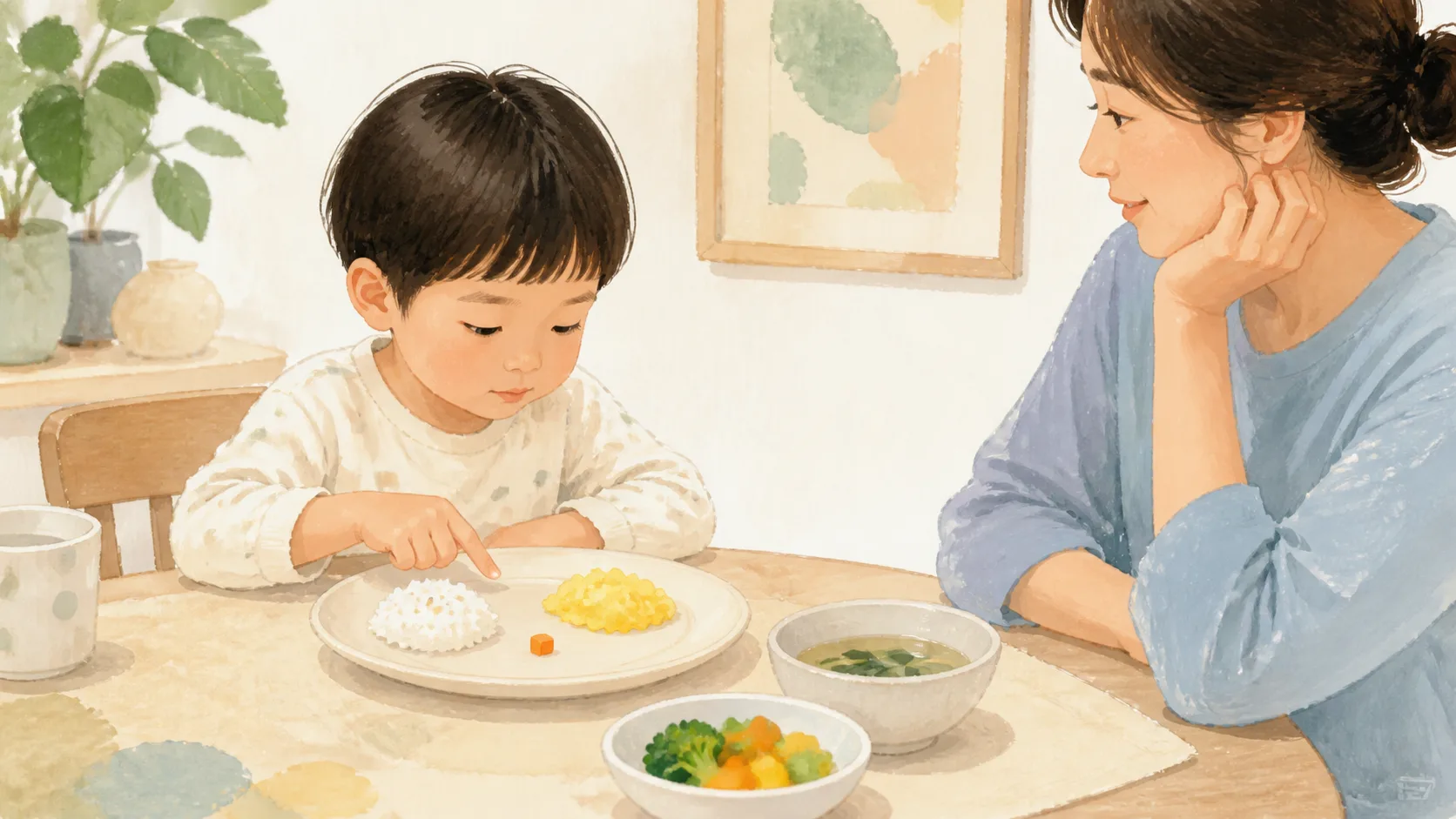
When a child pushes vegetables away or asks only for familiar foods, the table can easily turn into a negotiation. Before trying to make your child take one bite, give the child chances to stay near the food, look at it, smell it, and touch it.
Key point
The parent decides what food to offer and when, and watches the child's signals about whether and how much to eat. Offer small amounts of unfamiliar food again on other occasions without pressure to eat.
What to remember
- Serve one familiar food with a small amount of an unfamiliar food.
- Looking, smelling, and touching before eating are also steps toward getting used to food.
- Seek medical care before changing meal rules if you have concerns about weight, swallowing, pain, or nutrition.
Do not make one bite the goal
It is not uncommon for toddlers and preschoolers to go through a period when they want only familiar foods. Start by avoiding force and keeping meals from becoming a fight. Instead of serving only favorite foods, include one food your child eats and another healthy food at each meal.
Do not start with a large serving of an unfamiliar food. Put a small piece on one side of the plate. If your child only looks, smells, or touches it, end with, "That is enough for today."
Look at the conditions around pushing food away
When the same refusal keeps happening, look at that day's conditions rather than calling the child stubborn. Your child may not be hungry after a snack just before dinner. A new texture or smell may feel too unfamiliar to touch. Or repeated demands to eat every time the child sits down may have made the table itself feel tense.
Each condition suggests a different step. If your child is full, first adjust the timing and amount of the snack. If the food feels unfamiliar, allow more time to look and touch before eating. If the table feels tense, talk less about food during that meal and discuss something else. If you do not know which condition is present, record the time of refusal and what happened just before it for a few days instead of recording only how much the child ate.
Separate the roles at the table
The parent chooses the meal time and menu. The child shows whether and how much to eat. Repeating "Just one bite" can make the child focus on the negotiation instead of hunger and fullness. If the child refuses, offer another small amount at a future meal instead of immediately taking the plate away.
Instead of saying, "You did not eat the carrot," state the fact: "The carrot is on your plate." You can also offer two healthy choices, such as, "Would you like the cucumber or tomato beside it?"
Try this sequence for one meal
Serve the food the family will eat with one food your child eats comfortably. Put a very small amount of the unfamiliar food beside it and simply name the menu: "There is rice and egg, and the carrot is here." If your child looks, smells, or touches it, state what happened: "You touched it."
Even if the child does not eat it, do not remove the plate right away or offer a new food as a reward. After the meal, say, "I will put it on your plate again another time," and offer it again at the next regular meal or snack. This tool is not a set of steps your child must pass. It records and respects the child's response that day.
Handle growth and swallowing concerns separately
Do not keep practicing at meals and wait if food textures often cause gagging or coughing, your child seems to have trouble swallowing, there is pain or vomiting, or you are concerned about weight and growth. Show your child's medical professional a few days of meal records, foods eaten, and moments of refusal.
General strategies for the table may not fit a child whose food choices are limited by allergies, illness, developmental needs, or sensory needs. Discuss individual nutrition and feeding support with a medical professional.
End the meal until the next one
Do not follow your child around holding a refused food or use another family member's eating as praise or comparison. If your child signals fullness, offer water or help with the usual end of the meal, then leave the table. You do not need to question the child later about what was eaten.
A day of eating less does not mean the parent failed. Look at the pattern across several days along with your child's energy, growth, bowel movements and urination, and signs of pain. If there are no concerns, do not make a new rule after one refusal. Offer the same food again another day.
Worksheet
5 steps for getting familiar with food
Do not score how much your child ate. Record actions that brought the child closer to the food.
- Look
- Food placed on the plate or looked at
- Keep nearby
- A small amount beside a familiar food
- Smell and touch
- How the child explored it with a hand or utensil
- Taste
- When the child brought it to the mouth by choice
- Notes for care
- Concerns about swallowing, pain, or growth
Notes
- Prepare foods that may pose a choking risk to fit the child's age and chewing skills.
- Do not use food as a reward or punishment.
References
This is general guidance for the mealtime setting. It does not replace diagnosis or treatment for concerns about growth, allergies, swallowing, or feeding.