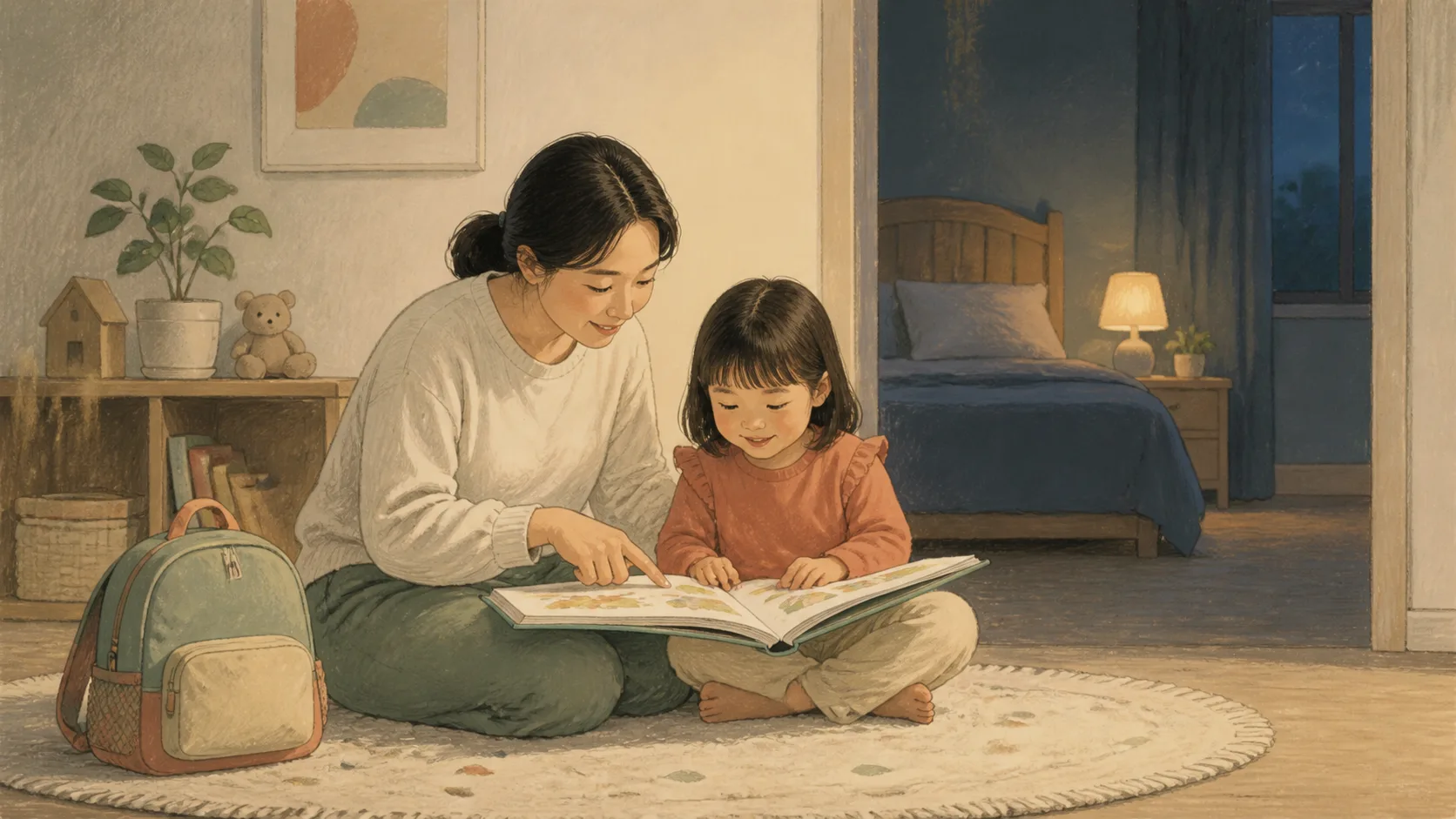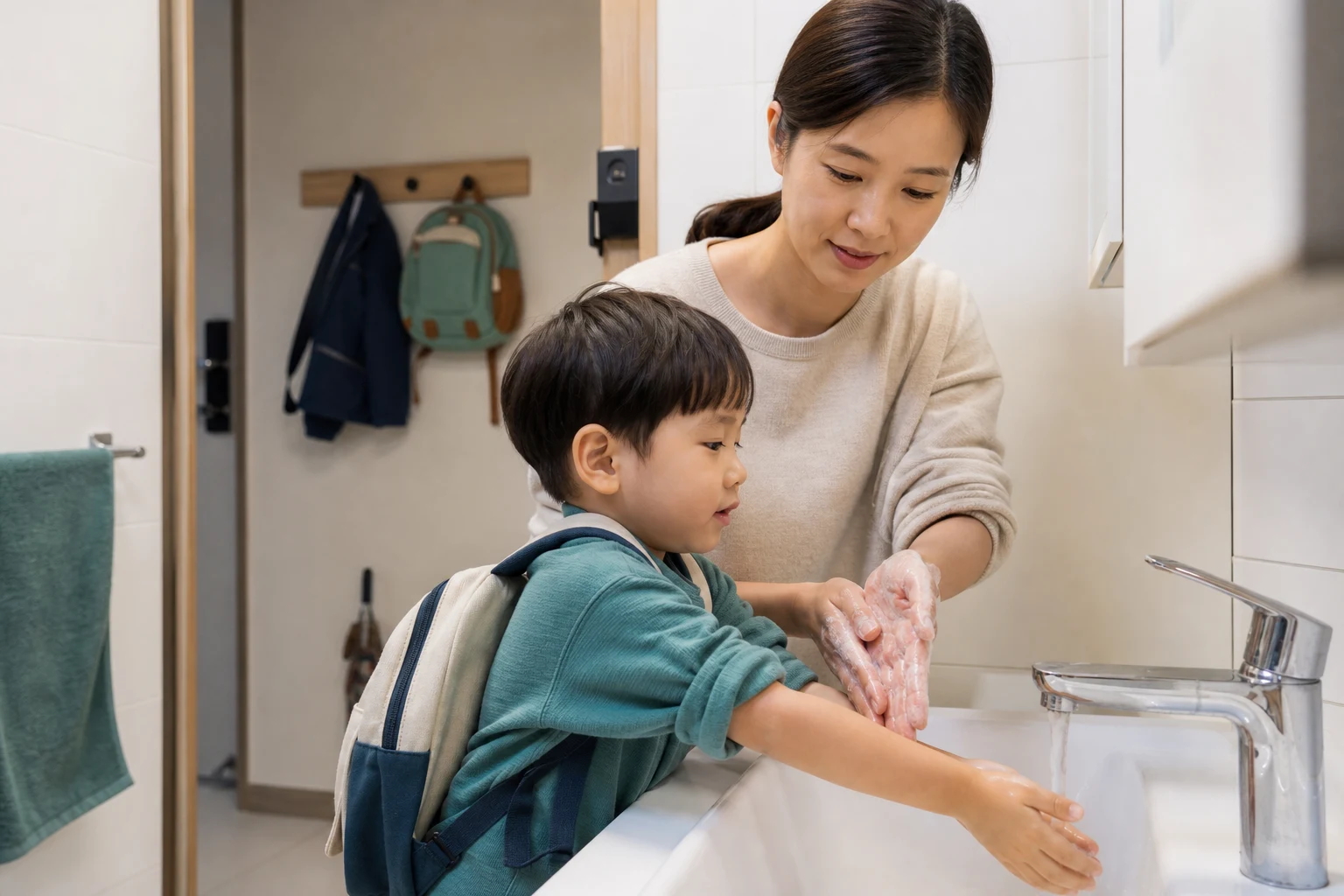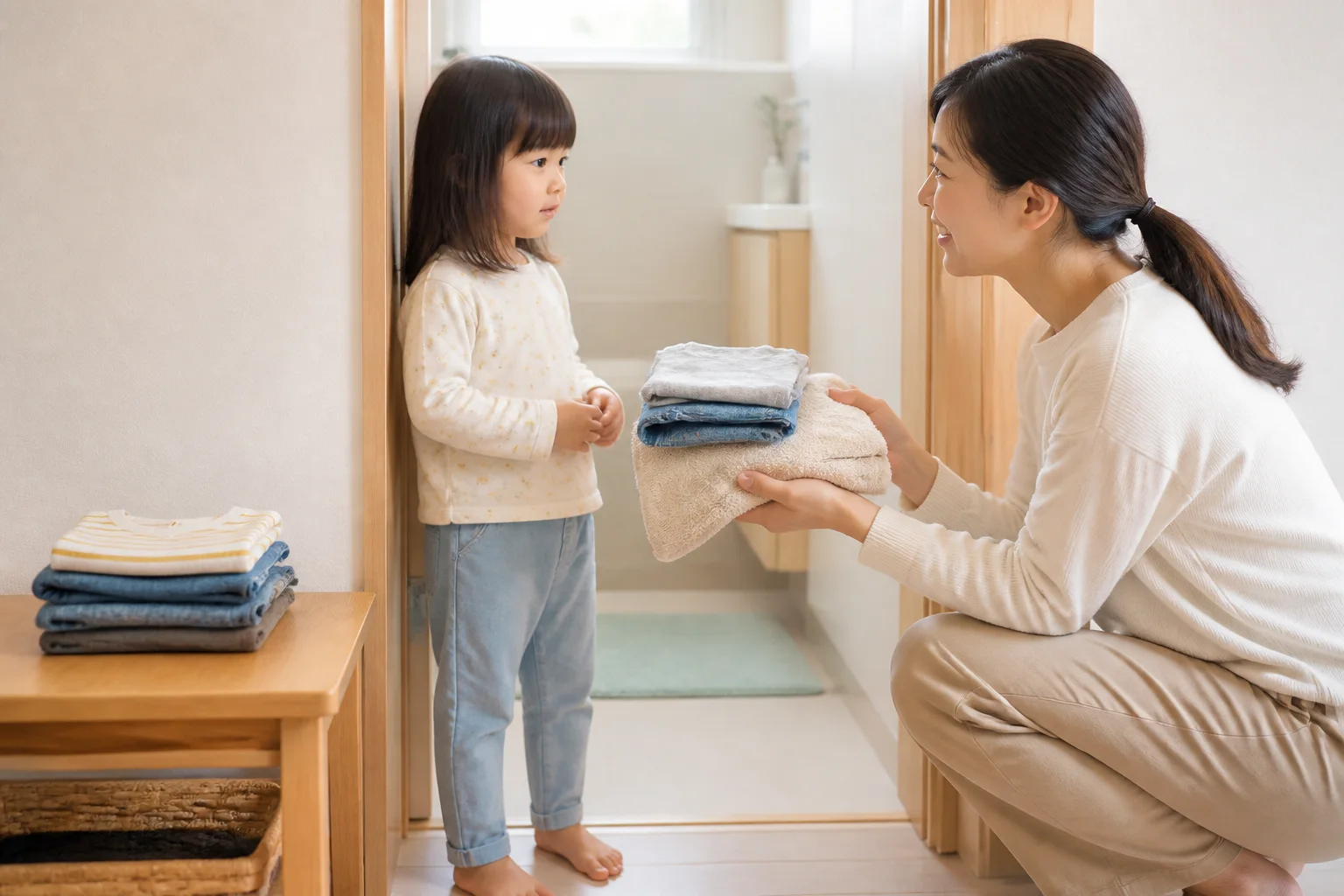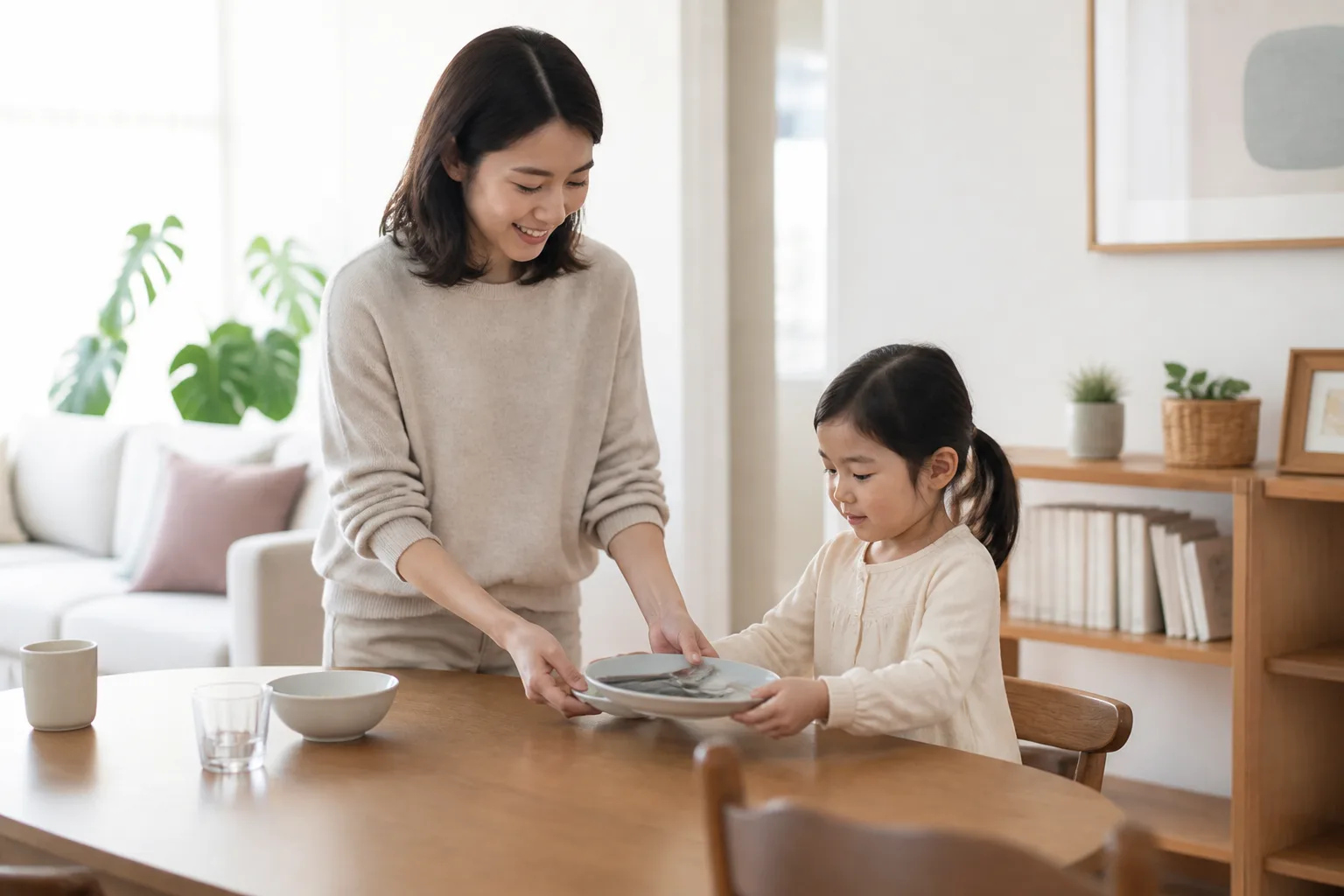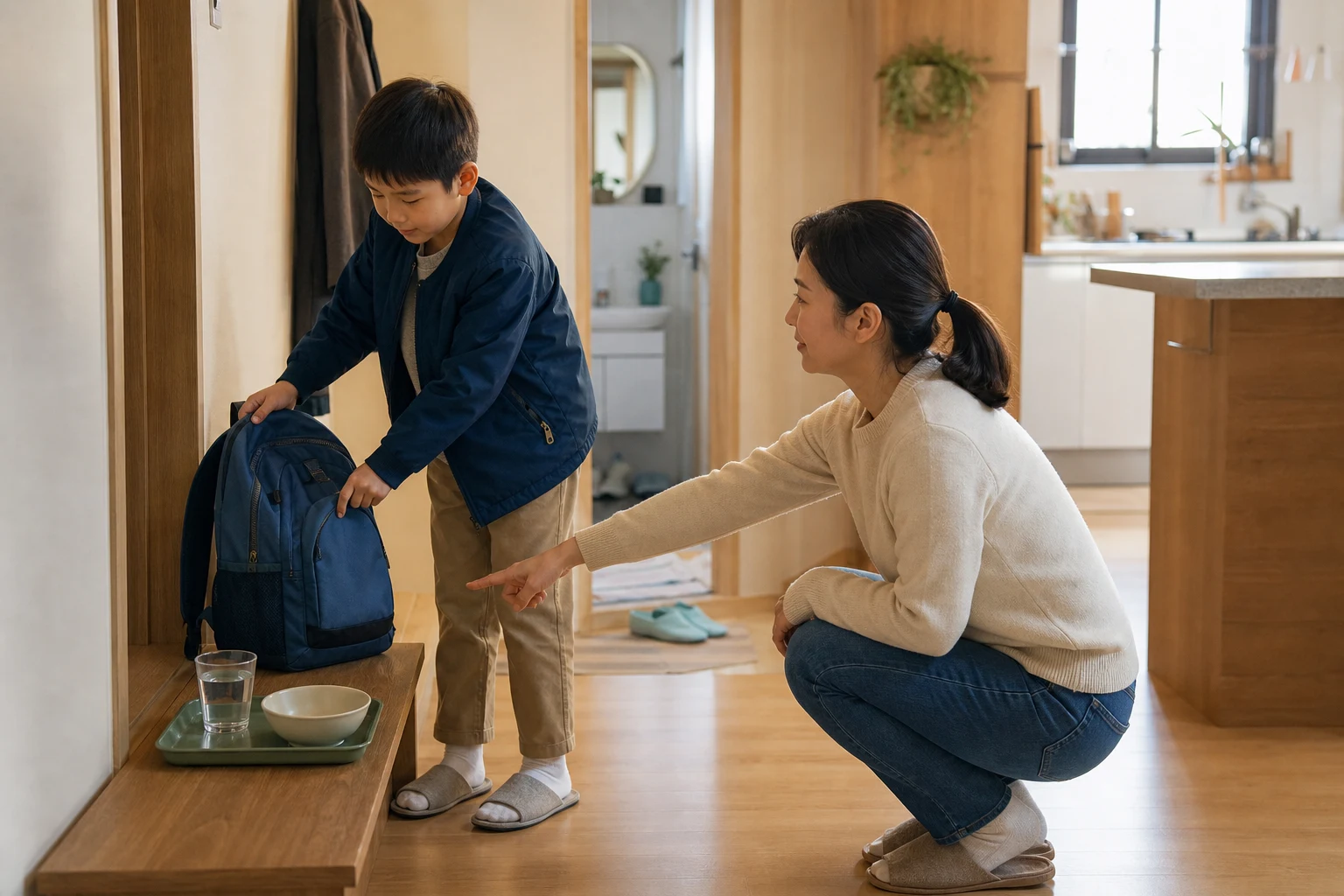
When "Wash your hands, do your homework, and eat dinner" comes all at once as a child drops their backpack, they may freeze and the parent may repeat the same words. Choose one first action that moves the child from the entryway into the evening. Set aside the goal of finishing everything for a moment and check your child's body and the day's schedule first.
Key point
After your child comes home, first check physical needs such as water, the bathroom, and rest, then name one action at a time. The order of bathing, dinner, and homework can change with the day's schedule. Still wash hands after using the bathroom and before eating.
What to remember
- First check water, the bathroom, how your child feels, and what must be done today.
- After putting down the backpack and checking how their body feels, choose one thing to do first: washing up, dinner, or homework.
- Do not treat dizziness, lasting fatigue, changes in appetite or weight, repeated headaches or stomachaches, or avoiding school as routine problems alone.
Choose the first action at the door instead of saying, "Do everything"
When your child comes in, ask about one thing they can do right away: "Do you need the bathroom or water first?" On a day when even putting down the backpack feels hard, start smaller: "Put your backpack on this chair." Do not combine handwashing, homework, and dinner in one sentence.
A simple routine that helps a child know what comes next and specific directions given one at a time can help. A routine is an agreement that makes the next action easier to understand during a busy time, not a tool for grading a child minute by minute.
The snag usually comes from one of three places
When the same scene repeats, look at the conditions instead of your child's attitude. Some days hunger makes it hard to hear anything. Some days a child has used up their energy at school and says little at home. Other days the number of tasks makes it hard to know where to start.
Each needs a different response. Move dinner earlier for hunger. Offer a place to sit before talking when your child is worn out. Show only two tasks when the list feels overwhelming. If you are unsure, ask, "Are you hungry, or do you want to sit for a little while?" and let your child choose.
Four steps are enough after coming home
One: Put the backpack in its usual place. Two: Choose what is needed now, the bathroom, water, or a brief sit-down. Three: Choose one thing to do first among washing up, dinner, and homework. Four: Briefly name what follows, such as, "After dinner, we will open your notebook."
You do not have to follow all four steps in the same order every day. On a late day, your child may put down the backpack, use the bathroom, wash their hands, and eat right away. Shorten or change the order to match the commute and how your child feels that day.
Do not make homework an automatic duty the moment your child arrives
First check what must be turned in today, then decide when homework will begin. Instead of, "Do 10 pages now," name the starting action: "After dinner, open the notebook and read the first problem." A brief rest is neither a reward that excuses homework nor a punishment that delays it.
Homework is easier to start when the time, place, and needed materials are planned and the assignment is divided into small steps. A parent does not need to supply the answers or require every assignment to be finished immediately after a tiring trip home.
Agree out loud on the order that fits your family
When more than one caregiver shares the routine, leave one line with today's order instead of one large rule such as, "Always wash up as soon as you get home." Examples include "backpack, bathroom, dinner, homework" and "water, sit briefly, first homework step, wash up." Tell your child simply, "Today it is water, dinner, then your notebook."
Plan a phrase for times when you cannot listen fully: "I heard what you said. Tell me again after you drink some water," or, "We moved bath time until after dinner." State both the changed order and what comes next.
Physical discomfort comes before the sequence
Do not require the planned order when your child urgently needs the bathroom or water, or shows possible signs of low blood sugar such as shaking, sweating, or confusion. For a child with a diabetes management plan, follow the plan for blood sugar checks, snacks, and medication set by the school and health care team. Do not offer a household snack on your own to a child with allergies. First check the existing safety plan and food information.
A child with diabetes should follow the individual plan made by the school, family, and health care team. The sequence in this article does not replace medical directions or an allergy response plan.
If the difficulty repeats, write one line and tell the school or doctor
For about three days, briefly record the arrival time, first action, when dinner and homework began, and what your child said. This can help separate where they often stop: washing up, hunger, or homework. The record does not diagnose a cause. It helps you choose what to change first.
If severe fatigue continues, or dizziness, changes in weight or appetite, daily headaches or stomachaches, or school avoidance persist, do not wait while changing only the after school routine. Record when and where the signs appear, tell the school and pediatrician, and ask what support your child needs.
Worksheet
Four steps after coming home
Choose what to do after coming home within these four spaces.
- Backpack
- Where will it go?
- Body check
- What comes first: the bathroom, water, or rest?
- One next step
- Which comes first today: washing up, homework, or dinner?
- Connecting phrase
- A short phrase that names the next step
Notes
- Delay the organizing sequence when your child feels unwell or needs to follow an individual health plan.
- The sequence will not fit every day. Reduce it to two steps when a child goes directly to an after school activity or several siblings arrive together. If sensory input in the entryway makes spoken directions hard to process, post a single picture instead.
- Bathroom needs, dehydration or possible low blood sugar, a diabetes management plan, and allergy safety come before the sequence.
References
- CDC: About handwashing
- CDC: Creating structure with routines and rules
- CDC: Practicing parenting skills for structure and rules
- American Academy of Pediatrics: Developing good homework habits
- CDC: Managing diabetes at school
This is general guidance for the transition home. It does not replace emergency response or an individual medical or school management plan for low blood sugar, dehydration, diabetes, or allergies.