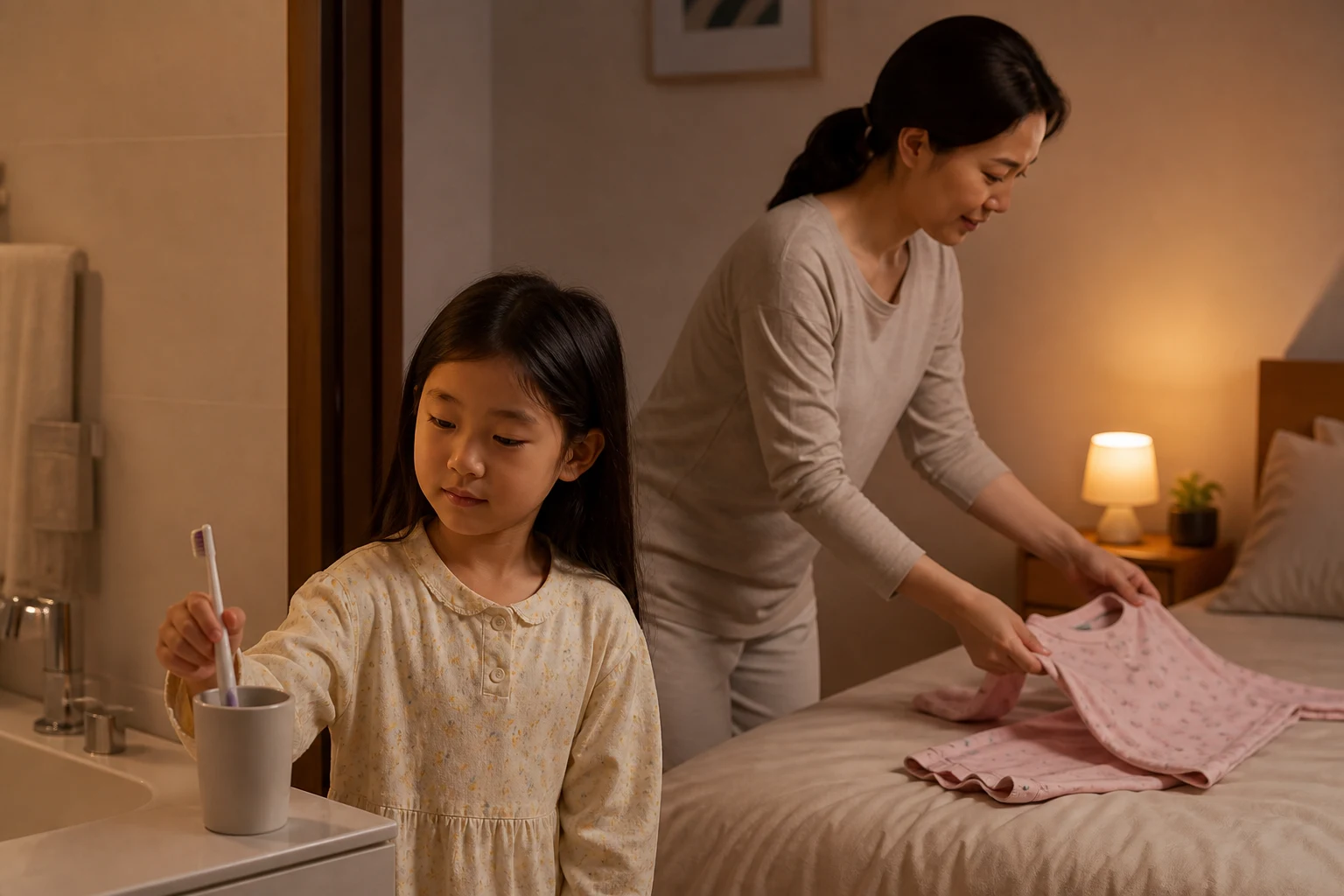
When you get home late, you may start speaking faster because washing, books, cleanup, and conversation all seem necessary. But choosing tonight's essentials is better than making a sleepy child finish a long evening. Check medication, bathroom needs, toothbrushing, and a safe sleep space first, and leave the rest for tomorrow.
Key point
On late nights, keep safety, medical needs, toothbrushing, bathroom needs, and a brief goodnight. Safe sleep for babies and young children and individual medical plans come before any schedule.
What to remember
- Plan separate routines for regular evenings and late nights.
- Do not skip medication, toothbrushing, bathroom needs, or a safe sleep environment because everyone is tired.
- If snoring, breathing problems, ongoing sleeplessness, or daytime sleepiness interfere with play, child care, or school, do not just keep adjusting the routine and waiting.
Choose what to keep first
After a late arrival, first check required medication or medical equipment, diaper or bathroom needs, toothbrushing, age-appropriate supervision, and a safe place to sleep. You can shorten baths, long books, toy cleanup, and preparations for tomorrow according to your family's situation.
A consistent bedtime sequence and enough sleep help support a child's day. On late nights, you can follow a shorter version of the usual sequence. This does not guarantee that your child will sleep better or fall asleep faster.
Late bedtimes can drag on for different reasons
There are several common reasons bedtime takes even longer after getting home late. A child may be exhausted but wide awake and running around. They may cling at every step because they want more time with a caregiver they have not seen all day, or feel uneasy because the usual sequence is missing. Similar behavior can call for different responses.
If your child is wound up, dim the lights and lower the noise, then shift their attention to one quiet activity instead of forcing them to stop moving. If they want time together, keep connection brief but clear: "Let's have two long goodnights." If an unfamiliar sequence makes them anxious, explain first: "We'll do just three things: brush teeth, have a hug, and turn out the light."
Decide in advance which steps to keep on late nights
On evenings with more time, you might wash, put on pajamas, brush teeth, read a short book, and turn out the light. On late nights, you might keep only necessary washing, toothbrushing, bathroom needs, a brief goodnight, and bed. This is a practical family arrangement, not an official recommended duration or treatment standard.
The sequence can change with age, the reason for the late arrival, hunger, and sensory or health needs. Name just the next action: "After brushing, I'll give you a hug and turn out the light."
Do not turn tiredness into punishment
You can reduce screens and exciting play, but do not automatically withhold the next day's meals, naps, or play because it is late. If your child falls asleep on a sofa or in a car seat, move them to an age-appropriate safe sleep space as soon as possible. Place an infant on their back in a separate, firm, flat sleep space. Do not take your child out of the car seat while the vehicle is moving; the driver must park somewhere safe, away from traffic, before attending to them. Do not use the car seat for overnight sleep after arriving.
Follow your family's medical guidance for babies' and young children's sleep environments, feeding, and prescriptions. Do not independently introduce sleep medication or melatonin, or skip or change medication because it is late.
Use the same short message with the family
If several caregivers are involved, share only tonight's essential medication, toothbrushing, and bathroom needs, and who will handle bedtime. You can tell your child, "We'll read more tomorrow. Tonight we'll say goodnight and sleep." Keeping a goodnight even in a short routine makes the sequence easier to predict.
If repeated late arrivals mean too little sleep, or your child has trouble falling asleep, loud snoring, breathing problems, or persistent daytime sleepiness that disrupts play, child care, or school, discuss their schedule and sleep with a pediatrician.
Worksheet
A Late-Night Bedtime Sequence
Separate tonight's essentials from things that can wait until tomorrow.
- Regular evenings
- The sequence when there is enough time
- Late nights
- What must stay tonight
- Medical needs and safety
- Medication, bathroom needs, and the sleep environment
- A connection phrase
- The next action you will explain to your child
Notes
- You can shorten the bedtime sequence to fit your family. It is not an official recommended duration or treatment standard.
- Keep a safe sleep environment and follow prescriptions and medical instructions even on late nights.
- A shorter route does not suit every child. If changing the sequence itself is difficult, keep the usual steps and shorten each one rather than removing steps. If you get home late almost every day, it may be time to review the evening schedule itself.
References
- American Academy of Pediatrics: Safe sleep spaces and moving a sleeping baby out of a car seat
- American Academy of Pediatrics: Car seats, travel breaks, and supervision
- American Academy of Pediatrics: Tips for toddler bedtime trouble
- American Academy of Pediatrics: Sleep and health
This is general bedtime guidance for late arrivals. It does not replace guidance on sleep disorders, safe sleep for babies and young children, medication, or individual medical plans.