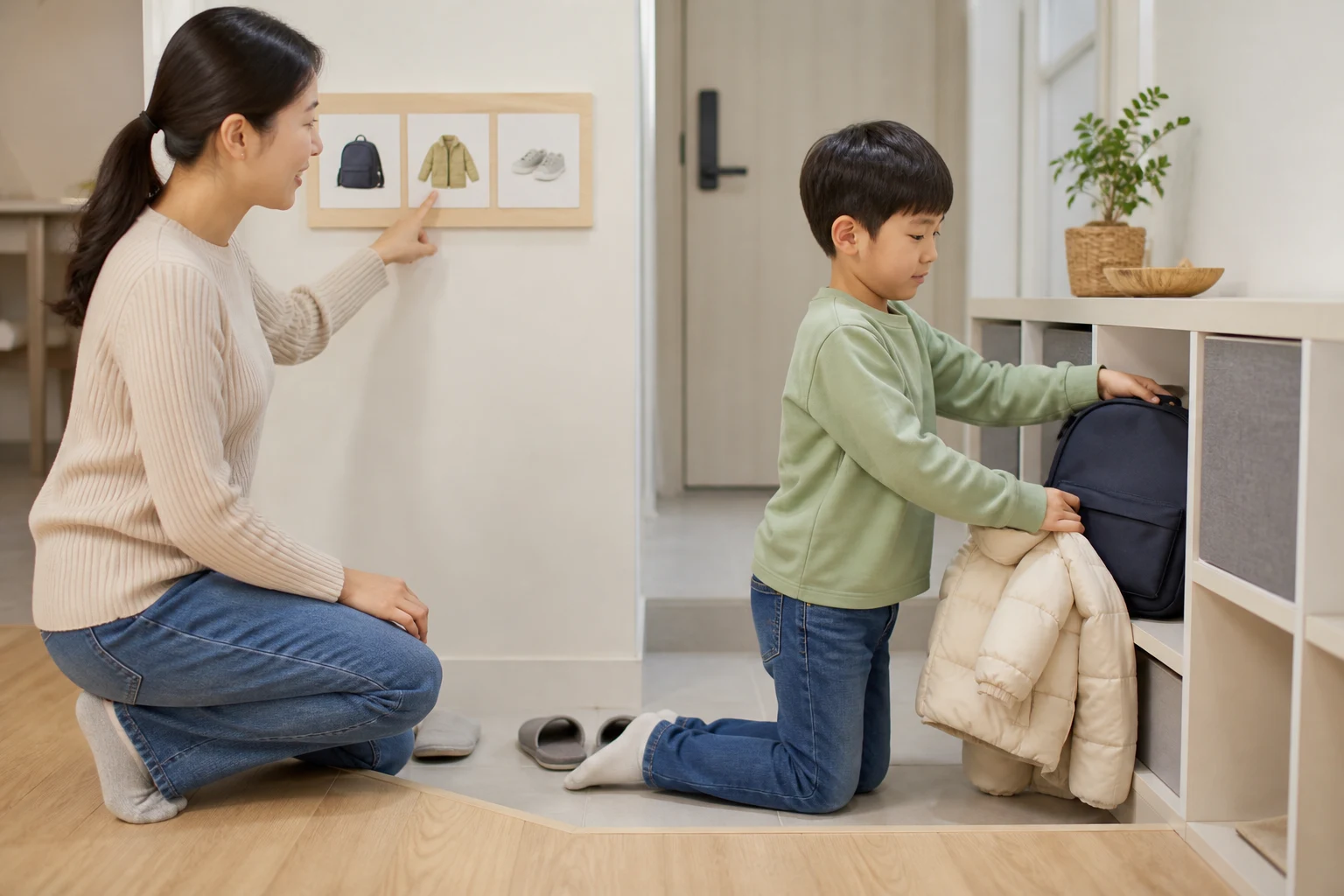
If clothes and bags lead to arguments each morning, choose them together tonight. In the morning, show the tasks in order, such as washing, dressing, and breakfast. Before blaming your child, check whether the next step is clear and whether there are too many choices to make.
Key point
Prepare clothes and bags the night before. In the morning, show the tasks in order so your child knows what comes next.
What to remember
- Choose clothes and get bags ready the night before.
- Use pictures or a list to show the order of morning tasks.
- Instead of urging your child to hurry, tell them how much time is left to help them get moving on their own.
Make decisions the night before
Having many decisions to make in a short morning can add to the rush. If choosing clothes or packing often holds things up, try deciding together the night before so there is less to work out in the morning.
Lay out clothes and pack bags ahead of time to leave fewer choices for the morning. When possible, let your child choose between two options. If choosing feels like too much, offer one option you have prepared.
Make the steps easy to see
Children often stop when they do not know what comes next. Post pictures or a short list of morning tasks, such as washing their face, getting dressed, eating breakfast, brushing teeth, and putting on shoes, so they can check the next step themselves.
If a picture chart is hard to use, try a short list, a choice between two options, or a timer that shows how much time is left. Keep only the tools that ease pressure on your child, and skip any that do not fit.
Name what your child has done and what comes next
Toddlers and preschoolers find it easier to get moving when they know what comes next. Keep the steps consistent and follow through on what you say. Adjust the number of steps and the words you use to your child's abilities and understanding.
When your child puts on socks, name what they have done and what comes next: "You put your socks on. Now let's put your backpack on." There is no need for a long round of praise or a comparison with yesterday. Praise does not guarantee cooperation the next day, but consistently noticing the behavior you want to see more often can gradually make those familiar morning moments easier.
Seek support when a routine is not enough
If easing the pressure and changing the order does not help, and difficulties continue beyond mornings in activities such as dressing, eating, and getting from place to place, talk with your child's healthcare provider. Do the same if you have concerns about development. Rather than waiting, write down when and where your child gets stuck and bring those notes.
Avoid blaming your child or dismissing the difficulty as bad behavior. Brief notes about when it started and which situations are hard give you something specific to discuss.
The same delay can have different causes
If your child gets stuck at the same point every day even after you change the routine, look at the circumstances rather than assuming stubbornness. A child who has not had enough sleep, one bothered by clothing textures or morning noise, and one who hears too many tasks at once and does not know where to start may look similar, but each needs a different response. If sleepiness keeps coming up, look at bedtime first. If sensory discomfort is the issue, choose clothes together the night before and keep morning noise down. If your child feels overwhelmed, name just one next step: "Just one sock for now." If you are unsure, offer a choice: "Is this hard because you're sleepy, or because you don't know what to do first?"
For older children, use these examples as a starting point rather than following them exactly. You might use a short list instead of pictures or let your child choose the order. Adjust pictures, words, transitions, and choices to your child's age, development, sleep, sensory needs, and communication. Skip tools that do not fit.
Worksheet
A one-page record of where mornings get stuck
Instead of trying to fix all of tomorrow morning, write down the one moment where things most often stall.
- Where things get stuck
- The one task that took the longest today: getting dressed, eating, brushing teeth, or putting on shoes
- What to move to the night before
- One thing to prepare or decide this evening
- The morning sequence
- Two or three steps to show your child
- What you will say
- A sentence that names one action to do now and how much time is left, instead of urging your child to hurry
Notes
- Timers, picture charts, and praise do not work the same way for every child. Adjust them to your child's age, development, sensory needs, and family circumstances. If a picture chart or timer makes your child feel more rushed, switch to a few words or a short list. If daycare or preschool starts very early, or siblings get ready at the same time, reduce the routine to two steps. For a child who finds it hard to listen right after waking up, you can show just one picture instead of speaking.
- If difficulties with sleep, eating, communication, or behavior continue, or you are concerned about development, talk with a healthcare professional rather than blaming your child or waiting.
References
- CDC: Building structure and routines at home through consistency, predictability, and follow-through
- CDC Learn the Signs. Act Early.: Talking with a healthcare professional about developmental concerns
The cited resources on routines are intended for toddlers and preschoolers. This general guidance does not replace an individual developmental evaluation, diagnosis, treatment, or professional advice tailored to your family.