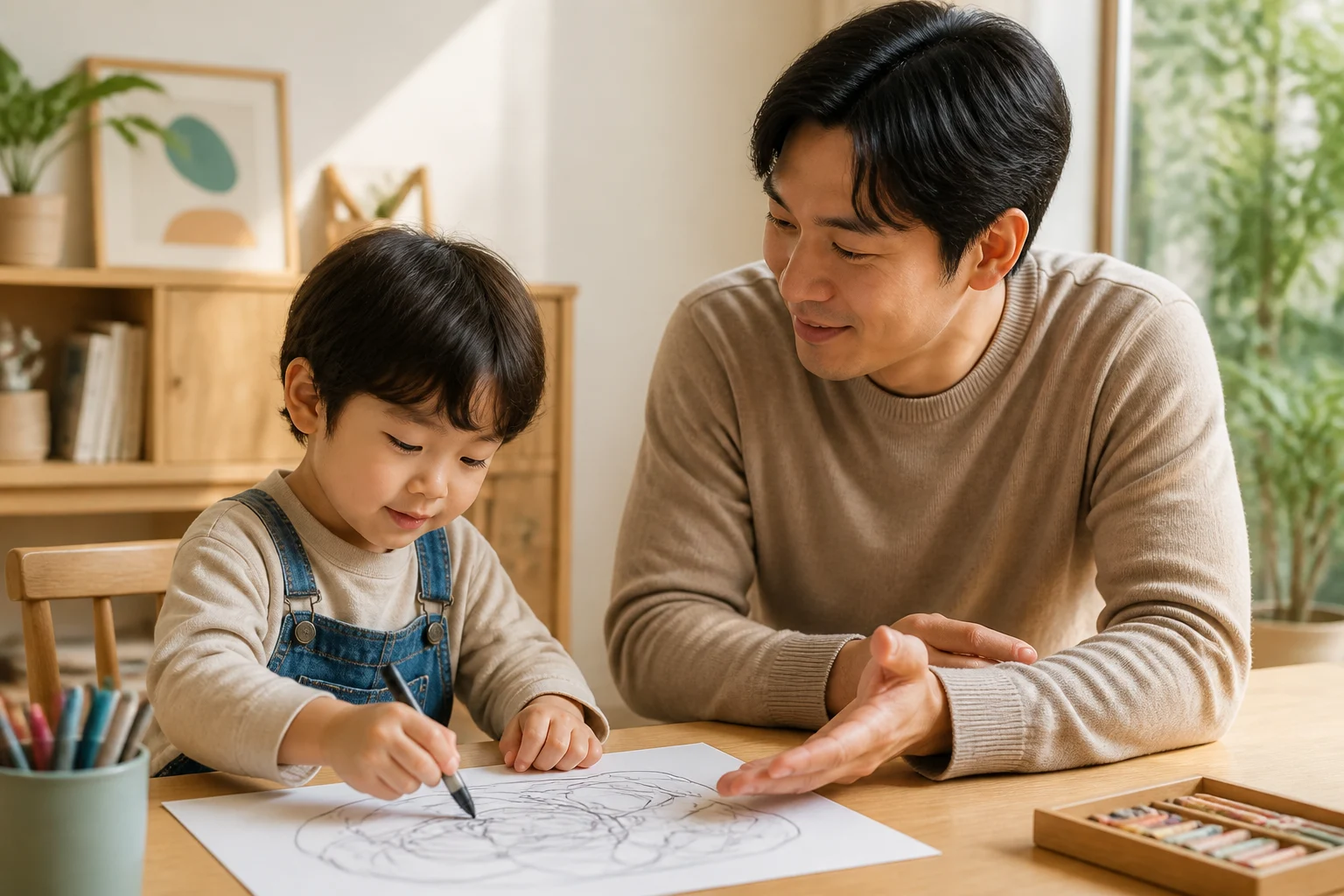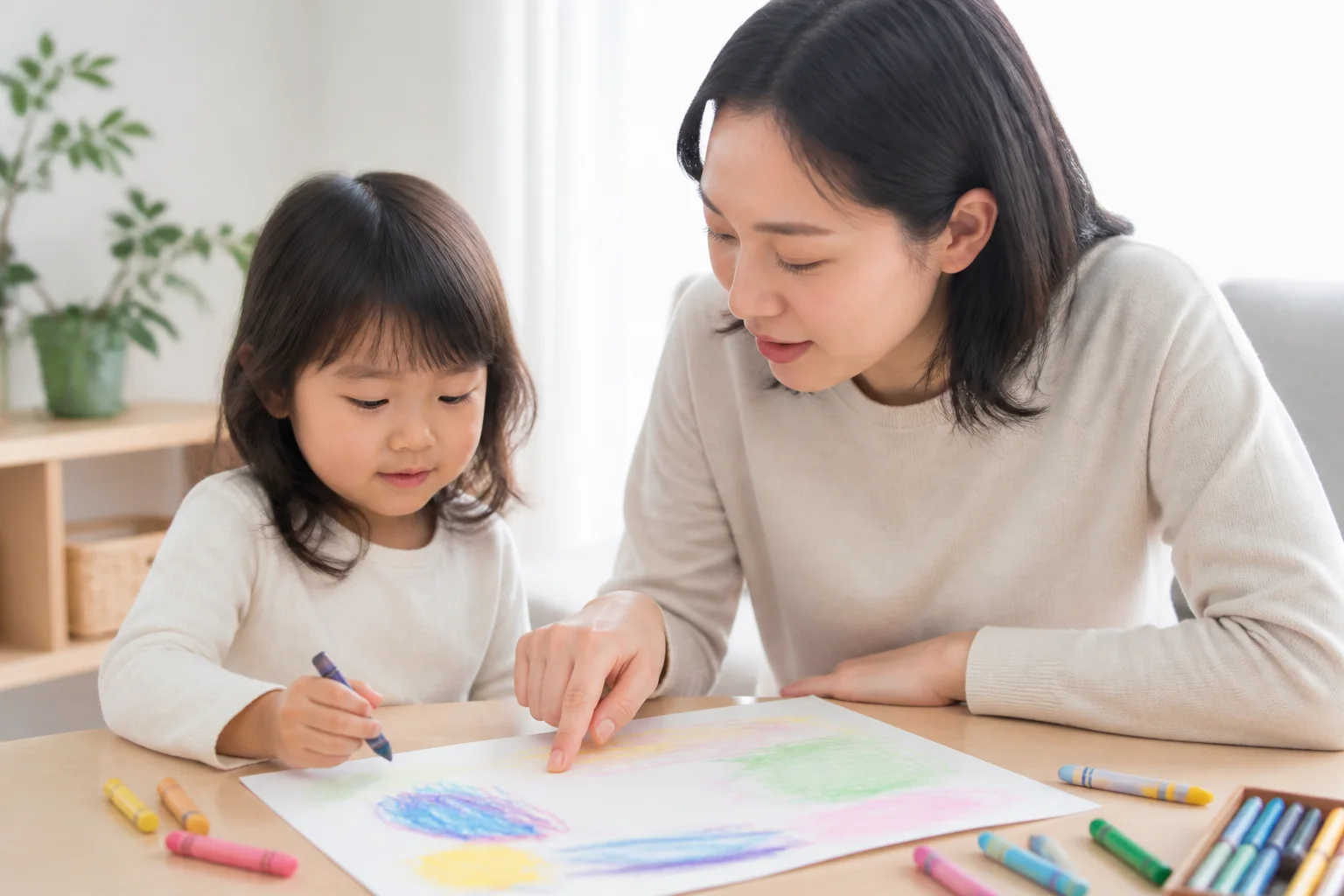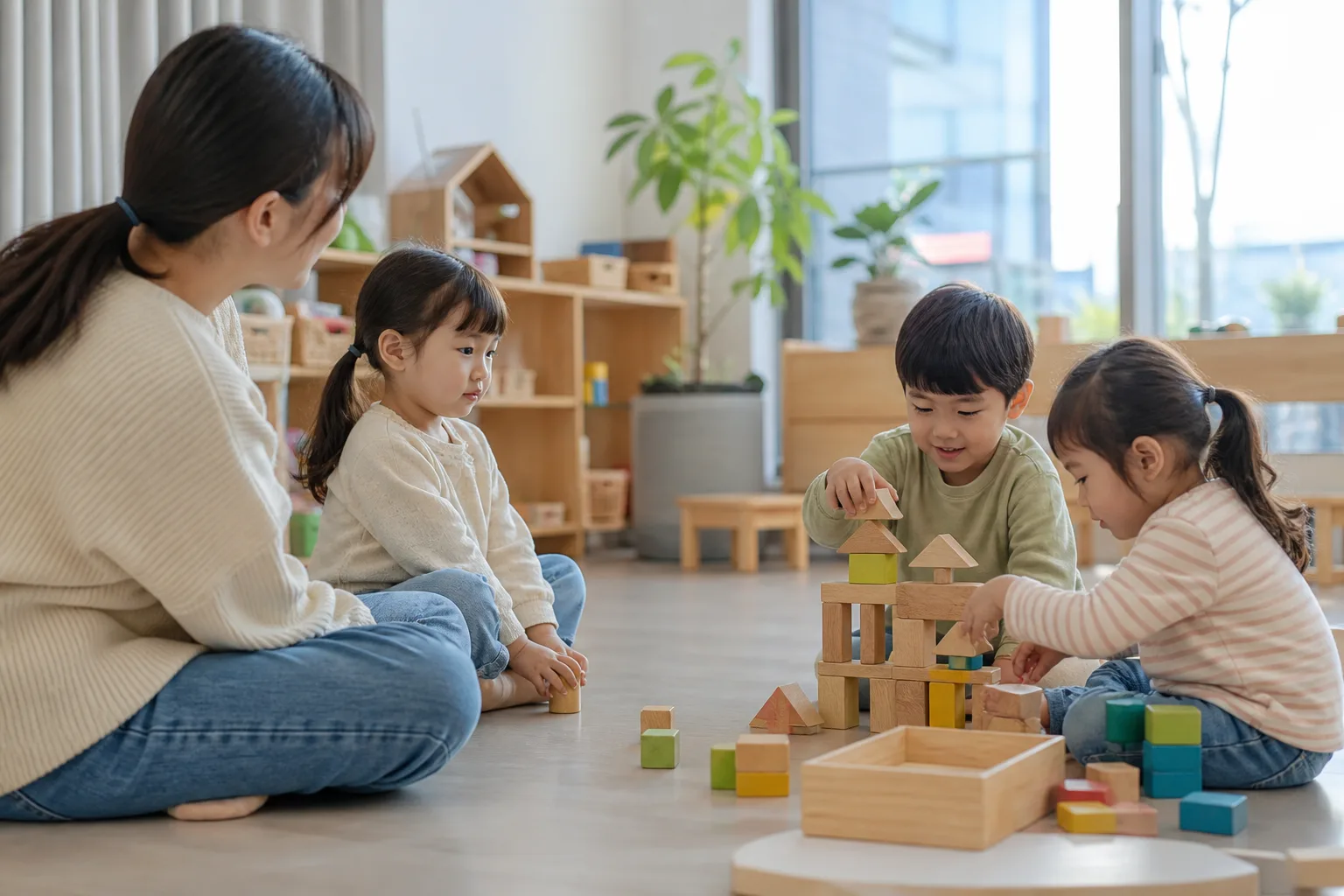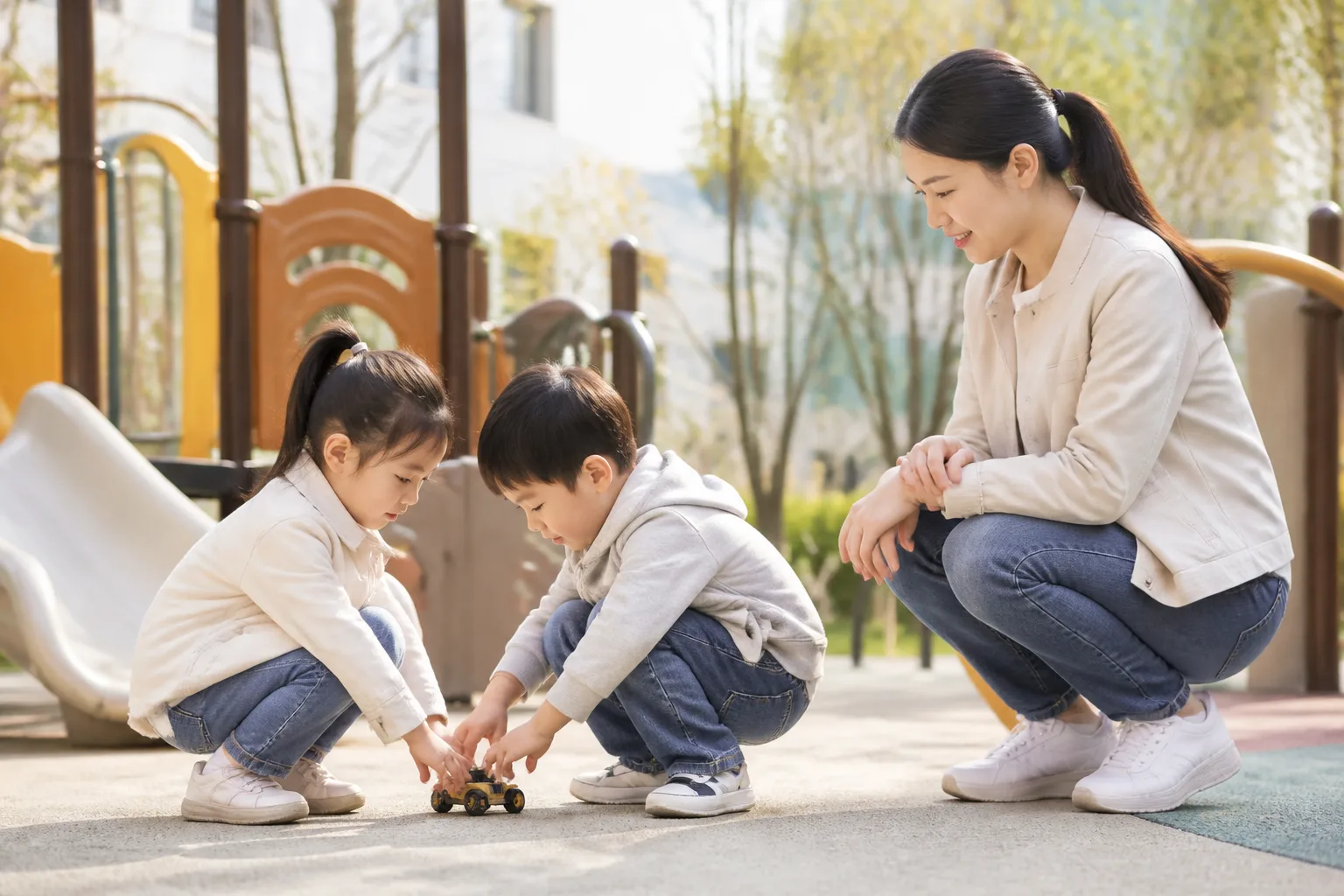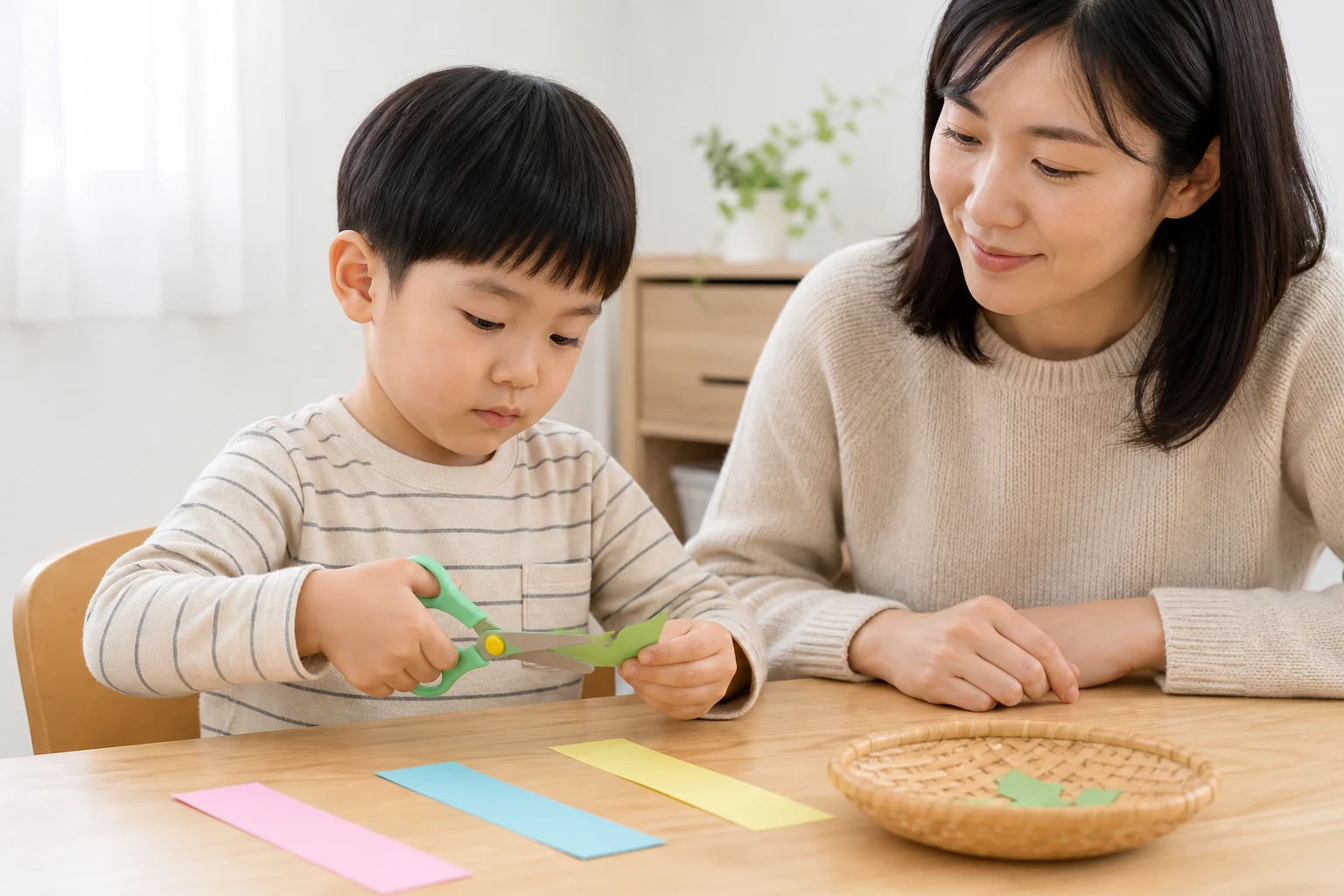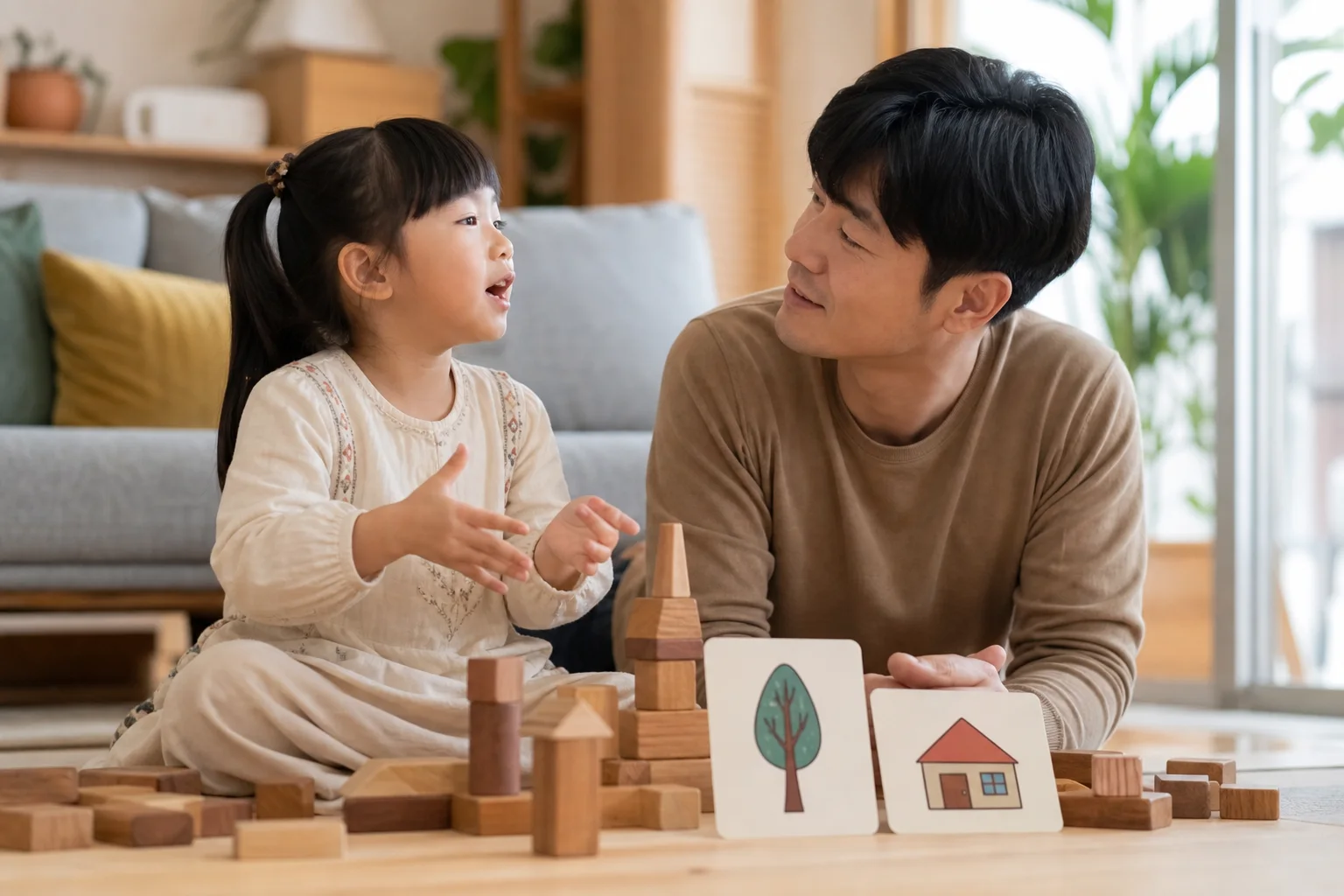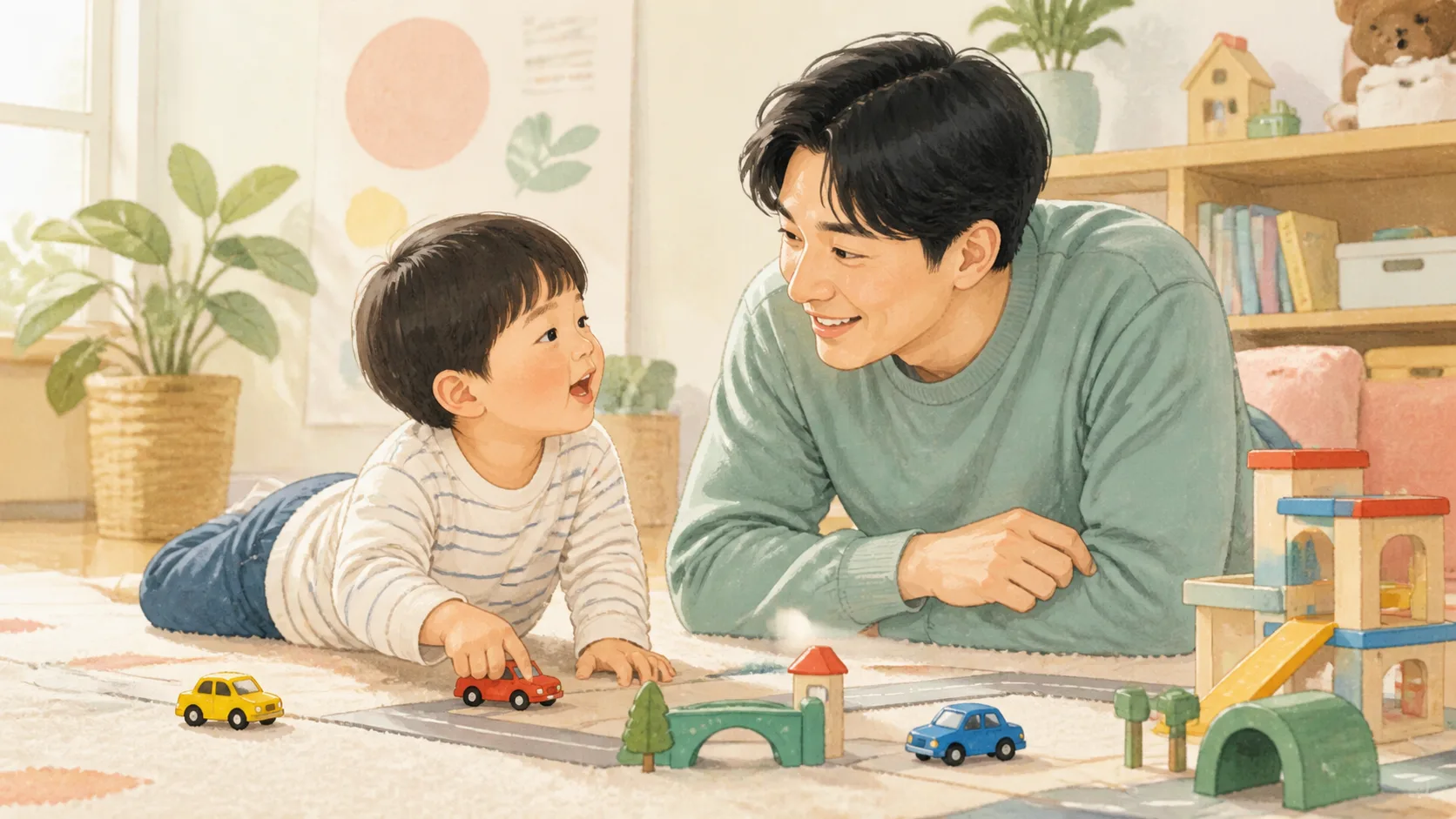
When your child uses a different name for an object or puts a sentence together in an unusual way, you may wonder whether to correct it. The conversation does not need to feel like a test. First notice what your child means, then model the accurate expression once.
Key point
Accept the meaning of your child's words first, then repeat them with the accurate word and a slightly longer sentence. Seek a professional evaluation for ongoing concerns about speech or understanding.
What to remember
- Accept the meaning, then model the accurate words.
- Follow your child's words and interests, and ask fewer quiz questions.
- Seek a professional evaluation if your child loses words or you are concerned about understanding.
Getting the right answer is not the first goal
If your child says, "The car is eating," do not end the exchange with, "Cars do not eat." Join the scene your child created by saying something such as, "The car is going to the gas station." First build the experience of being understood.
Around ages 1 to 2, it can help to respond by adding a word to something the child started. If the child says, "Baba," you might answer, "Yes, it is a water bottle."
Model the words instead of correcting
If your child says, "Me bunny went," first look at what the child is pointing to and what is happening in the game. When the meaning is clear, repeat it once in a natural sentence: "Yes, you went to the bunny." You do not need to ask your child to copy you. Respond naturally and use the same word again when your child shows interest.
During pretend play, you can keep using an unusual name your child gave a doll. A conversation is often easier to continue when the adult describes the child's words and actions and uses fewer questions and directions during child-led play.
Three responses are enough in the same scene
First, accept the meaning of your child's words. If the child says, "Doggy went to school," continue the game with, "The doggy put on a backpack and went." Second, add only one needed word in a natural way. If the child says, "Big car," add one level: "The big red car is going fast." Third, if you cannot understand, do not test the child. Ask your child to point or show you. "Can you show me which one you mean?" keeps the conversation going more easily than, "Say it correctly again."
Correcting every sentence can make both the child and parent focus on right answers instead of meaning. Choose a few relaxed minutes of play each day and respond to what your child notices and says first. With a picture book, describe the picture your child studies instead of asking for the name of every object.
Tell pronunciation, pretend words, and word choices apart
A child may not yet pronounce a word clearly, may invent a name on purpose during play, or may understand the meaning but choose a different word. Each situation may call for a different response. You can enjoy a pretend name as it is and model a word needed in daily life by repeating it naturally. You do not need to make your child repeat a pronunciation many times or compare the child with others.
If you keep notes, record conditions that supported a good conversation instead of making only a list of wrong words. Note who was there, whether the child also used gestures or facial expressions, whether the child understood in familiar situations, and whether the child seems to hear sounds well. These details can help explain daily life during an evaluation.
Do not judge a concern from one word
One unusual word or pronunciation does not show a child's developmental status. But if your child has lost words or skills used before, or you remain concerned about response to their name or understanding directions, record what you observe and show it to a medical professional or developmental screening service.
At the evaluation, share the words you actually heard, when and with whom your child talks more, which words your child understands, and any concerns about hearing.
Worksheet
Notes for responding to your child's words
Write down your child's meaning first, then choose one natural sentence to model.
- Child's words
- The words or gestures you actually noticed
- Meaning I noticed
- What the child pointed to and the play scene
- Words to model
- One sentence using the accurate word
- Evaluation notes
- Ongoing concerns or lost skills
Notes
- In a home that uses two languages, have plenty of conversation in the languages your family actually uses.
- Repeating a natural model will not suit every moment. If your child treats it as a correction and talks less, do it less often and simply respond to the play. If your child communicates through gestures, a picture board, or another method instead of speech, use the same approach with that method: accept the meaning and add only one level.
References
- Centers for Disease Control and Prevention: Adding words when responding to children ages 1 to 2
- Centers for Disease Control and Prevention: Child-led play
This is general communication guidance. It does not replace a speech, hearing, or developmental evaluation or treatment.