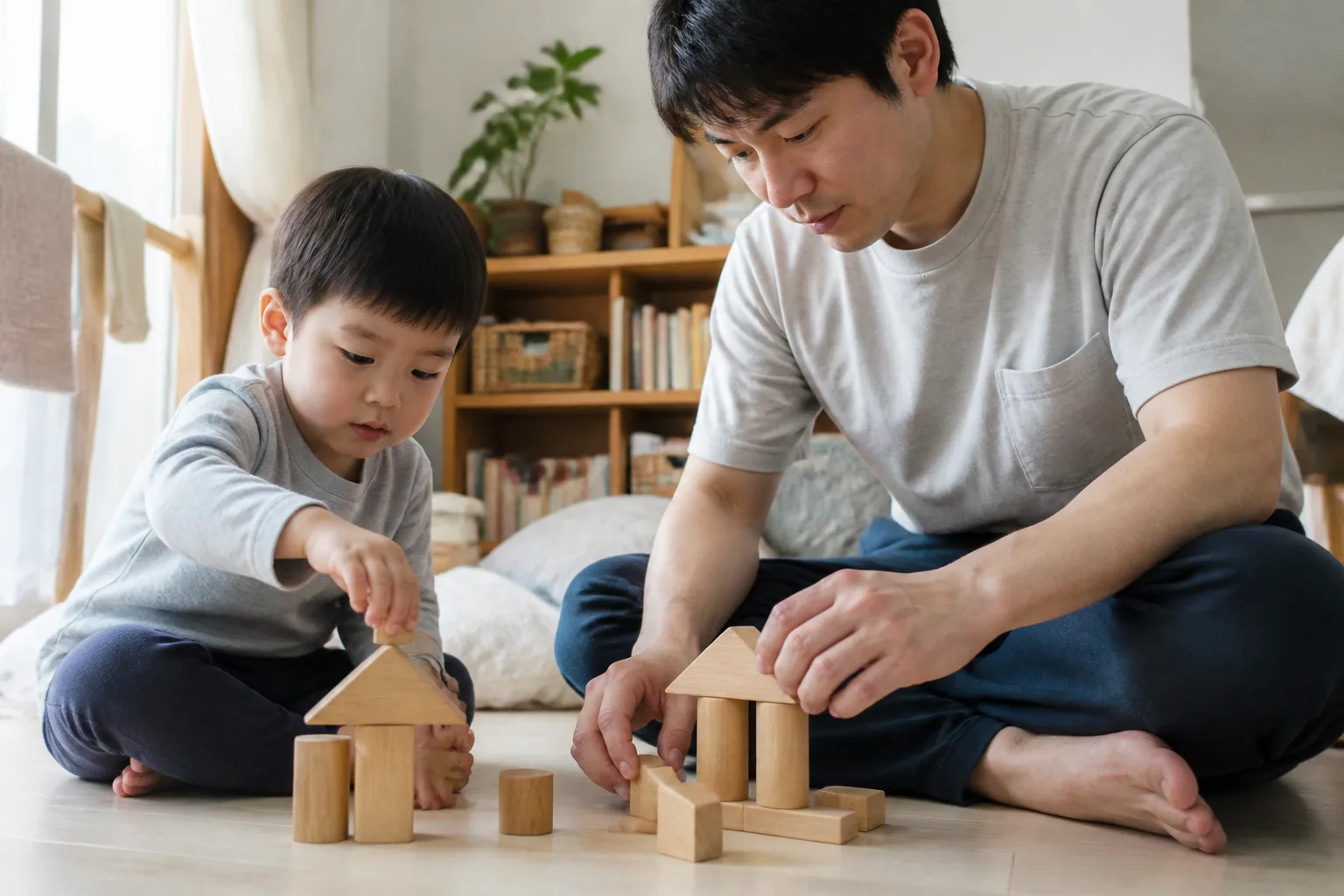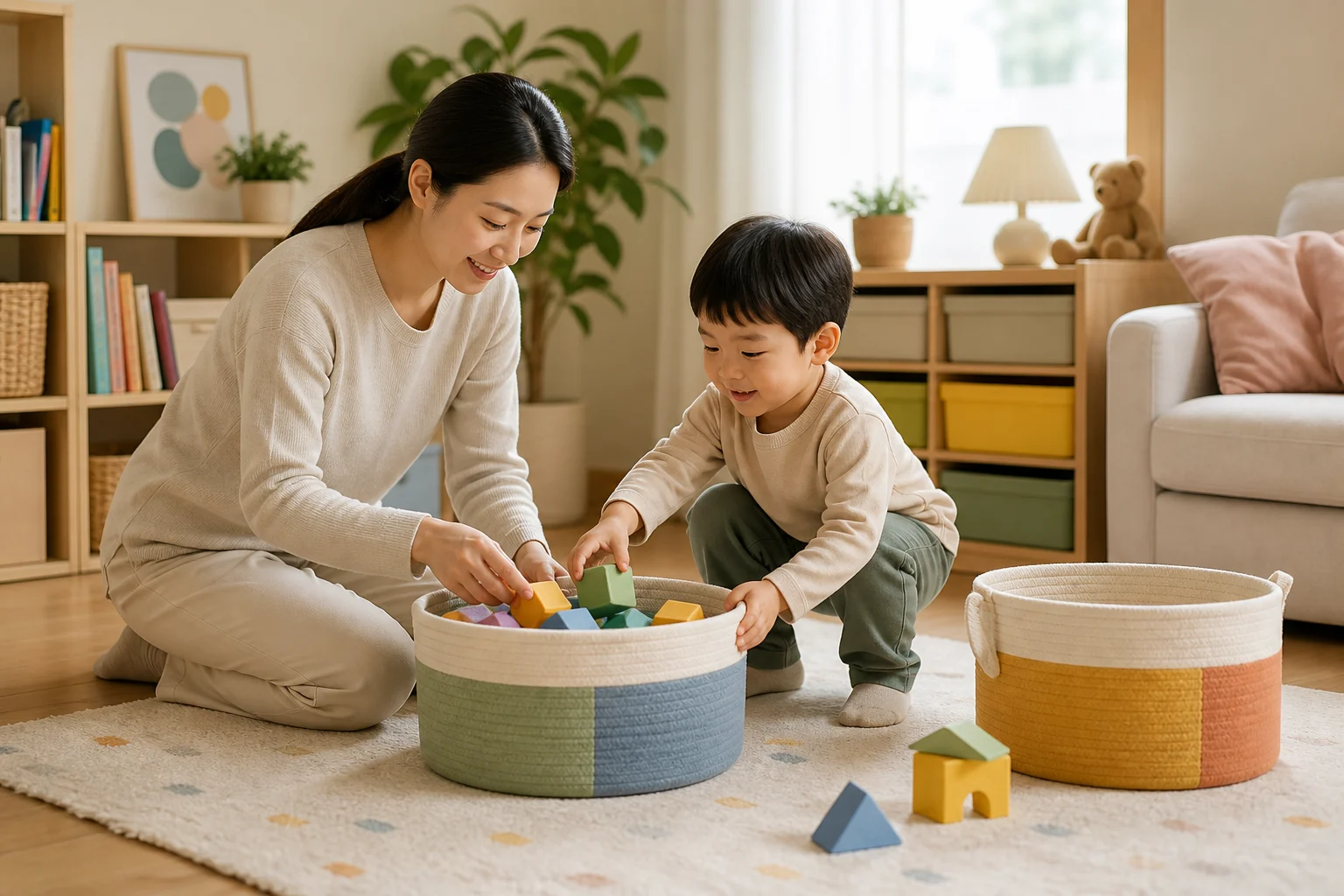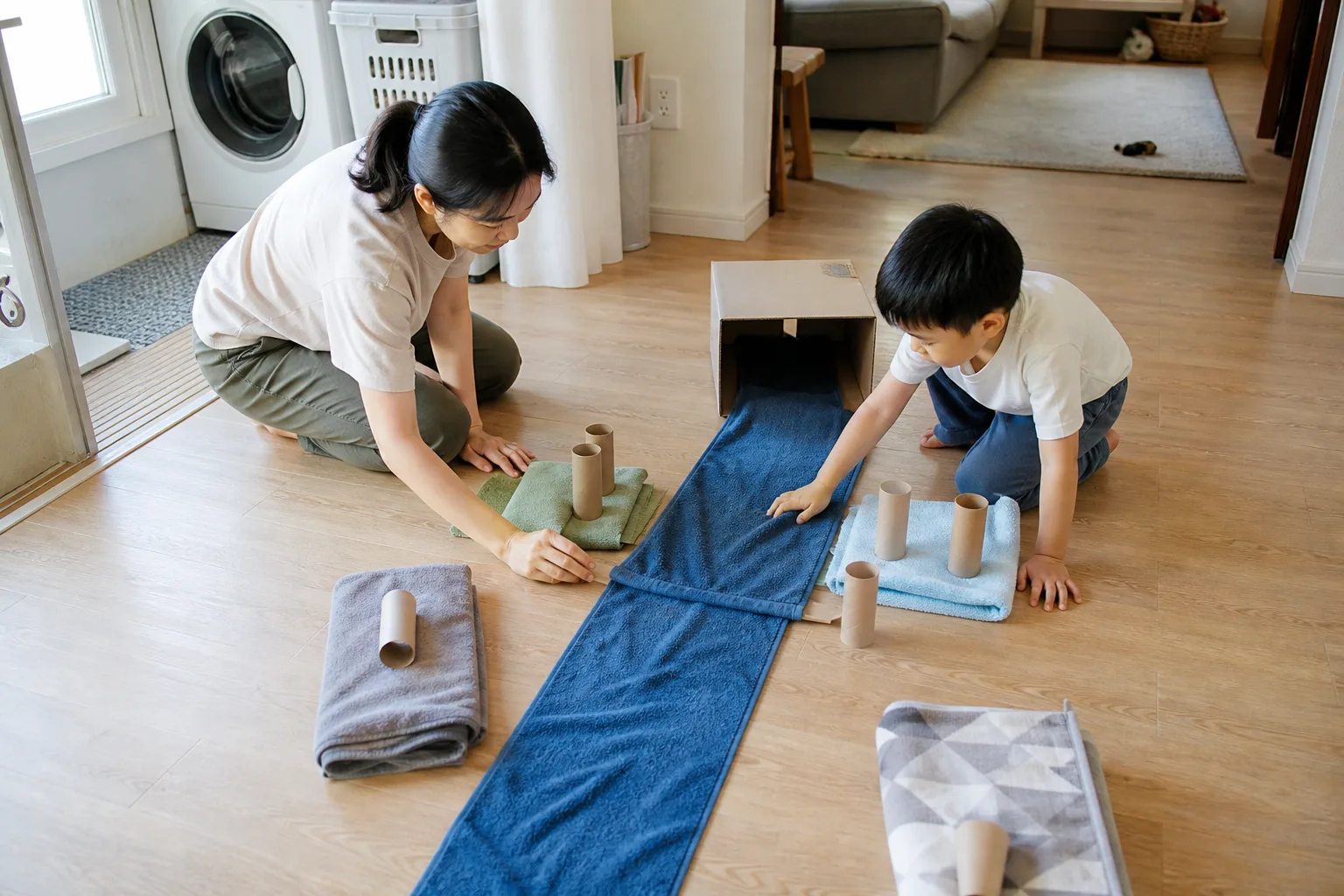
You can play together with towels or boxes without buying new toys. Give your child time to fold, unfold, or imagine another use. During a chore, letting them choose a color or a use can be a way to start playing.
Key point
Choose one everyday activity, then offer something your child can choose, move, and use in a different way.
What to remember
- Laundry: Let your child change a cloth's shape and use, rather than just find matching pairs.
- Walks: Let your child choose where to stop, look, listen, and compare instead of focusing on the destination.
- Waiting: Make up stories with safe paper, cups, or small boxes.
Share roles instead of focusing on the finished chore
Start by letting your child pick out and pass you large and small towels, or imagine a basket is a boat. Do not immediately replace their approach with your own correct way of doing it.
Keep breakable or sharp objects, cleaners, and hot cooking tools out of play. First check that objects are a suitable size and weight for your child's age and development.
Notice where your child stops on a walk
For you, a walk may be about getting somewhere. Your child may want to spend time listening to water in a drain or watching a shadow. When you have time, look together at one thing that catches their attention. You might ask, "What's different from yesterday?"
Before explaining the answer, leave time for your child to respond with their hands, gestures, or words. Around traffic, water, or fall hazards, safe movement comes before offering choices.
Simple materials work well for child-led play
Safe materials with several possible uses, such as blocks, crayons, and paper, suit play led by toddlers and preschoolers. Follow your child's lead by copying and describing what they do, with fewer questions and directions.
For young children, avoid small parts that can come off. Use large materials that are easy to grasp.
Add one playful option to an everyday task
Draw four boxes labeled "Usual activity," "Child's choice," "A different use," and "Safety limits." When setting the table, for example, your child could choose a napkin color and fold a napkin into an animal's home, while keeping away from hot food.
If your child is not interested, do not try to persuade them. A day without turning a task into play is not a failure. Children also need rest and time to watch on their own.
Worksheet
Turning an everyday task into play
Choose one chore or waiting time and fill in four boxes.
- Usual activity
- Laundry, setting the table, walking, or waiting
- Child's choice
- A color, an order, or a place to stop
- A different use
- Imagine another role for a safe object
- Safety limits
- Check for heat, sharp edges, cords, choking, traffic, and water hazards
Notes
- Household objects are not made to toy safety standards. First check their size and any sharp edges, cords, toxic materials, heat, or choking hazards.
- The child-led play ideas here are intended for toddlers and preschoolers.
References
This guide does not certify the safety of individual household objects. Consider your child's age, development, and the supervision available.