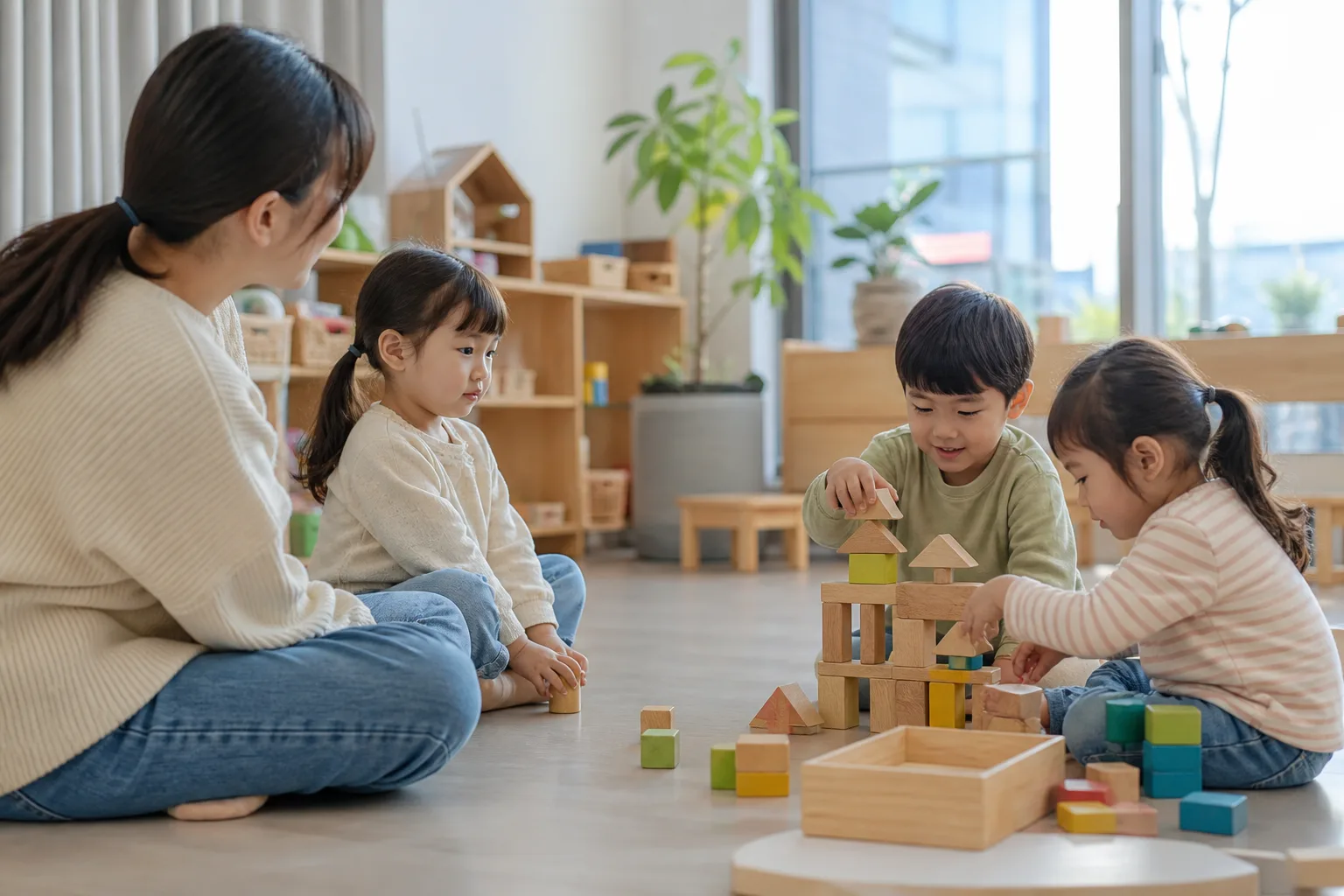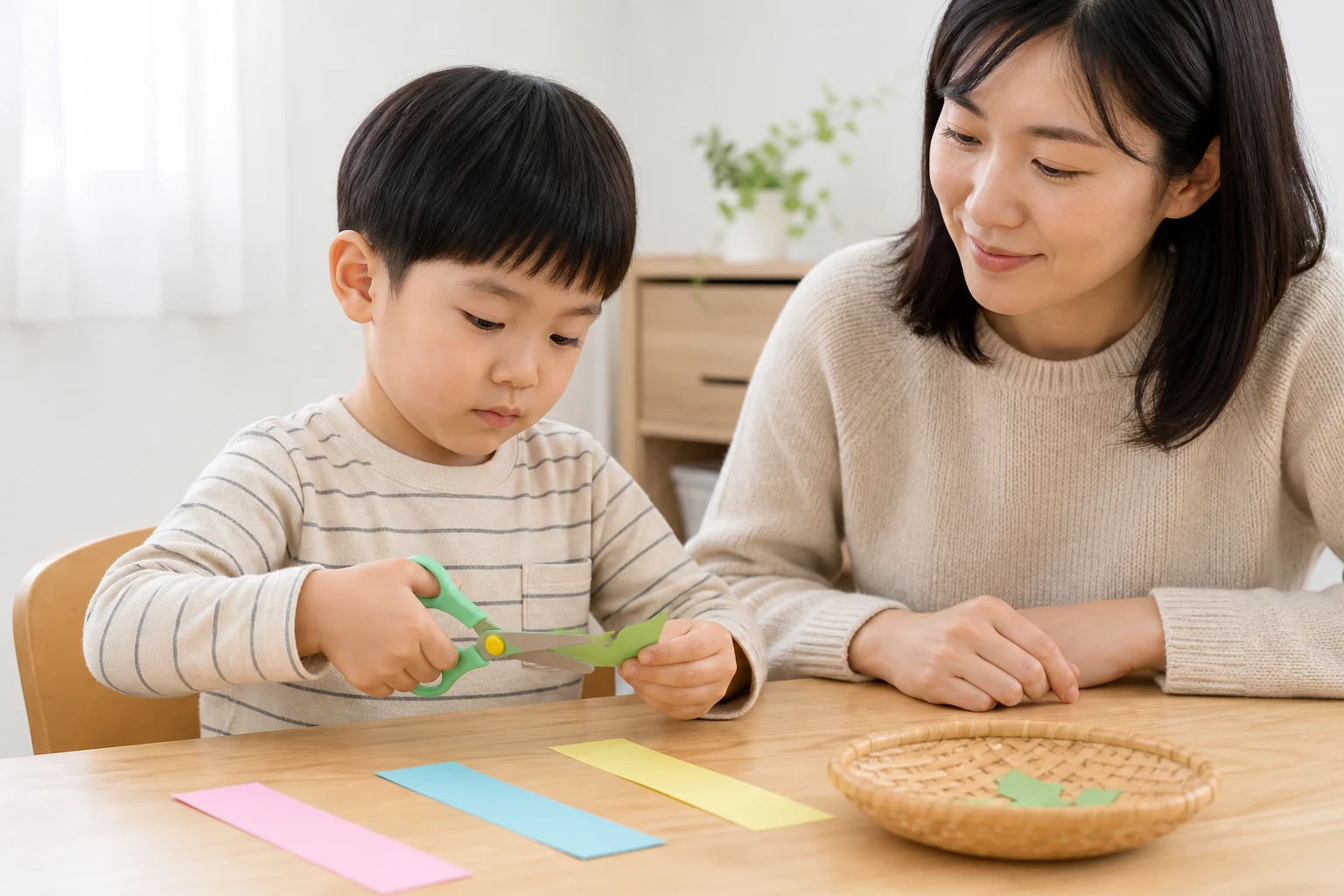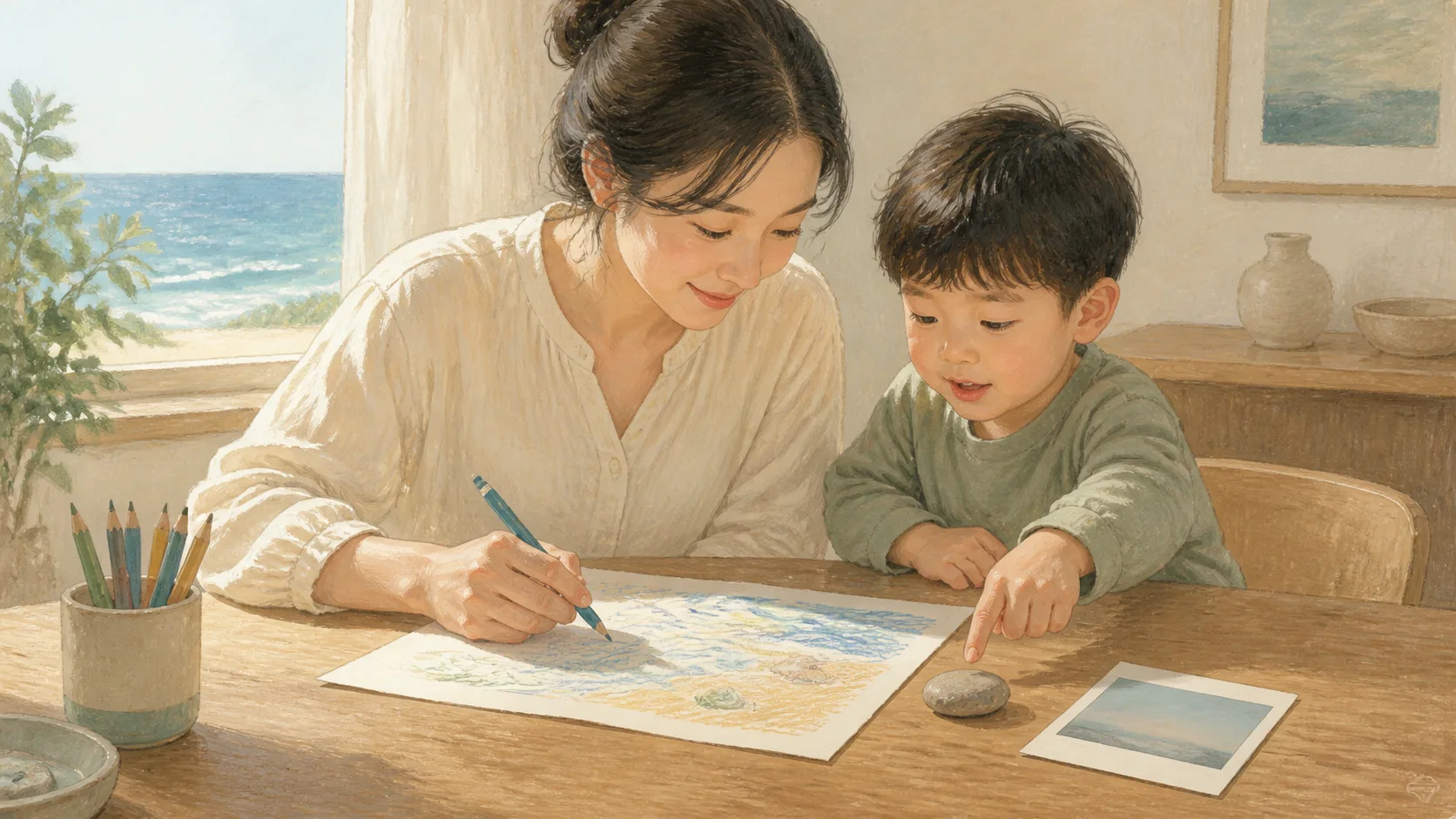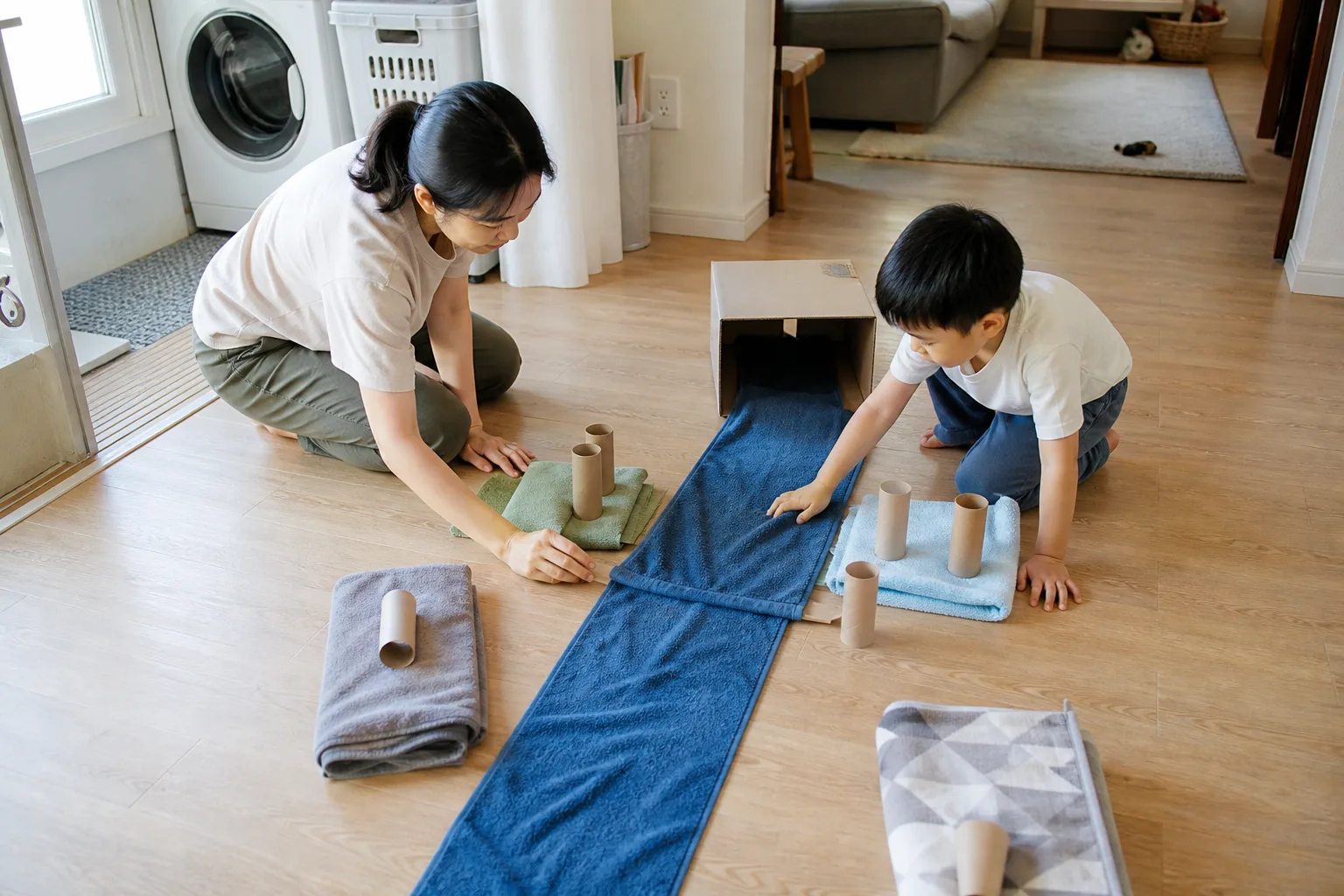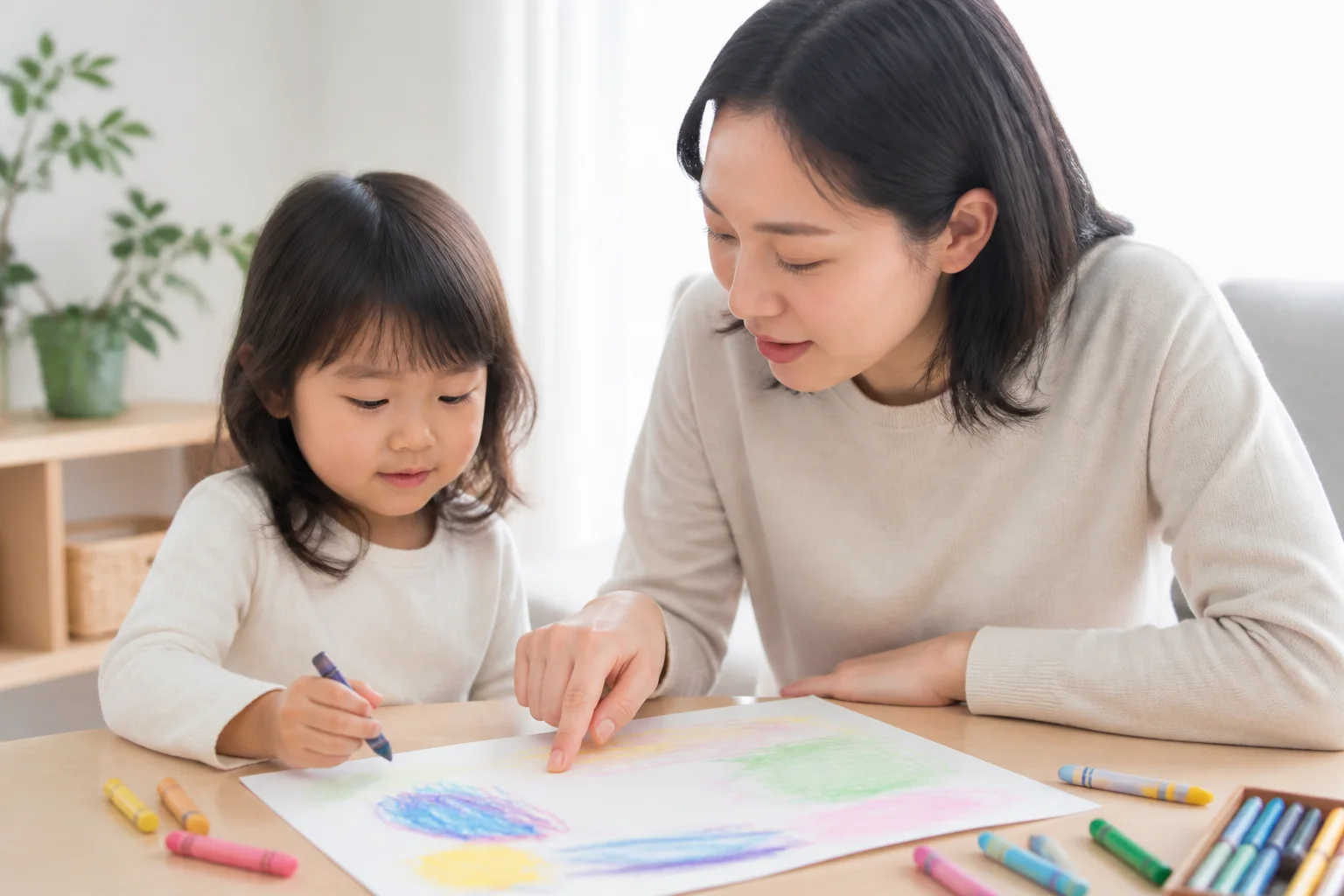
It is fine to say, "That is beautiful." If you want to spend more time looking at what your child made, though, start with something you can see in the work instead of the result.
Key point
Name one detail you can see, such as a line, material, or choice your child made. If you ask a question about the work, ask just one that lets your child answer in their own words. Do not judge talent or emotions from the artwork alone.
What to remember
- Name one thing you can actually see in the lines, materials, choices, or story.
- Ask just one question, and respect your child's choice not to answer or finish.
- Choose age appropriate art materials and supervise scissors and glue.
Describe lines just as you see them
Describe the color, direction, or overlap: "You drew several long blue lines." This does not mean you must stop saying, "You did a great job." It means looking at the work together instead of grading the result or judging talent.
Follow the materials and choices
Try saying, "You tore this paper and glued it here," or, "You chose your fingers instead of a brush." Do not fix or finish the work for your child. Do not use praise as a bargain to make your child keep creating, either.
One question is enough for the story
Ask one question, such as, "Would you like to tell me about this part?" Then wait. Your child does not have to answer. If the answer is "I don't know," you can say, "Okay, I'll look at it with you." Do not turn questions into a test or assign psychological meaning to the work.
Correct yourself when you misunderstand, and do not diagnose
If you say, "It looks like rain," and your child disagrees, acknowledge it: "I saw it differently." Do not read emotional or developmental problems into one dark color, torn paper, or scary title. If changes such as trouble sleeping, eating less, or difficulty attending child care or playing continue, tell a health care professional or counselor what your child said and what has changed, instead of interpreting the art.
Leave room to stop or choose whether to share
Respect your child's choice not to explain or finish the work. Ask before saving or sharing a photo, and check that it does not show sensitive health, school, or location information. Describing the work does not guarantee creativity, self esteem, or talent.
Check material safety before starting the conversation
Check that materials are age appropriate and nontoxic and do not contain broken pieces or small parts. Supervise scissors and glue as needed, and remove broken items or pieces that could be swallowed. Seek appropriate medical help for pain, repeated difficulty using the hands, or swallowing art materials.
Worksheet
Four ways to start talking about art
Start with one thing you can see now: a line, material, choice, or story.
- Lines
- Color, direction, and overlap
- Materials
- What your child used
- Choices
- A method your child chose
- Story
- One question your child can answer in their own words
Notes
- Do not judge your child's feelings or talent from one picture.
- Check safe materials and needed supervision first.
- There are days when observation is not the right approach. If your child asks, "Isn't it pretty?" and is waiting for your response, greet the work warmly first. Save observations and questions for a time when you can look together.
References
- CDC: Tips for praise, imitation, and description
- CDC: Tips for child led play
- CDC: Tips for praising teens
- U.S. Consumer Product Safety Commission: Toys
This is general guidance for talking about artwork. It does not replace a psychological diagnosis, developmental assessment, or medical judgment.