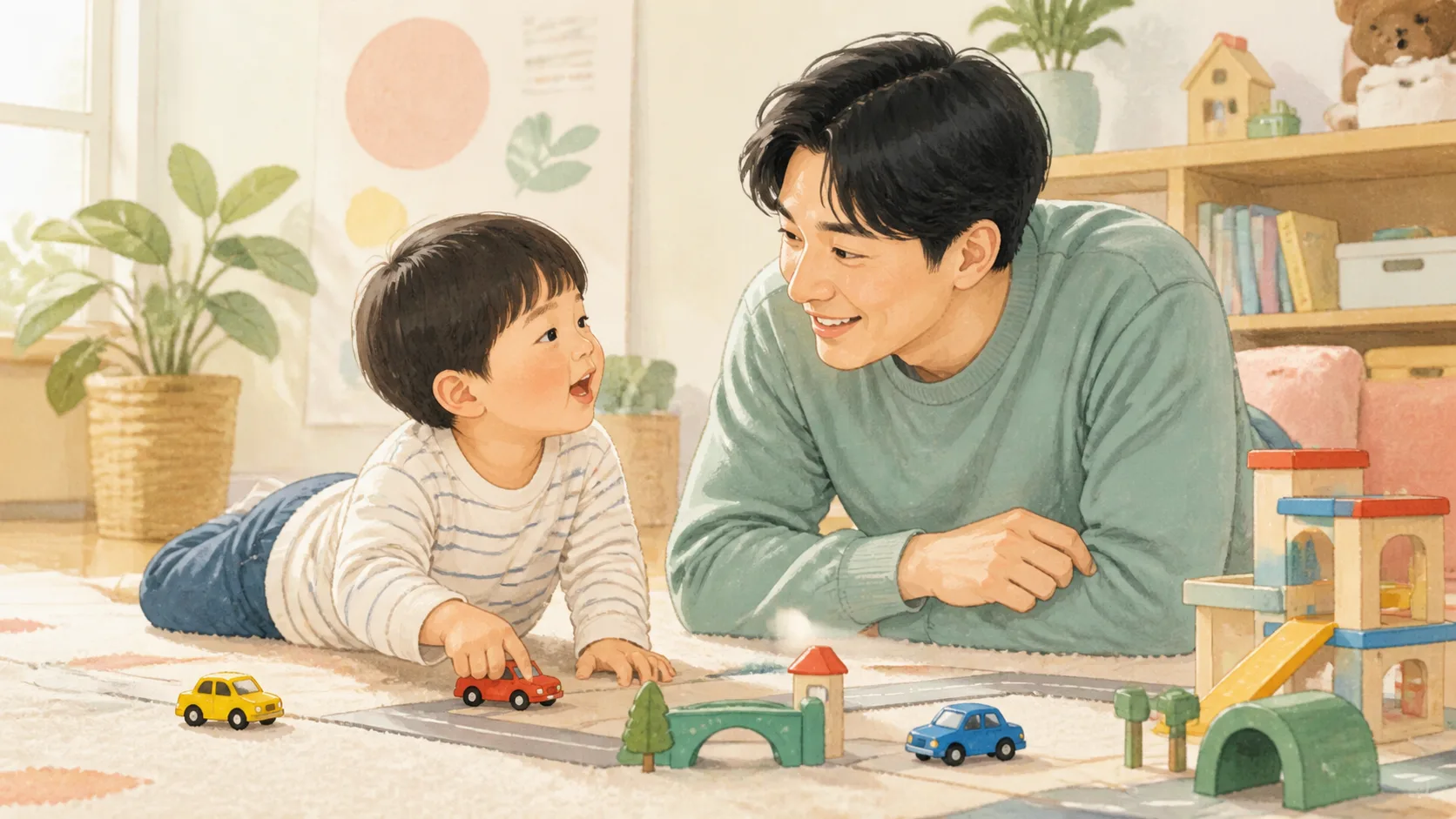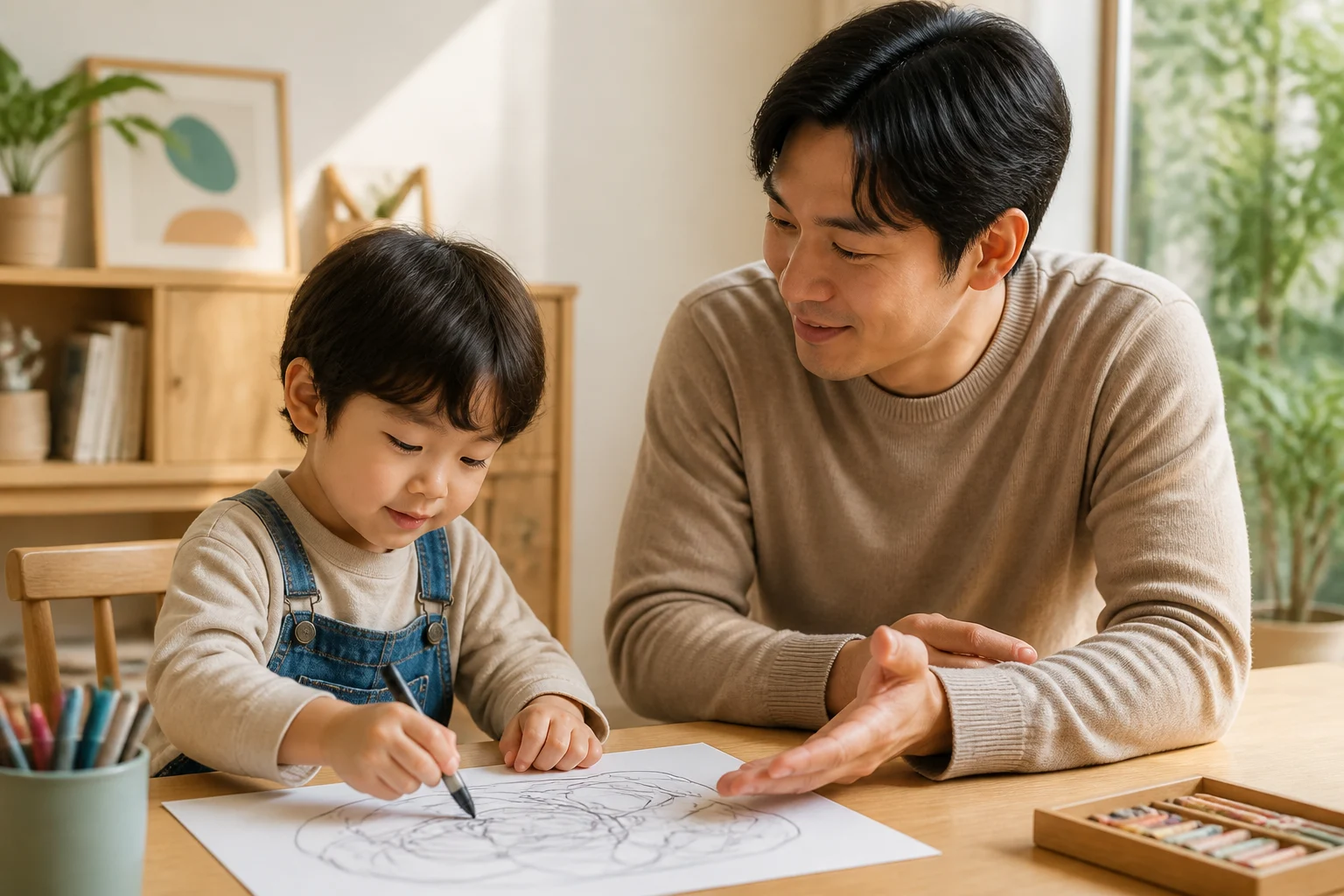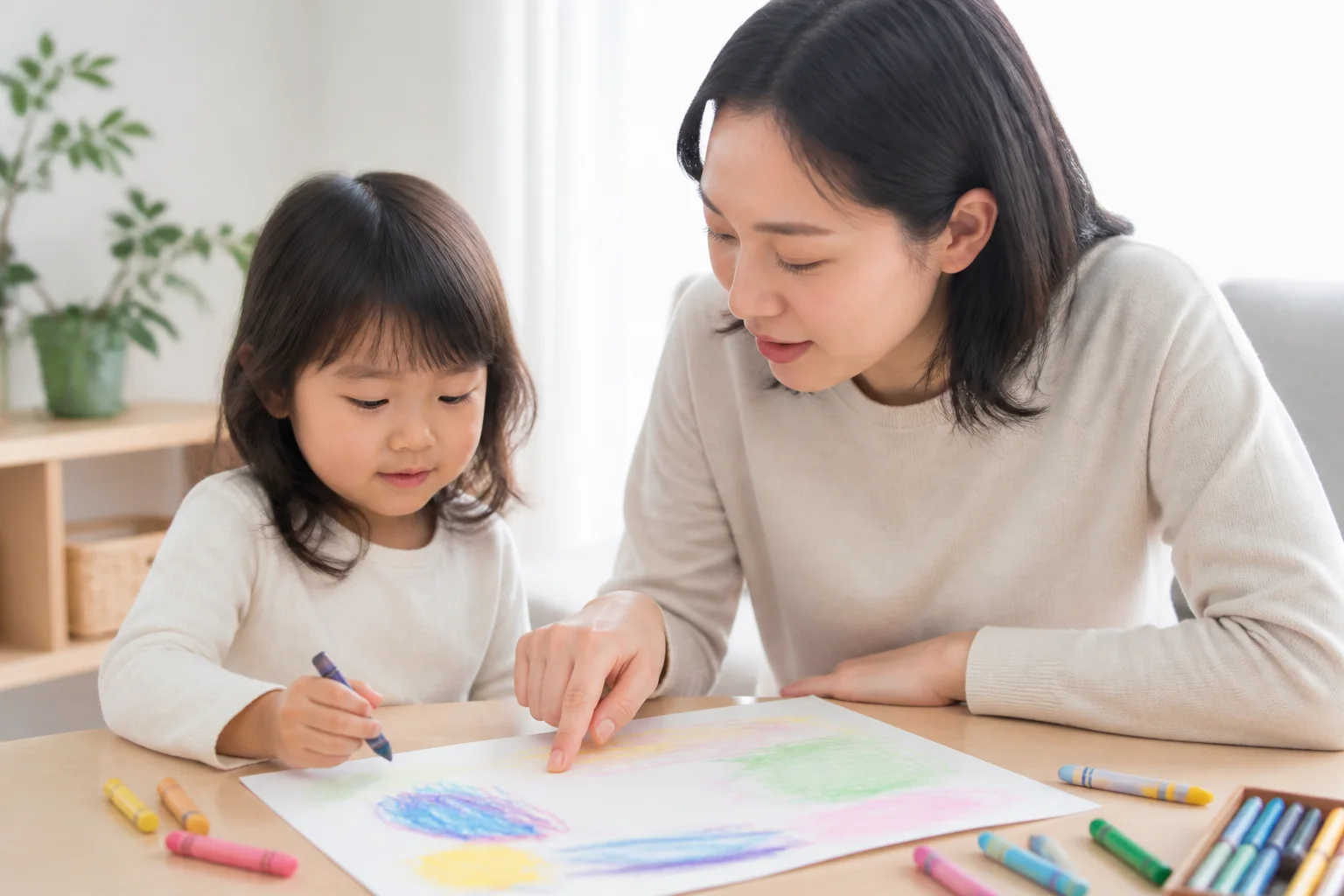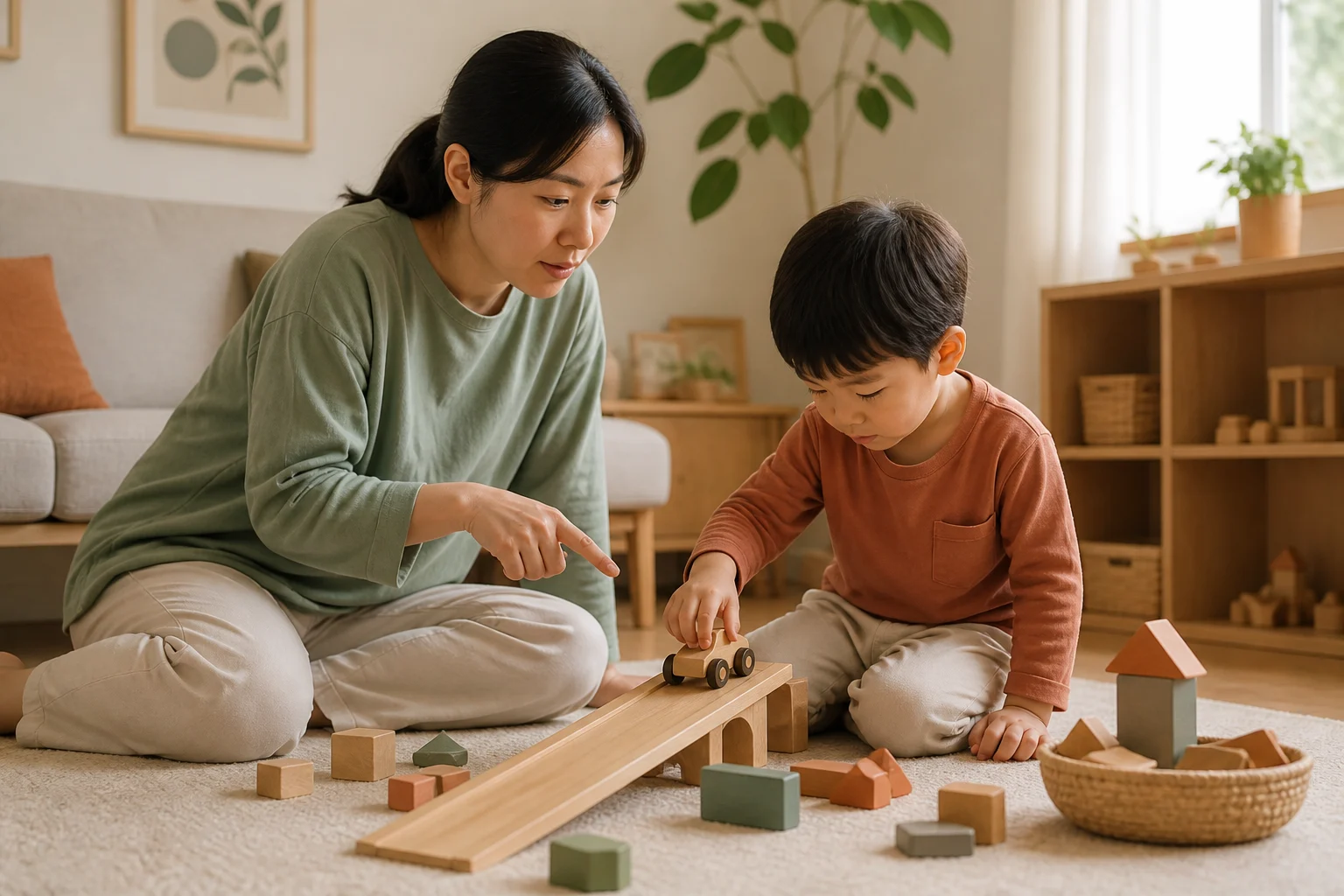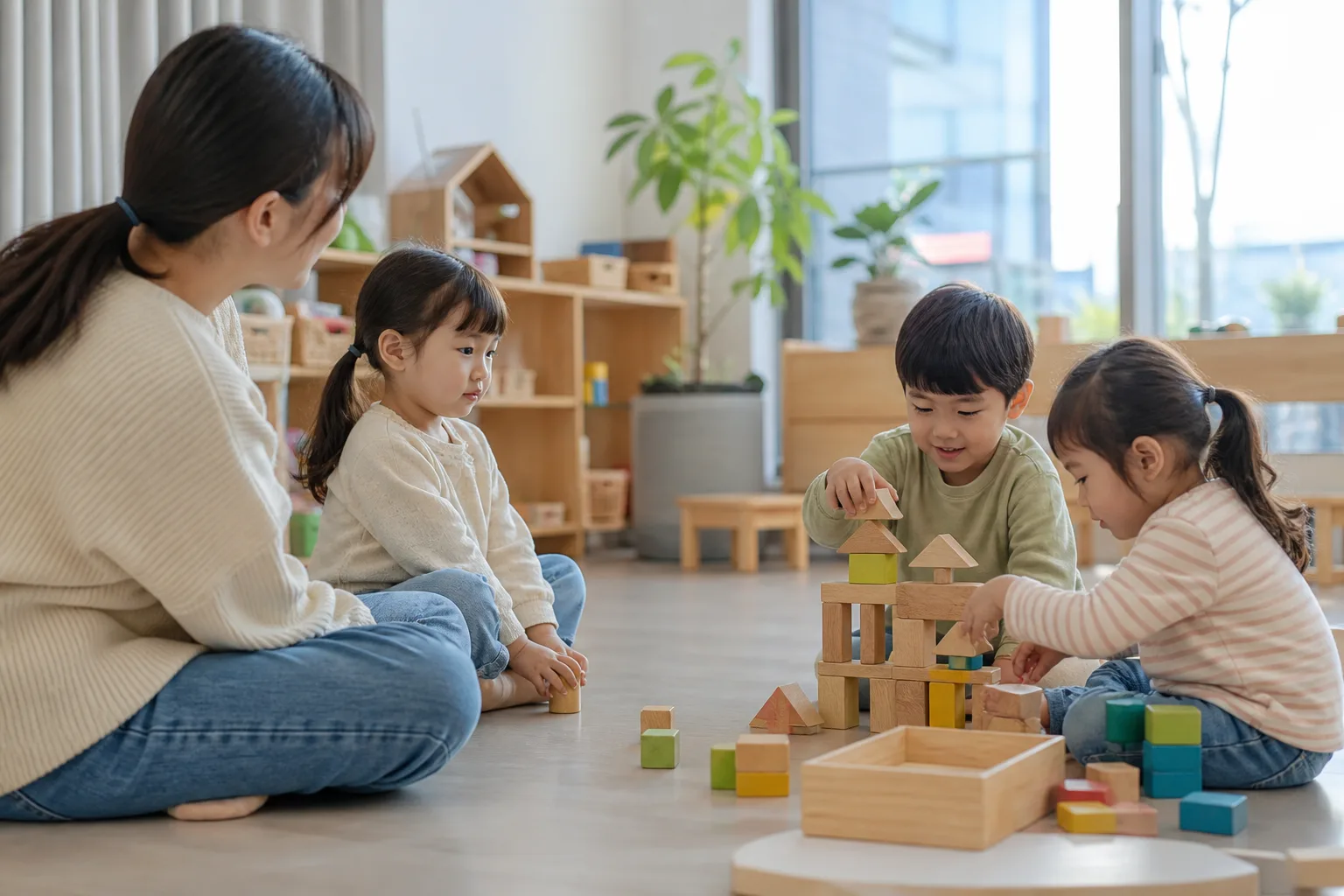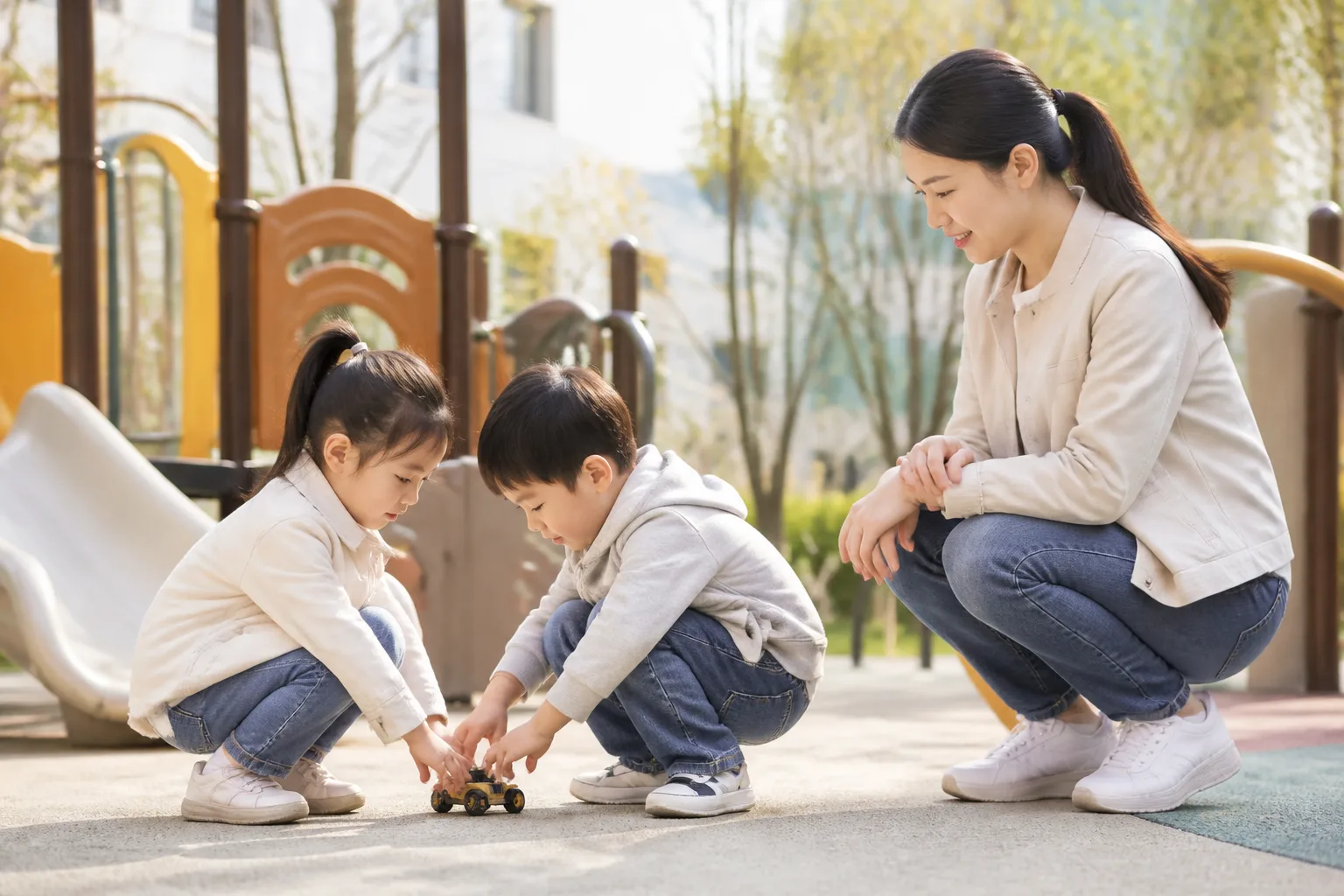
When your child picks the same toy for days, you may feel rushed to introduce something new. Repetition alone does not tell you what it means. First watch what your child repeats, their expression and body, and whether the play is safe. Start by following along or placing one item nearby.
Key point
If play is safe and your child is absorbed in it, observe without rushing to interrupt. Add one material or action only when your child shows interest.
What to remember
- Look separately at the repeated action, your child's expression, and their response when play stops.
- Ask fewer questions and give fewer directions. Describe or copy your child's actions.
- If play leads to injury or you also have developmental concerns, ask your pediatrician or a developmental support service.
Do not call repetition a "bad habit to fix"
Stacking and knocking down the same cups or sending a car down the same path can help children get familiar with materials and results. You do not need to explain right away what they are learning. Describing what you see, such as "You pushed the blue car all the way here," instead of "That again?" leaves the choice with your child.
During child-led play, copy and describe your child's actions, and reduce questions and directions. Giving your child time to decide also helps you see what interests them.
Children repeat play for different reasons
Your child may be checking whether the result is the same as yesterday, enjoying the comfort of a familiar movement, or resting with familiar play after an unfamiliar day. From outside, these all look like "that game again," but they may feel different to your child.
The goal is not to guess the reason. If repetition is your child's choice, your first step is to watch before changing the play.
Watch your child's response more than the shape of the play
For about three days, briefly note when, what, and how long your child repeats. Note whether they want to play alone, respond when you sit nearby, or show interest in small changes. If they can laugh, take breaks, and move to other activities even while repeating a game, respect that flow.
If your child takes a very long time to settle every time play stops, repeatedly does things that could cause injury, or also shows concerning changes in speech, play, or relationships, do not consider repetition alone. Write down everyday examples and show them to a clinician or local developmental support service.
Place just one small change nearby
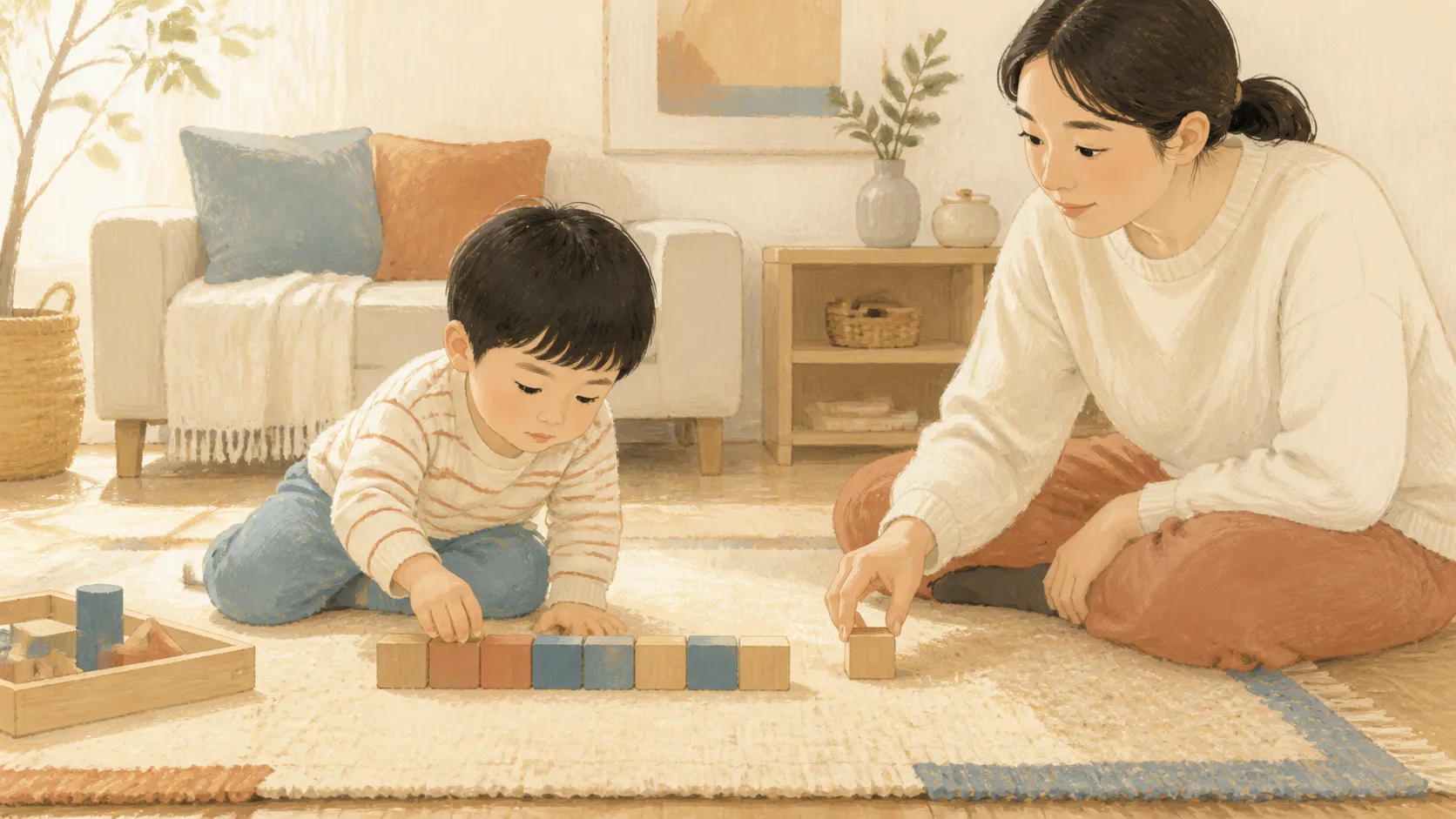
If your child lines up blocks, quietly put one block beside them and wait. If they push a car, place a box nearby that could be a tunnel, without asking them to drive through it. If they ignore the new material, return to the original play. Your child also sets the pace for accepting change.
Adding one small change to a familiar play pattern is also used in play with babies. Here, though, a small change is not an assignment to make play more "educational." It is an extra material your child can choose.
Prevent injury before continuing play
At an age when children put small parts in their mouths, remove anything they could swallow. Stay close near water or high places. If throwing or crashing could hurt someone, stop it right away and explain what is allowed: "Do not throw toward people. You can throw the ball into the basket."
Repetitive play may not be your only concern. If worries about development, communication, or sensory responses continue, do more than ask whether to wait. Seek advice with your child's age and observation notes.
Worksheet
Four things to watch in repetitive play
Before trying to persuade your child to change their play, write down what you actually saw in one moment.
- What was repeated
- What your child did and in what order
- Your child's signals
- Expression, body movement, speech, response after stopping
- Your role
- Copying, describing, or watching safely
- A small invitation
- One optional material, or none today
Notes
- Play still needs age-appropriate safe materials and close supervision.
- Small invitations do not suit every child. If simply adding a new object disrupts play, do not add materials. Stay where you are and watch until your child seeks something out.
- Do not judge development from one repetitive behavior.
References
This is general guidance on observing play. It does not replace developmental assessment or treatment.