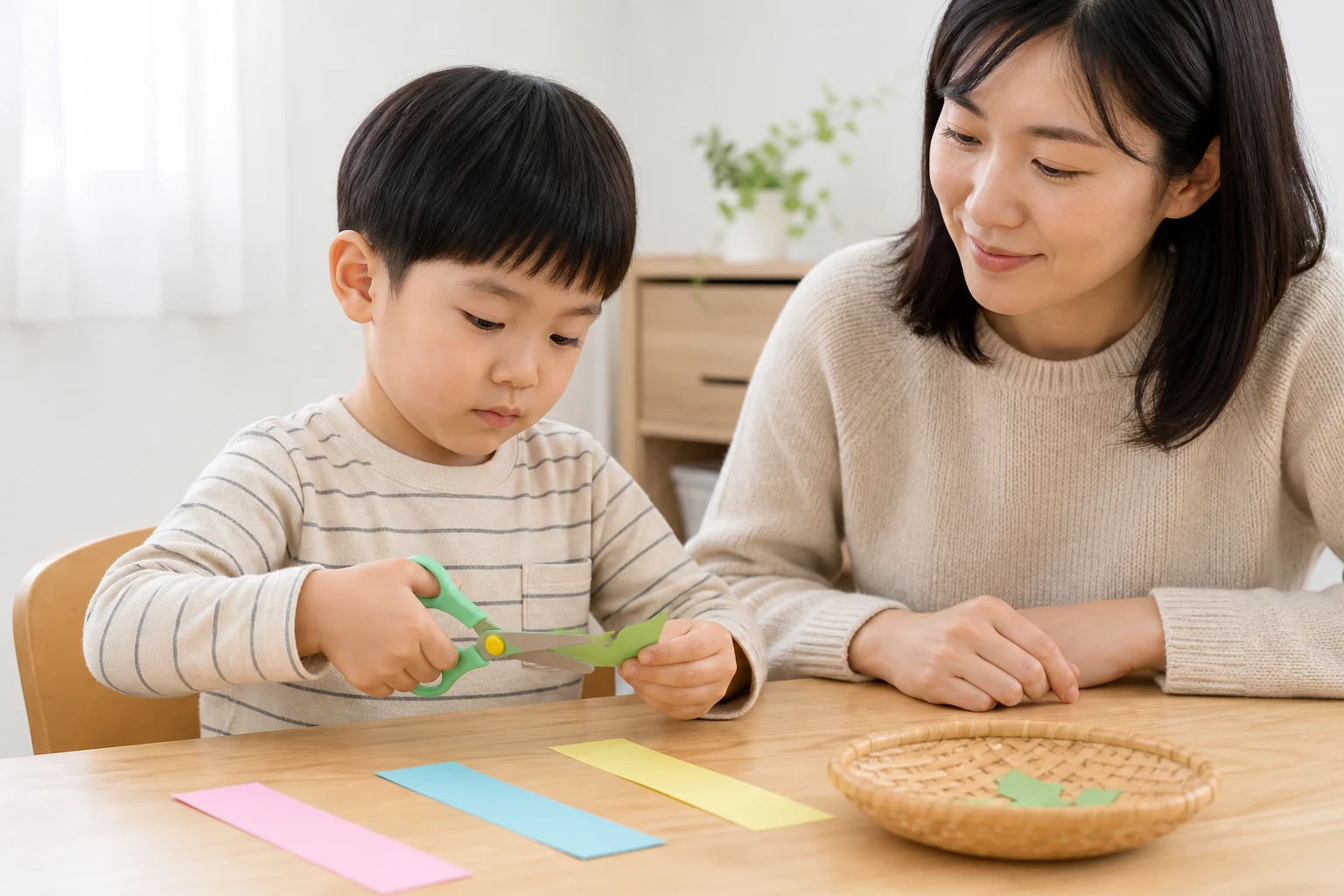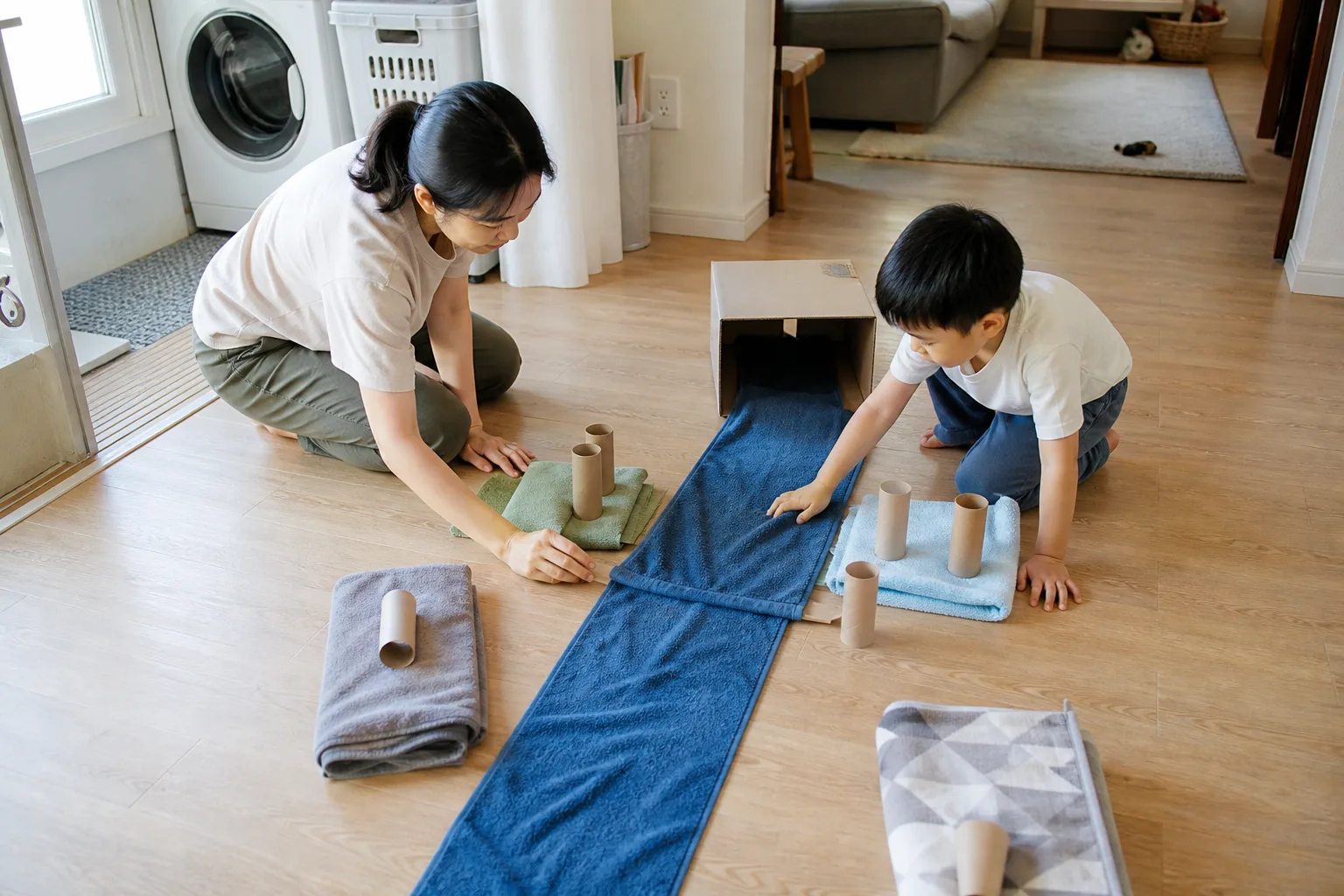
Beside a child rolling a car, a string of questions like "What color is it?" "Where is it going?" and "Who's riding?" can bring play to a stop. On quieter days, following what your child is already doing and waiting briefly may feel easier than trying to draw out answers.
Key point
During child-led play, reduce repeated questions, describe actions, and respond to sounds, gestures, or words by adding just one or two words. Do not diagnose based on how much your child talks. Discuss concerns about lost skills, understanding, or hearing with a clinician.
What to remember
- After one question, leave time for your child to look and move.
- Start by describing what you see: "The car stopped with a bump."
- Add just one step to the signals your child uses, such as words, pointing, expressions, or sign language.
Watch and wait briefly before asking
When your child puts a car on a ramp, watch for a few seconds before asking, "Where will it go?" Choose words that match their signal, whether they push the car, look at you, or make a sound. Ask only one question at a time. If there is no answer, do not repeat it louder.
In child-led play, fewer questions and directions, descriptions of your child's words and actions, and following their interests can keep the exchange going longer. Pointing or making a facial expression can count as taking part in the conversation, too.
Describe what your child is looking at
When you want to speak, briefly describe the scene in front of you. As a car rolls down a ramp, say, "The blue car is coming down." If blocks fall, say, "Crash, the tower fell." With no answer to get right, your child can keep rolling or rebuild.
Even if your child repeats an action, do not turn the description into a longer explanation. One visible difference is enough: "Down it comes again," or "It's going slowly this time." If your words become a running commentary, pause and watch what your child chooses next.
Expand by just one step
If your child says "Vroom," add a word or two to the sound, such as "Vroom, big car." If they point to the car, you might say, "The car stopped here." If they show you a push, try, "You pushed it. It goes fast." Do not ask again if they do not repeat your words.
Your child does not need to respond in the order you spoke. Eye gaze, sign language, and picture boards can help your child express meaning alongside or instead of speech. If your family uses two or more languages, this is no reason to stop using a comfortable home language.
Ask less and describe what your child is doing
For car play, you can prepare just one necessary question, one sentence describing an action, and one or two words to add to your child's words. If your child does not respond, wait or stop playing. One difficult moment today does not mean you failed to provide enough language.
Note times when communication feels comfortable, too. Record who was there, what your child watched and played with, whether they used gestures or expressions, and how they responded to sounds. These everyday examples can help explain any concerns later.
Do not delay help for concerning signs by trying more play
Speaking little alone does not establish shyness, stubbornness, or a particular developmental condition. But if you worry about one or more age-related milestones, your child has lost words, gestures, or skills, or concerns persist about responding to their name or everyday sounds or understanding simple speech, record your observations and tell a clinician or developmental support service.
When caregivers worry about development, they can speak with a clinician and request developmental screening rather than simply wait and see. Mention hearing concerns, too. A consultation is a chance to examine what you see at home and decide on next steps, not to label your child.
Worksheet
Words to use during play
Watch one moment of car play and write one line for each thing you might say. This is not a scorecard for your child's response.
- Ask
- One question only if needed, or time to wait
- Describe
- One thing your child was watching or doing
- Expand
- One or two words to add after your child's word, sound, or gesture
- Your child's signals
- Words, pointing, expressions, or sign language seen today
- Notes for a consultation
- Recurring concerns about understanding, hearing, or lost skills
Notes
- Do not demand that your child repeat words or hold up play until they give the right answer.
- Recommending fewer home languages is outside this article's scope.
References
- CDC: Talking during child-led play
- CDC: Connecting and communicating with your child
- CDC: When you are concerned about your child's development
- CDC: Understanding hearing loss in children
- CDC: Developmental milestones
This is general guidance on conversation during play. It does not replace speech, hearing, or developmental assessment, diagnosis, or treatment.