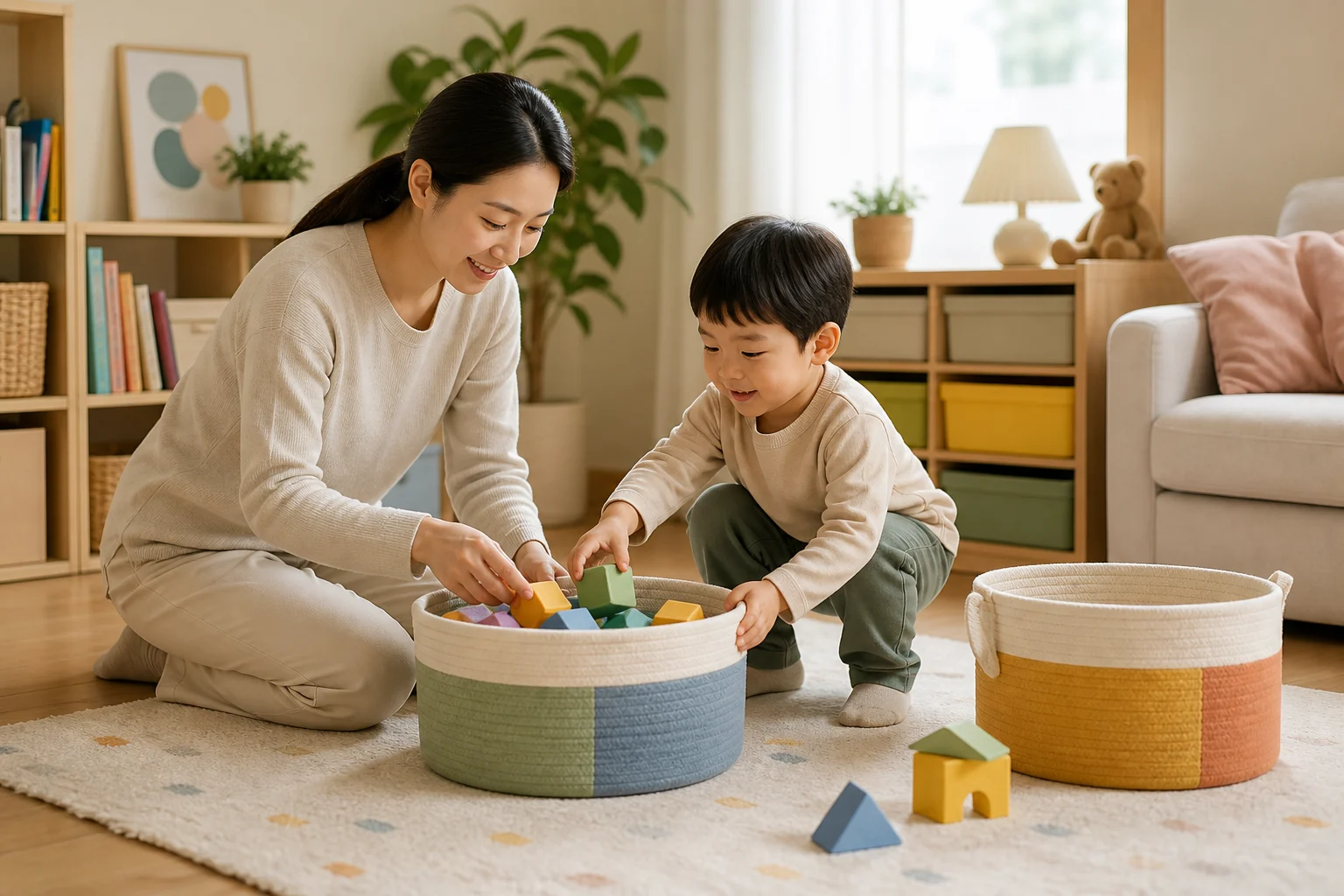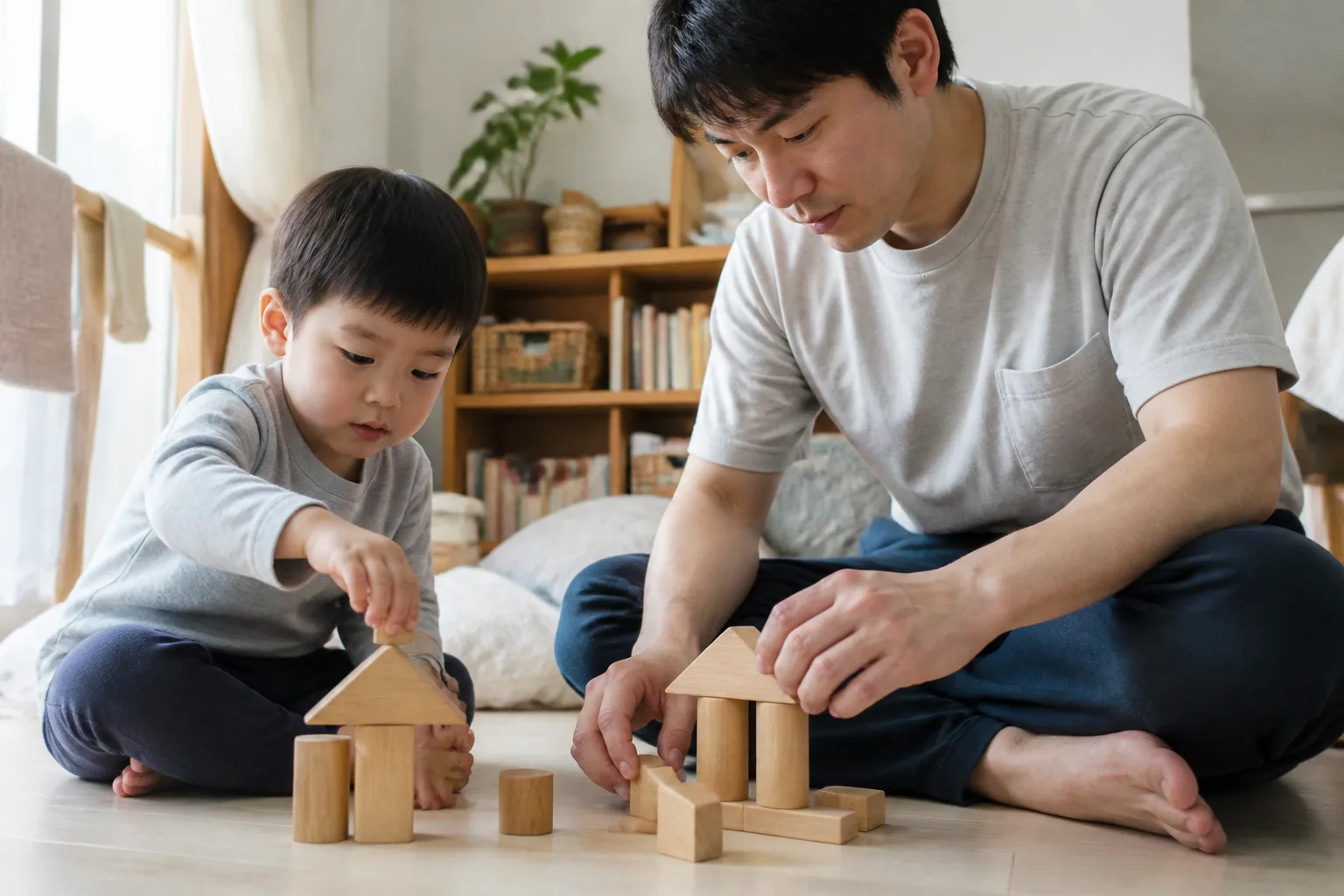
Questions like "What color is this?" and "How many are there?" can slip out while you play together. Questions are not bad in themselves. But when you keep checking answers you already know, getting them right can take over from the play your child chose.
Key point
When you are unsure what to say, first notice what your child is looking at. Copy one action, then briefly describe what is happening.
What to remember
- Watch: Wait and notice what your child looks at and repeats.
- Copy: Imitate one action without changing the play.
- Describe: Briefly say what happened, without judging it.
Try a minute without questions
If your child lays a block down, wait to see what they do next before suggesting, "Shall we make a train?" A quiet moment gives you room to notice their choices and repetition.
Answer if your child speaks to you, but do not immediately ask another quiz question. Describing an action, such as "You put the long block on top," shows interest while leaving your child in charge.
Notice signs that play has become a test
If your child looks at your face before answering, stops speaking for fear of a mistake, or leaves the activity, there may be too many questions. The issue is not a wrong answer; checking answers may have taken over the play.
When you notice this, hold back the next question and copy one thing your child is doing. Once they choose the direction again, you can keep going with descriptions.
Copying is a way to show interest
During child-led play, adults can copy actions, describe what they see, and repeat what children say and name their feelings. Reduce questions, directions, and criticism during this time.
This does not mean watching every unsafe action without intervening. Stop dangerous or destructive actions immediately.
Even open questions can put adults in charge
Questions such as "What will happen next?" can feel demanding if they keep coming without time to think. When your child asks for help or looks to you because they seem stuck, ask once and wait.
A spoken answer is not required. Moving a toy or showing an expression can be a response within play.
Separate time for teaching from time for play
Briefly explain what needs teaching, such as safety rules or how to use a tool. Then leave time for your child to choose again. If you are tired and cannot focus for more than five minutes, it is okay to keep play short.
If you are worried about your child's play, speech, movement, or interactions, talk with a healthcare professional rather than trying to solve it through play techniques.
Worksheet
Three questions for the adult during play
These questions help you review your actions. They are not a quiz for your child.
- Watch
- What is my child looking at for a while or repeating?
- Copy
- What action could I imitate without changing the play?
- Describe
- How could I briefly describe what I see without judging it?
Notes
- Child-led play does not mean giving up safety limits or allowing every behavior.
- Asking fewer questions does not mean stopping language input. It makes room to see your child's choices.
- Some children enjoy question-and-answer games. If your child starts asking questions and invites you to take turns, you do not need to insist on fewer questions.
References
- CDC: Child-led play with toddlers and preschoolers
- CDC: Talking to a healthcare professional about developmental concerns
These play suggestions are for toddlers and preschoolers. They do not replace individual developmental assessment or treatment.