When your child stands behind you at a new gathering, your first words may be, "Say hello." But immediately mixing into an unfamiliar space is not an easy start for everyone. Before sending your child into the middle of the group, let the child choose a place to stay.
Key point
In a new group, let your child move among four stages: watching, staying nearby, playing side by side, and joining briefly. Wait for signs that the child is ready.
What to remember
- At first, let your child choose a place to stay, such as by the entrance or beside you.
- Instead of making the child talk to another child right away, create a chance to play side by side with the same materials.
- Do not make a judgment based only on fear of strangers. Share changes and concerns across several situations with a medical professional.
Watching is a place to begin
For the first few minutes after arriving, wait and notice where your child looks and which play holds their attention. Your child can choose a comfortable place, such as your lap, the edge of the room, or by a window.
Pressure such as, "If you do not join, we are going home," can make your reaction feel bigger than the gathering itself. Instead say, "You can watch from here. Hold my hand if you want to move closer."
Hesitation can have different reasons
Children may stay out for different reasons even when the behavior looks the same. On one day, a child may need time to understand unfamiliar people and space. On another, noise and movement may feel like too much. The child may also be unsure where to join because the rules of the game are unclear.
Offer help that fits the reason. Give more time in the watching spot if your child needs to understand the scene. If the stimulation is too much, first find a quiet edge or step outside briefly. If the rules seem unclear, describe the scene: "They are taking turns on the slide." If you are unsure, let your child choose by asking, "Would you like to watch longer or go somewhere quiet?"
Playing beside someone can feel easier
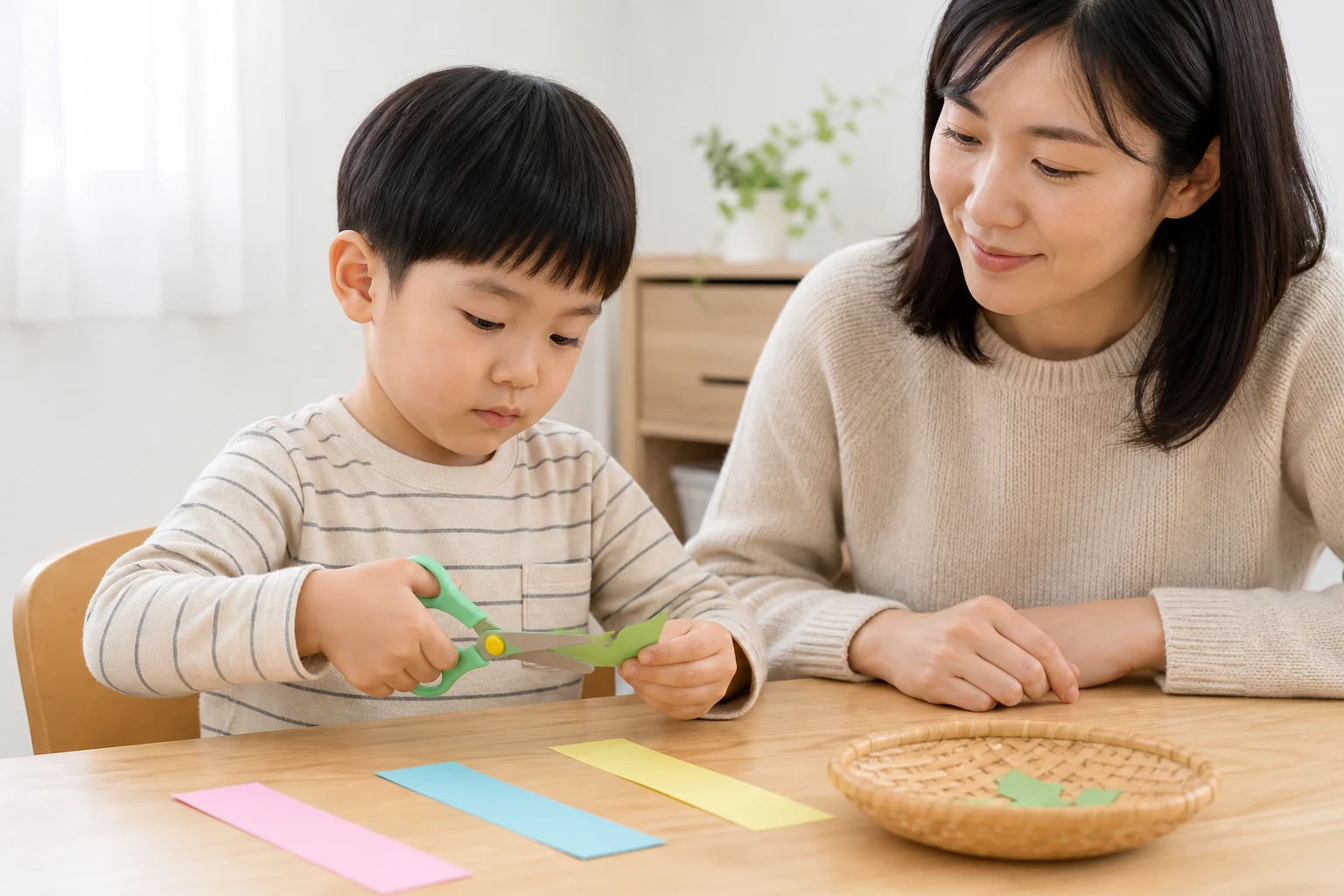
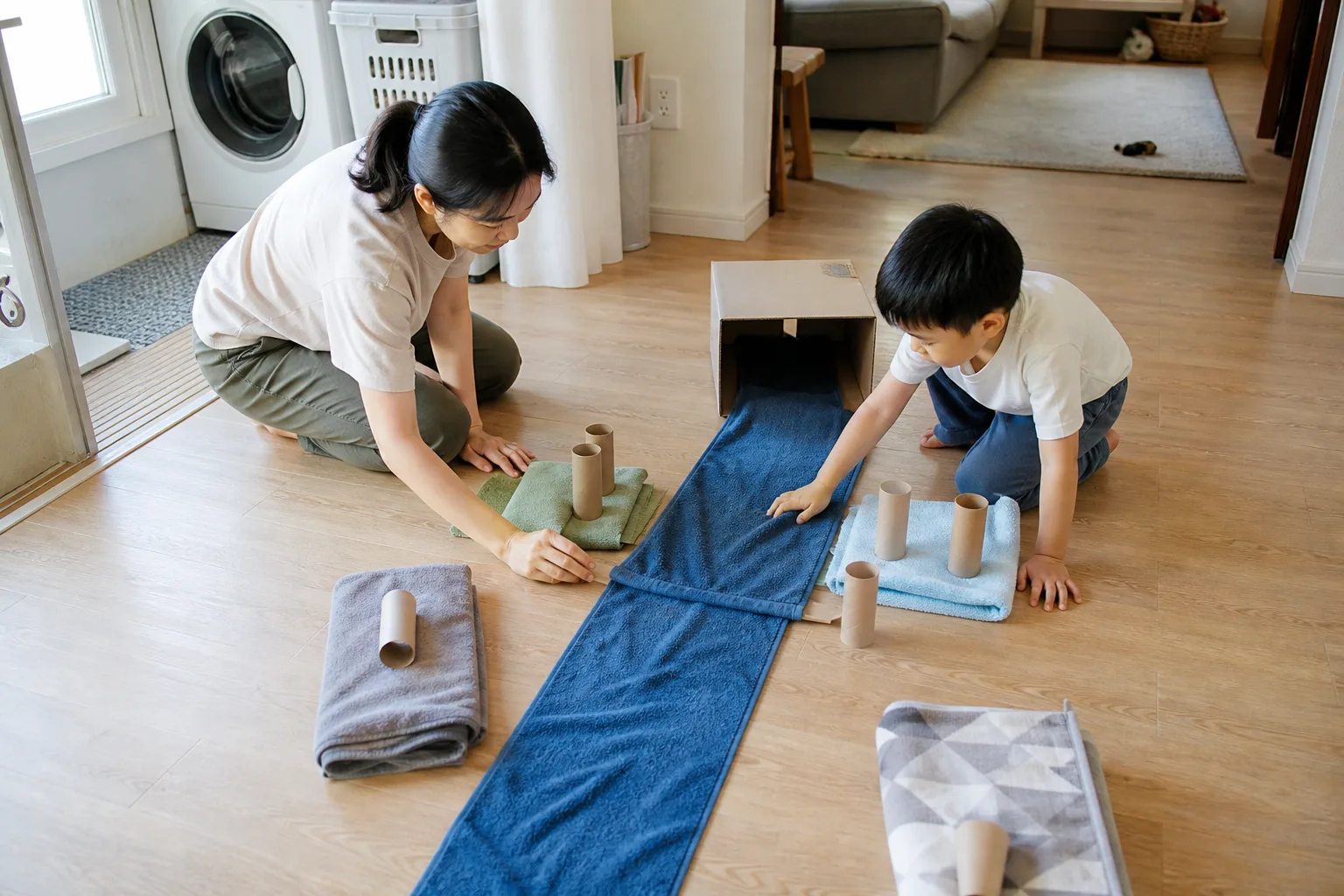
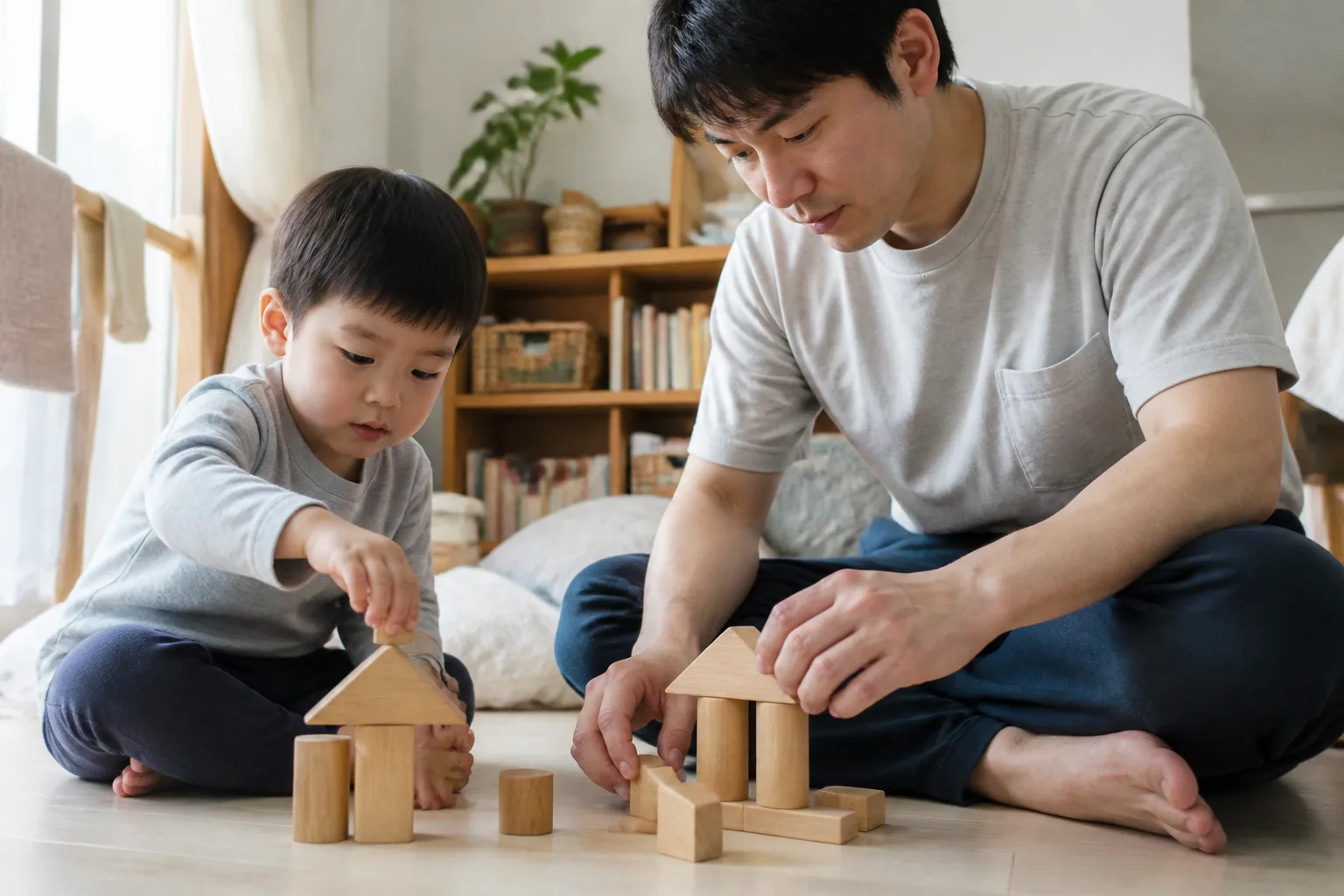
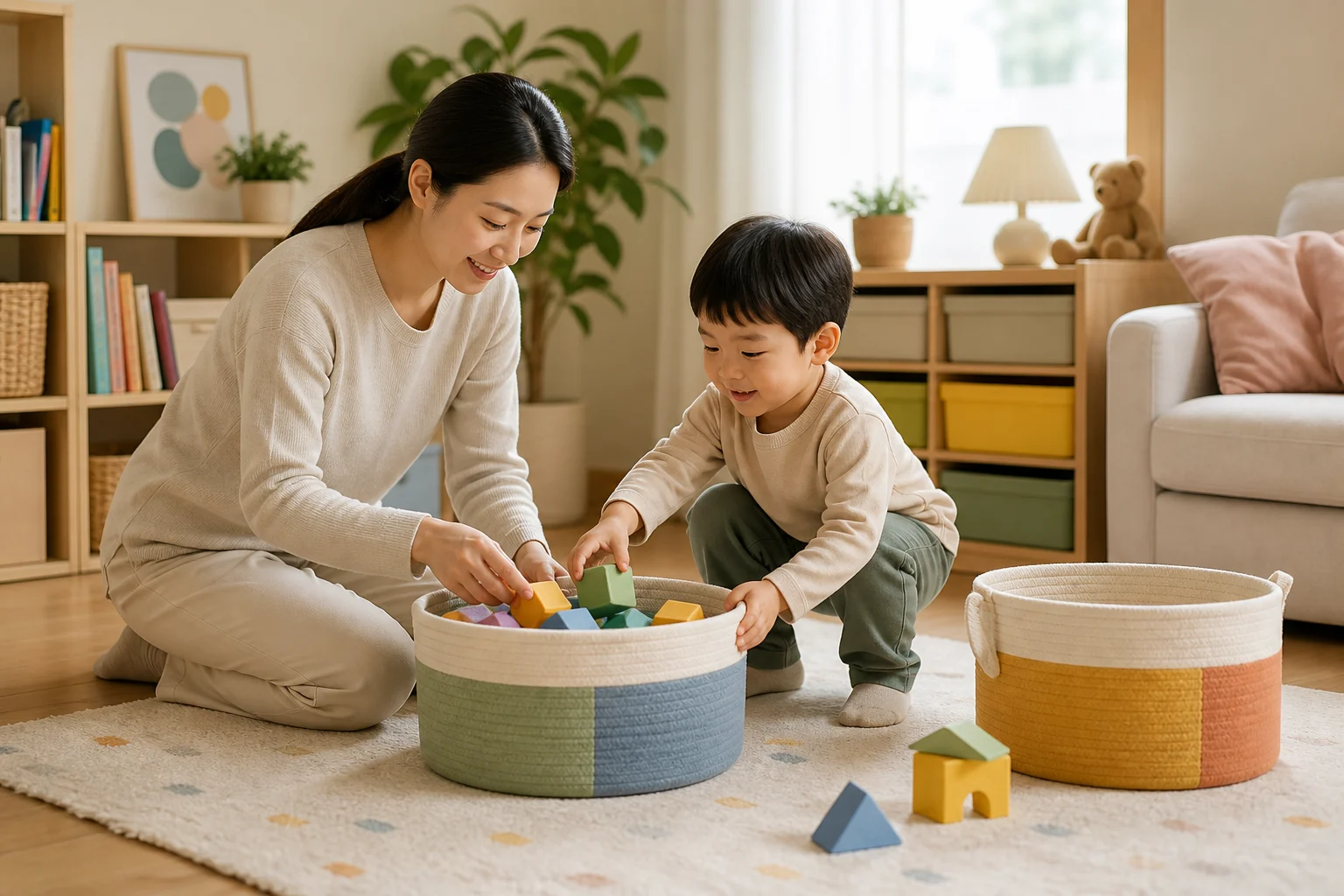
Place nearby materials that two children can use separately, such as matching blocks, sand tools, or paper. If your child watches another child play for a long time, point to an open space or one material and leave room for a choice instead of making an introduction for the child.
The same principles of child-led play work in a group: follow and describe your child's actions while asking fewer questions and giving fewer directions. This helps you avoid deciding the child's pace for them.
Joining briefly and leaving is still experience
Do not call it failure if your child sits nearby to watch once, passes a ball once, and returns to you. Using the same place or arrival sequence at the next gathering can make the event easier to predict.
If you want to offer words, use a short sentence that also gives the other child a choice, such as, "Can we join you?" If the other child says no, say, "Let's find another game," instead of trying to persuade them.
If concerns continue, discuss several situations
Do not judge development from wariness of unfamiliar people alone. But if your child loses a skill used before or several concerns continue with play, speech, or movement, review an age-based milestone checklist and consult a medical professional.
If you are concerned or your child has missed a milestone, you do not need to wait. Talk with a medical professional and ask about developmental screening. If anxiety lasts and clearly interferes with school, family life, or friendships, do not dismiss it as personality alone. Talk with the school or a medical professional.
Worksheet
Where your child stayed in a new group
You do not need to fill all four boxes at one gathering. Mark where your child stayed and which place you will leave open next time.
- Watch
- A comfortable place and the play your child watched for a long time
- Stay nearby
- A moment beside the parent or closer to the play
- Play side by side
- A scene where each child used the same kind of material
- Join briefly
- One pass, one phrase, or one shared action
Notes
- Respect your child's and the other person's choices about their bodies and space when deciding about greetings, hugs, or photos. Do not force them.
- Do not use these stages to judge personality type or developmental status.
- These stages will not fit every event. At a program that starts as soon as you arrive or includes a lot of body contact, it may be hard to keep a watching spot. You can arrive early so your child sees the space first or choose to join another time.
References
- CDC: Child-led play with toddlers and preschoolers
- CDC: Developmental milestones and next steps when you have concerns
- NHS: Getting help when a child's anxiety interferes with daily life
This is general guidance for joining a group. It does not replace developmental screening, diagnosis, or treatment.