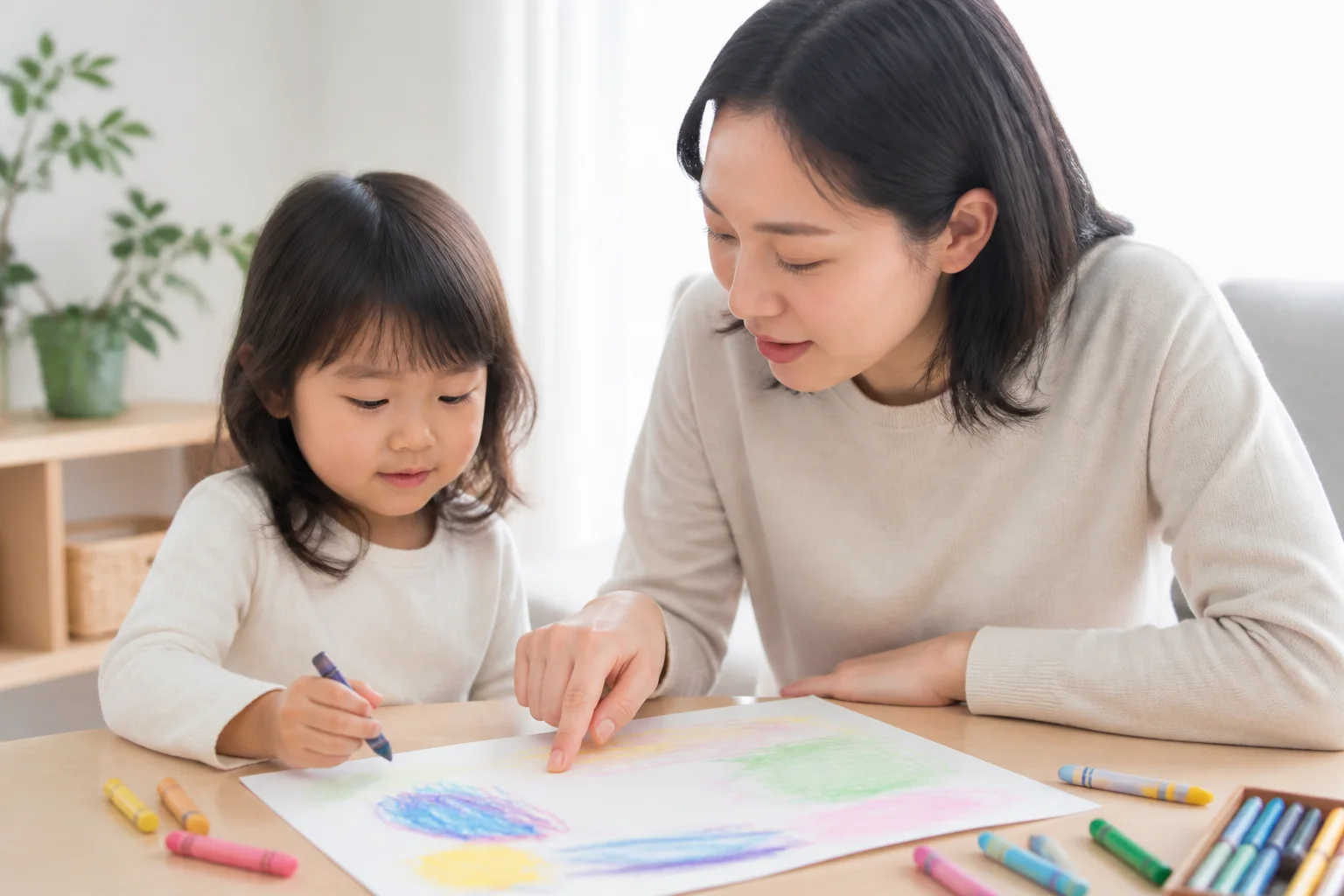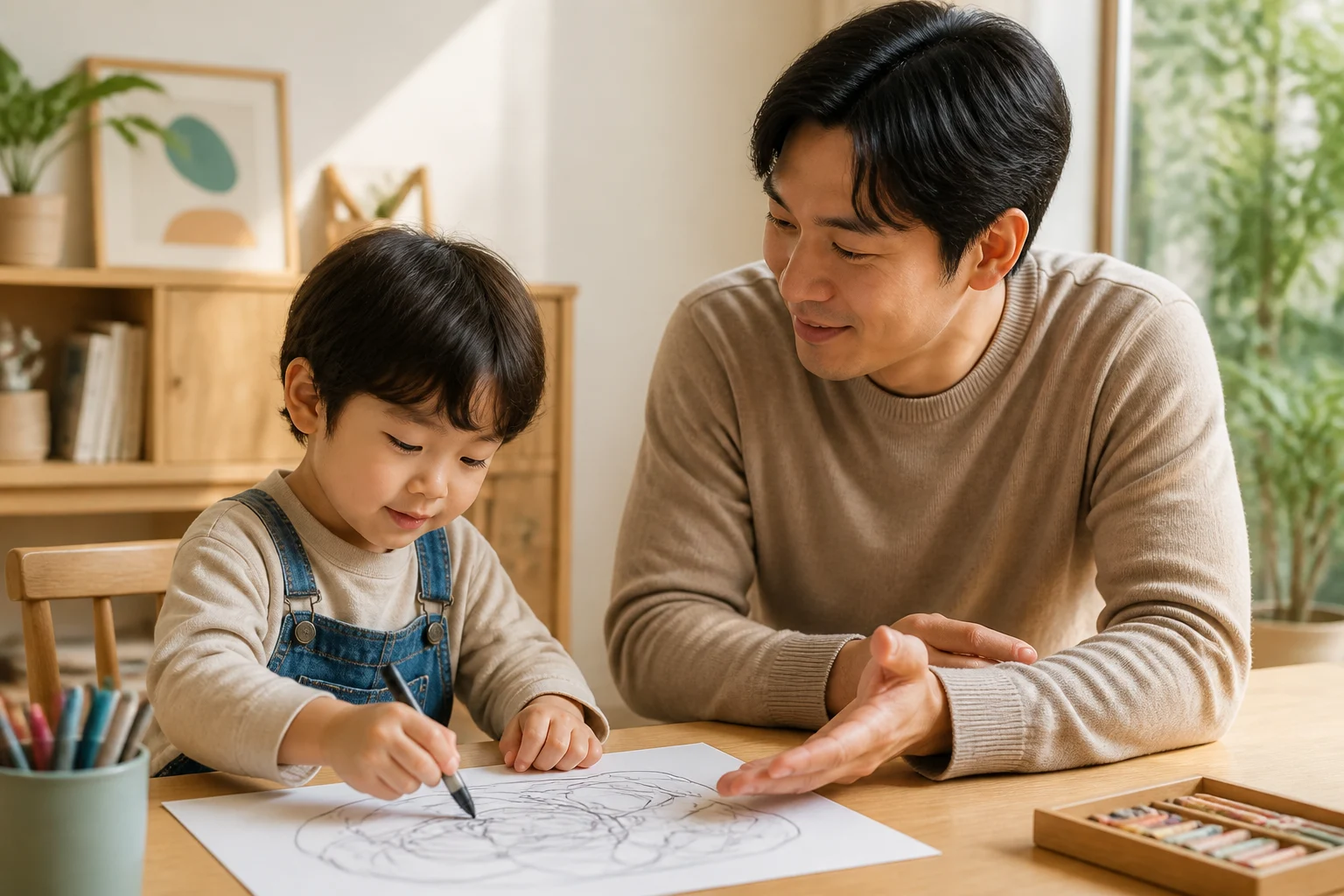
If your child uses only black, draws thick lines, and crumples the paper, you may worry about a hidden meaning. But the colors, lines, shapes, or finished appearance of one drawing cannot reveal depression, anxiety, abuse, or family relationships. Notice the materials your child chose and what they said at the time, without adding an interpretation.
Key point
Do not use the colors and shapes in one drawing as evidence for a diagnosis. Respect your child's right not to explain and their drawing's privacy. If you worry about something frightening or harmful that actually happened, ask brief, direct safety questions and get the help needed instead of interpreting the picture.
What to remember
- Do not judge your child's feelings or safety from black coloring, rough lines, or one torn sheet.
- Describe what you see, such as "You chose black," and ask an open question only if your child wants to talk.
- Address ongoing changes in sleep, eating, play, or school, and disclosures about safety, through counseling and protective steps, not drawing interpretation.
Do not label a child based on black coloring
There is no basis for saying that using lots of black means depression, drawing a large person means fear of someone, or leaving out eyes or hands signals abuse.
Children choose black for different reasons. It may be bold and easy to see with little effort, the first color they reached for, or a way to draw something dark, such as night, a cave, or a dinosaur. Even if you are curious, it is enough to watch the next drawing instead of interpreting this one.
When your child shows a drawing, describe what you actually see: "You chose black," or "This line goes a long way," instead of demanding, "Why did you draw it like this?" If your child stays quiet or covers the paper, do not push for an explanation.
Watch the process and listen to the words
Consider a preschooler's hand skills in the context of varied play and everyday tasks, not whether a finished drawing is good or bad. Fixing the picture or asking for a prettier version can easily become evaluation rather than observation.
Only if your child seems interested in talking, ask one question without a right answer: "What is happening in this picture?" or "What kind of place is this?" Add, "It's okay if you don't want to talk," and wait. You can note the drawing sequence or when they paused, but do not question them to fill out an interpretation chart.
Ask about safety directly, without interpreting the drawing
If, separately from the drawing, your child says someone scares or hurts them, says they do not want to go home, or there are real reasons to worry about safety, do not guess who the figures represent. In a comfortable setting, ask briefly and directly, "Are you safe right now?" or "Has anyone scared you or hurt you?" Believe what your child tells you and listen calmly.
Do not repeatedly question them about the same thing or lead their answers. If you sense immediate danger or your child shares concerns about injury, violence, self-harm, or death, seek help right away from a safe adult, local emergency or child protection services, or a medical provider. Do not analyze the drawing alone. Your child's current safety comes before saving the drawing or taking counseling notes.
Look at daily life beyond the drawing
If worries persist, briefly note dated changes in sleep, eating, play, relationships with peers and family, and child care or school, rather than focusing on one drawing. Development is considered across everyday situations, not one artwork. If fear keeps interfering with daily life, speak with a clinician instead of bearing it alone.
If you see severe withdrawal, fear, aggression, loss of previously used skills, or ongoing disruption to sleep, eating, attendance, or play, do not ask for more drawings to check. Note when and where daily life changed, and discuss this with a pediatrician or child and adolescent mental health service.
Respect the privacy of drawings, too
Ask before putting a drawing on the refrigerator or sharing it in a family group chat. If your child says no, decide together how to keep it. Do not tease them or explain its supposed meaning in front of relatives. Instead of making them redo a "messed-up" drawing, quietly offer fresh paper and other materials.
For today, it is enough to write, "Drew long black lines and chose not to explain." A different drawing tomorrow does not confirm the meaning of the earlier one.
Worksheet
What you can actually learn from a drawing
Write separately what you saw, what your child said on their own, and any ongoing changes outside drawing time.
- What you saw
- Only observed colors, lines, materials, and drawing order
- Your child's words
- A sentence they volunteered, or their choice not to speak
- An open question
- Ask "What is happening in this picture?" just once
- Everyday changes
- Whether changes in sleep, eating, play, or attendance have continued
- Safety check
- Where to get immediate help if there is a direct safety concern or disclosure
Notes
- Do not diagnose psychological states, abuse, or family relationships from colors, lines, shapes, figure sizes, or missing parts.
- Some children find even nearby conversation distracting. In that case, skip the descriptions, stay quiet, and respond only when your child shows you the drawing.
- Talk about self-harm, death, or violence, immediate danger, and ongoing daily-life changes call for safety measures and professional advice, not drawing interpretation.
- Ask your child before sharing drawings or explanations in a family group chat or on social media. If you need to tell a clinician or child protection service to keep your child safe, explain whom you will tell and why, and share the information needed. Do not delay seeking protection because your child does not want you to tell.
References
- NSPCC: Listening and seeking protection when a child reveals abuse
- American Academy of Pediatrics: Hand and finger skills in preschoolers
- CDC: Developmental milestones
- American Academy of Pediatrics: Helping with children's fears and anxiety
This is general guidance on observing drawing activities. It does not replace abuse investigations, mental health or developmental diagnosis, or treatment.