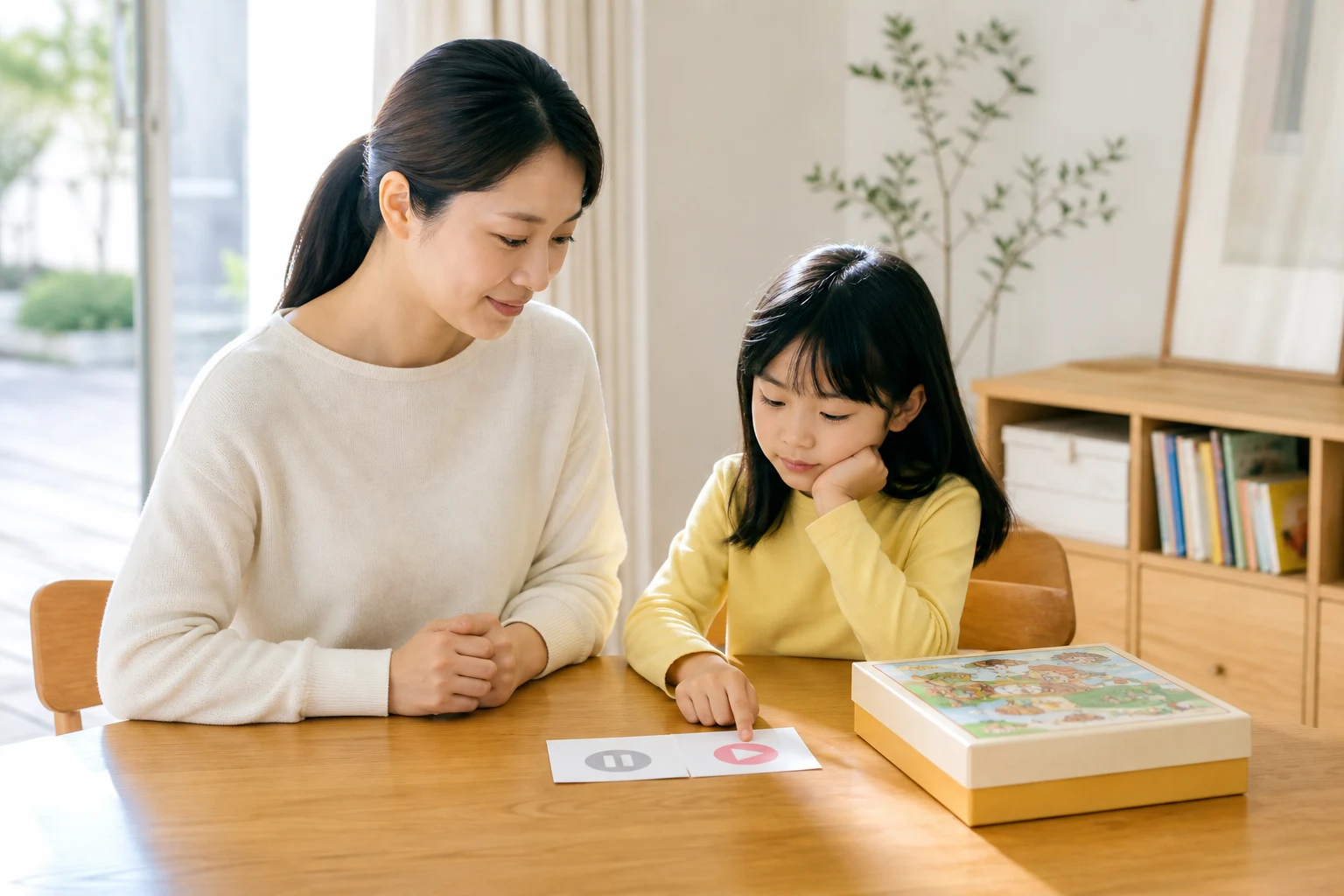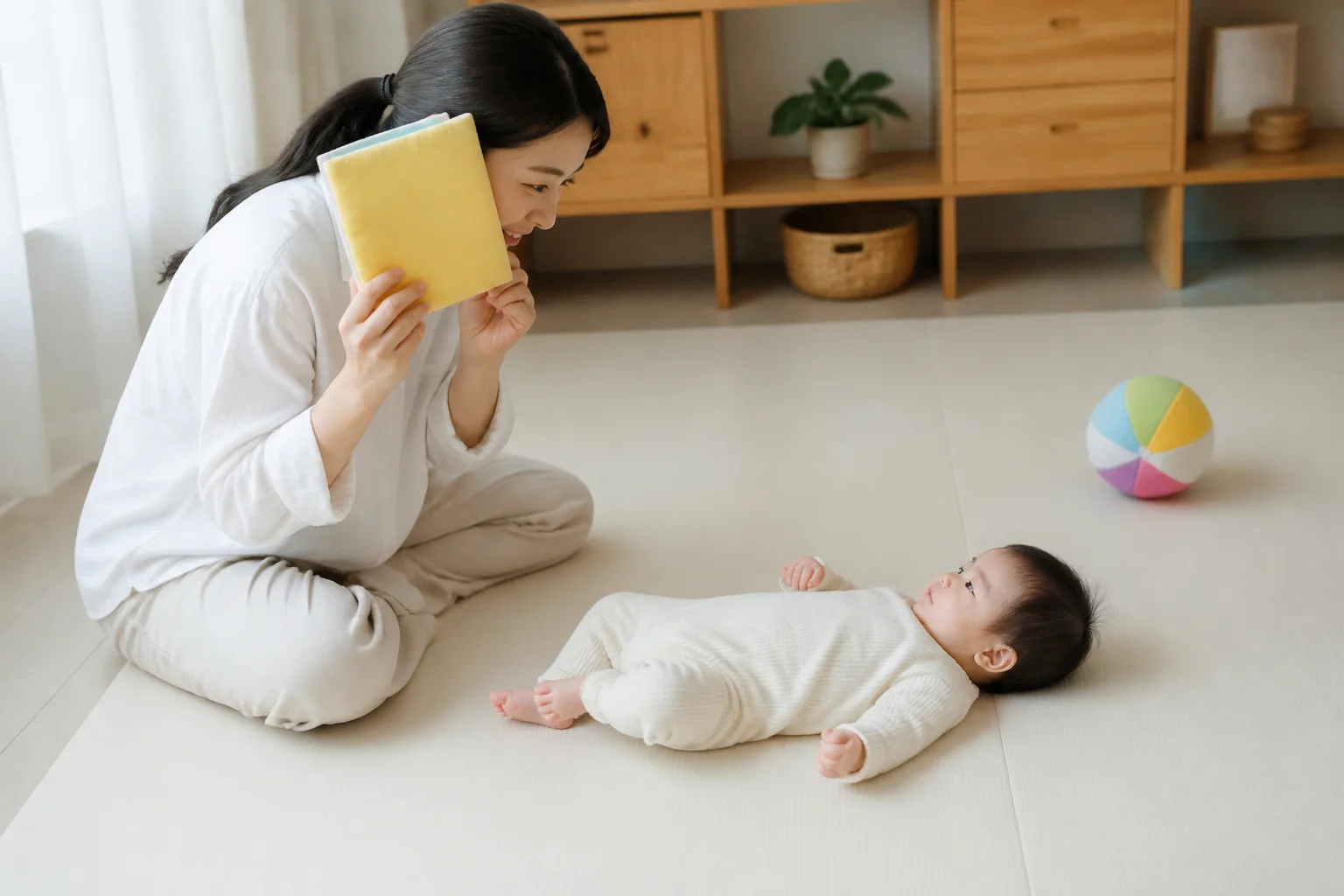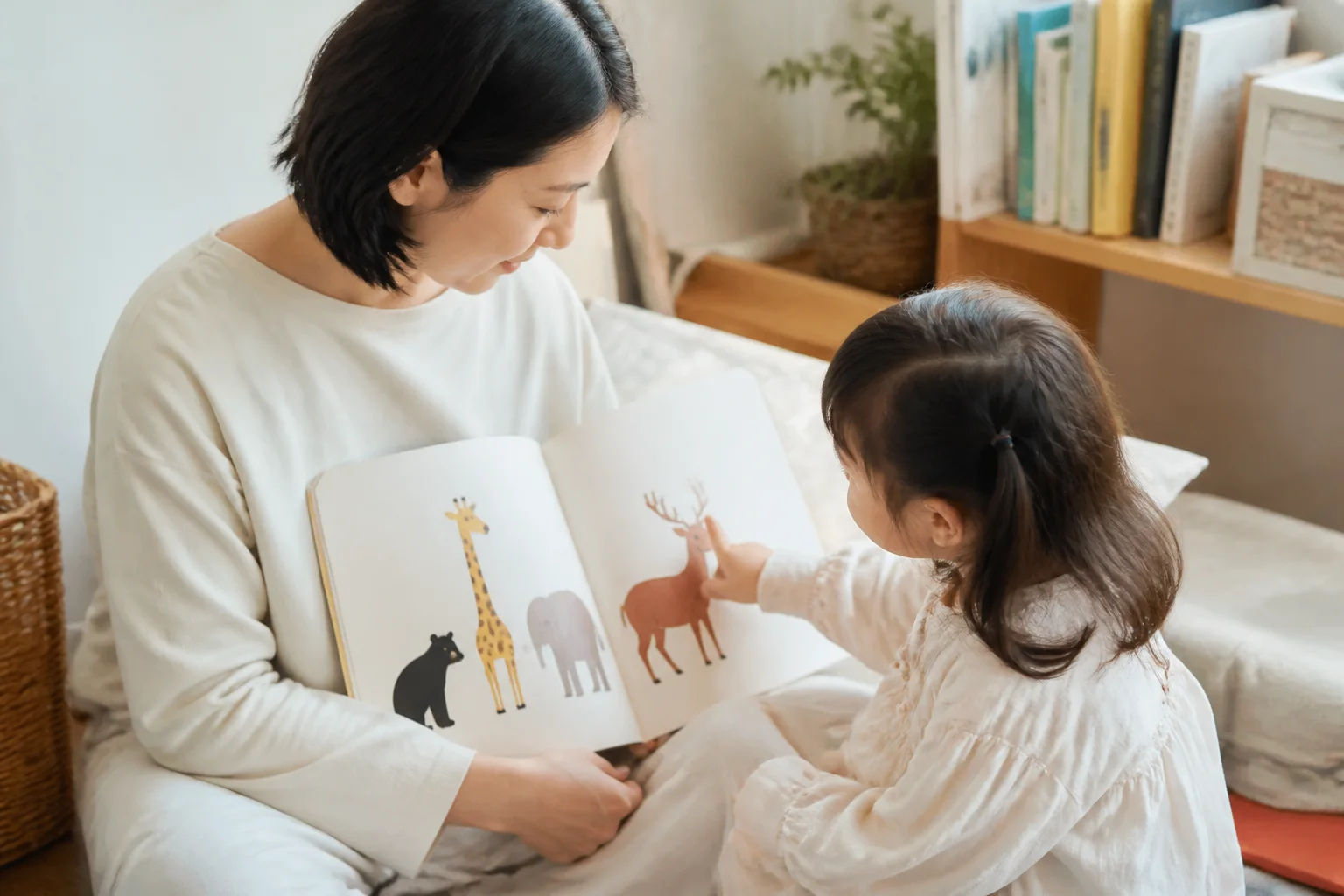
If your child flips pages quickly or looks at only one picture, start there. Point to the picture they chose, describe what you see, and wait for a response. Finishing the book does not have to be today's goal, and one response to a book cannot tell you whether there is a developmental or reading concern.
Key point
Point to a picture and describe what you see. Wait for your child to respond, then add a few words. Do not require them to finish the book or give a correct answer.
What to remember
- Start with the picture your child chooses.
- Wait for a response after describing it.
- Do not judge a concern based only on a response to a book.
Follow your child's finger instead of starting on the first page
If your child points to a car, describe it: "There's a red car." Add an open-ended question such as "Where do you think it's going?" and wait. If your child responds with a sound, gesture, or word, reflect it back. Sharing a book with a young child can simply mean talking about the pictures and their interests rather than reading every word from beginning to end.
Reasons for leaving midway can differ from book to book
If your child spends a long time with some books but quickly closes others, look at the conditions rather than their attention span. Common factors include long text that means waiting between pictures, a time when they want to move, or an uncomfortable sitting position.
Each calls for a different response. If the text is long, shorten it and talk about the pictures. If timing is the issue, try a calmer moment after active play or before bed. If position is the problem, read where your child chooses, such as your lap, the floor, or the sofa.
Try pointing, describing, waiting, and adding something
Say, "Did you see the dog?" and "The brown dog is running," then pause. If your child responds with a sound or gesture, add a connection to their experience: "The dog in our neighborhood walked fast, too." Do not require a correct answer. Choosing a different book counts as participation, too.
Make it easy to open a book again
Even if your child does not finish books, keep two or three in a low basket within easy reach. If they bring one to the table or open it on the floor, join them for one picture when you can. Taking out a book does not need to become a lesson immediately.
Notice something different in a familiar book
If your child wants the same page again, mention just one thing you did not mention yesterday. Point to a small detail, such as "It's raining outside the window," or copy your child's sounds and gestures. You do not have to invent a new story to keep reading together.
Your child does not have to sit until the end
Even if your child walks around with the book or switches to another game partway through, you can share one picture. Choose sturdy books, a comfortable position, and a brief time with few distractions. Children may touch and look at books differently depending on age and motor, sensory, or developmental needs. Do not hold a child in place or assign reading as punishment.
Check the book's safety, too
For babies and toddlers who chew books, avoid torn paper, detachable parts, and books with button batteries. Put damaged books away. Do not leave bedtime books in an infant's sleep space. Closing a book or walking away does not mean a child dislikes books or has ADHD.
Look at concerns across situations, not one book
Not listening quietly during shared reading is not enough to determine a language, hearing, or interaction problem. If you have language or hearing concerns across situations, notice changes in interaction or loss of previous skills, or remain worried, share your observations with a pediatrician or developmental consultation service.
Worksheet
One Picture We Shared Today
Record the picture your child lingered over and what you exchanged.
- The picture they pointed to
- Where your child looked or pointed
- My description
- What I noticed in the picture
- The response I waited for
- Gestures, sounds, or words
- What I added
- A brief link to your child's experience
Notes
- You can talk about a picture you shared even if you do not finish the book every time.
- Do not give babies or toddlers damaged books or small detachable parts.
References
- American Academy of Pediatrics: Sharing books with 2- to 3-year-olds
- American Academy of Pediatrics: Sharing books with children with special health and developmental needs
- CDC: Tips for child-led play
This is general guidance on shared reading. It does not replace language, hearing, or developmental assessment or treatment.