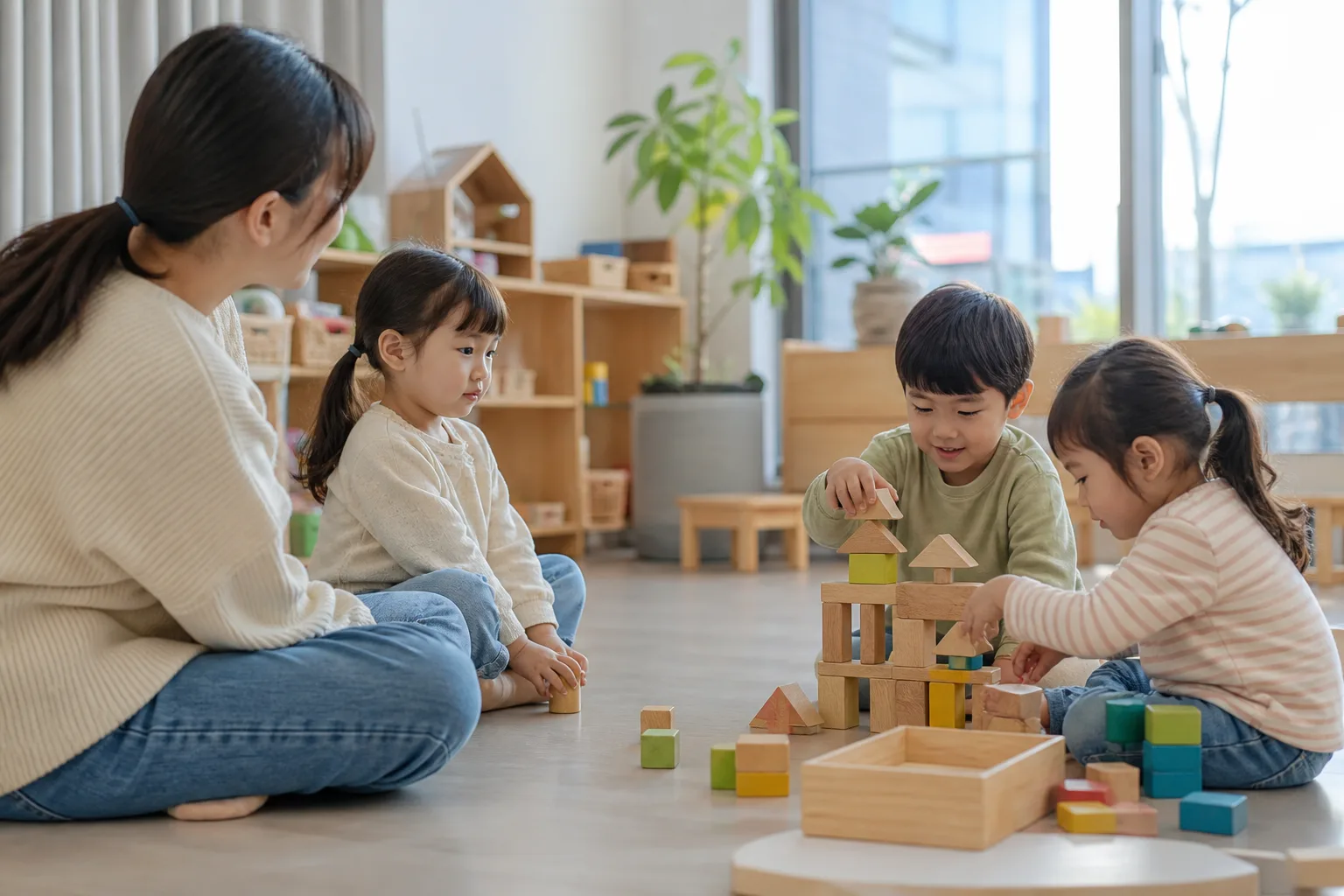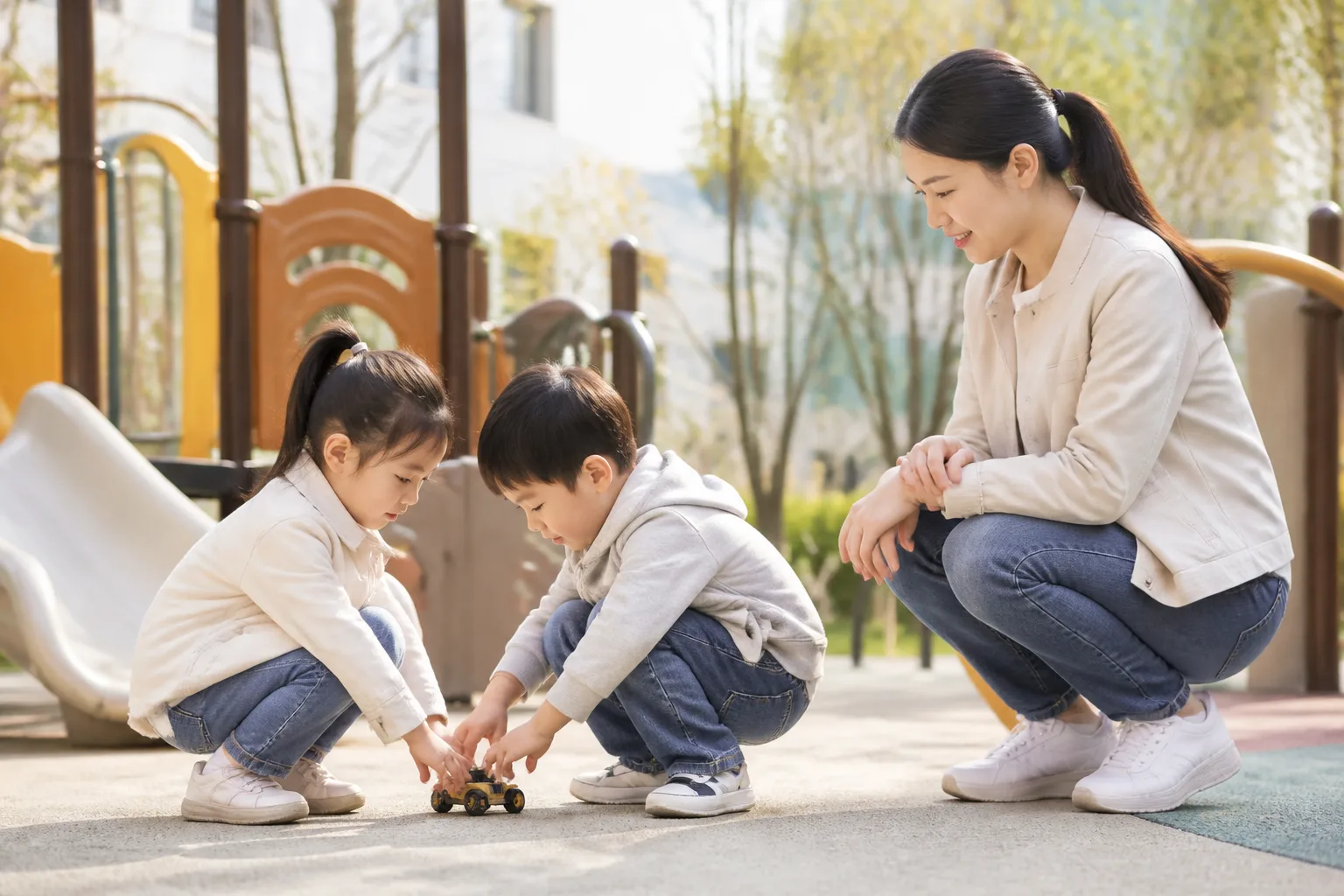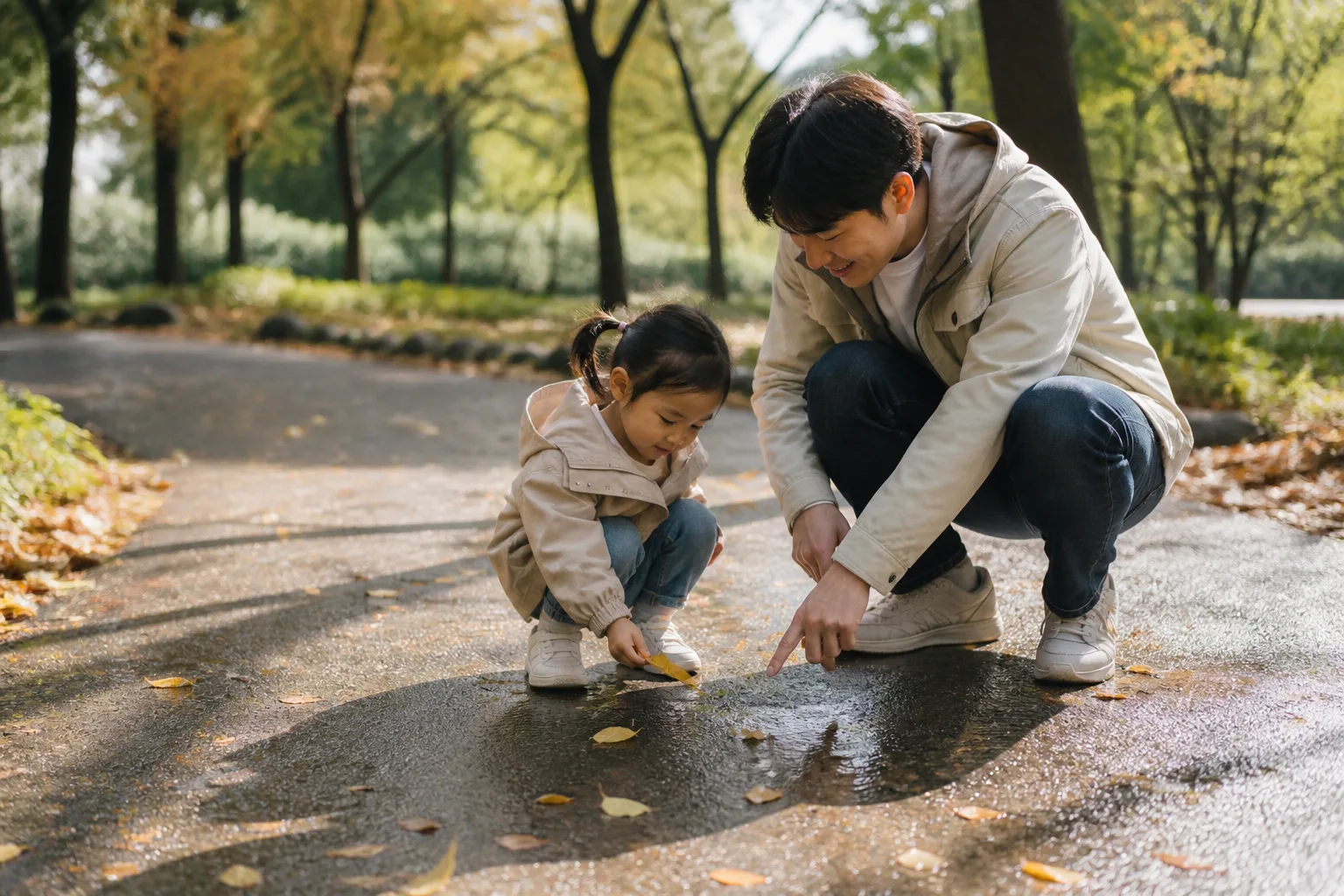
When parents see a leaf or puddle at the park, they may feel they need to teach something. A string of questions about names can quickly turn the scene a child was watching into a test. Pause together in the same place and talk about the change in front of you.
Key point
In nature, ask one question that continues the observation, such as "What changed since before?" "Which one is wetter?" or "What do you think will happen next?" instead of "What is this called?"
What to remember
- Wait first where your child stops to look.
- After asking a comparison question, give your child time to explain the reason instead of correcting the answer right away.
- Explain safety rules and respect for living things before asking questions.
Ask what your child sees before asking for a name
If your child studies a rock, ask, "Which part shines?" instead of, "What kind of rock is it?" If your child does not answer with words, accept pointing or moving closer to look as an answer too.
If you want to add a fact you know, wait until your child has responded once, then keep it brief. You can repeat what you both saw, such as, "The wet side looks darker."
Keep change and comparison in one scene
Choose two nearby views, such as leaves before and after the wind blows, the ground in shade and sunlight, or a dry rock and a wet rock. Ask, "Which one looks colder?" Then wait for your child to touch, observe, or explain the reason.
You do not need to say "right" or "wrong" right away. When you pass the same place the next day, ask, "Is it the same as yesterday?" This gives your child a chance to look at the idea again.
Make predictions small enough to check
Instead of deciding from the clouds whether it will rain, ask a question you can soon check, such as, "What will happen to the leaves if the wind keeps blowing?" If your child's prediction differs from yours, listen once to the reason, then watch together.
Outdoors, give children time to explore, ask questions, and describe what they see. Wait while they look more closely at a leaf or rock before offering an answer.
Set clear rules for touching nature
Tell your child the rules first: do not eat unfamiliar fruit or mushrooms, do not carelessly catch insects or pick plants, and stay beside an adult near water and roads. Before leaving, prepare for risks already known for your child, such as allergies, asthma, or bee stings.
Respect it if your child would rather run or rest than observe nature. A walk that supports thinking begins with a safe experience, not with the number of questions you ask.
Worksheet
Three questions to choose from on a walk
One question on a walk is enough.
- Change
- What changed between before and now?
- Compare
- What is different between the two scenes, and what makes you think so?
- Predict
- What do you think will change in a little while?
- Check
- What will we check when we look again?
Notes
- Observing nature is not a science lesson or a developmental assessment.
- Follow local park and protected-area rules for access and collecting.
References
This is general guidance for outdoor play. It does not replace individual decisions about allergies, asthma, infection, or local safety rules.