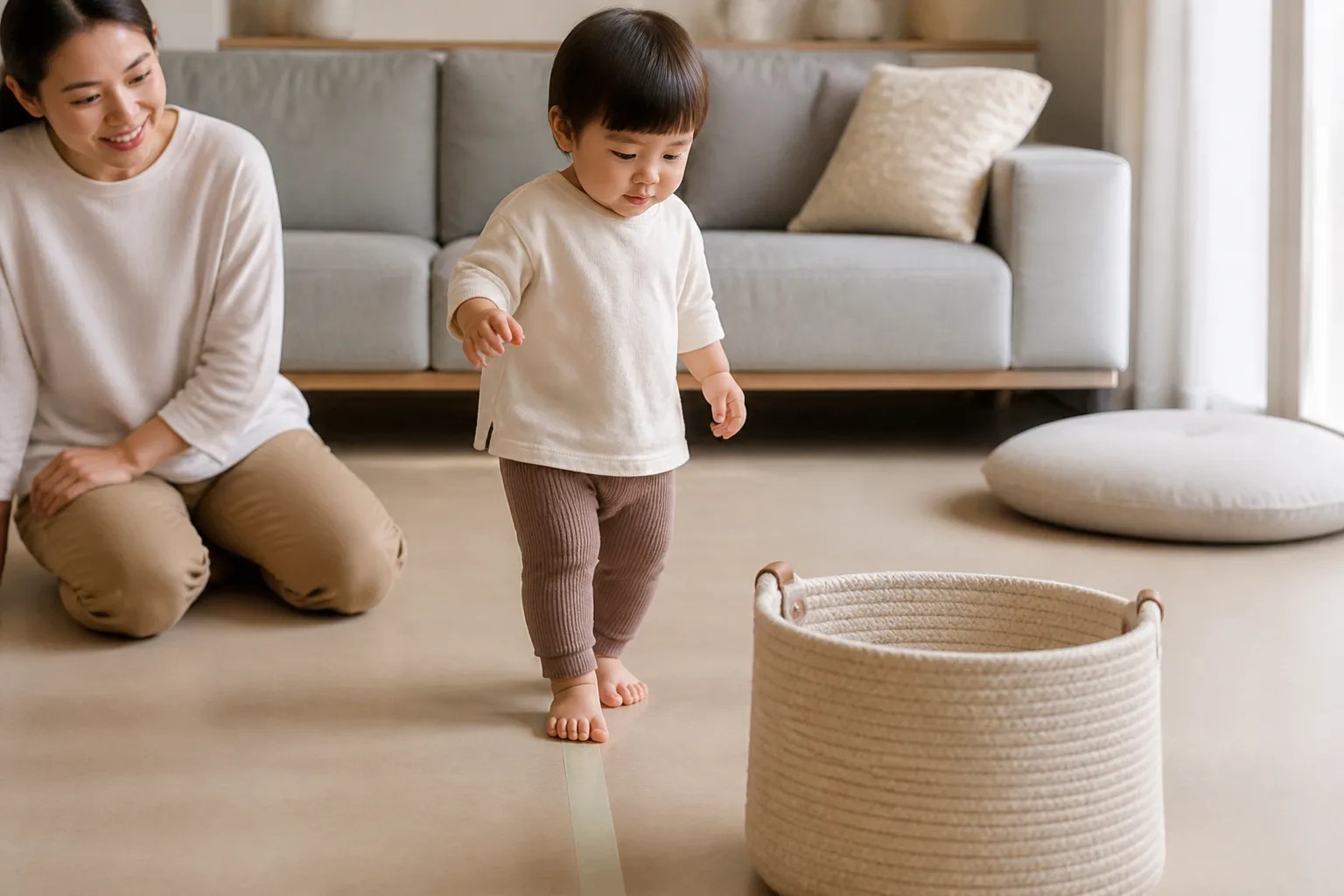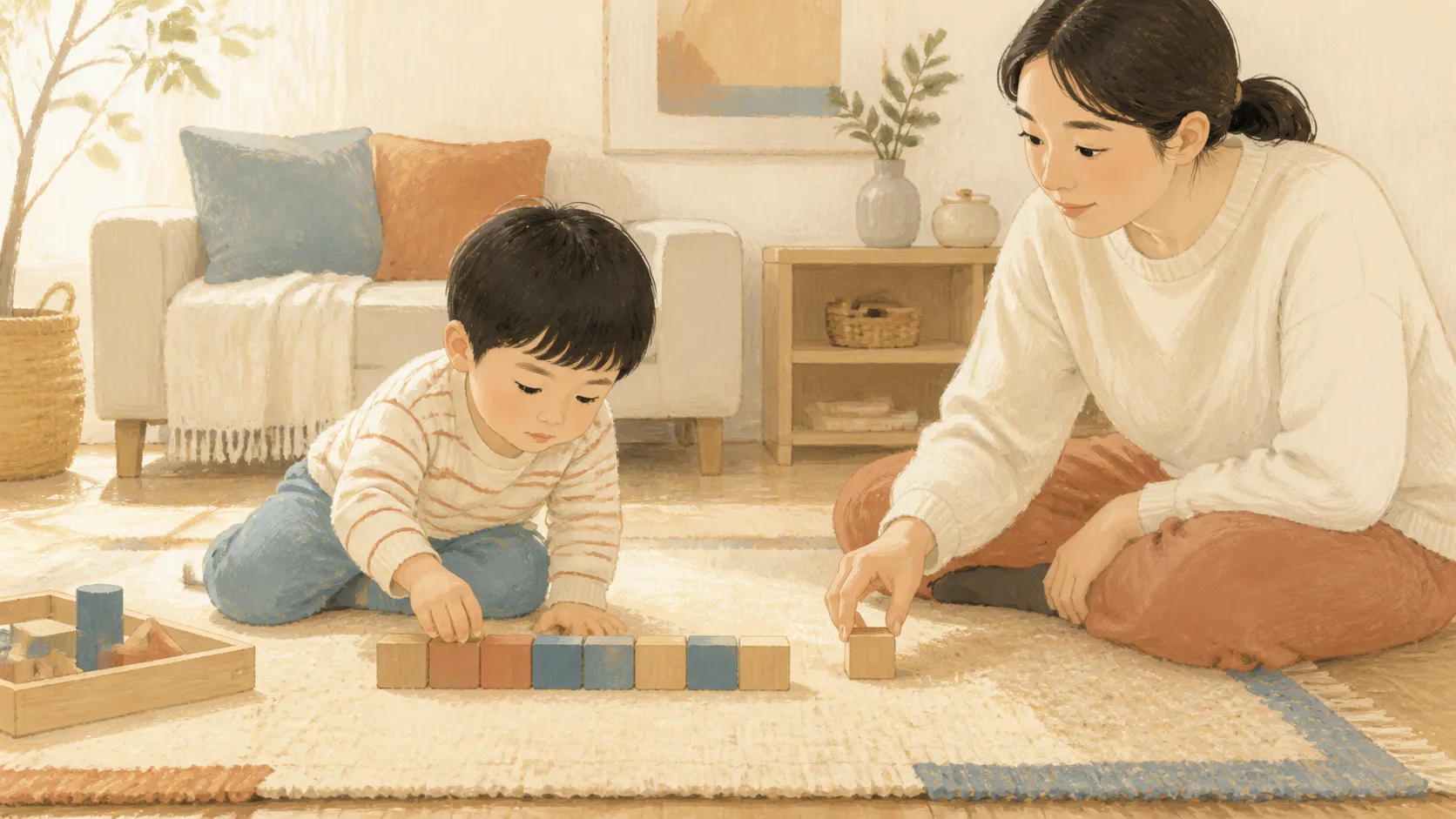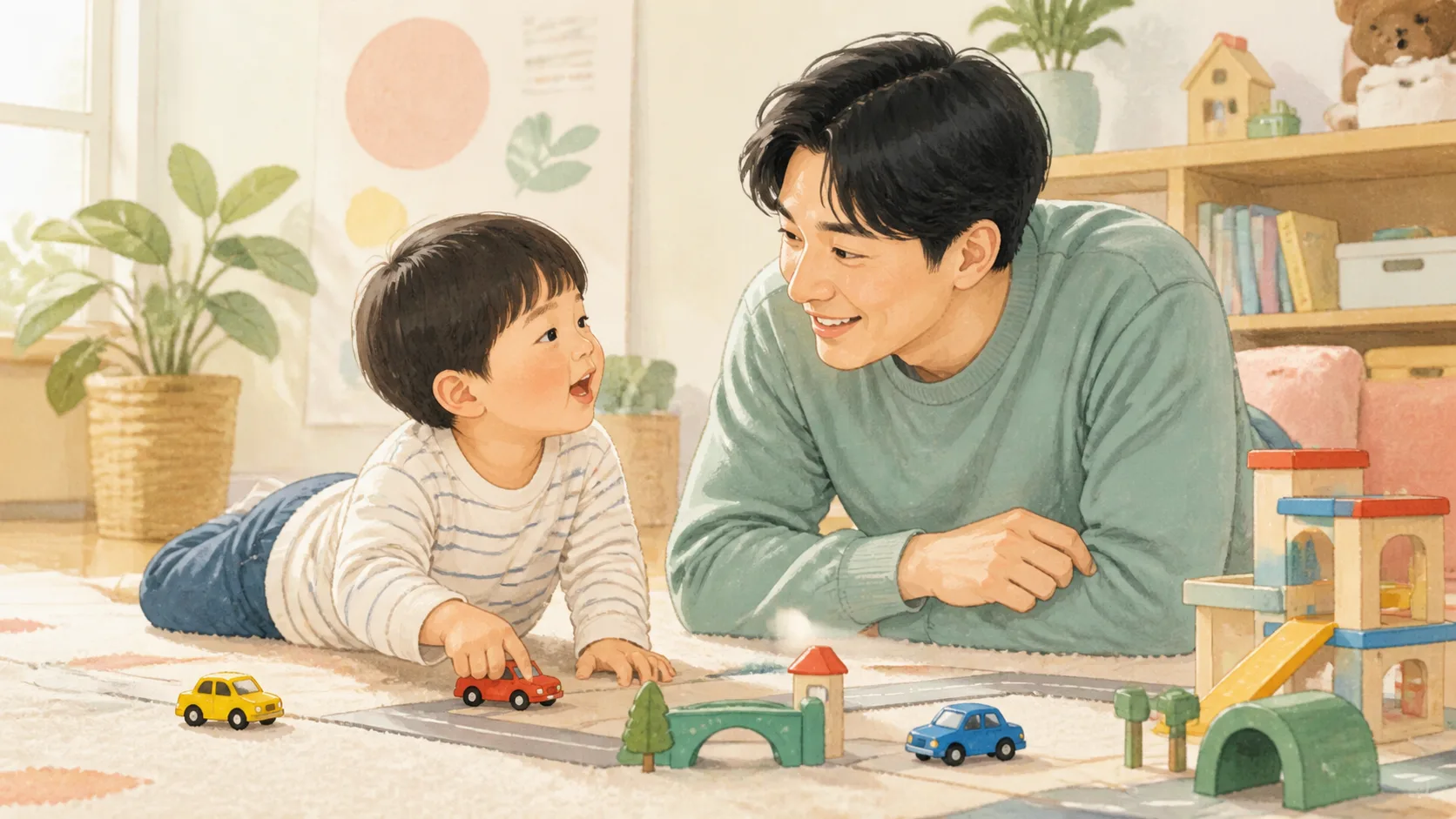
If your baby was laughing at peekaboo and turns away, first see whether they still want to watch instead of making the game louder. Do not judge development from one quiet response. Allow a break or a different game.
Key point
Change just one thing based on your baby's response, and stop when they show they do not like it.
What to remember
- Start briefly when your baby is awake and looking at your face.
- Change just one thing: your face position, a large object, or where a sound comes from.
- Do not leave your baby alone with fabric or small objects, or leave them in the sleep space.
Hide your face and come right back
Briefly cover part of your face, then show it again. If your baby makes eye contact or moves their hands and feet, repeat once or twice at the same pace. Smiling or laughing during peekaboo is among the 9-month milestones, but one game is not a developmental test.
If your baby turns away or their expression tightens, say, "Let's take a break," and stop. Start again only when they look for your face.
Change one thing at a time
If your baby is comfortable, change just your face position, a large cloth book, or the direction of the sound. Changing everything at once makes it hard to tell what they were watching. This game is not training to improve memory or attachment.
Keep play shorter on quieter days
On days with hunger, sleepiness, unfamiliar surroundings, or loud noises, seeing a familiar face may be enough. Instead of trying to get a reaction with a new object or a louder voice, make eye contact, say your baby's name, and wait.
If your baby looks back after turning away, try the same thing just once more. If they keep looking away or pull back, end the game for the day. Try again at the same time the next day, and briefly note what conditions felt comfortable.
Keep hold of the fabric
Use fabric only when you can keep holding it and remove it immediately. Do not leave your baby alone with fabric, plastic bags or sheeting, cords, or small objects, or leave these in the crib. If your baby gets sleepy, put the objects away and move them to their sleep space on their back.
Choose large objects that cannot be swallowed and have no broken or sharp parts. Check age and safety labels.
Consider concerning responses alongside everyday behavior
Write one line, such as, "After the morning feeding, turned toward a voice on the right." Do not assume a developmental problem because your baby did not smile. Tell your pediatrician if you worry about how your baby responds to sounds or makes eye contact. Also seek advice if they are not meeting one or more milestones for their age, stop doing things they used to do, or your worries continue.
Return to your usual routine afterward
You do not need to add more stimulation after peekaboo ends. Moving on to cuddling, feeding, or a diaper change can help your baby anticipate the end of play.
On days when both you and your baby are tired, eye contact or a line of a song is enough. Ending comfortably can make it easier to play again next time than trying to get more responses.
Worksheet
Peekaboo that felt comfortable for your baby
Write just one line about which approach led your baby to watch, smile, or want a break.
- Start
- Awake, mood
- One change
- Face, object, sound
- Signal
- Looking, turning away
- Next
- Repeat, rest
Notes
- Not smiling does not mean your baby has a developmental problem.
- Remove fabric, cords, and small objects from the sleep space.
- Some babies dislike seeing a face disappear. Try hiding and showing a stuffed animal or cloth book instead, or switch to another game.
References
- CDC: Developmental milestones
- CDC: 9-month developmental milestones
- U.S. Consumer Product Safety Commission: Toy safety
This is general guidance on interactive play with babies. It does not replace developmental, hearing, or vision assessments or a medical diagnosis.