Access to medicine, cleaners, knives, or batteries is not play. Lock up hazards first, then have an adult prepare one space the child may explore. If your child may have swallowed something or been injured, stop the play and get emergency help first.
Key point
Lock up hazards and open only one adult-chosen space for exploration.
What to remember
- Lock and check hazardous drawers.
- Put only large, safe objects in the allowed drawer.
- Respond to a possible accident as an emergency first.
First remove off-limits areas from reach
Keep medicine, cleaners, laundry pods, knives, matches, lighters, magnets, button batteries, and breakable objects locked up and out of reach. Child-resistant packaging does not replace supervision. Do not expect telling a child not to open a drawer to prevent access.
Secure furniture, the TV, and the range so they cannot tip, and prevent a child from using drawers as steps. Even after installing locks, check them regularly as your child grows and may learn to open them.
Create one small space that can be opened
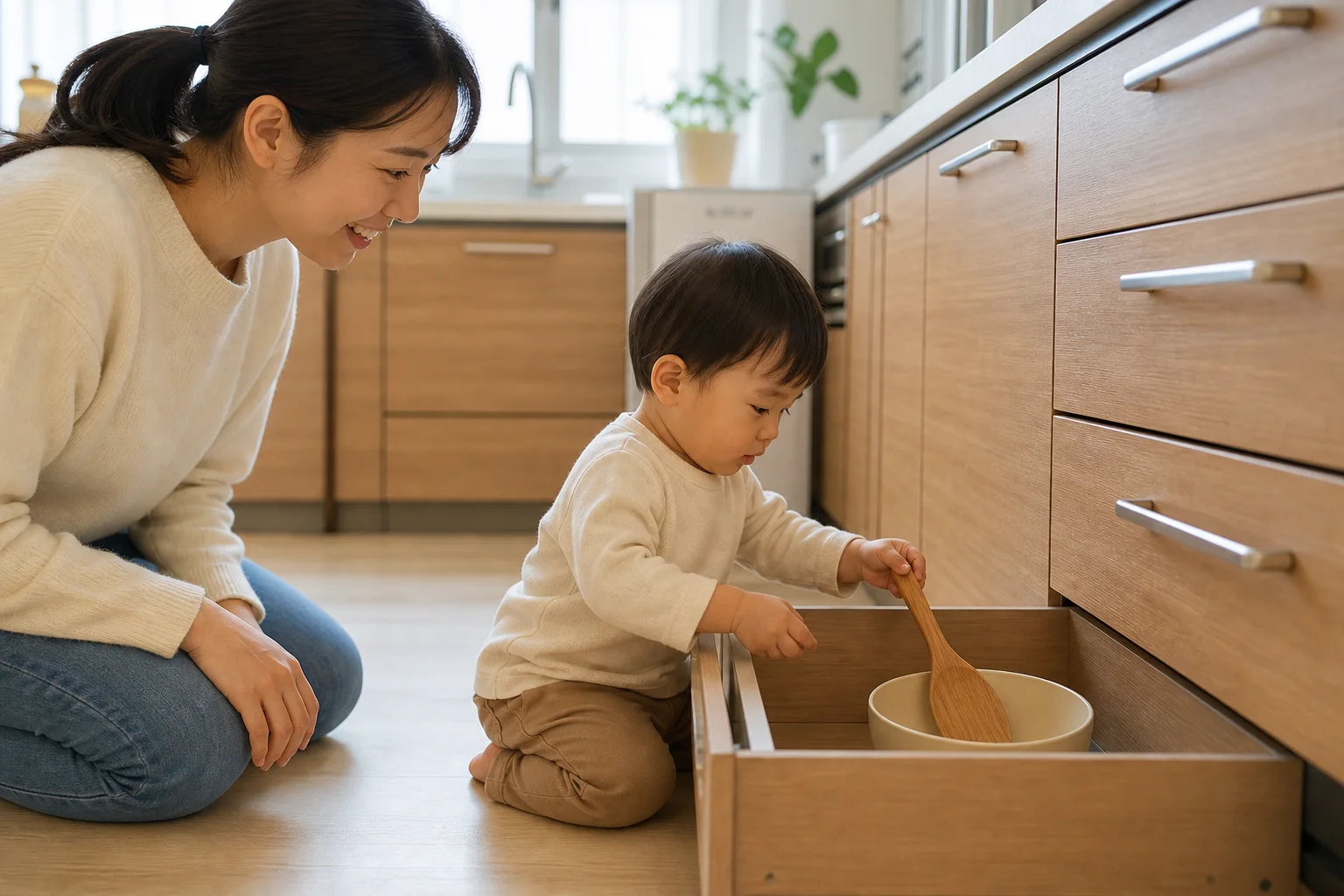
In one low drawer, place only objects that cannot be swallowed or broken, such as a large wooden spoon, light plastic bowl, or large piece of cloth. Do not use plastic bags, food, strings, or small parts for exploration. More objects are not better. Include only enough for a parent to check at a glance.
If your child goes to a hazardous drawer, say briefly, "That one is locked. You can open this one," and move together to the allowed drawer. One allowed drawer does not guarantee that your child will stop opening other drawers.
Observe what your child explores
Watch whether your child repeatedly takes objects out, puts them in, or taps them. Change only one object the next day. This play is not a program that promises cognitive development. It is a way to handle curiosity safely at home. If your child slams the drawer or throws objects, first protect the hands and feet, then show another action.
Get help right away for a possible accident
If you suspect swallowing, poisoning, a burn, or a cut, do not discipline your child or force vomiting. Contact local emergency or poison response services. If possible, identify the object or its packaging. Access to a hazard is not a test of curiosity. It calls for an adult to block access and get help immediately.
Worksheet
Home Exploration Area Checklist
Write down environmental changes for adults to make, rather than rules for the child to manage.
- Lock up
- Medicine, cleaners, knives, and batteries
- Secure
- Furniture, TV, and range
- One allowed space
- A few large, safe objects
- Accident plan
- Local services to contact
Notes
- Locks do not replace supervision.
- Do not allow access to hazards as exploration play.
References
- U.S. Consumer Product Safety Commission: Home safety checklist
- U.S. Consumer Product Safety Commission: Toy safety
This is general home safety guidance. It does not replace emergency diagnosis or treatment for poisoning, burns, swallowing, or trauma.