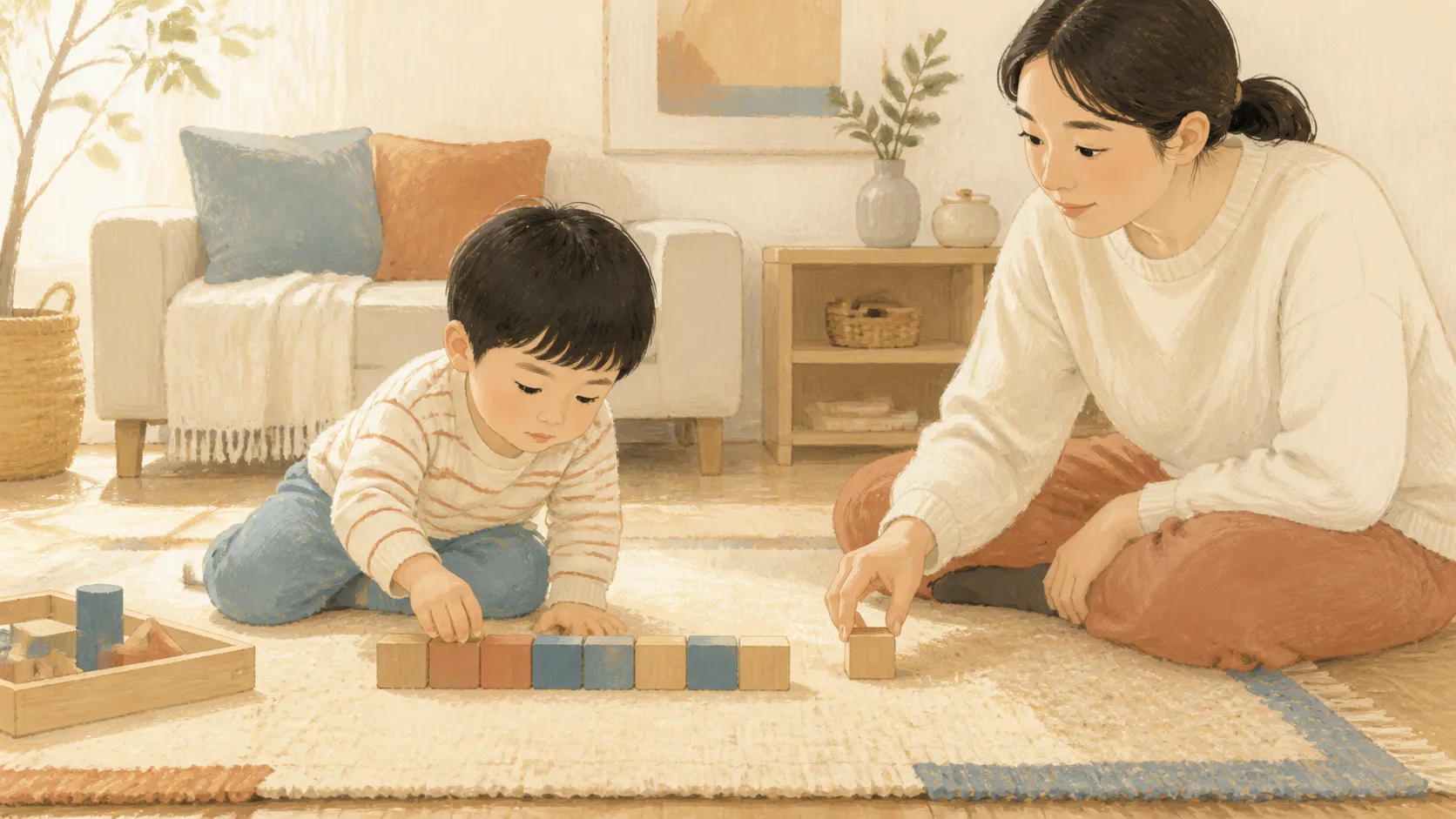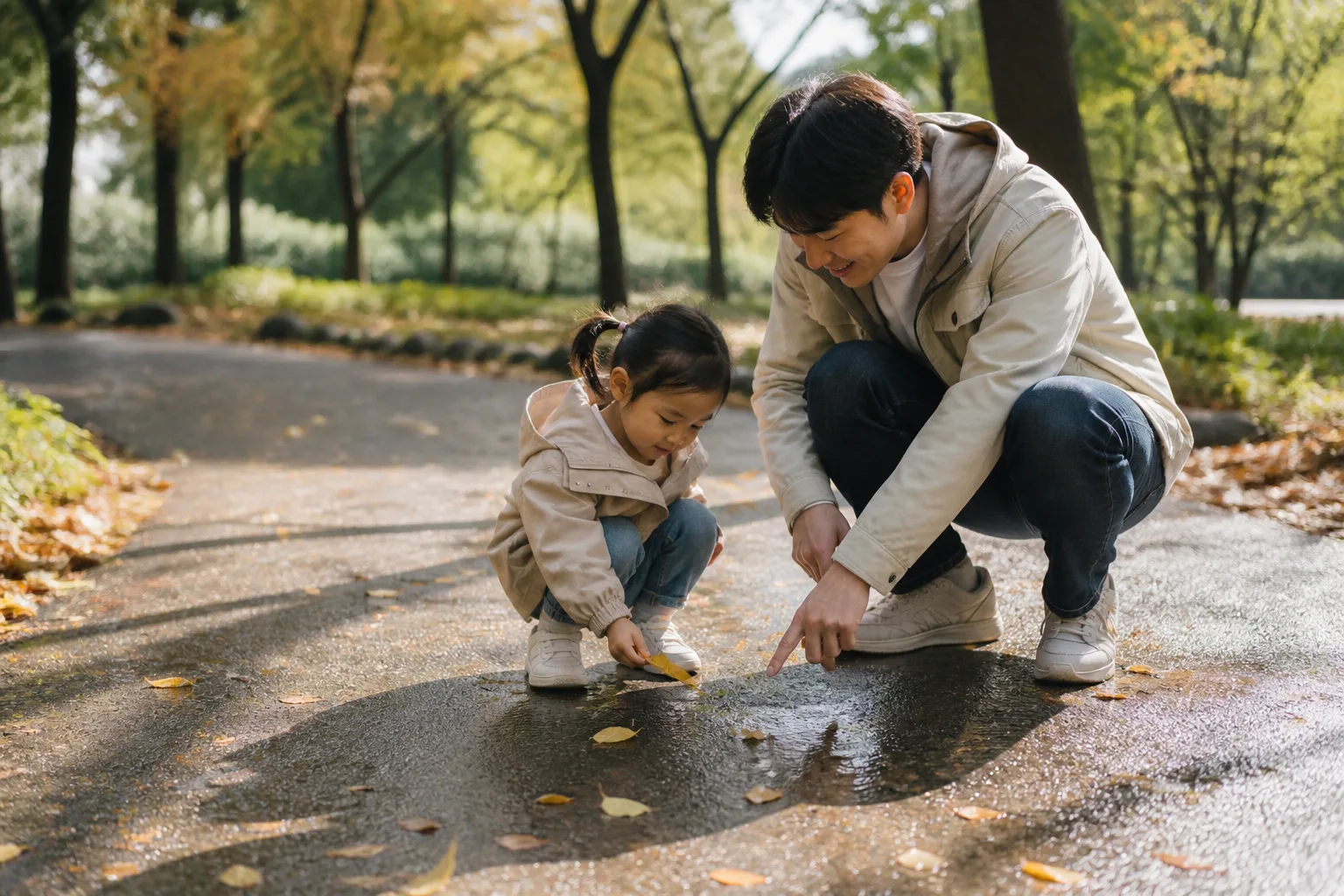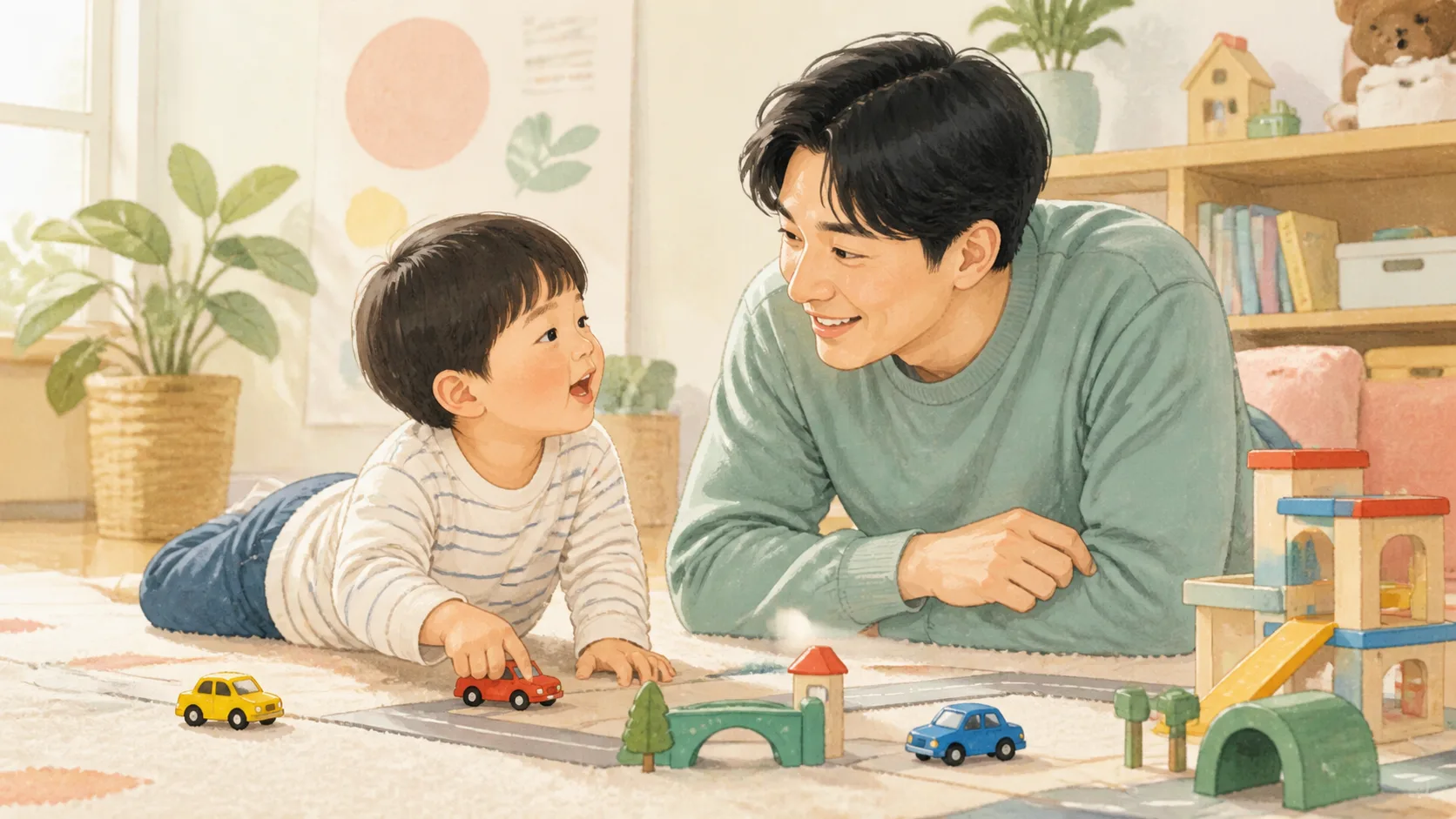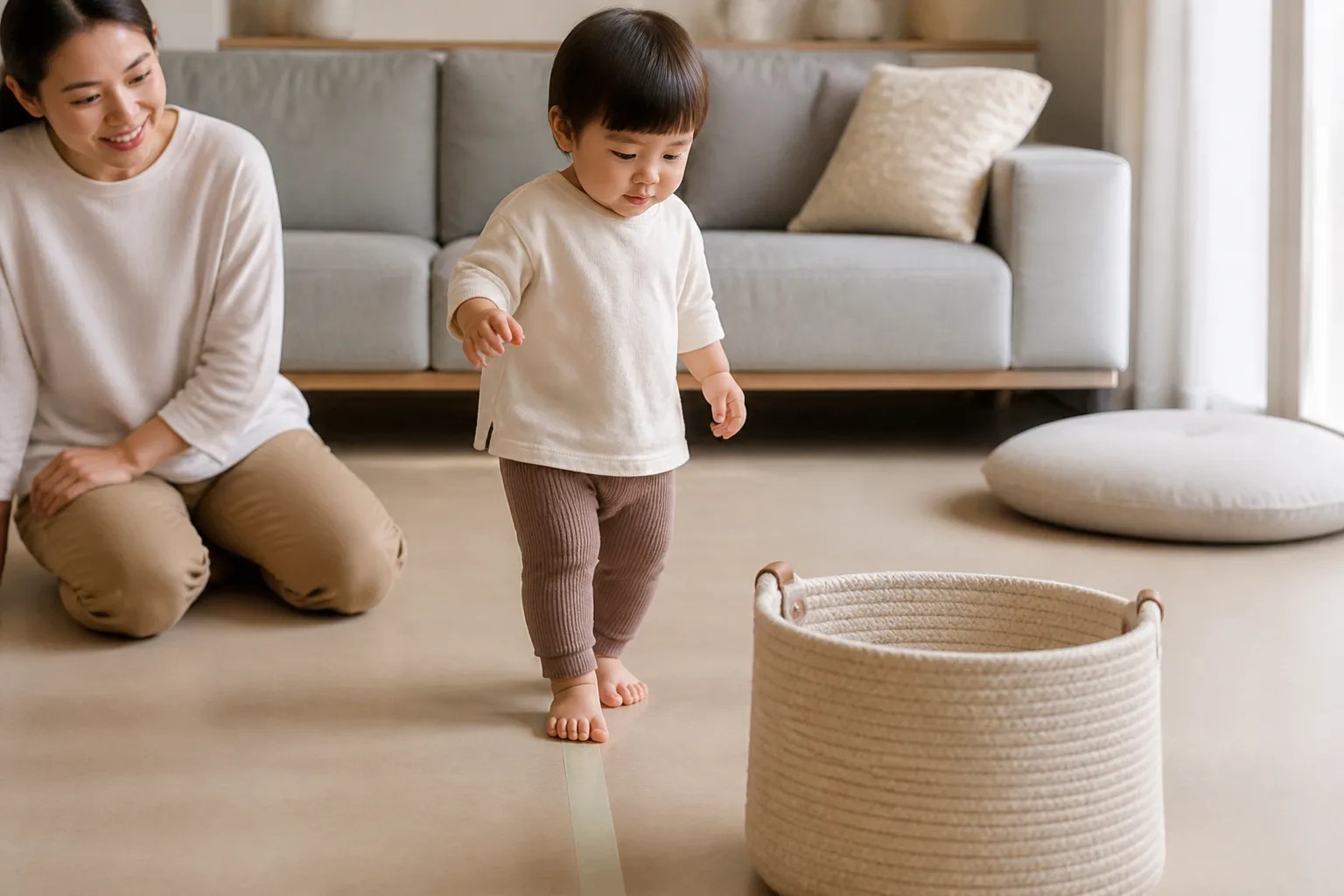
On a rainy day, a new walker may move around the house and try climbing the sofa. Instead of building a big course to provide enough exercise, make a short, low route where falls are less hazardous. Indoor movement play is a brief chance to move and stop by choice, not training to walk sooner.
Key point
Place a low cushion, tape line, and large basket one at a time on a flat, nonslip floor. Stay close and stop when your child is tired or unsteady, regardless of time. Pain or a sudden change in walking needs medical attention before more play.
What to remember
- First clear slippery spots, small parts, sharp corners, and hot objects.
- Offer a low cushion path, tape line, or large basket endpoint one at a time.
- Limping, pain, one-sided use, or a sudden loss of walking are reasons to seek advice.
Check the floor before planning the route
Check that the surface is level and not slippery, with no curled rugs or cords crossing it. Block off access toward stairs, windows, hot objects, and furniture corners. Furniture and televisions should be anchored to the wall. Clear small toys, magnets, plastic bags, and cords from the route.
Cushions do not make falls from high places safe. Do not include jumping on beds, sofas, or chairs in the course. Do not use unstable boxes or chairs as steps. If your child tries to climb, move them safely to the floor and offer another activity.
Use three materials to make a low route
Place one low, firm cushion on the floor for your child to step over or go around. A short tape line can come next, with a large basket at the end for placing a soft ball. Do not make a complex layout all at once. Start with the one item that interests your child.
Briefly describe the current action: "Shall we walk beside the cushion?" "Your foot is on the line," or "Put the ball in the basket, then we're done." Do not pull your child through movements by the hand or test their balance. Let them go around or sit down. Show the next section only when they want to start again.
Do not fill a time target when your child is unsteady
Even if you planned only a short session, finish when your child looks tired, loses balance, or loses interest. There is no need to repeat the same course every day or complete a set time.
Show the next action when finishing: "Let's put the ball in the basket and have some water." No particular course guarantees faster walking or balance development. Young children benefit from chances to move and play several times a day, but time or performance in one activity is not a developmental standard.
Change one section to fit your home
In a small living room, use two steps of clear floor away from the wall and one basket instead of a cushion path. In a long hallway, check thresholds and slippery spots before adding tape, then place a ball at the end. With thick or slippery carpet, skip the tape and walk to the basket. A different layout is no reason to add higher steps or chairs.
If your child avoids the cushion or sits down, do not insist on completing the course. Reduce it to "Let's just put the ball in the basket today," or finish with a book beside you. Crying, excessive tiredness, and unsteadiness mean stop, not push for more.
Remember one thing for next time
After play, note just one thing: a favorite section, when tiredness appeared, or a spot where they almost slipped. If you notice pain, limping, one-sided use, or unusual behavior after a head bump, describe it to a healthcare professional rather than extending play to test it.
Separate immediate safety from reasons to seek care
If a person or pet enters the route, stop movement and clear the space first. Stay close, but do not deliberately make your child walk again after a fall or frighten them. Unusual behavior after a head injury needs emergency assessment, not continued play.
Do not assume more practice will resolve limping, pain, persistent one-sided use, or a sudden loss of walking. Note when and where it began and talk with a healthcare professional. The age when walking starts alone does not determine typical development or delay. Baby walkers are not recommended as a walking practice tool.
Worksheet
A safe indoor movement space
Note where to start and stop safely rather than how long to play.
- Floor check
- Remove slippery spots, small parts, and corner hazards
- First section
- A low cushion or space to go around it
- Middle section
- A tape line or clear floor
- Finish and stop
- A large basket and signs of tiredness or pain
Notes
- Let your child rest right away if tired or unsteady.
- An indoor route is not a developmental test or an exercise prescription.
- Do not include heights, unstable steps, or small parts.
- If your child dislikes tape's texture or feeling underfoot, leave only the clear floor and basket. On days when opening doors or drawers interests them more, clear the route and help them explore that interest safely.
References
- U.S. Department of Health and Human Services: Physical Activity Guidelines for Americans
- CDC: Positive parenting tips for ages 1 to 2
- U.S. Consumer Product Safety Commission: Home safety checks
- U.S. Consumer Product Safety Commission: Toy safety
This is general guidance on indoor play. It does not replace diagnosis or treatment for walking, balance, pain, or head injuries.