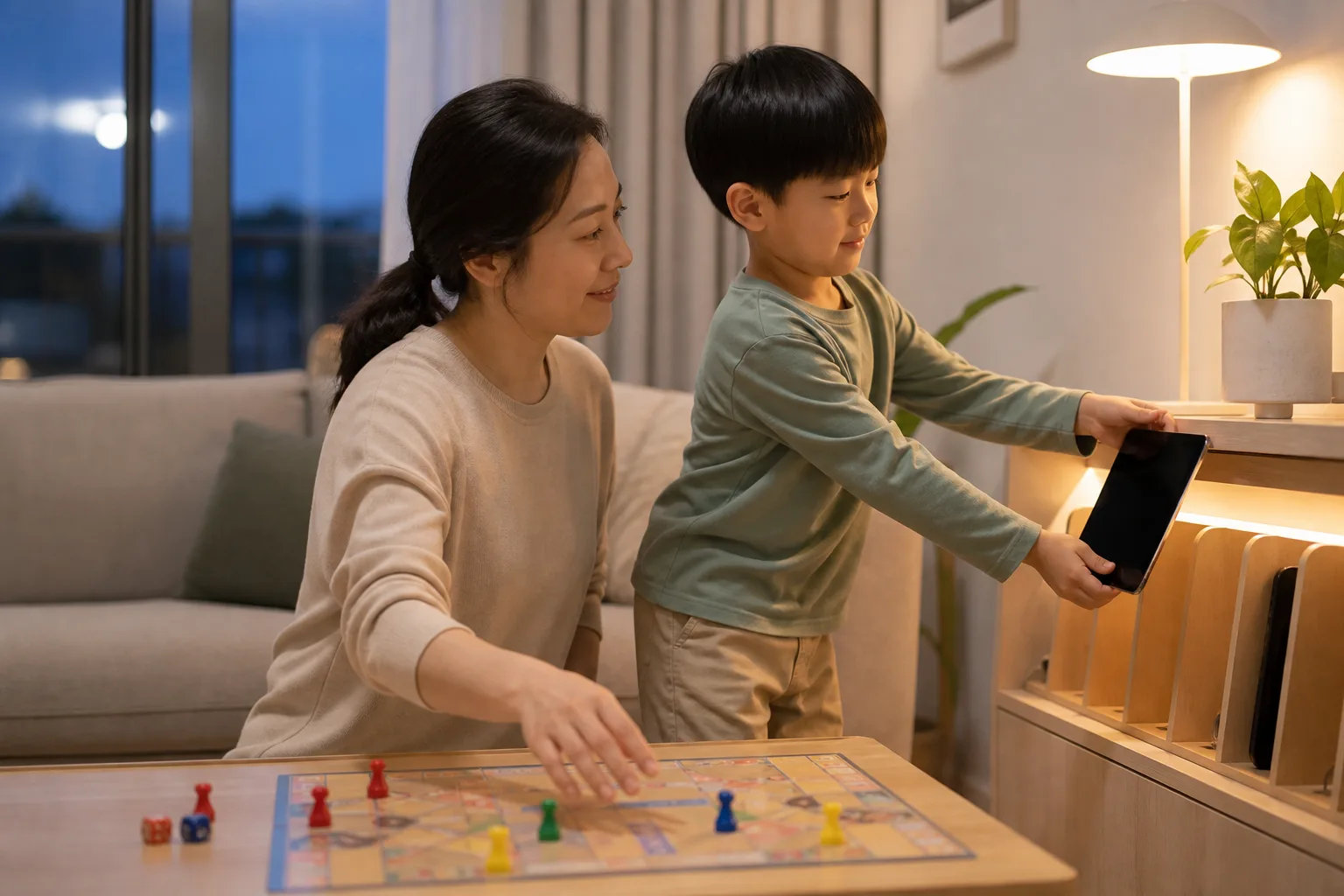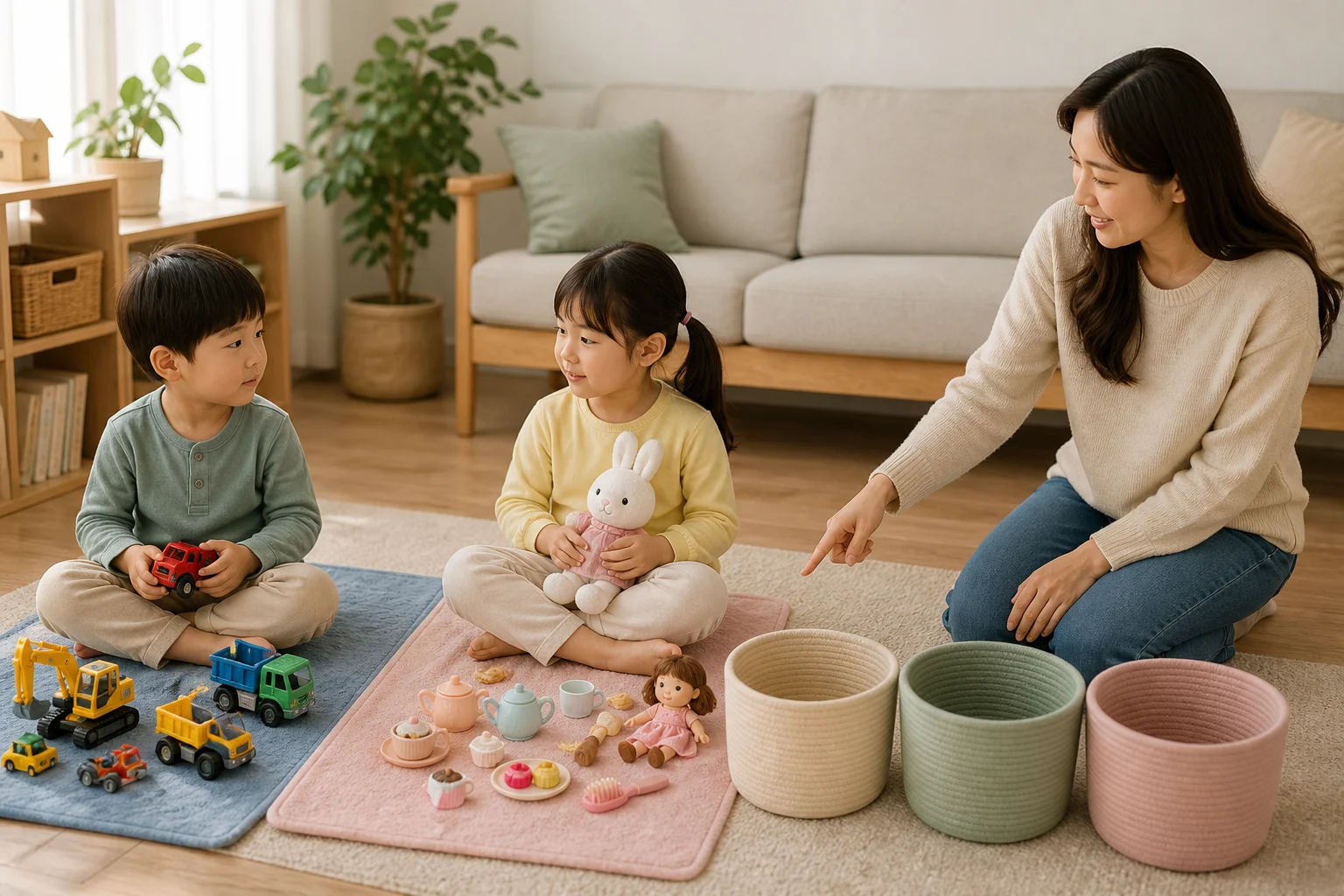
The moment your child starts to pull away, move close and make the child safe. On a real road or in a parking lot, do not wait for a choice. An adult must physically protect the child. Practice stopping only in a safe place with no vehicles.
Key point
Near real vehicles, do not ask whether the child wants adult protection. Use the three stopping points only as a teaching tool in a safe space.
What to remember
- Protect the child immediately on a real road.
- Practice the three stopping points in a place with no vehicles.
- If running away happens repeatedly, seek support and make a safety plan.
Do not practice in a real parking lot
If your child runs on a road or in a parking lot, move close, block the child safely, and say, "Stop. Hold my hand and walk." Traffic safety is not a choice. Before starting or backing up, drivers must check around the vehicle. Never leave a child alone in a car or at the edge of a road.
Use the same sequence when getting out of the car
Wait before opening the car door. After an adult checks the area, get out on the same side as the child. Once outside, walk close to the adult. Do not assume a driver has seen the child.
Practice the three points only away from cars
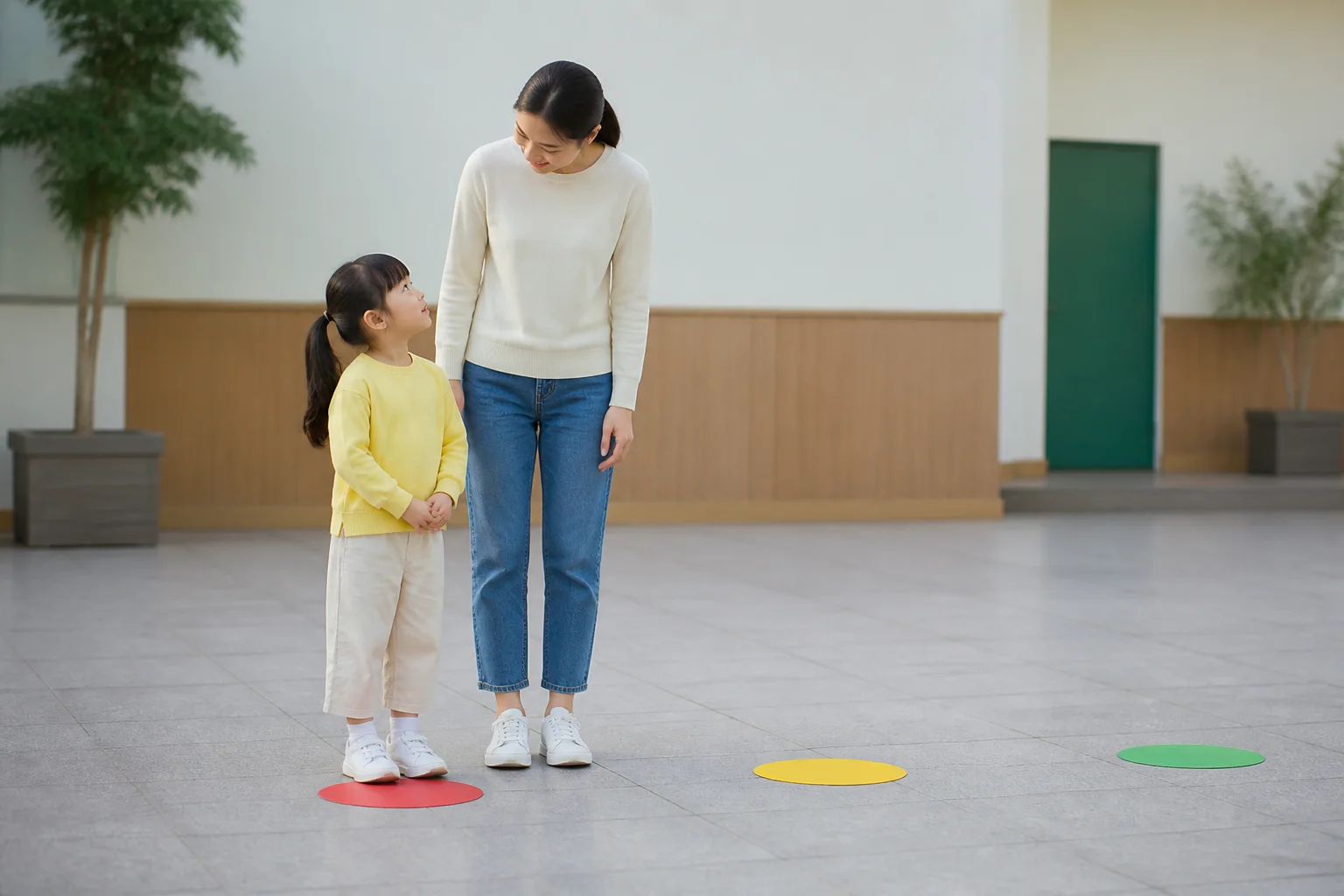
In a hall, yard, or empty open area with no vehicles, mark three points: at the door, at a boundary line, and before crossing. Give one direction, such as, "Stop," "Wait at the line," or, "Look at me and walk with me." The three points do not treat impulsive behavior or show that a child is ready to walk alone. Never test the response on a real road.
Adults should agree on roles before leaving
When two or more adults travel together, decide in advance who will hold the child's hand and who will handle bags and the car door. With several children, keep one child close to each adult. Put away phones before entering the parking lot.
Once in the car, prepare for the next transition
After arriving, do not let the child get out first. An adult should check needed bags and shoes first. When returning to the car, walk on the same side and use the same words for stopping. Repetition does not test the child. It helps the adult keep the same sequence even in a rushed moment.
Build a safety plan beyond holding hands
If holding hands is hard because of sensory needs, a disability, or communication needs, do not treat a wrist strap as a complete solution. Make an individual plan for a cue the child can tolerate, the adult's position, roles for getting in and out of a car, and information to share with the care setting. Do not threaten that a car will take the child away or show crash videos.
If it keeps happening, do not assume it is only a behavior problem
The situations that lead the same child to run can differ. Briefly note whether it happens just after getting out of a car, when the child sees a playground or someone familiar, or in a noisy or crowded place. This can show where an adult should prepare to hold close next time.
If running away happens often or interferes with daily life along with sensory, developmental, or impulse-control difficulties, consult a medical professional, developmental support service, and school or care setting. In a dangerous scene, secure physical safety first.
Worksheet
A 3-point route for practicing "stop"
Use this practice tool only in a safe place with no vehicles.
- At the door
- The stopping place and one sentence
- At the boundary
- The waiting place and adult's position
- Before crossing
- Words for looking at me and walking together
- On a real road
- The safety action an adult takes immediately
Notes
- The 3-point route does not measure traffic safety readiness or impulse control.
- On real roads and in parking lots, adult protection comes before practice.
References
- National Highway Traffic Safety Administration: Child pedestrian safety curriculum
- National Highway Traffic Safety Administration: Practicing parking lot safety at home
- CDC: Steps for giving good directions
This is general traffic safety guidance. It does not replace an individual disability, developmental, or behavior support plan or emergency response.