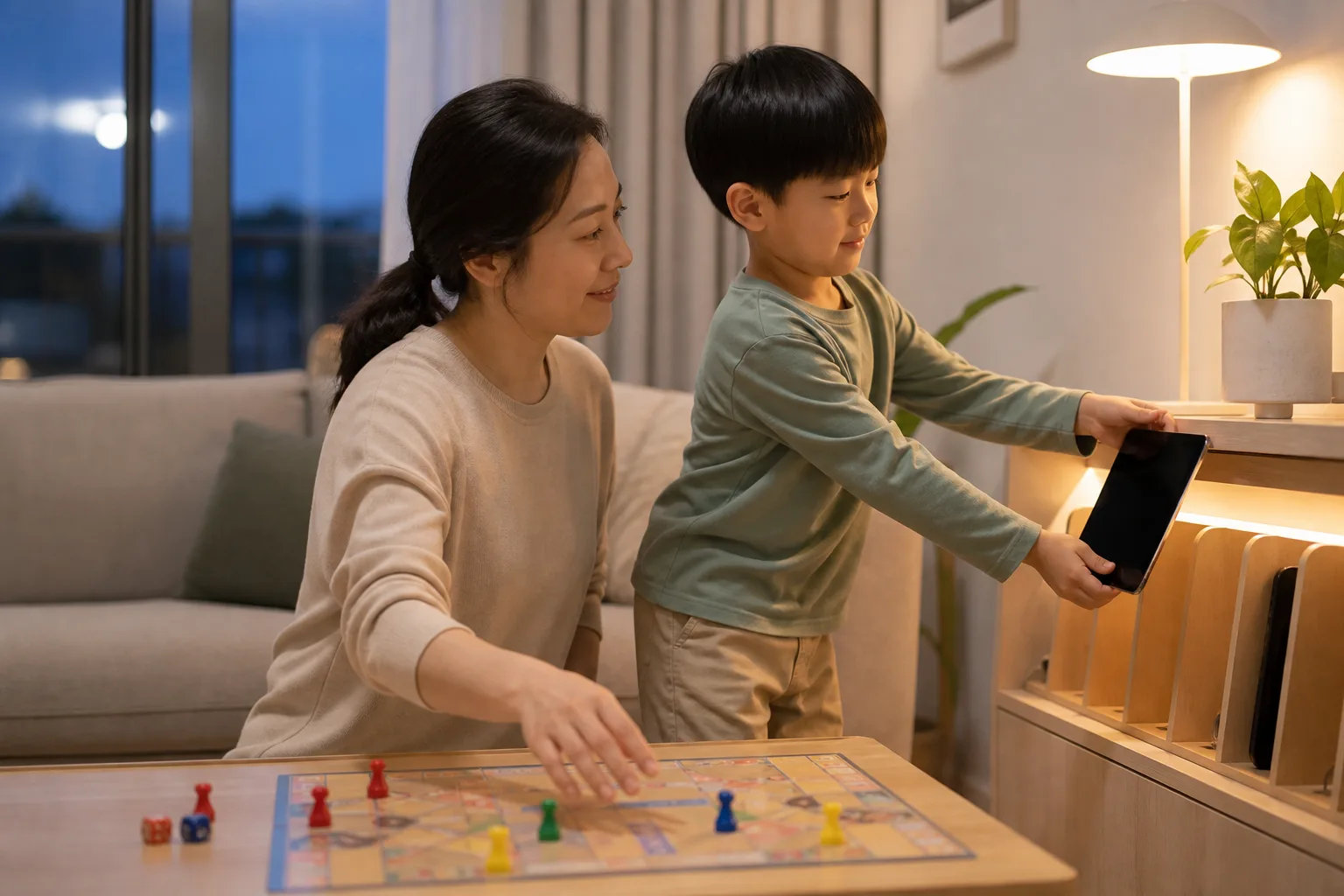
Some days, a child yells or grips the device whenever a video ends, and the parent gives in to one more episode. Asking, "Why can you not turn off the screen?" usually starts the next fight. Stopping happens with one button, but a smoother transition needs preparation that begins before watching and continues into the next activity.
Key point
Before starting, decide together when viewing ends, where to put the device, and what comes next. Use autoplay settings, notifications, and a device timer as support. During anger, use a brief limit instead of a lecture and keep everyone safe. If fights repeat, look at the effects on sleep and daily life.
What to remember
- Before starting the video, agree in one sentence on the ending point, where the device goes, and what comes next.
- Turn off autoplay and unneeded notifications. Use a device alert or timer as the ending signal.
- If your child pushes, throws, or threatens self-harm, protect people before the device and seek help.
Make the ending clear before you start
Before pressing play, state both the ending and what comes next: "When this video ends, we will put the tablet at its charging spot in the living room. Then we will take out the block box you chose." This is clearer than, "We will watch for a while and turn it off." The next activity can be something simple and immediate, such as drinking water, choosing a picture book, or playing with age-appropriate blocks, rather than a grand reward.
The same ending will not fit every situation. Choose a different point for a homework video, a movie the family watches together, or play planned with a friend. Use words the family understands before starting so a new negotiation does not begin at the end.
Device settings can take some weight off the parent's words
A family media plan can include turning off autoplay and notifications and using parental controls. A device timer or ending alert can support the transition so it feels less like the parent suddenly takes the device away.
Do not turn on a setting for the first time without showing it to the child. Listen to the alert together and practice: "When we hear this sound, we press stop and put it at the charging spot." When adults put away phones in the same place during meals or conversations, the rule is less likely to feel like punishment aimed only at the child.
Right before the end, name the next scene clearly
If a warning helps your child, agree on the ending scene and then give one reminder near the end: "When this scene ends, press stop and go to the bathroom to get ready to brush your teeth." If warnings did not help that day, do not keep adding promises for more minutes. Keep the sequence of one signal, the ending, and the next activity for several days.
When your child asks for one more episode, you can answer, "I know you want to keep watching. Our plan for today ends here. Now it is time to take out the block box." Instead of giving a long explanation or adding another punishment, help your child move on to the activity already chosen.
Say briefly that the screen will stay off even when your child is angry
After the video ends, tell a crying or yelling child, "You are angry. The video is over. Your body and my body need to stay safe." A child may not be able to listen to a lecture about the rule while very upset. Use fewer words and calmly hold the boundary.
If the child tries to throw the device or hit someone, separate the child from the person and device first. Move a young child with you to a safe place, and place the device in a stable place out of reach. Do not restrain the child as punishment or shame the child in public. If danger happens often or there is a threat of self-harm or harm to others, do not push the plan alone. Find local emergency help or medical support immediately.
The next day, examine the conditions instead of calling it failure
If the same fight repeats, do not write only, "My child did not listen." Record the start time, content watched, whether autoplay was on, tiredness or hunger near the end, the next activity, and physical responses. Look for differences, such as whether it happens only on weekday evenings, is harder after short videos than a long story, or changes when watching alone versus together.
Use the record to change only one condition. Turn off autoplay and prepare the next activity where the child can see it, or have the parent put away their device first. Do not count only total screen time. Also look for ongoing loss of sleep, movement, play, learning, or family conversation.
Keep separate signs for seeking professional support
Conflict at the end of screen time does not always mean illness or addiction. But consult a pediatrician or mental health professional if an intense fight happens almost every time even after you adjust the plan in several ways, sleep, hygiene, meals, school, or friendships keep breaking down, or the child secretly stays up all night using a device. Bring notes about changes in sleep, washing, meals, school life, and friendships rather than only what happened when the screen was turned off.
At the consultation, share the type of content and setting, ending methods the family has tried, aggression or threats of self-harm, and changes in bedtime. If you and the professional decide a safety plan is needed, adjust the family media plan to fit it.
Worksheet
A plan to make before watching a video
The child and caregiver each fill in one line before watching, then briefly review the result the next day.
- Today's ending
- Which scene or alert means it is time to stop
- Device spot
- The fixed place for the device after viewing
- Next action
- One offline action to start right away
- Review
- Facts about tiredness, autoplay, and the intensity of the fight
Notes
- Device settings help a family with transitions. They are not tools for watching or shaming a child.
- If there is a risk of violence or self-harm, immediate safety and professional help come before consistent screen rules.
References
- American Academy of Pediatrics: Responding to intense reactions when screen time ends
- American Academy of Pediatrics: Creating a family media plan
- American Academy of Pediatrics: Helping children in a digital world
- American Academy of Pediatrics: Using parental controls to set media boundaries
This is general guidance for a family media plan. It does not replace diagnosis or treatment for violence, risk of self-harm, sleep problems, or mental health concerns.