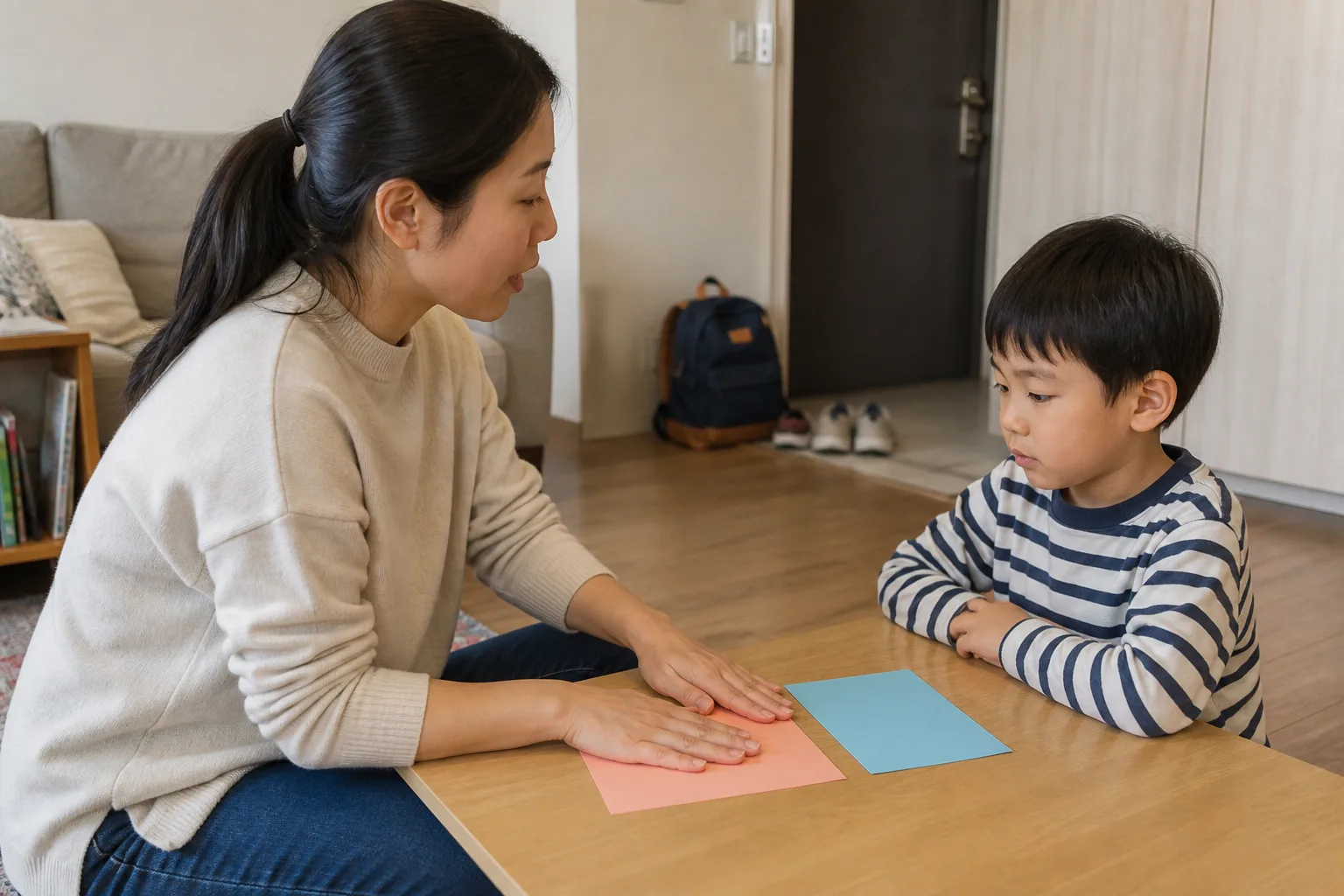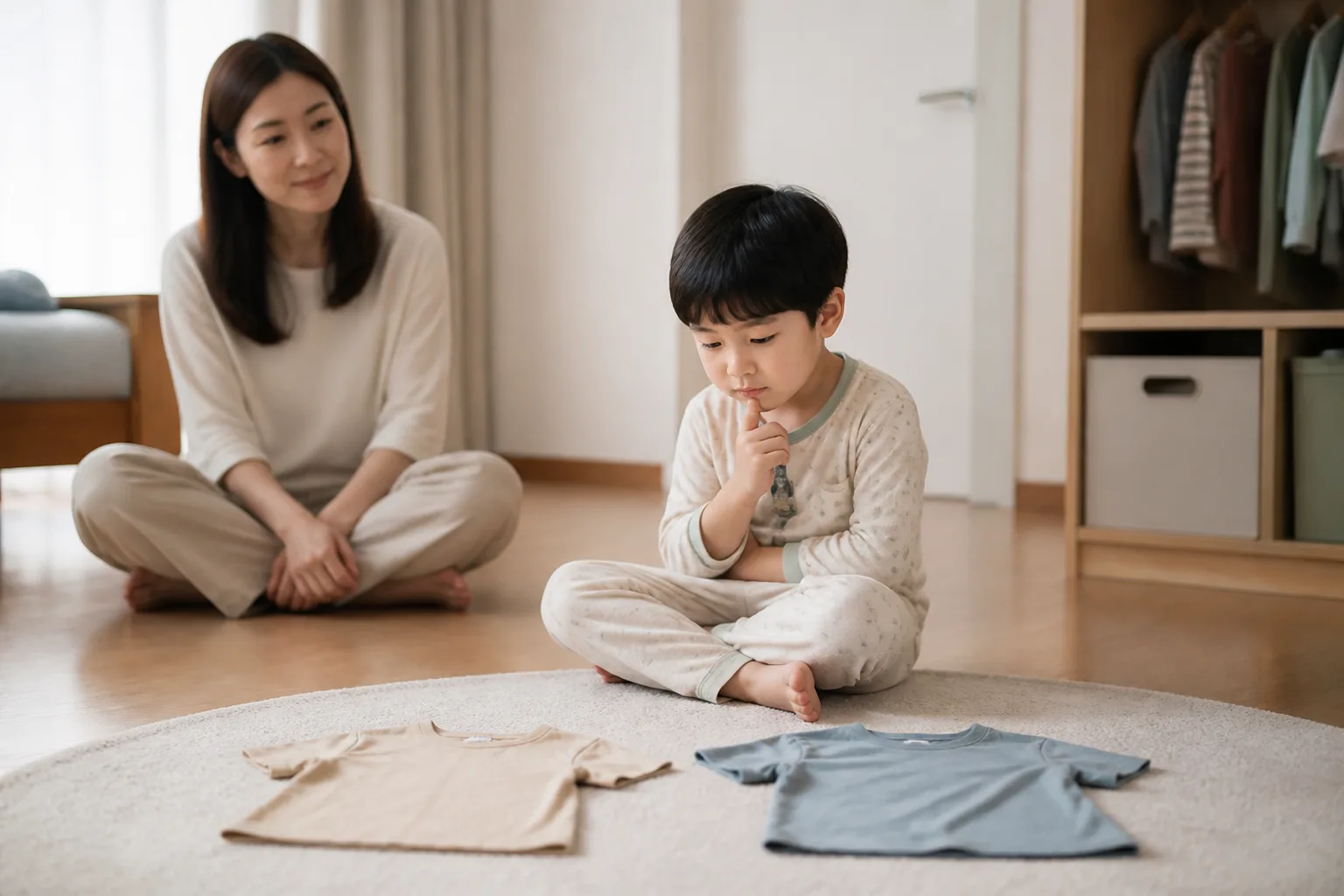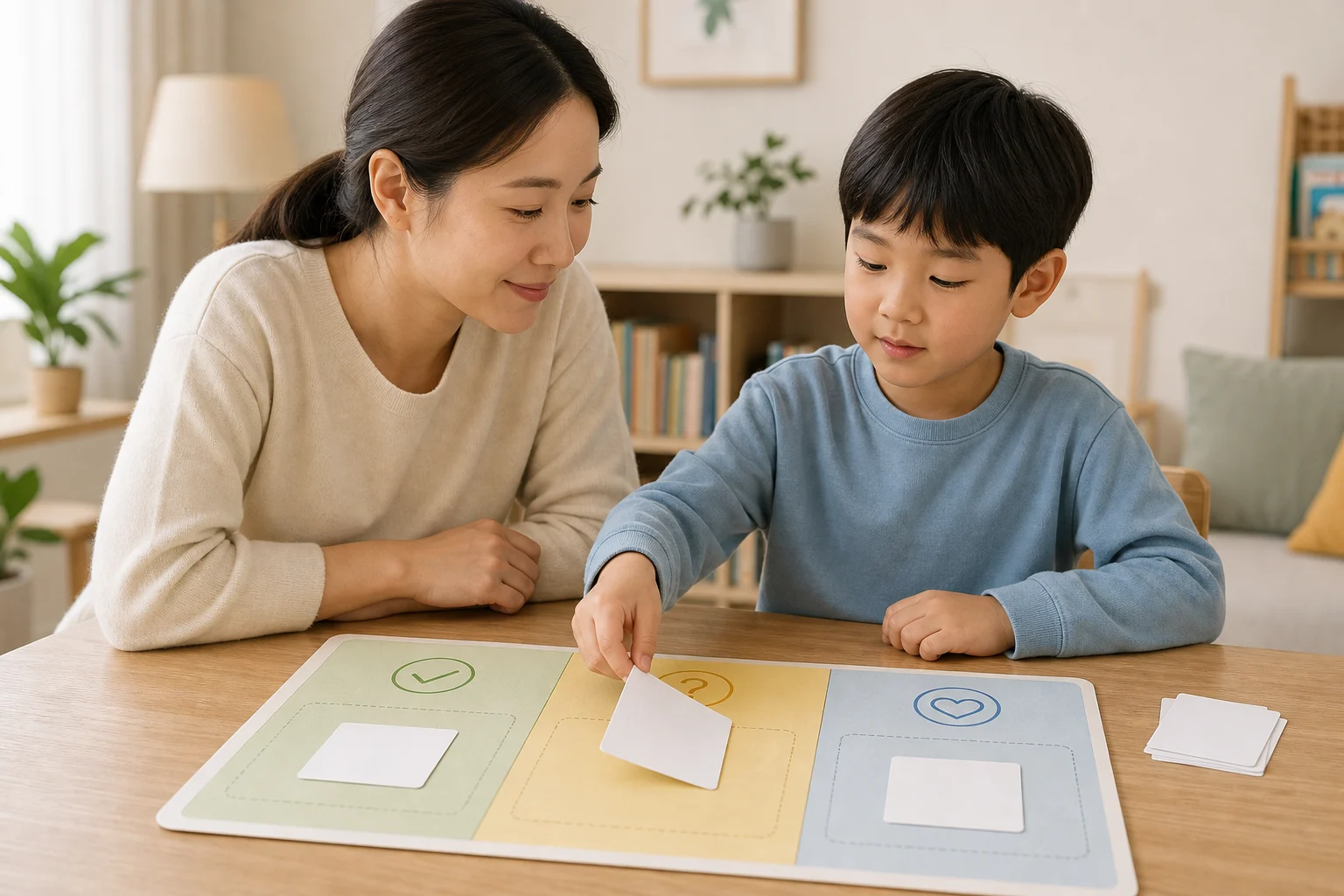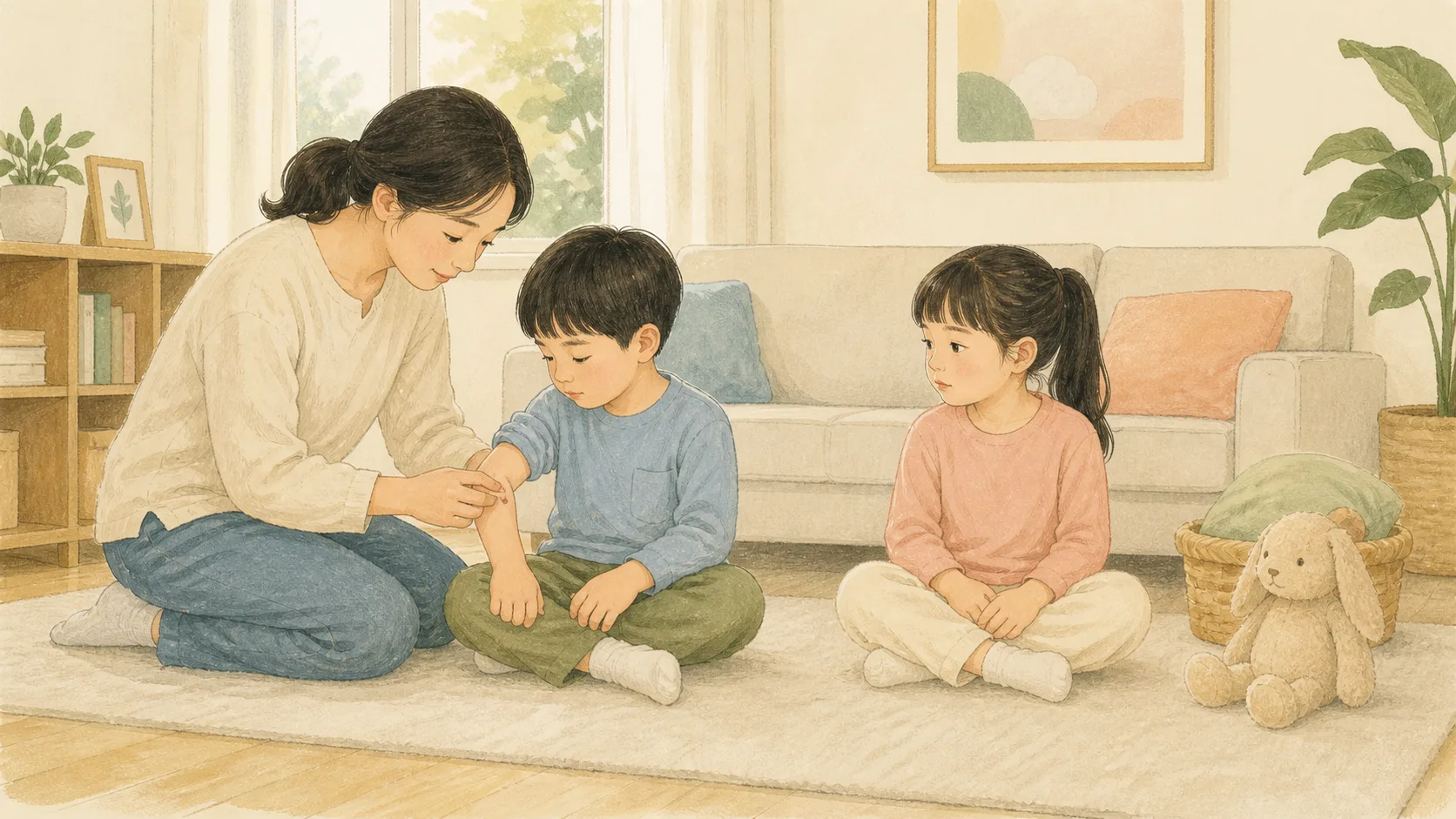
After a child pushes a sibling or breaks something belonging to a friend, adults may want an apology quickly so the moment can end. But if the child is still angry or scared, saying "sorry" may spark the conflict again. Skipping a forced apology does not mean ignoring the behavior. First care for the person who was hurt, then decide what to change once everyone is calm.
Key point
If someone is hurt or in danger, separate the children and provide care first. Once the child is calm, briefly discuss the effect of the behavior and possible repair.
What to remember
- Check the injured person, dangerous objects, and the space between the children first.
- Instead of making a child repeat "sorry," state the fact and effect: "You pushed their face. That must hurt."
- Choose a repair the child can make, such as apologizing, putting belongings away, or setting a rule for the next playtime.
Check safety before asking for an apology
After hitting, biting, pushing, or throwing, separate the children and check injuries and dangerous objects first. Bringing them close to demand an apology can make the hurt child face the other child again before feeling safe. Give needed first aid and let the hurt child stay with a caregiver if they want.
Anger itself does not need to be stopped, but clearly state that hurting people and breaking things are not allowed. The safety boundary comes before the conversation after the child is calm.
A rushed apology can restart the conflict
A "sorry" spoken while a child is still angry may sound mocking because the feeling remains in their tone and face. Bringing the children close while the hurt child is not ready can raise anxiety again. If one word always ends the scene, a child may memorize the word instead of changing the behavior.
Giving both children time and space to settle avoids forcing a conversation while either child is not ready to face the other. An apology can remain one of several ways to repair the harm afterward.
Briefly say what happened
After the child calms, starting with "Why did you do that?" can lead to excuses and a longer argument. State what you saw and its effect: "You threw the block, and it hurt your sibling's arm." If the child can talk, briefly ask what made them angry. If speaking is hard, offer just one choice.
Tell a young child specifically what you expect and what follows the behavior. The consequence is not a shaming punishment. It may mean putting the toy away for safety or helping the injured child.
Repair can take more than one form
A child who is ready can say, "I'm sorry." If they are not ready to speak, they may put an item back or bring an ice pack. You can separately practice saying "Stop" to prevent the next conflict. Respect the hurt child if they are not ready to accept an apology or play together.
If the child refuses to repair, briefly follow through with the consequence tied to the safety rule and talk again when calm. Making a child recite an apology or forcing a hug ignores both the hurt child's choice and the other child's readiness.
When the same conflict repeats, change what comes before it
If fights always happen over the same toy, at the same tired time, or in the same space, change that setup instead of demanding a stronger apology. Separate the toys for a while, have the children play together while an adult is close, or delay competitive play when they are hungry or tired. Before the next playtime, practice one rule: "Keep your hands near your own body. Say stop if you need to."
Seek help from a clinician or local child and family service if injuries are serious or repeated, your child may hurt themselves or someone else, or you cannot keep everyone safe.
Worksheet
Steps for repair after an incident
Use this order to address safety and the next action rather than getting an apology quickly.
- Safety
- Who is hurt and what needs to be moved
- Facts
- One sentence about the behavior you saw and what the other person experienced
- Choice for repair
- What is possible now: words, cleanup, help, or waiting
- Next rule
- One action to follow during the next playtime
Notes
- Do not require the hurt child to accept an apology, hug, or return to play.
- For a serious wound or a problem involving the head, eyes, or breathing, seek medical help before having a discipline conversation.
- Do not stop a child who wants to apologize right away. This sequence delays a forced apology; it does not ban apologies.
References
- American Academy of Pediatrics: Ways to teach children boundaries
- CDC: Using consequences after behavior
This is general guidance for repairing conflict. It does not replace care for violence, abuse, a serious injury, or individualized behavioral treatment.