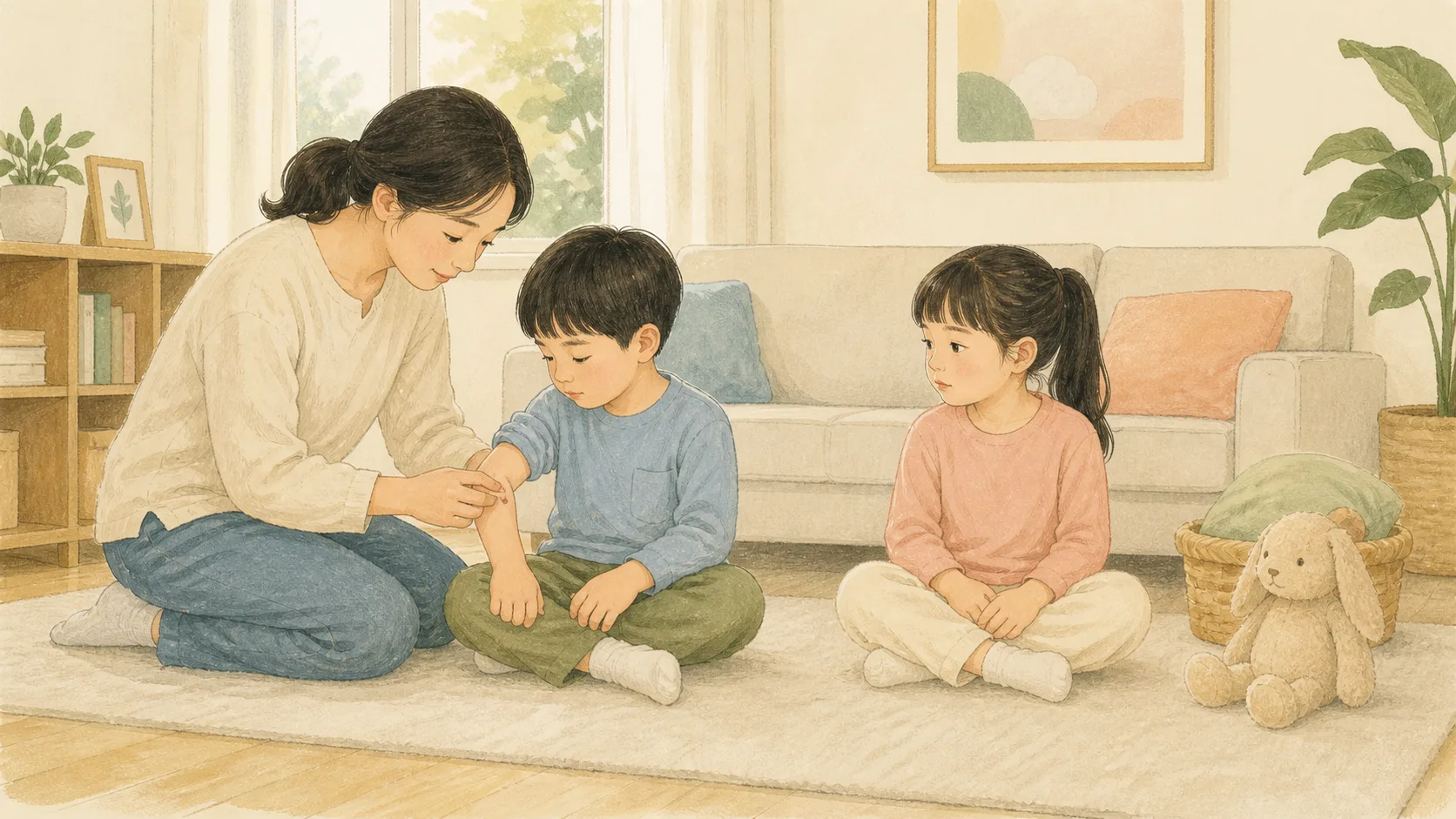
Some children give a friend a toy even when they do not want to, or freeze when an adult offers a hug. Do not dismiss this as simply being nice and agreeable. Use it as a chance to practice words that protect your child's body, belongings, and time.
Key point
Teach your child to choose among three phrases for the situation: "No," "Not right now," and "Help me." Adults should first show that they respect those answers.
What to remember
- Saying no can communicate a choice or a safety need. It is not bad manners.
- Practice one short sentence together with one action for moving away.
- Do not make a child handle requests involving threats, secrets, or touching alone. Teach them to tell a trusted adult.
Children find it hard to refuse for different reasons
The behavior may look the same, but the reasons differ. One child agrees because they fear a friend will leave. Another has never learned what to say. Another child's body freezes before words come in a difficult moment.
Practice should fit the starting point. A child worried about the relationship needs experiences where play continues after a refusal. A child without words needs one sentence that fits. A child who freezes can start by moving away instead of speaking.
Practice with small choices first
At home, offer choices such as, "Do you want to keep playing this, or do something else?" Your child can say no to unwanted food, tickling, or photos, and the adult stops.
Speaking to a parent may be easier at first than speaking to a friend. Use dolls to practice one sentence at a time: "It's my turn," "I don't want to lend it," or "Maybe later."
Pair refusal words with a way to move
If your child only says "No," they may not know what to do when the other person keeps asking. Add an action for reaching a trusted adult: "No. I'm going to my teacher."
Notice facial expressions and gestures as well as words. Ask before hugs, hand holding, or other physical contact, and respect the response. Adults need to hear a child who shakes their head or steps away instead of speaking.
Use the same rule for requests from adults
Requests from relatives for greetings, hugs, secrets, or errands can be hard too. When a parent says first, "If you don't want a hug, you can wave," the child does not have to choose alone between manners and safety.
Respect other households' rules, but do not require your child to accept uncomfortable touch or keep a secret. Do not tease a child or make them apologize for refusing.
A dangerous request is about safety, not manners
If someone tries to touch your child against their wishes, tells them to keep that contact secret, or threatens them and demands that they follow, teach them to get away and tell a trusted adult. If your child reports something that already happened, do not blame them or repeatedly question them about the same facts. Make them safe, then find the needed protection and reporting process.
A child can refuse unwanted contact, and the person who commits sexual abuse is responsible, not the child. If your child unusually avoids a person or place, or says or does something that raises a safety concern, seek help from a clinician and local child protection or emergency services.
Worksheet
A ladder of refusal phrases
Choose one age appropriate sentence and practice it with moving away or going to an adult.
- Simple refusal
- I don't want to right now.
- Belongings and turns
- I'm using it. You can have it later.
- Body and space
- No. Do not come closer.
- Asking for help
- Help me. I'm going to my teacher or parent.
Notes
- Adults remain responsible for safety even after a child practices refusing.
- Do not tell a child to keep a dangerous or suspicious situation secret.
- Some children should not be rushed into practice. If a child has experienced something uncomfortable or freezes when a certain person is mentioned, do not assign refusal practice. First tell the child that adults are protecting them.
References
- CDC: Ways to connect and communicate with toddlers and preschoolers
- American Academy of Pediatrics: Adult responsibility in preventing and responding to child sexual abuse
This is general guidance for practicing boundary phrases. It does not replace an investigation or treatment for abuse, crime, or immediate danger.