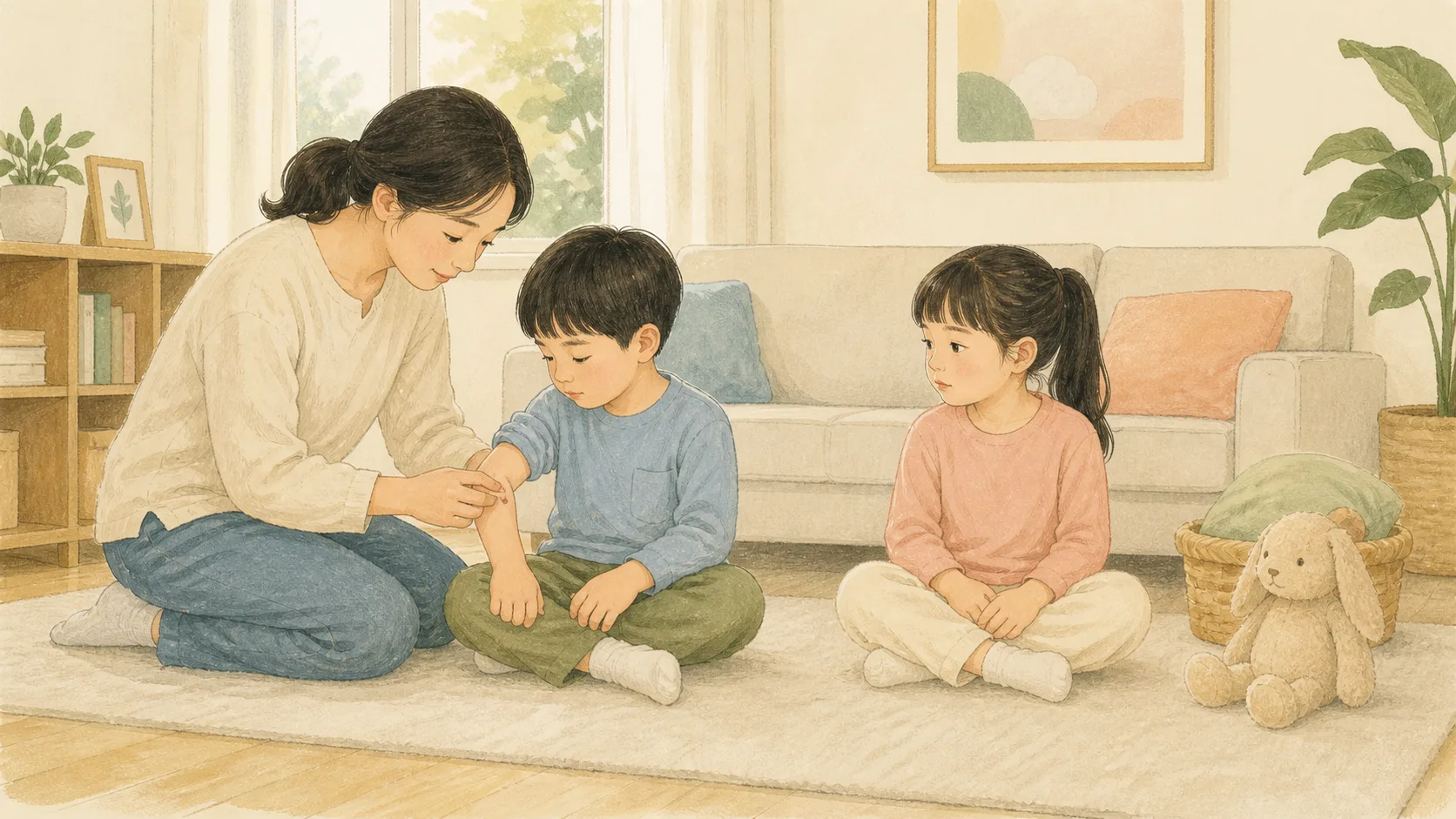
Hearing "I hate you, Mom" just after closing a door or turning off a screen can make your heart sink. Making your child say they love you instead, or explaining at length how hurt you feel, can escalate the fight. First acknowledge the big feeling, then separately name the behavior that must stop.
Key point
Respond briefly: "You're really angry now. I'm here with you. But I won't let you hit or throw things." Listen to what they disliked after they settle.
What to remember
- Do not take "I hate you" as a final verdict on your relationship. Briefly reflect the feeling of the moment.
- Clearly separate feelings from behaviors that must stop, such as hitting, throwing, or insults.
- After your child calms down, choose one phrase or repair action for next time instead of questioning the event again.
Keep the first answer short and your expression calm
Before responding with "You can't say that," name the feeling you heard: "You're angry." If your child does not want closeness, do not force a hug. You can wait at a distance in the same room or put down a glass of water.
With young children, expressions and gestures communicate empathy and safety as much as words do. Briefly reflecting what you heard and the feeling can help even when your child cannot say much.
Listen to anger and stop unsafe behavior
"You can be angry enough to say you hate me. But I won't let you kick" states a safety boundary without trying to erase the feeling. If your child throws things or may hurt someone, separating people and objects comes before conversation.
If you want to express your hurt, do it briefly after your child settles. Use words that do not shift responsibility onto the child: "I felt sad hearing that. When you're angry, let's say what you don't like."
Review just one moment after calming down
Ask about the immediate situation: wanting more screen time, fighting with a sibling over something, or feeling tired. A question with options, such as "Did you dislike turning it off, or was there something you still wanted to do?" can open conversation more easily than "Why did you say that?"
Then practice one phrase for next time. One sentence your child can say is enough: "I want more time," "Help me," or "I'm angry now."
Look separately at dangerous or persistent signs
Do not label your child just because angry words recur. But if they also say or do things aimed at hurting themselves or others, have very frequent and long outbursts, or show major changes in sleep, eating, or school life, consult their clinician or local mental health support.
If you are so upset that you feel you might hurt your child, immediately create safe distance and get help from another adult or emergency support.
Worksheet
A set of response phrases
Choose short phrases in your family's own words rather than reading these straight to your child.
- Feeling
- You're really angry right now.
- Relationship
- Even when you're angry, I'm here with you.
- Boundary
- But I won't let you hit or throw things.
- Next words
- Next time, let's say what you don't like in one sentence.
Notes
- Do not immediately demand words of love, an apology, or a hug.
- Some days those words hurt so much that you cannot answer calmly. Instead of a long conversation, pause with "Let's both take a short break now." You can talk again after settling.
- When safety is at stake, separating people from dangerous objects comes before a conversation about feelings.
References
This is general guidance on relationships and safety boundaries. It does not replace support for mental health crises, violence, or family-specific therapy.