Giving a child a job often takes longer, and you may need to redo parts of it. More than the age when chores begin, ask whether the job is one step your child can now understand and try safely.
Key point
Choose chores based on the child's age, skills, and safety. Break each job into one step, do it together at first, and name the specific contribution you appreciate.
What to remember
- Start together with a small, safe step.
- Dangerous objects and high places are adult jobs.
- Talk about the child's specific contribution instead of the result.
Look at one step your child can do now, not age alone
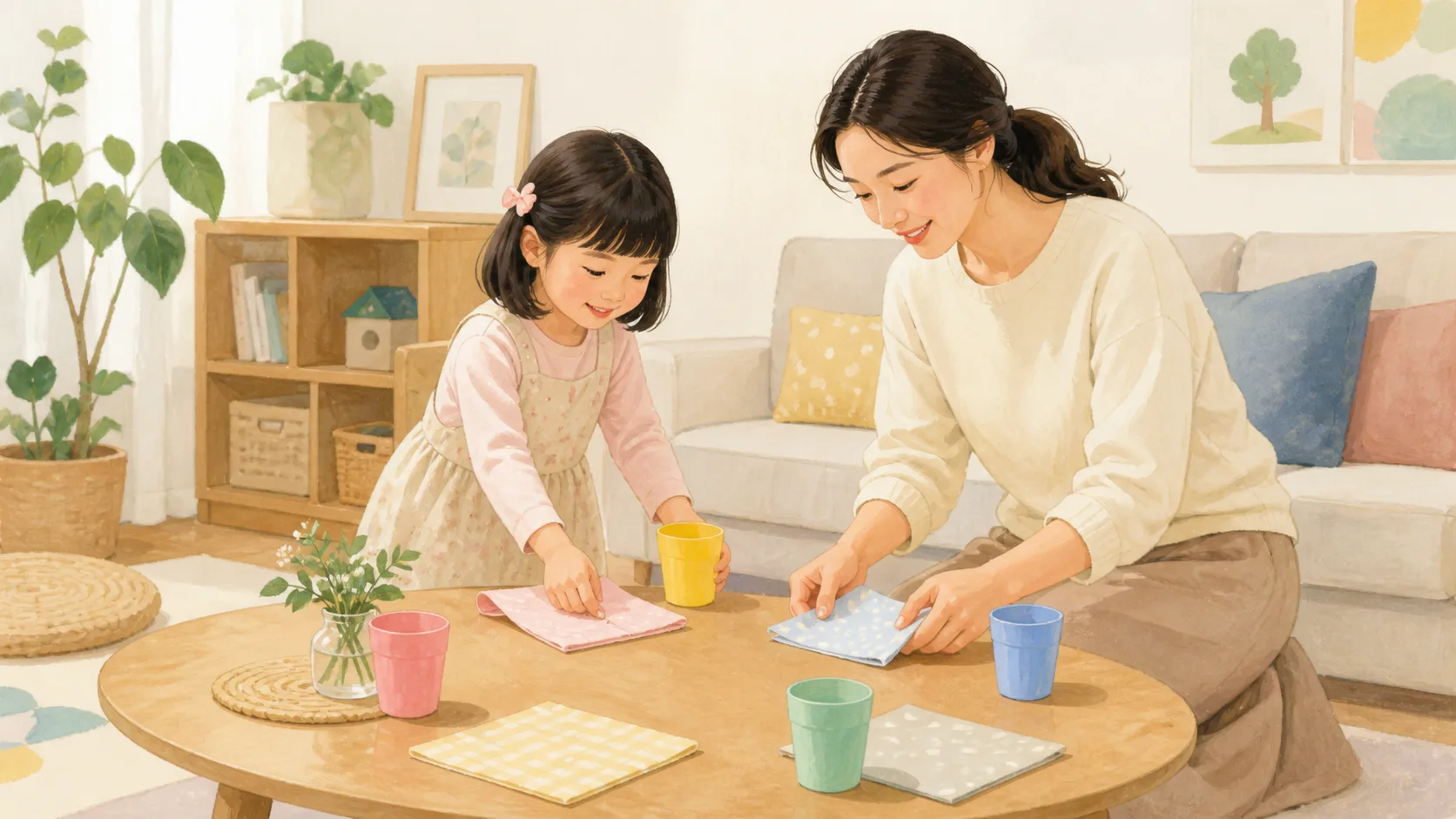
Around age 2, some children can help put toys or laundry in a basket and carry plastic cups or napkins to the table. This does not mean every child should do the same job at the same age.
Instead of "Clean your room," give a task with a visible end, such as, "Let's put three blocks in the basket."
Make the beginning and end visible
Break a job into taking out one towel, folding it in half, and putting it in a basket. Show your child, then do it together. The next time, reduce help by one step. A rushed morning is not a good time to practice a new job.
Match a job to your child's current skill level, and choose only safe tasks.
For the first week, focus on the process instead of the result
At first, stay beside your child, give the signal to begin, and look at the finished step together. For example, choose only two scenes: placing four napkins on the table before dinner and putting the child's cup on a low tray afterward. If you add a different request every time, your child may not know which job belongs to them.
If your child stops partway through, narrow the choice before finishing the job for them. Ask, "Would you like to place the cup or the napkins first?" Either choice completes the same role. If it is still hard, do one step together or finish it yourself that day. Return to a smaller step next time.
Keep punishment separate from helping the family
If chores are used only as punishment after a parent gets angry, helping the family can start to feel like an unpleasant consequence. Instead of, "You threw the toy, so wash the dishes," put away the thrown object safely and return to the usual job at its usual time.
Short words are easier to act on. Show the roles by saying, "We all set the table. I have the dishes, and you have the napkins." Afterward, point to the real contribution instead of saying, "Good child": "You put down the napkins, so we could eat right away." If the result is imperfect, do not secretly redo it while pointing out faults. Fix together only what hygiene or safety requires.
Set the safety boundary before assigning a role
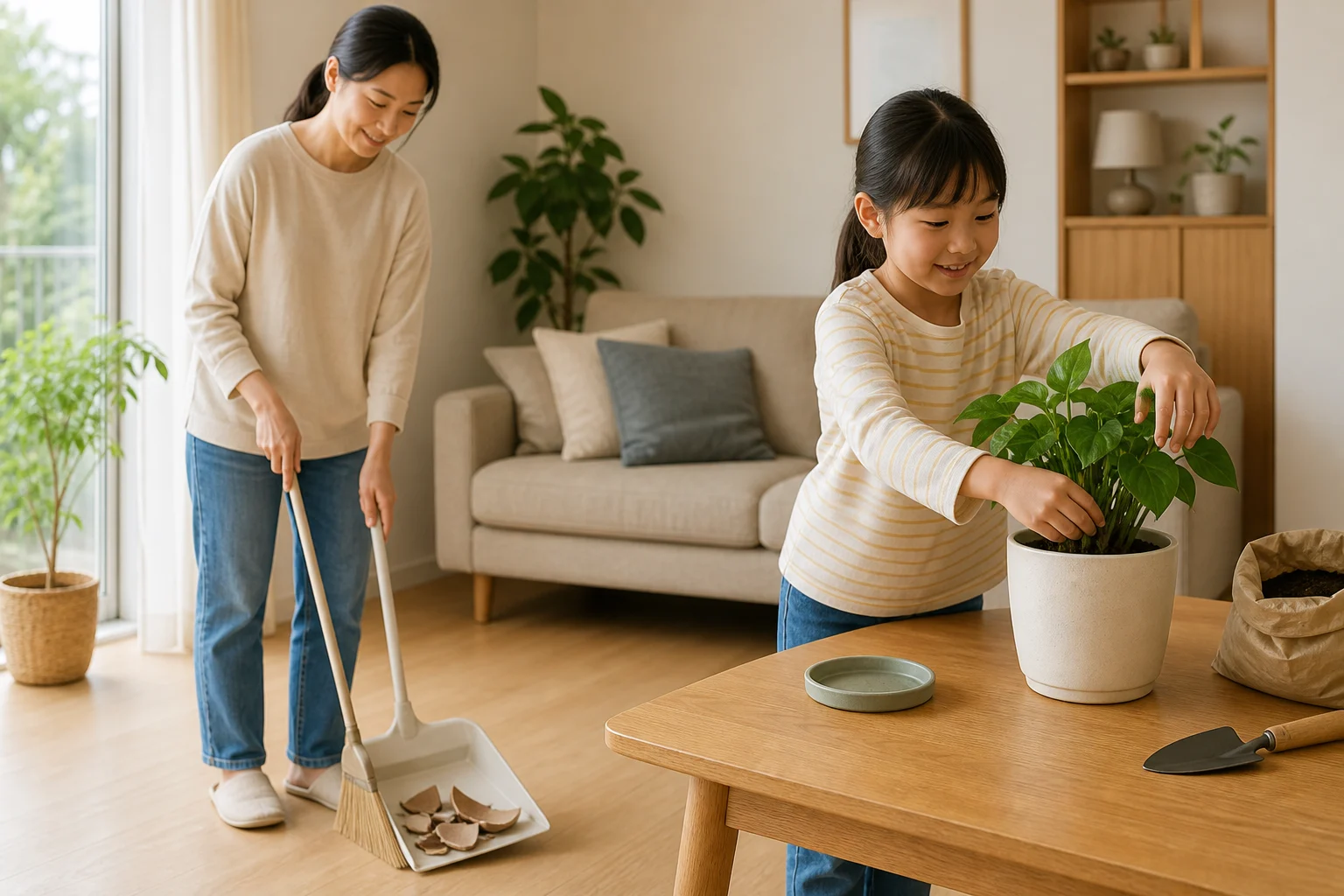
Do not leave a child alone with knives, hot water, cleaners or medicine, high shelves, or heavy loads. If the child wants to help clean, offer a small cloth with only water or let the child put materials in a basket while staying close to an adult.
If a little water spills, name the contribution by saying, "You brought the cup, so the table is ready," and wipe it up together. If the task stays difficult and you also have concerns about speech, movement, or sensory needs, ask a medical professional or developmental support service about your child's daily activities.
Worksheet
Chore chart by level of supervision
Do not use family work as punishment. Choose one safe step.
- Do together
- One step to do side by side today
- Do alone
- A safe action with a visible end
- Adult's job
- Tasks involving heat, sharp edges, chemicals, height, or weight
- Specific words
- One sentence that names the contribution
Notes
- Siblings do not need to have the same job or an equal amount of work.
- Age-based chores do not fit every child. If hand movements or sensory needs make a peer-level job hard, divide it into smaller steps. During a busy period such as moving or starting school, keep one familiar role instead of adding new ones.
References
- Centers for Disease Control and Prevention: Simple chores to try with a 2-year-old
- Centers for Disease Control and Prevention: Routines and safe tasks that fit a child's skill level
This is general guidance for family roles. It does not replace a motor or developmental evaluation or a safety assessment for your home.