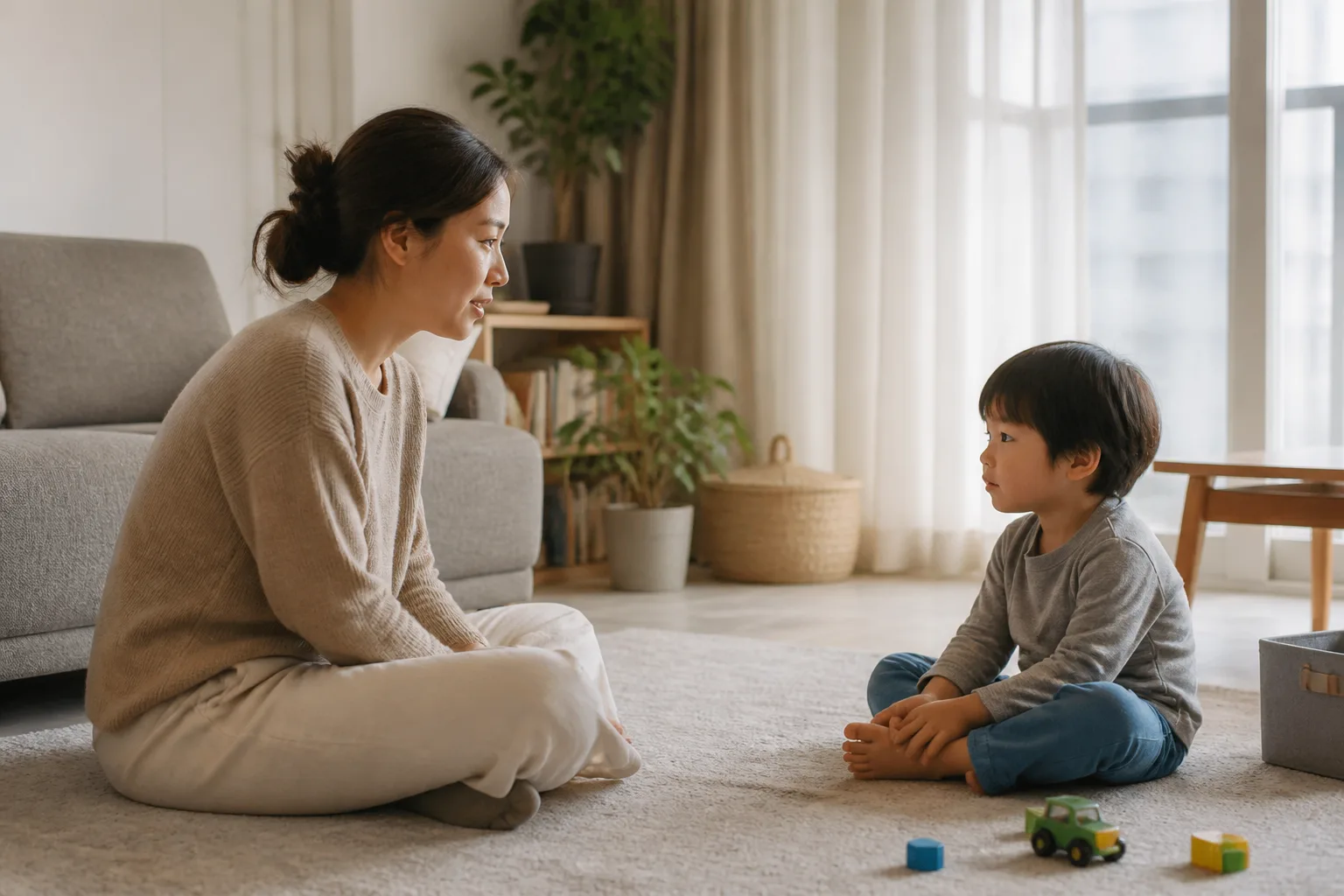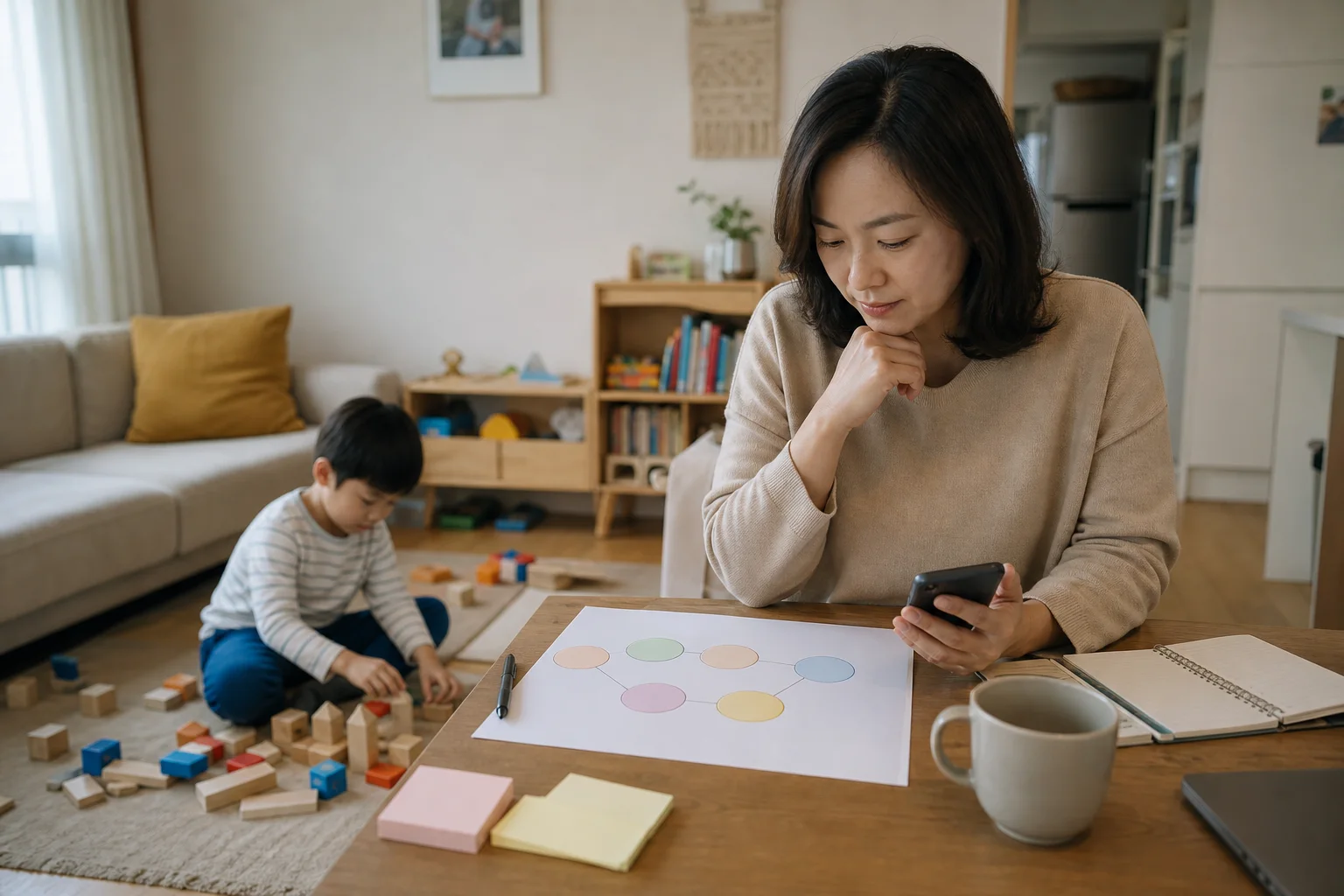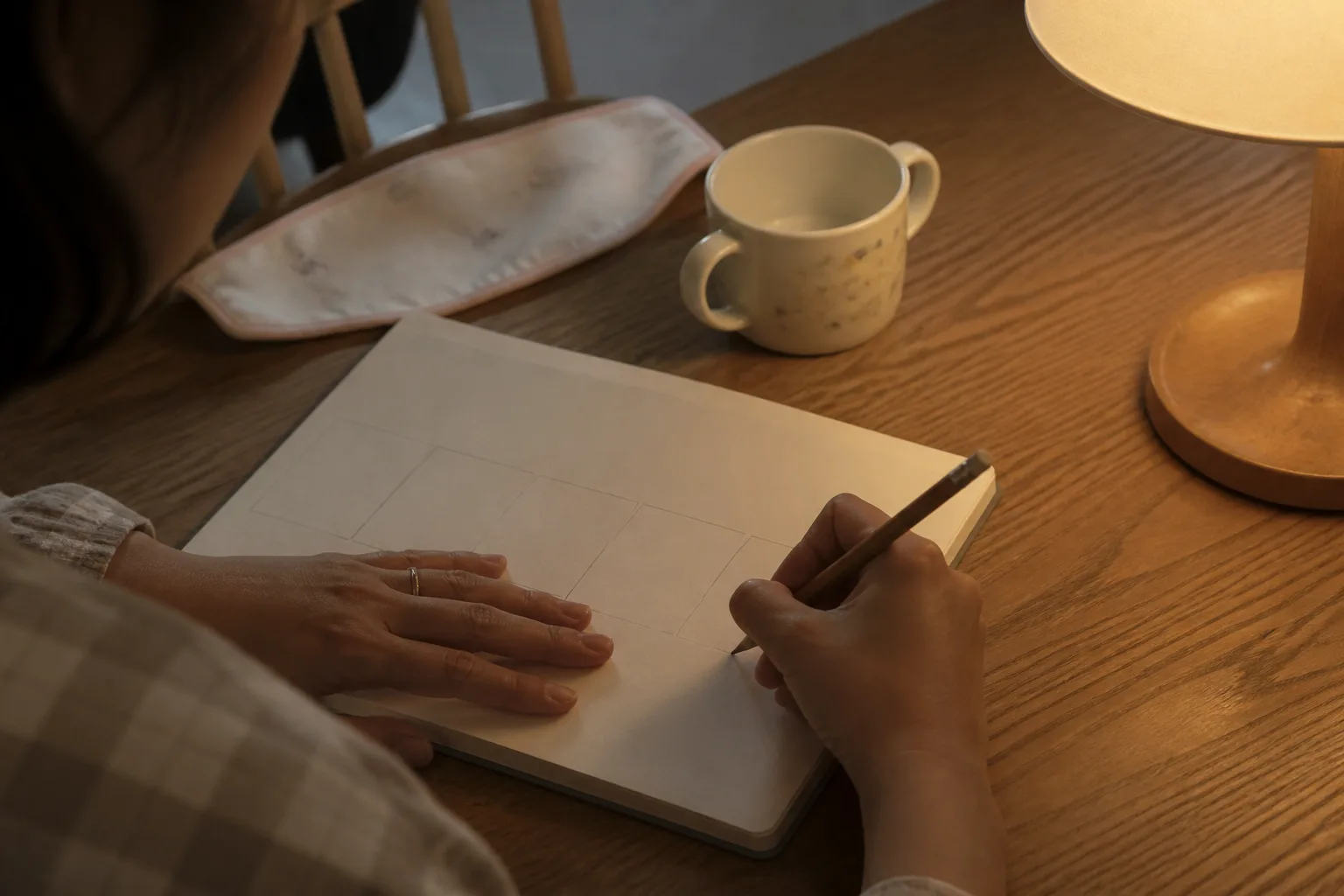
Writing "They did not listen again today" captures your frustration but makes it hard to decide what to do next. A log is not a report card for your child. It is a way to break the day into small moments and find conditions you can change.
Key point
Choose one moment each day, separate facts from interpretations, and write down just one action to try differently next time.
What to remember
- Facts: Record only observable actions, including who did what and when.
- Interpretation and responses: Separate your thoughts, your actions, and your child's next response.
- Next attempt: Change just one thing about timing, words, or the environment.
In the first field, write only what a camera could capture
Instead of "They were stubborn," write, "At 7:20 in the evening, I asked three times to put away the blocks, but they kept building." Leave out judgments about character. Then compare when cleanup started, whether you gave a warning, and what your child was doing.
You do not need to write much. Two or three sentences about one recurring moment are enough.
In the second field, write your interpretation at the time
"They are ignoring me" and "They are having trouble ending a fun activity" can lead to very different responses to the same behavior. Rather than deciding right away which interpretation is correct, write down what you actually thought.
Note your own fatigue, time pressure, and noise around you, too. This helps you separate your child's behavior from your own state.
In the third and fourth fields, record your action and your child's response
Write down whether you raised your voice, offered choices, or cleaned up yourself, then add what your child did immediately afterward. One entry cannot establish a cause, but several days may show whether the same sequence repeats.
Record good days, too. Sleep, extra time, and the way you gave advance notice on days without conflict may offer more useful clues.
In the fifth field, choose one small experiment
Write an action you can check, such as "Give one reminder 5 minutes before cleanup," rather than "Never get angry again." If the next day is no different, do not call it a failure. Compare several days under the same conditions.
If recording makes you monitor yourself or your child constantly, or increases your anxiety, stop. If you are worried about development, sleep, eating, or safety, talk with your child's healthcare professional rather than simply continuing the log.
Worksheet
A 5-Field Parenting Reflection
Choose one moment each day and write one or two sentences in each field.
- Observable facts
- When and where did it happen, and who did what?
- My interpretation
- What thought came to mind at that moment?
- Parent's response
- What did I say and do?
- Child's response
- What did my child do immediately afterward?
- Next attempt
- What one thing will I change about timing, words, or the environment?
Notes
- This log is not a diagnostic tool and does not score children or parents.
- If there is an immediate safety concern, such as self-harm, abuse, or difficulty breathing, or a sudden difficulty with eating, sleeping, or daily life, get help right away instead of recording.
References
This 5-field log is an editorial tool for observing recurring situations. It does not replace developmental assessment, diagnosis, or family counseling.