When your child starts crying, your chest may tighten and your voice may rise before you realize it. Trying to find a solution right then can make you feel more rushed. Prepare a sequence that starts with checking your child's safety and gives you 90 seconds to catch your breath.
Key point
When crying feels unmanageable, make room for 90 seconds by checking safety, giving a brief explanation, calming your body, and asking for help.
What to remember
- First check for signs that your child is hurt or ill.
- If your baby is in a safe crib, you can step away briefly to catch your breath.
- If you want to shake your baby or fear you may hurt them, contact another adult and emergency support immediately.
Use the first 10 seconds to check, not guess
Check immediate needs and signs such as a diaper change, hunger, fever, pain, or difficulty breathing. If your child seems in danger or ill, seek medical help rather than trying a different soothing method. Even when the crying is not dangerous, it can sound louder when you are exhausted.
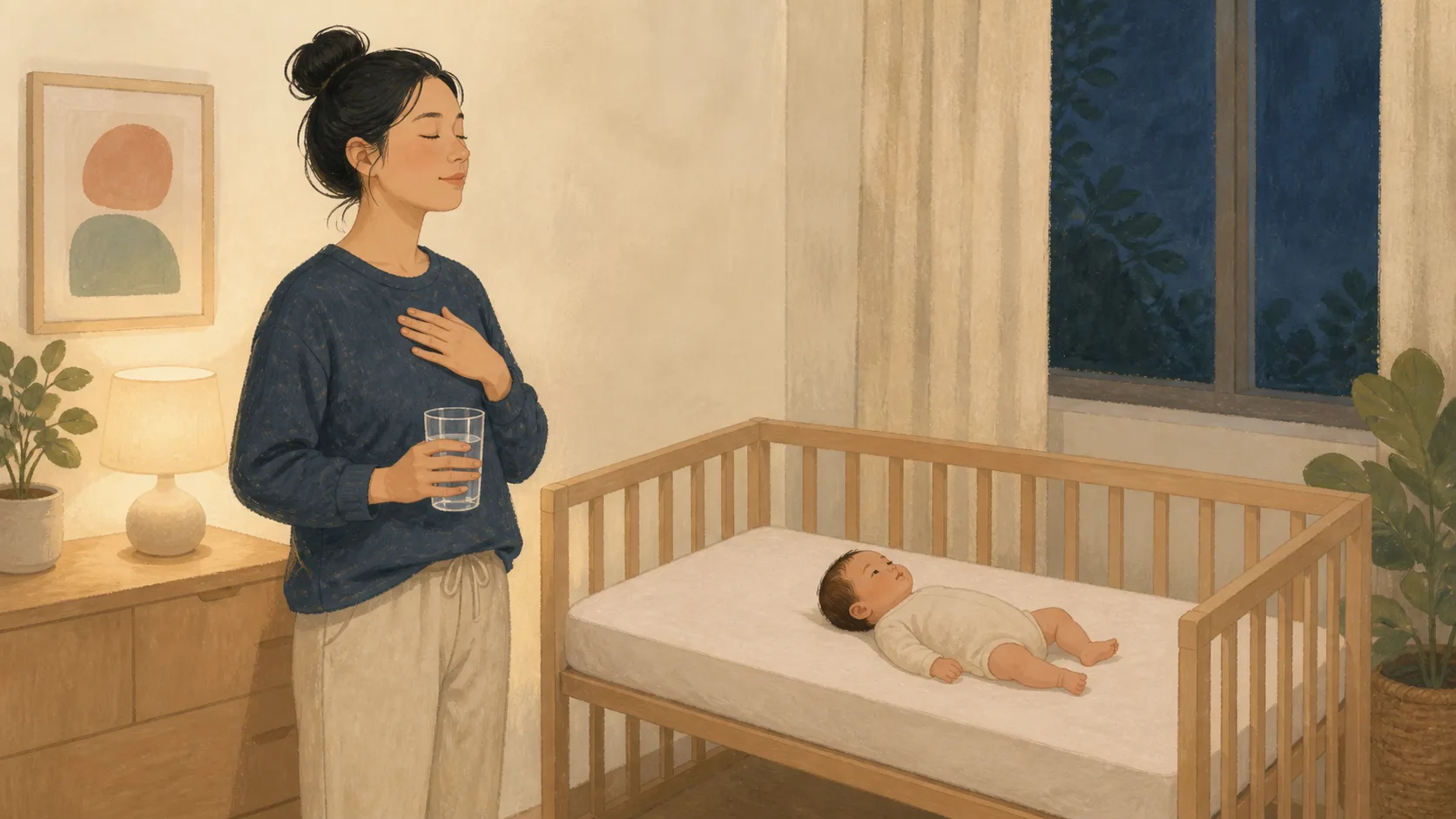
If your baby's crying makes you increasingly angry or frustrated, placing them in a safe crib and stepping away briefly to catch your breath is a safe choice. Never shake a baby. Shaking can cause brain injury or death.
Decide in advance what to do for 90 seconds
If your child is in a safe place, give a brief explanation: "I feel like I might get too loud, so I'm going to drink some water." Take a sip, put both feet on the floor, and slowly count four breaths. If you need a timer, set it for just 90 seconds.
If your child is older and you cannot leave their side, remove dangerous objects and say less while staying in the same room. Repeat one sentence, such as "You're crying. I'm here." Save reasoning or discipline until you are both calmer.
For now, say less about stopping the crying
Repeating "Stop crying" or "Why are you crying?" can make you feel more rushed when your child may not have the energy to explain. Your task is to let them know you are nearby and keeping them safe, not to guess their feelings perfectly. Short, quiet phrases such as "You're upset and crying" or "Your body is safe" are enough.
Later, note whether your child seemed hungry or tired, was somewhere unfamiliar, or was bothered by noise or uncomfortable clothing. Once the crying stops, there is more room to consider the cause. You do not need to meet every demand on the spot or punish the crying.
If the same time is always hard, change the conditions first
If crying lasts longer every evening before dinner or just after getting home, look at the conditions at that time rather than your child's personality. For an older child who already eats snacks, you might offer a snack and water a little earlier. You could also reduce screens or questions, or leave 10 minutes after arriving home to spend quietly together. Choose one change and watch for several days.
If you are more tired at the same time, write down a plan for sharing care. Instead of one person doing all the soothing, another person could handle dishes or care for siblings. These 90 seconds are a chance to reach further help, not training in coping alone.
Reach out to one person for help
If your hands are still shaking or you feel like yelling after 90 seconds, do not keep enduring it alone. Ask specifically, "Can you talk with me for 10 minutes right now?" or "Can you hold the baby?" If no one can take over, contact local emergency support or a medical service.
Your child's continued crying does not make you a bad person. But if you have grabbed your child roughly or fear you might hurt them, contact a safe adult and professional help immediately instead of waiting for next time.
Worksheet
A 90-Second Pause Card
Write this on your refrigerator or phone before the crying starts.
- Safety
- Check for pain, fever, breathing problems, and dangerous objects
- One sentence
- The brief explanation I will give
- A 90-second action
- Choose water, feet on the floor, or counting breaths
- Contact
- One person I can ask for help right now
Notes
- Never shake a baby. The 90 seconds are an example of a brief pause for the parent, not a recommended time to leave a baby crying or a deadline for calming down.
- Seek immediate medical help for abnormal breathing, skin color changes, unusual lethargy, or injury.
- The 90-second card will not fit every situation. Do not try this pause or turn around to attend to your child while driving. First park somewhere safe, away from traffic, then check your child and catch your breath beside them. Keep the car-seat harness fastened while the vehicle is moving, and never leave your child alone in a parked car. When out, stop an age-appropriate stroller somewhere safe, position and secure your child according to the manufacturer's instructions, and stay beside them. Car seats and strollers are not substitutes for a sleep space; if an infant falls asleep, move them to a safe sleep space as soon as possible. If stepping away briefly makes your child much more anxious, stay in the same space and simply say less.
References
- NHTSA: Why driving needs your full attention
- American Academy of Pediatrics: Travel breaks, car seats, and never leaving a child alone in a car
- American Academy of Pediatrics: Moving a sleeping baby to a safe sleep space
- Centers for Disease Control and Prevention: Safe breaks for caregivers overwhelmed by crying and preventing abusive head trauma
This is general safety guidance. It does not replace diagnosis or treatment for infant illness, a parent's mental health crisis, or risk of abuse.