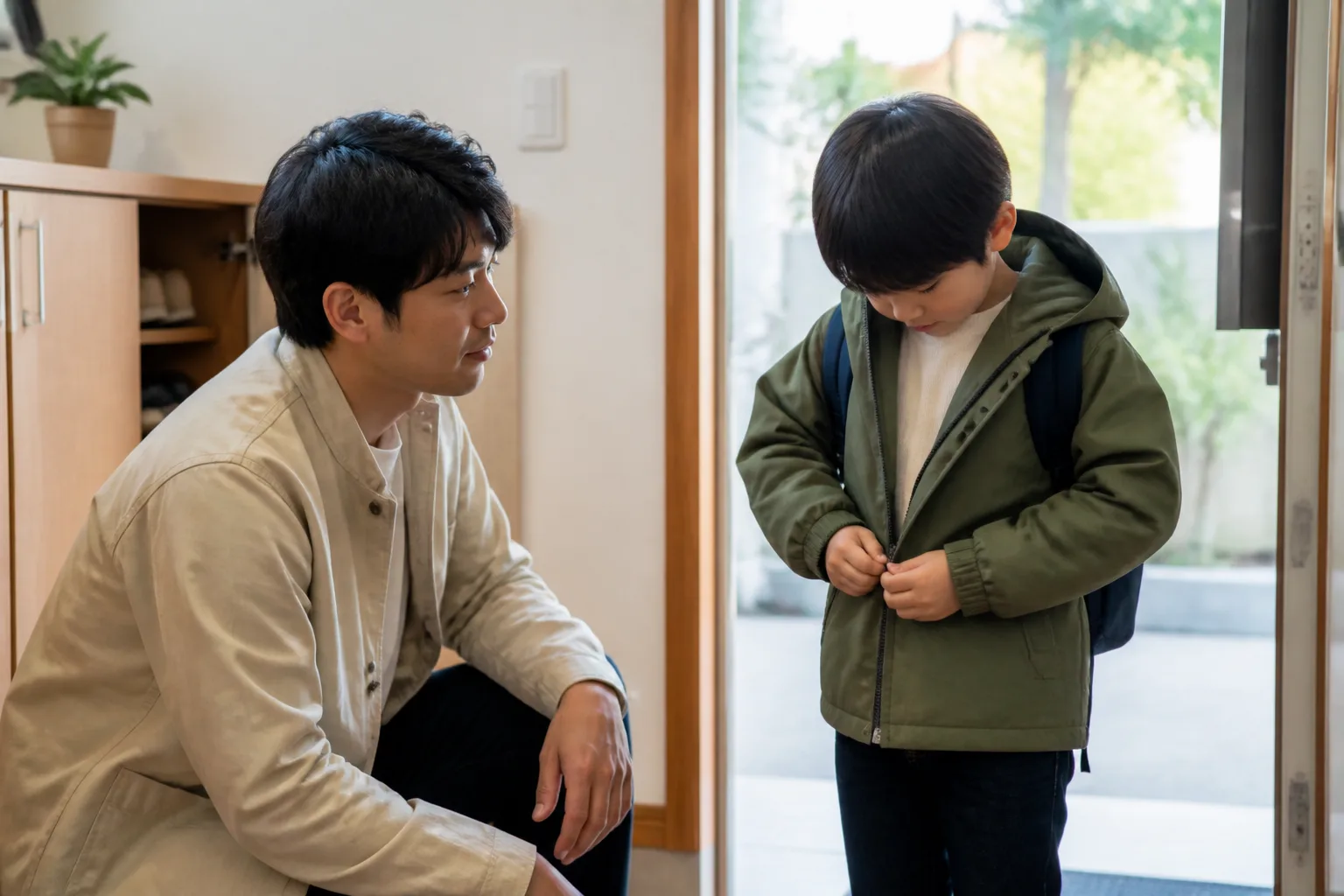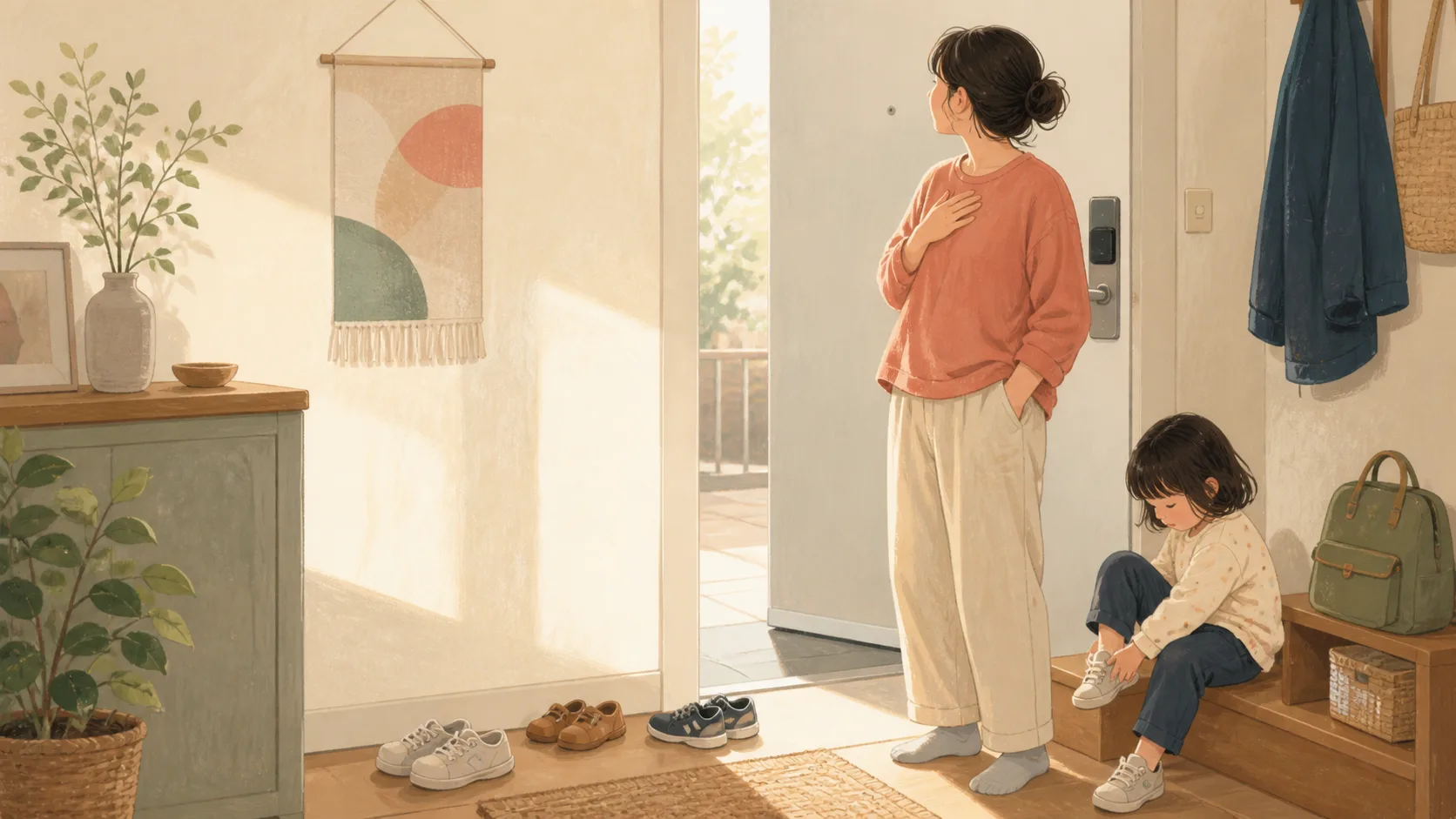
A journal quickly falls behind when you try to save every photo and word, along with every detail about sleep and meals. Missing a day does not mean you missed what matters. You can choose one moment you want to remember or ask about later, write a short note, and stop.
Key point
Record only the date, what you actually observed, and the situation. Save as little sensitive information about your child as possible. If journaling delays care or sleep, you can put the notebook away.
What to remember
- A journal is not daily homework or proof of your love.
- Briefly record the date, what you actually observed, and the situation. Leave out interpretations.
- Do not use notes to draw conclusions about development. Share concerns with a clinician.
Choose just one reason to write
Pick one thing: something funny your child said today, a change to ask about at an appointment, or a moment your family may want to remember. You do not have to cover sleep, meals, play, and mood. The thought that failing to record it all means you do not love your child enough only makes the journal heavier. A missed day does not mean you paid too little attention.
Set a timer for 2 minutes. Write the date, then one line each about the behavior you saw and the situation. When time is up, close the journal without polishing the sentences.
Record the scene rather than your interpretation
Instead of "I think speech is delayed," write, "May 3, before dinner, pointed to water and made a sound." Instead of "Happy today," you might write, "Held my hand at the park and asked for three more turns on the swing." If your child did not say how they felt, do not decide the feeling for them.
Do not settle concerns about developmental milestones through a family journal. Talk with a clinician. A moment card is not an official monitoring tool, screening test, or assessment. If any milestone concerns you or your child has lost a skill they once used, tell a clinician without waiting to collect more notes.
Save fewer photos and personal details
Even when a record is useful, limit where you store or share your child's face, health information, school name, location, and sensitive events. Before posting to a family group chat or public account, consider whether your child would want it shared or may feel uncomfortable later. Respect their views and privacy more as they grow.
You can preserve a moment without a photo. Part of something your child said, what they pointed to, and roughly when and where you saw it may be enough. Keep records that do not need to be shared in a locked private space, or choose not to write them at all.
It is fine to skip days
When your child is sick, the family schedule is busy, or you are exhausted, you do not have to fill out even one card. If journaling cuts into sleep or care, or repeatedly checking what you missed increases anxiety, put the timer and notebook away for a while. Writing less does not mean you have stopped paying attention.
Instead, write one line only when you need to remember something, or list your three current concerns the day before an appointment. If anxiety and repeated checking keep disrupting daily life or make it hard to keep your child safe, reach out to someone close to you, a clinician, or mental health support.
Use the card to start a conversation with a clinician
At an appointment, share the date, behavior, and situation from the card. Also explain what your child usually can do and when the concern began. Public milestone checklists and developmental screening by a clinician provide a more systematic review than family notes. A parent's concern alone is also a reason to ask.
Do not judge your child's development, your relationship, or your parenting by how much you record. Use the card if it helps, and choose another method if it does not. The quality of the journal matters less than whether you and your child are safe now and able to continue care.
Worksheet
A 2-minute moment card
You do not have to complete all three lines. Choose only the moment you need today for a memory, an appointment question, or a family conversation.
- Date
- Today or the day the moment happened
- Observed behavior
- What you actually saw in speech, gestures, or play
- Situation
- Time, place, people present, and what happened just before
- Question
- One thing to ask a clinician or family member
- Privacy
- Sensitive information you will not save or share
Notes
- This card is not a developmental screening test, diagnosis, or scorecard for good parenting.
- Do not judge your child's development or your ability as a parent from a one-line note.
- If recording makes sleep, care, or anxiety worse, you can stop or cut back and seek help.
References
- CDC: Developmental milestone tracking app
- CDC: Why developmental milestones matter
- CDC: When you are concerned about your child's development
This is general guidance for easing the burden of record keeping. It does not replace developmental screening, diagnosis, mental health treatment, or legal advice about privacy.