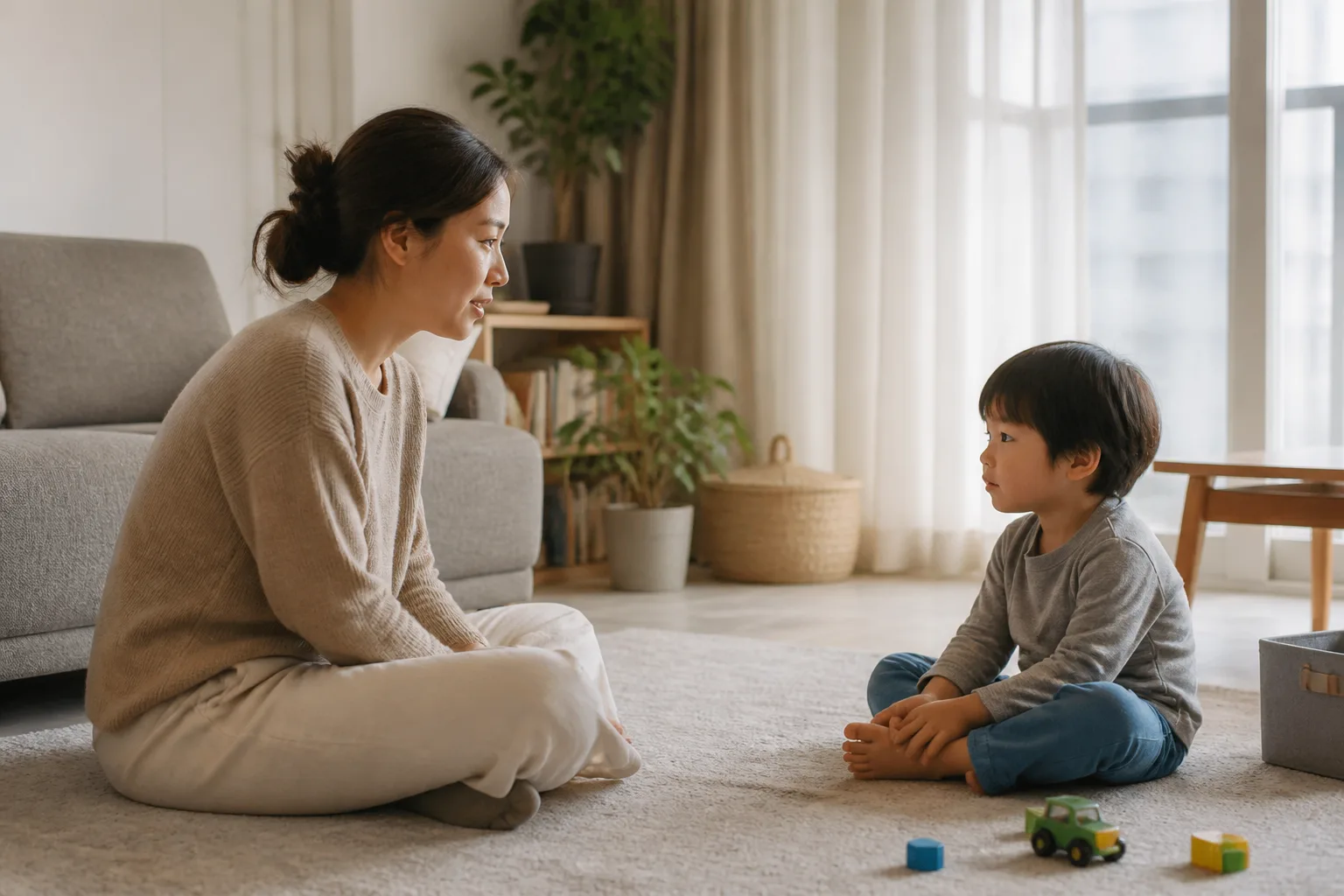
After yelling, you may explain at length out of guilt or act as though nothing happened. First check for injuries and make sure the area is safe, then allow time to settle. An apology is a time to take responsibility for your behavior, not rush your child to forgive you.
Key point
After checking safety, keep it brief: "It was wrong of me to yell," "That must have scared you," and "Next time I'll pause before I speak."
What to remember
- First check whether anyone is hurt or anything nearby is unsafe.
- Acknowledge your action in one sentence, without excuses.
- Name one small, specific thing you will do differently.
Wait to apologize if you are still upset
If your voice is still shaking and your child's answer might make you angry again, do not rush the conversation. Make sure your child is somewhere safe, then drink some water or briefly switch with another caregiver.
If you step away, explain rather than disappearing: "I feel like I might raise my voice, so I'm going to take a moment to calm down." If leaving a young child alone would be unsafe, stay in the same space and speak less.
Name the action you are taking responsibility for
Starting with "I did it because I'm having a hard time too" may sound as though you are blaming your child. Leave out "because you wouldn't listen." Name what you did, whether you yelled or grabbed them roughly.
Do not require your child to say "It's okay" or "I forgive you." Your responsibility stays the same even if they do not speak right away.
Focus the apology on your own behavior. Say "I yelled," rather than "You made me do it," and acknowledge the action directly.
Keep the apology separate from the rule
Your apology does not remove safety rules your child still needs to follow. But restarting a lecture during an apology can make it sound conditional. Briefly return to the rule once you have both settled.
For example, you can set a boundary by saying, "I won't let you hit." You can then agree on words or a pause signal you will use during the next conflict.
If it keeps happening, change the conditions
If you raise your voice at the same time or in the same situation, note what comes before it: lost sleep, time pressure, meals, noise, or gaps in childcare. Repeated apologies alone do not change those conditions.
If you have hurt your child or fear you may hurt them again, do not try to manage alone. Get immediate help from a safe adult and a professional service.
Worksheet
Three sentences for an apology
Prepare only the brief words you are responsible for, without asking your child to respond.
- Responsibility
- It was wrong of me to yell.
- Your child's experience
- That must have scared you. You don't have to talk right now.
- Next action
- Next time, I'll pause before my voice gets loud.
Notes
- Rough grabbing, threats, or throwing things involve physical safety and need a different response from a verbal slip.
- Your child may not want to answer or be held right after an apology. Do not rush them. Staying nearby, continuing the usual routine, and waiting for them to approach can also help repair the moment.
- This guidance does not replace counseling for your family or crisis support.
References
- American Academy of Pediatrics: Focusing on behavior when talking after conflict
- CDC: Giving brief, clear directions without yelling
This is general editorial guidance on repairing relationships. It does not replace assessment or treatment for abuse, violence, or a mental health crisis.