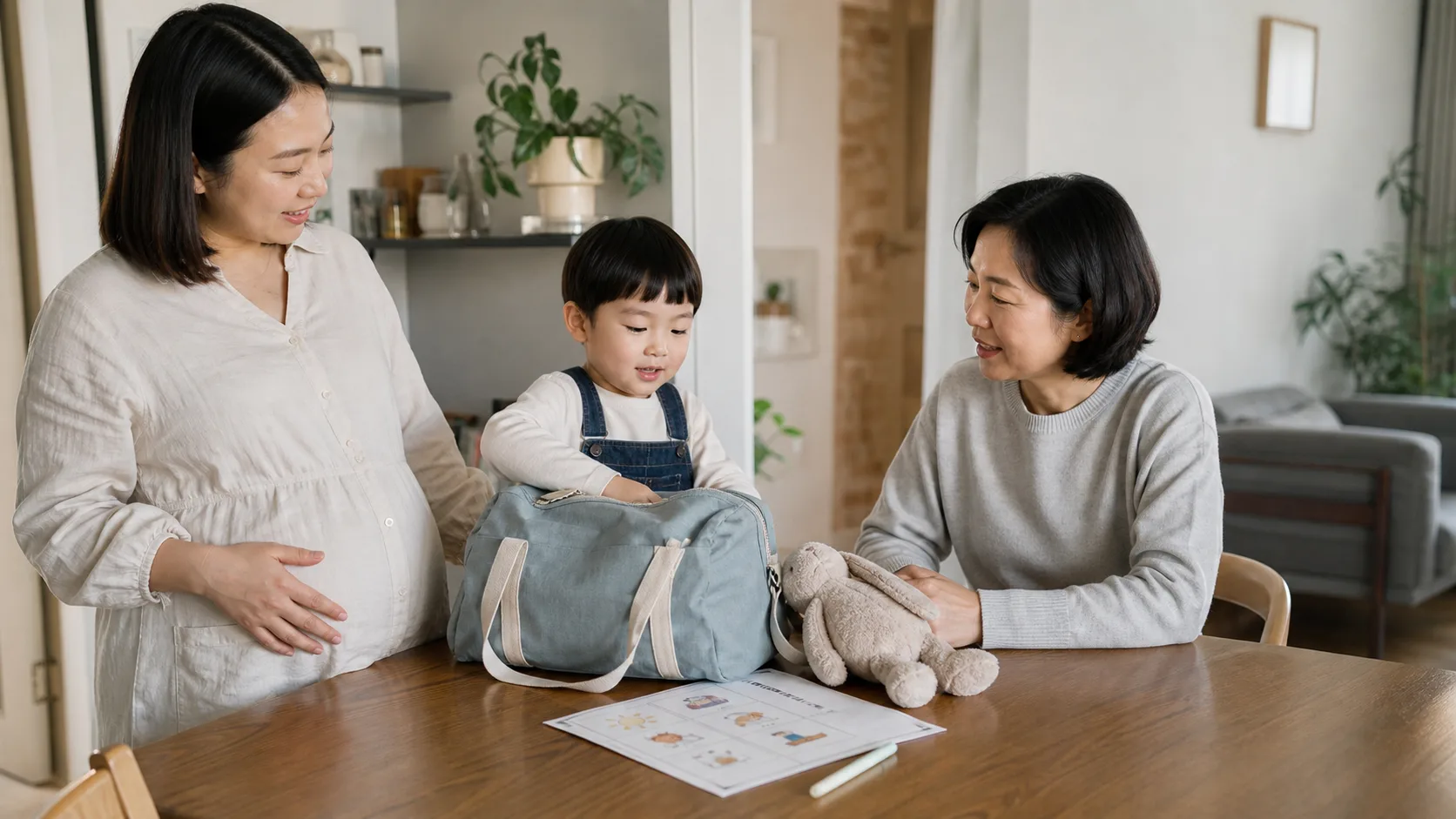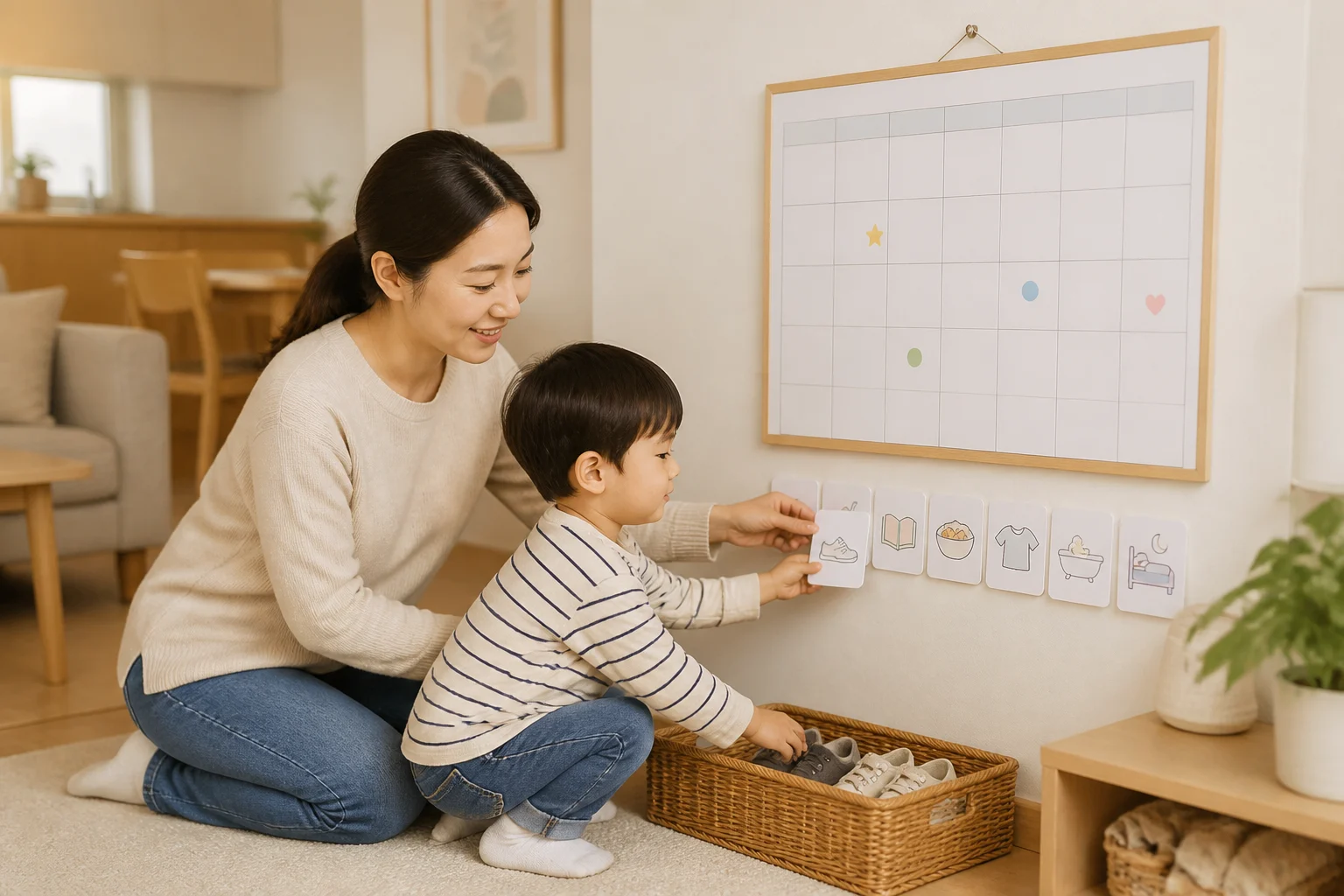
When you are sick, first identify an adult who can directly watch your child. Keep only today's essentials, such as food, water, prescribed medicine, and a place to rest. You do not need to handle school, housework, and your child's feelings exactly as you usually do.
Key point
When a caregiver is sick, check in this order: an adult to watch the child, food and water, prescribed medicine and medical instructions, and rest for the caregiver. If you are too sick to supervise your child, do not try to manage by reducing housework alone. Get help or medical care.
What to remember
- First decide whether you can supervise directly and who can take over if you cannot.
- Give the substitute caregiver information about allergies, medicine, medical needs, and contacts.
- Get immediate help if fainting risk, trouble breathing, changes in consciousness, severe pain, or another condition makes supervision difficult.
Keep only four priorities for today
On paper, make only four boxes: safety, food and fluids and the medical plan, rest, and connections. Under safety, write the adult supervising and any hazardous objects or places to check. Under food, list simple meals and water. Under rest, note when you can lie down and safe activities for your child. Under connections, list people to contact. Cleaning, lessons, and usual outings can wait.
Tell your child briefly, "I am sick today and need to rest. This adult will stay with you." Do not ask your child to become your nurse or emotional support person.
Decide first whether someone else needs to supervise
Do not try to manage alone if you are extremely drowsy, feel likely to faint, have trouble breathing, feel confused, or cannot watch your child because of severe pain. Contact a safe adult, such as a relative, neighbor, or friend, who can come and supervise in person. Use emergency or medical support if needed. Do not ask a child to watch an infant, toddler, or sibling or to find medicine for you.
A sick caregiver should not delay asking another adult for help or feel guilty about it. Getting help does not mean giving up on your child. It is a safety plan that keeps supervision in place while you are sick.
Share health and safety information with the other caregiver
Tell the substitute caregiver about your child's allergies, prescribed medicine and medical needs, foods to avoid, contact information for the child's health care professional and caregivers, key instructions from school or child care, and home safety rules. If your child has special health care needs, hand over the existing care plan as written. Do not make a sick caregiver rely on memory alone.
Share your child's health needs and safety plan with everyone involved in care before an emergency happens. Pass along only prescribed medicines and the existing care plan. Ask a health care professional about new medicines or how to assess symptoms.
Be clear about tasks a child should not handle
A child may bring you a cup or quietly work on a puzzle, but do not ask them to manage medicine, cook, supervise a younger sibling, or decide whether something is an emergency. If you might fall asleep on a bed or couch, do not put an infant or toddler beside you to sleep. Have an awake, safe adult watch the child. Keep roles separate so your child does not feel, "I have to take care of my parent."
Do not blame yourself for extra screen time or a simple meal today. Choose activities your family can manage with safe supervision, and make rest the sick caregiver's priority.
Change the plan if illness may be contagious
If you have symptoms that may be contagious, such as a cough, fever, vomiting, or diarrhea, use appropriate hand hygiene and distance around your child and the substitute caregiver. Check local public health and medical guidance. Do not set one isolation period or medicine as a general rule. Tell your child only what they need to know, such as, "Wash your hands, and another adult will help you."
Separately watch your child for signs that may need medical care, such as fever, breathing problems, or dehydration. Do not try to assess the caregiver's and child's illnesses as one case. Each person who needs it should receive their own medical advice.
Sometimes you should not wait to recover
Do not decide to just get through today if the caregiver's symptoms are getting worse quickly, the child cannot be supervised safely, or you suspect an emergency. Contact local emergency support, a medical facility, and a trusted substitute caregiver immediately. If you are unsure about your condition, ask a health care professional where and when to seek care.
If you cannot tell whether to go to an emergency department, urgent care, or a pediatric office, describe the symptoms and situation to a health care professional and follow their guidance. This article is not a standard for deciding which illnesses are safe to manage at home.
Worksheet
What to Check on a Sick Day
Set aside usual tasks and write down only the connections you need today.
- Safety
- Adult providing direct supervision and hazards to check
- Food and medical care
- Water, simple meals, and the existing care plan
- Connections
- Substitute caregiver and places to contact
- Information to share
- Allergies, medicines, safety rules, and contact information
Notes
- If you cannot supervise your child safely, do not try to manage at home alone. Find another caregiver and medical support.
- For symptoms that prevent supervision or emergency risks, contact a substitute caregiver and medical or emergency support first.
- Some families cannot immediately think of an adult to call. On a day when you feel well, identify even one neighbor, friend, or relative you could ask and how to reach them. Then the connections box will not be empty when you are sick.
References
- CDC: Parents and caregivers who are sick
- CDC: Children and youth with special health care needs in emergencies
- CDC: Considerations for creating a safety plan
- American Academy of Pediatrics: Urgent care, emergency room, or pediatrician
This is general caregiving guidance for a day of acute illness. It does not replace diagnosis, treatment, isolation guidance, emergency assessment, or an individual medical care plan.