Write your worries and your child's questions in separate columns. A parent's concern about grades calls for different preparation than a child's question about the restroom. If eating, sleeping, or going to school stays difficult, tell the school and a health care professional.
Key point
Check the route to school, the restroom, and which adults can help. Tell the school and a health care professional if eating, sleeping, or going to school continues to be difficult.
What to remember
- Listen to your child's concerns first.
- Check school information together.
- The worksheet does not determine whether a child is ready.
Use two columns for your worries and your child's preparation
Put parents' concerns in the adult column, and questions about the restroom or teacher in the child preparation column. Ask, "What are you wondering about?" first, without adding concerns about grades. You might say, "New things can feel unfamiliar. We can find out together."
Worry tends to spill over in familiar ways
When adults repeatedly say in front of a child, "What if they cannot adjust?" check supplies several times a day, or use fear in directions such as, "Your teacher will get mad when you start school," the child may pick up the parent's tension before understanding the words. Choose one scene that happens often in your home.
A parent's anxiety can also have different sources. If it comes from your own school memories, write it in the adult column and keep it separate from your child's day. If it comes from missing information, ask the school directly. If comparisons with other children trigger it, first spend less time looking at those comparisons.
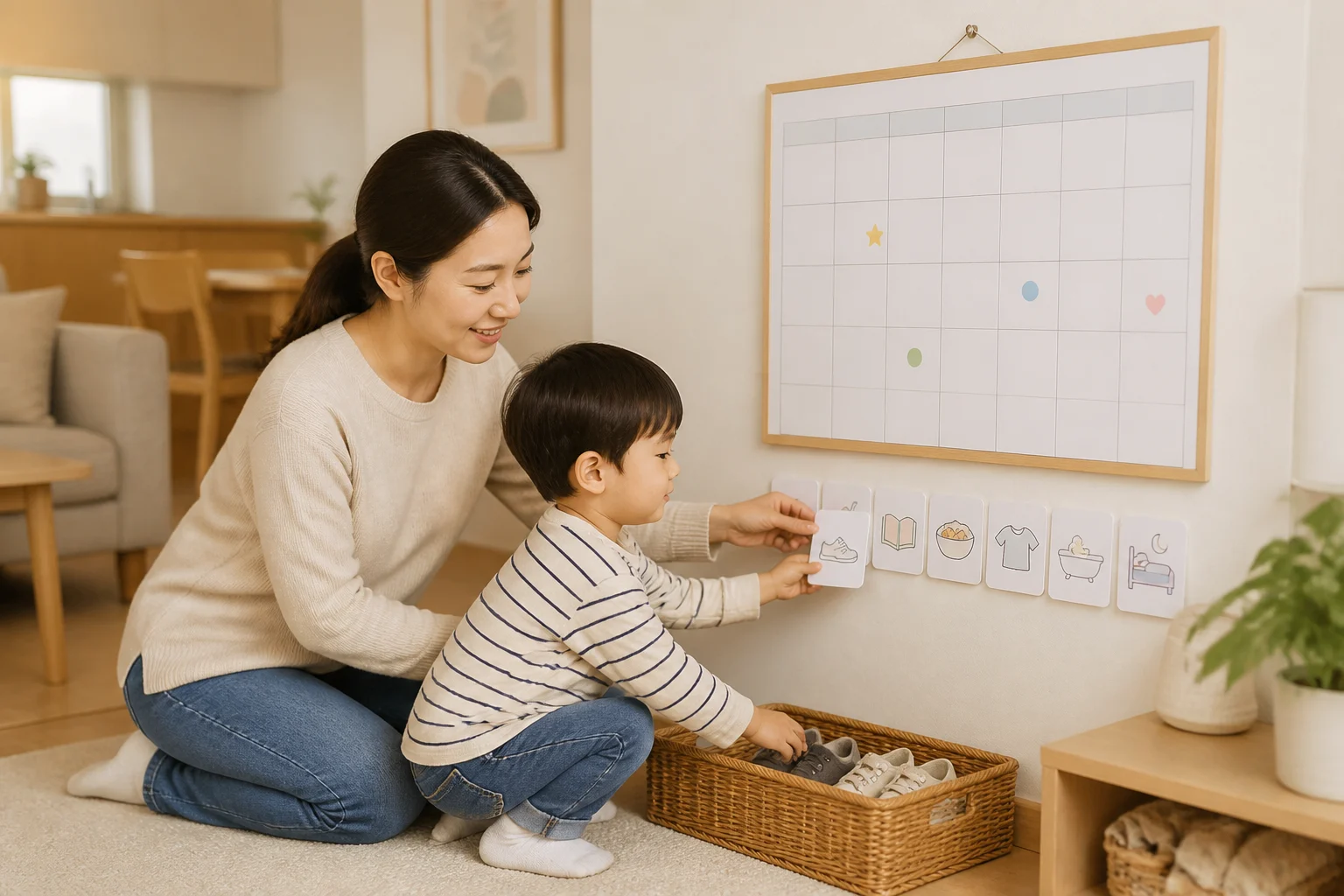
Visit and practice school routines
Check the route to school, the restroom, and the teacher or other adult your child can ask for help. Practice one or two phrases, such as, "I need to use the restroom" and "I do not understand." Adjust sleep, meals, and getting-ready times little by little over several days instead of changing everything just before school starts. Discuss concerns with the school ahead of time.
Keep goals small during the first week
Expecting a child to make friends, adjust to class, and organize every supply during the first week can overwhelm both child and parent. Set one goal a day, such as getting to the classroom door or asking for water or the restroom.
Choose your goodbye words ahead of time
Long explanations or repeated promises at every drop-off can make separation take longer. Use the same short phrase, such as, "I will meet you here after school," and keep the promised time and place. If plans change, tell your child first and also inform the school.
Practice the order of the day rather than studying ahead
Learning reading, writing, or math before school begins is not required for every child. Practice the order of waking up, eating breakfast, getting dressed, and leaving a few times. Completing every item on a checklist does not mean school preparation is complete. If your child needs language, health, disability, or developmental support, talk with the school ahead of time about what help is available.
Do not promise to make all anxiety disappear
Repeatedly saying, "It will be fun," may leave less room for your child to share concerns. Ask, "It might feel scary. Who could you tell then?" and listen to the answer. A child who does not cry is not necessarily more prepared, and a parent's nervousness does not always make a child anxious.
Get help early when anxiety disrupts daily life
If anxiety gets worse or lasts long enough to disrupt sleep, eating, school attendance, or play, consult the school and a health care professional. Do not assume that stomachaches or headaches are fake. Note when and where your child reported symptoms and which activities they missed, then share this with the school so you can plan the next support together.
Worksheet
What to Check Together Before School Starts
This worksheet is not meant to eliminate worry. Use it to separate what a parent should investigate from what to ask the child.
- Parent concerns
- What adults should discuss
- Child's questions
- What to ask the child first
- Places to check
- Route, restroom, and adults who can help
- Signs help is needed
- Changes to discuss with the school
Notes
- Listening for where your child feels uncomfortable matters more than completing the list.
- This worksheet does not determine school readiness or diagnose anxiety.
- Discuss anxiety and physical symptoms that disrupt daily life with the school and a health care professional.
- This worksheet will not fit every situation. If your child is not especially worried about starting school, bringing it up often may create worry. Answer when your child asks. If your child has a developmental, language, or health support plan, follow the individual plan made with the school first.
References
- American Academy of Pediatrics: Back-to-school tips for families
- American Academy of Pediatrics: Helping children manage fears and anxieties
- NHS: Anxiety in children
This is general guidance for preparing to start school. It does not replace diagnosis or treatment for anxiety disorders, developmental needs, or learning support needs.