You can love your child while finding care exhausting and unenjoyable. Instead of making enjoyment today's goal, decide what to keep among safety, food, rest, and connection.
Key point
On days that are not enjoyable, keep only essential safety, food, and rest. Note recurring signs of exhaustion and who you can ask for help.
What to remember
- Keep safety, basic care, and brief connection, and postpone the rest.
- Record signs of physical and daily exhaustion separately.
- During a crisis, get help instead of managing alone.
Necessary care remains even on days without joy
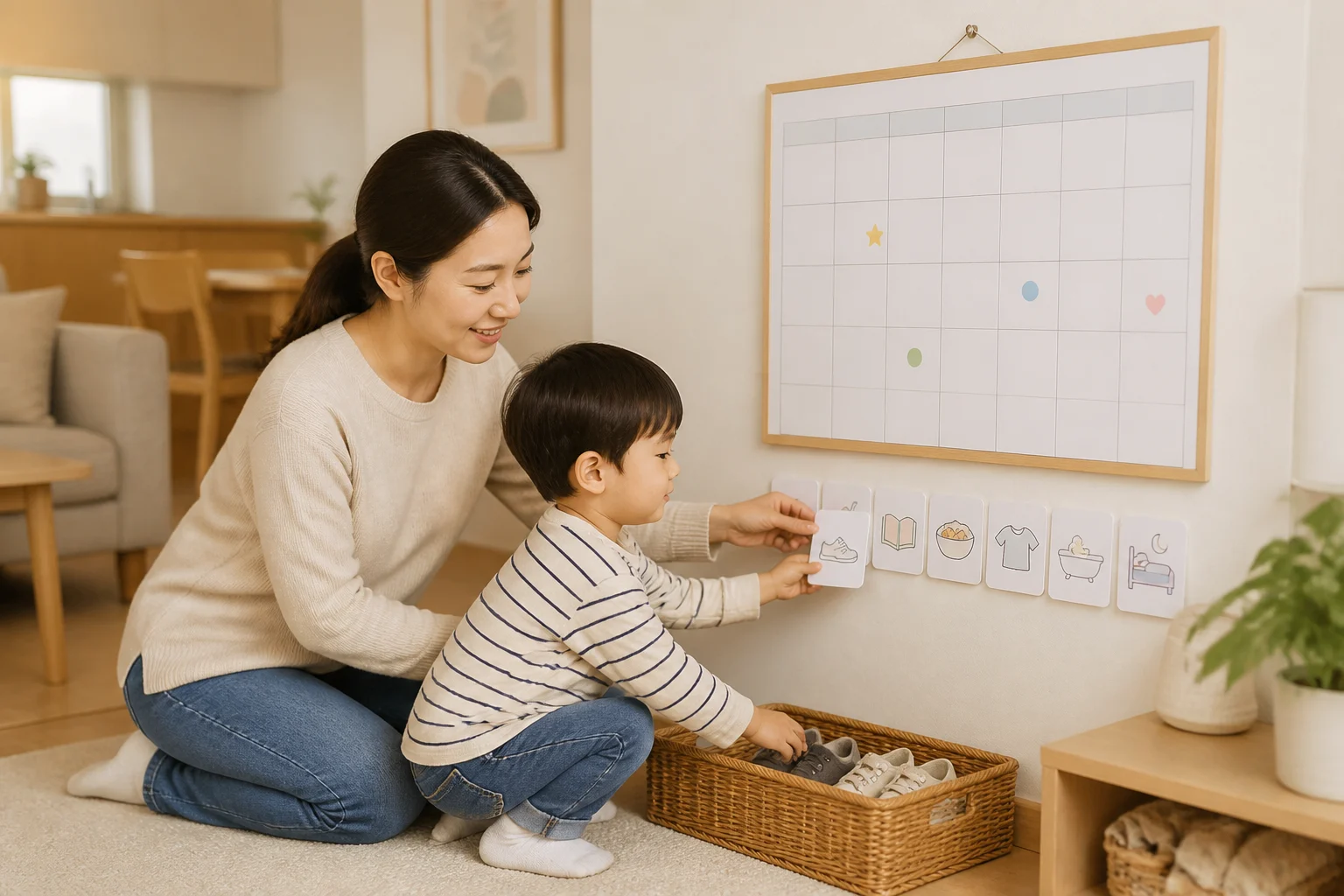
On a hard day, your child may not need a perfect play plan. You can get through the day by removing hazards, providing food, drinks, and a place to rest, and saying briefly, "I am having a hard day, but I am here with you."
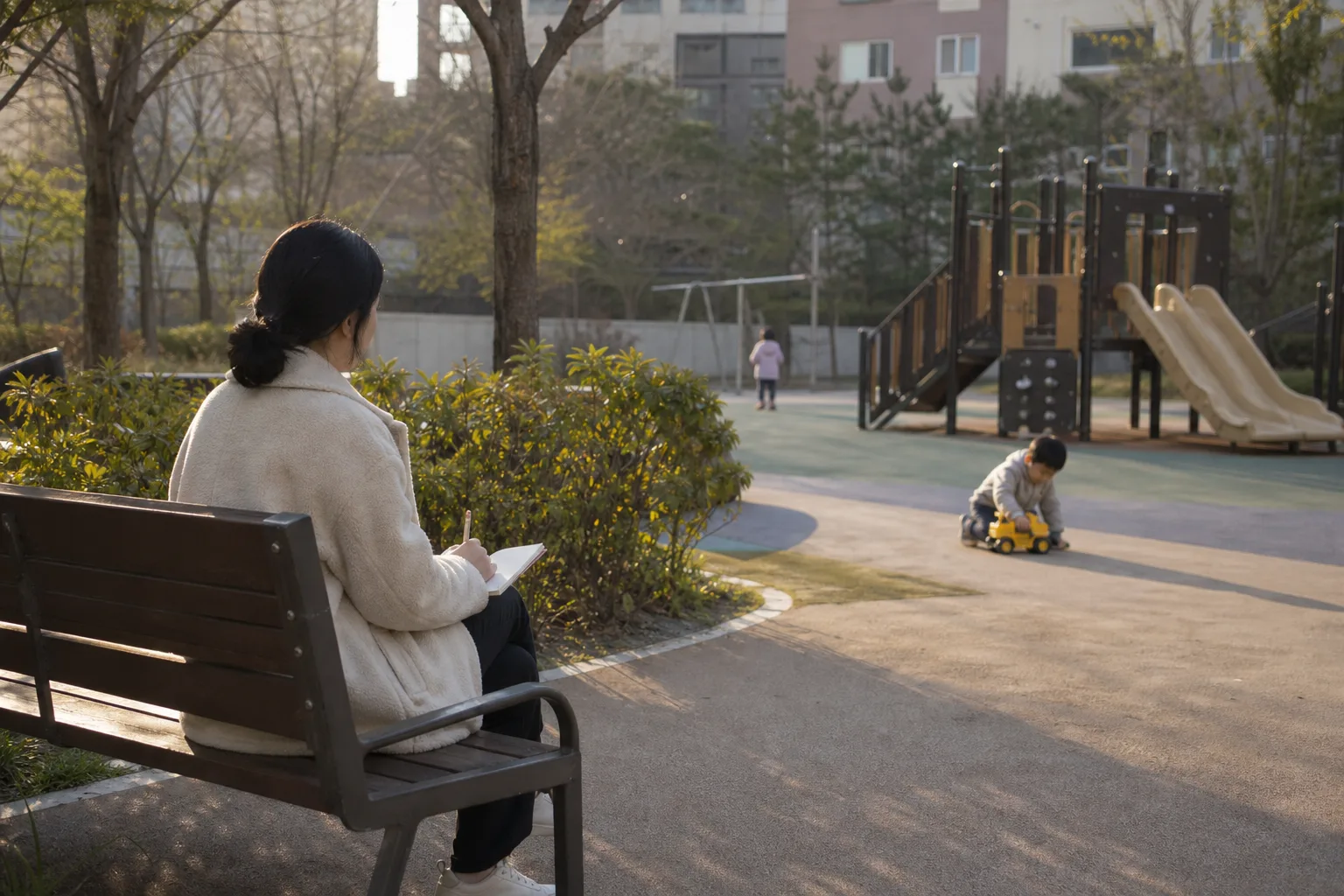
Quietly reading one book or sitting nearby is enough connection. You do not need to force an exciting activity.
Do not mistake exhaustion for personality
Stress can appear as anger or worry, but also as trouble sleeping, physical pain, or difficulty concentrating. On days when your child's requests sound unusually loud, first check sleep, food, noise, time spent as the only caregiver, and anything that hurts.
Even one line at the end of the day, such as, "Raised my voice at 6 p.m. and missed lunch," can help you choose one condition to change tomorrow.
Not enjoying parenting can mean different things
You may feel bored after repeating the same block game. You may be so drained that you want to do nothing, or lonely after going all day without speaking to another adult. All may sound like, "Parenting is not fun," but they are different states. Naming which one fits today can narrow your next choice.
For boredom, try moving the same play to another safe spot indoors. For burnout, remove one task from today. For loneliness, briefly contact one adult after your child is asleep. None of these asks you to parent harder. Each changes one condition for the parent.
Ask for help with a time and task
Instead of saying, "Help me," ask, "Could you play with my child for 30 minutes Thursday evening?" Lying down briefly, taking a shower, or resting without talking can all support recovery.
If one person cannot provide all the help, divide requests into meals, drop-offs and pickups, or going to appointments. Do not require yourself to accomplish something while receiving help.
Do not assess a long-lasting loss of joy alone
If you have little interest or pleasure, and hopelessness, guilt, or changes in sleep, eating, or concentration make daily life difficult on most days, do not dismiss it as a hard day of parenting. Seek professional help if it lasts for 2 weeks or more or keeps getting worse.
If you feel an urge to hit or shake your child, or think about harming yourself or your child, do not wait and count the days. Create a safe distance from your child and immediately contact a nearby adult, local emergency support, or a mental health professional.
Worksheet
What to Keep and Postpone Today
Do not grade the day. Write down one essential task and one thing someone else can help with.
- Keep
- What is essential today among safety, food, rest, and connection
- My signals
- The first changes in body and mind
- Reduce
- One thing to postpone today
- Ask for help
- Who to ask, when, and for what
Notes
- You do not need to pretend to feel joyful.
- Use local emergency support right away in a safety crisis.
References
- Centers for Disease Control and Prevention: Recognizing and managing stress
- National Institute of Mental Health: Signs that you may need mental health help
This is general self-care guidance for parents. It does not replace mental health diagnosis or treatment.