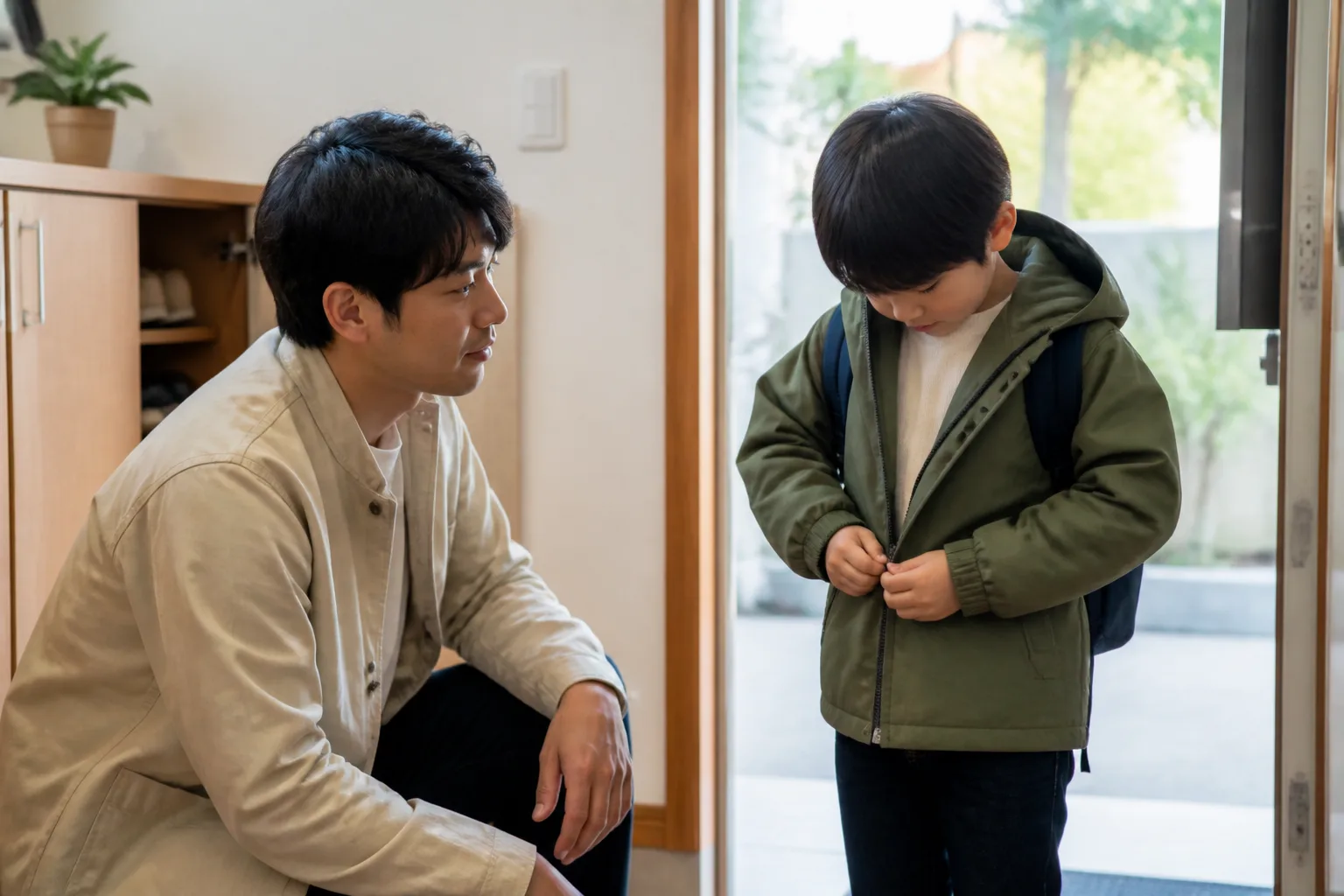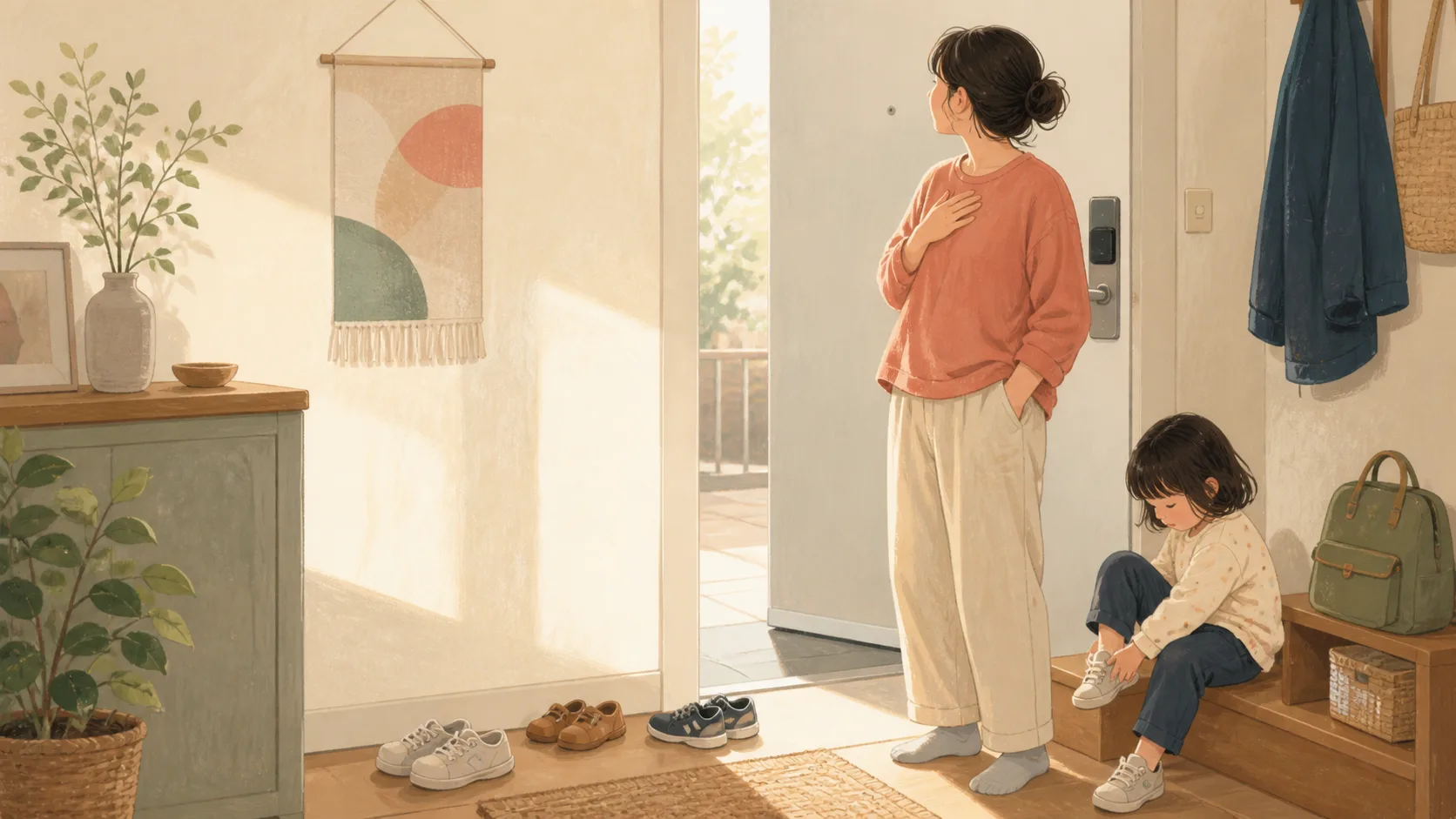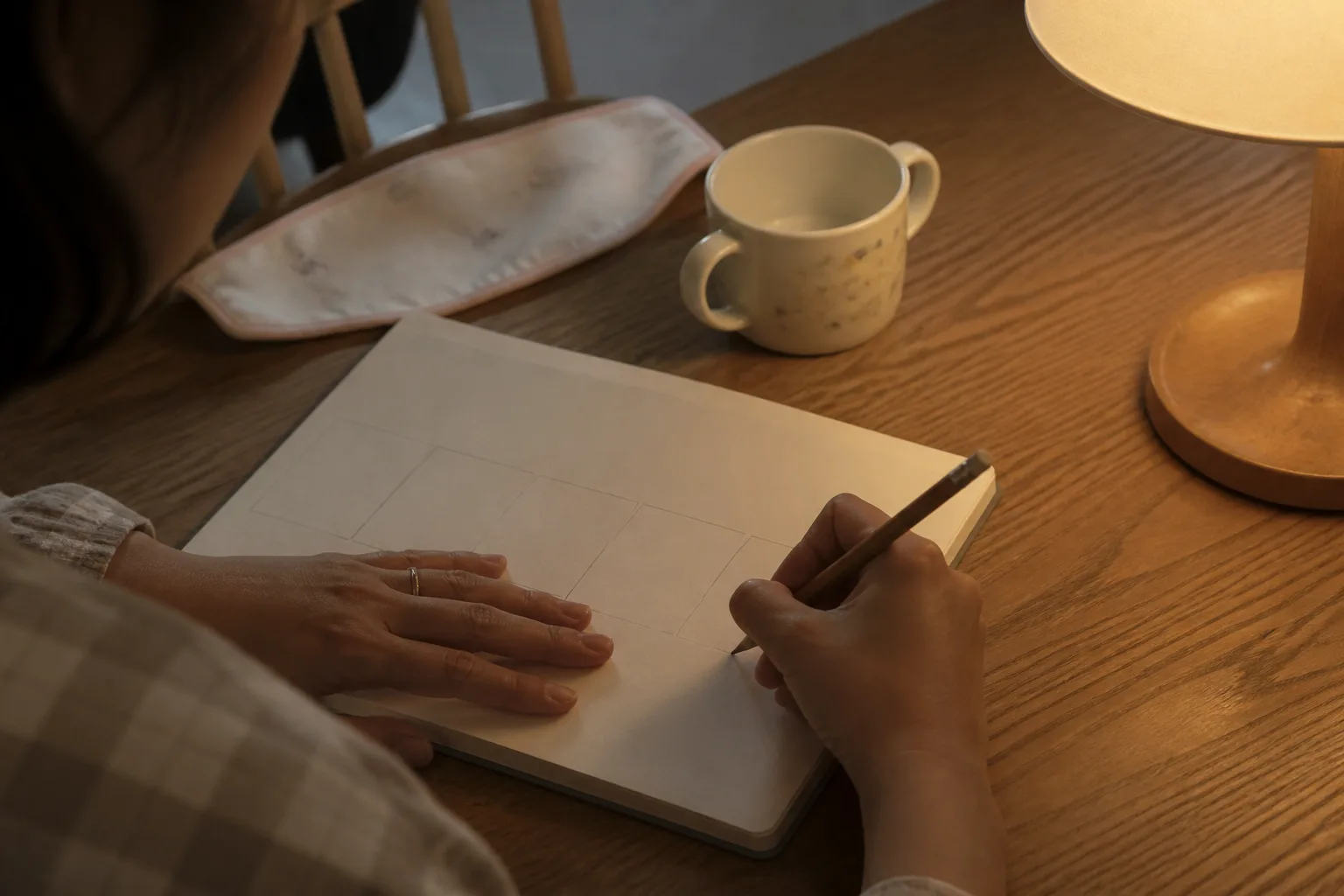
When your child does not listen or throws something, words like "You'll be in trouble if you cry" or "Why can't you do even this?" may come out first. Growing up with those words does not make today's behavior inevitable. But familiar responses can come quickly when you are tired or startled, so prepare a pause and replacement sentence at a calm time.
Key point
When harsh words are about to come out, reduce danger first and briefly say what your child needs to do now. Hitting, humiliation, threats, and shaming must stop. If you worry you may hurt your child, immediate safety and outside help come before discipline.
What to remember
- Remembering words from childhood does not mean that approach is safe or effective.
- First address dangerous objects, distance, and your voice, then briefly name your child's next action.
- If anger, panic, feeling blank or disconnected, or urges to hurt your child recur, or an injury has happened, seek help instead of enduring it alone.
The past can explain, but it cannot give permission
Discipline phrases you heard in your family may come to mind automatically. But "I was hit growing up too" or "I say it out of love" does not make hitting, whipping, humiliation, threats, or shaming safe. Physical discipline and harsh words are not recommended under any circumstances.
Do not shift responsibility for current verbal abuse or physical punishment onto the past. Your child needs a boundary today that keeps the past from being repeated.
Do three things before an outburst
Reduce danger before correcting your child. Remove objects that could be thrown, broken items, and hot things, and take a step back. If your voice rises, say briefly, "I'm stopping now. Safety comes first."
If your child is in a safe place and another adult can take over, pause to breathe and ask for help. But do not leave a baby or young child alone in a bathroom, car, high place, or area with dangerous objects.
Replace familiar words with the action needed now
Write down what comes out automatically and replace it with one sentence about what your child needs to do now. Instead of "You'll be in trouble if you cry again," try, "It's okay to cry. But I'll stop hands that try to hit." Replace "If you don't listen, I'll leave you" with "Stay beside me now. Hold hands on the street."
A replacement sentence is not a spell that immediately calms your child. The point is to replace frightening words with both the behavior that must stop and an available next action, making expectations clear and teaching them consistently.
Afterward, record facts and repair
If you raised your voice, write one line after your child is asleep instead of punishing yourself. Separate when it happened, the triggering action, your body's response, and what you actually said. Facts such as "During dinner preparation, my child threw a toy and I raised my voice" can show what to remove, whom to ask for help, and what sentence to change next time.
Do not act as if humiliation or threats never happened. When your child is safe, state responsibility and the boundary together: "Raising my voice was my responsibility. I won't use words meant to scare you. You can put things on the floor instead of throwing them."
Sometimes safety comes before changing words
If memories of past abuse, feeling blank or disconnected, panic, or anger recur, you fear hurting your child, or you have actually hurt them, do not try to bear it alone. Leave your child with a safe adult, move away from dangerous objects, and immediately contact someone close, mental health support, a medical provider, local child protection services, or emergency help.
If a child is being hit or threatened, or a caregiver feels close to losing control, secure safety immediately and follow the necessary protective procedures.
Worksheet
Replacement words for angry moments
At a calm time, prepare a way to reduce danger and one sentence for your child.
- Words that come first
- What you say when tired or angry
- Stop signal
- Changes to notice in your voice, body, or thoughts
- Reduce danger
- Objects to remove, distance to keep, and someone to ask for help
- What to protect
- Your child's safety, respect, and clear boundaries
- Replacement sentence
- One sentence naming what must stop and what to do next
- Ask for help
- People and services to contact if you cannot maintain safety alone
Notes
- Physical punishment, humiliation, and threats must stop, not continue under different wording.
- If you fear hurting your child or have actually hurt them, secure safety immediately and seek professional and protective help.
References
- American Academy of Pediatrics: The best way to discipline your child
- American Academy of Pediatrics: Position on physical punishment
- CDC: Essentials for parenting toddlers and preschoolers
- CDC: Time-in and taking a brief break
This is general guidance on preparing parental responses. It does not replace violence risk assessment, trauma or mental health diagnosis or treatment, or child protection procedures.