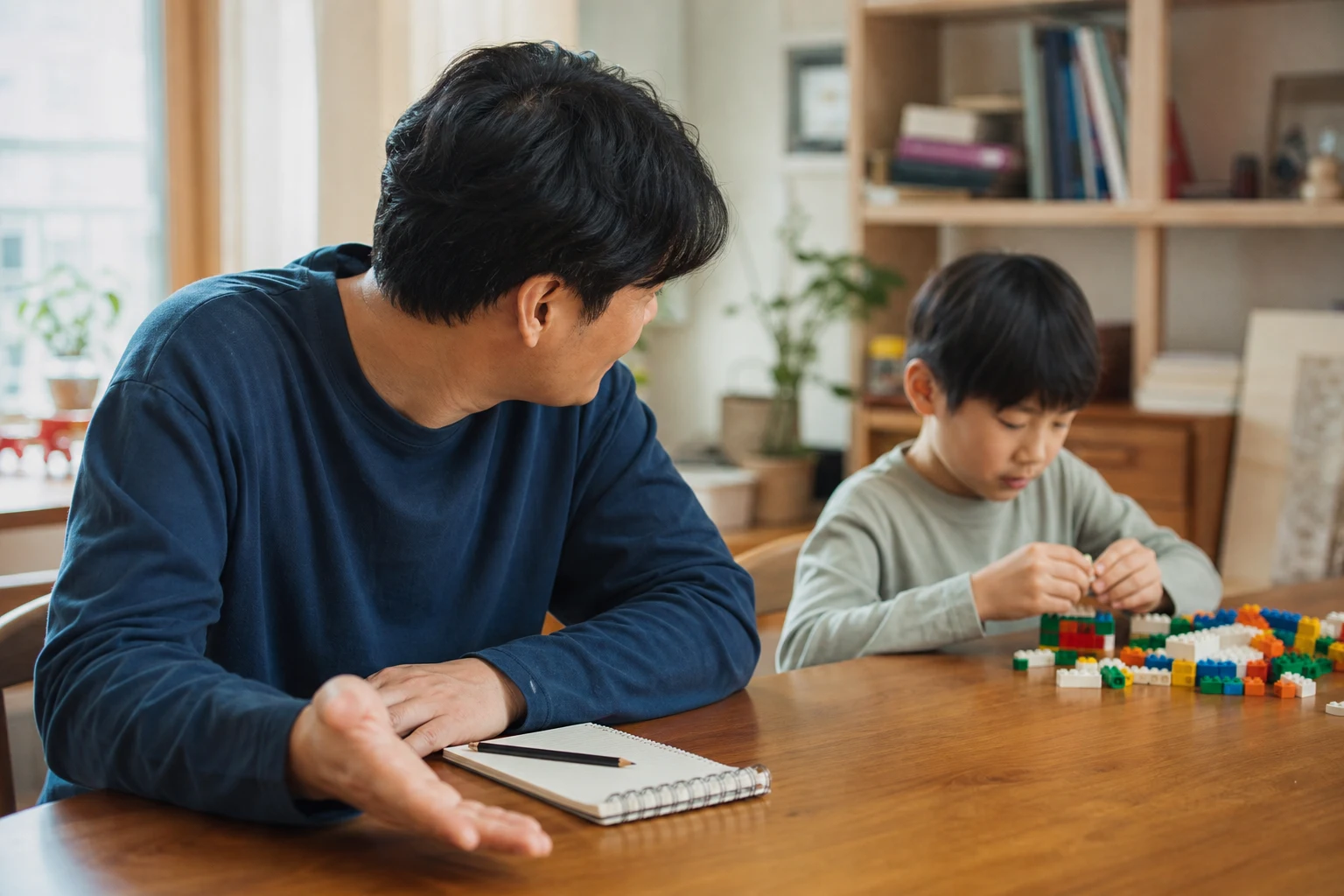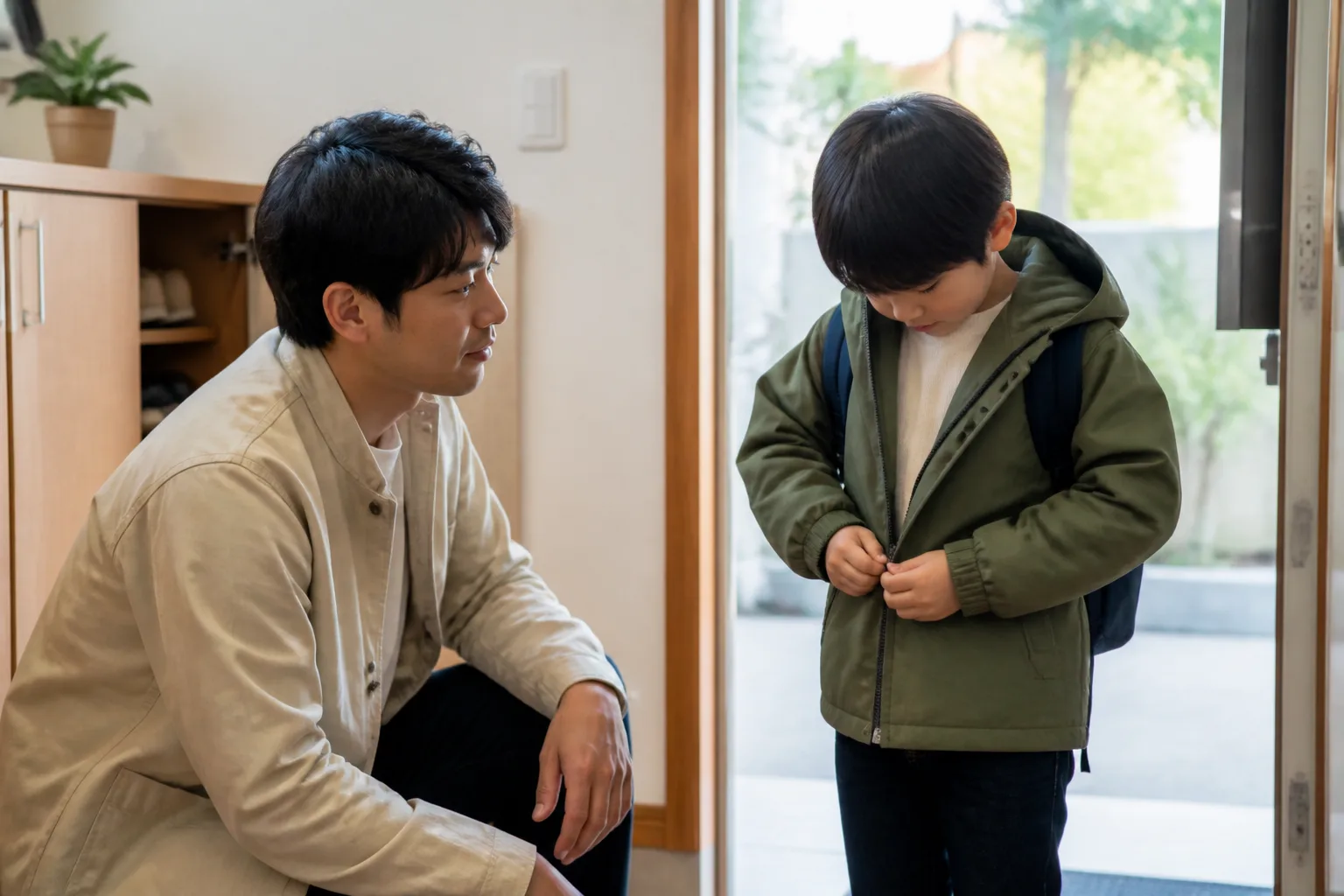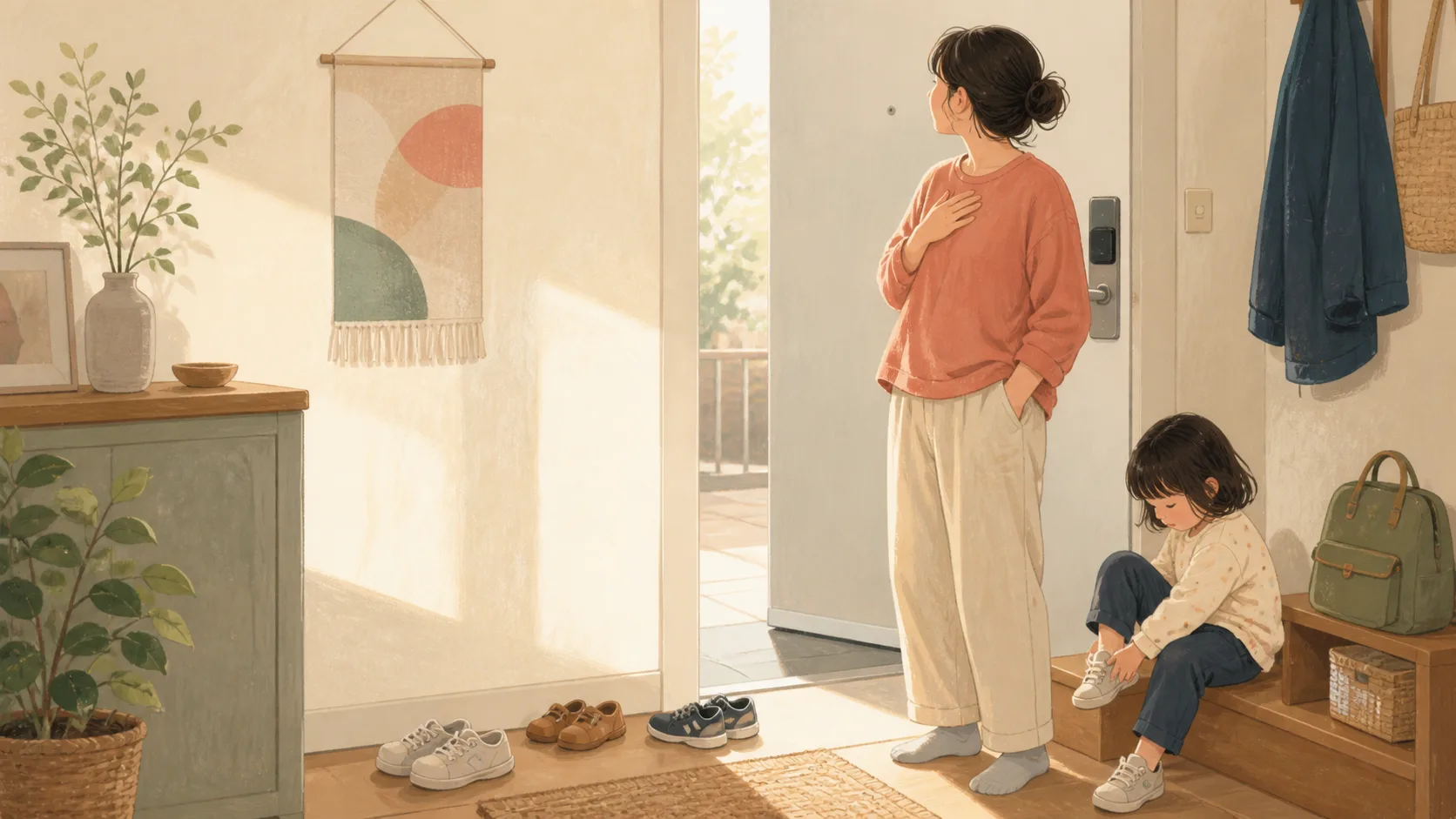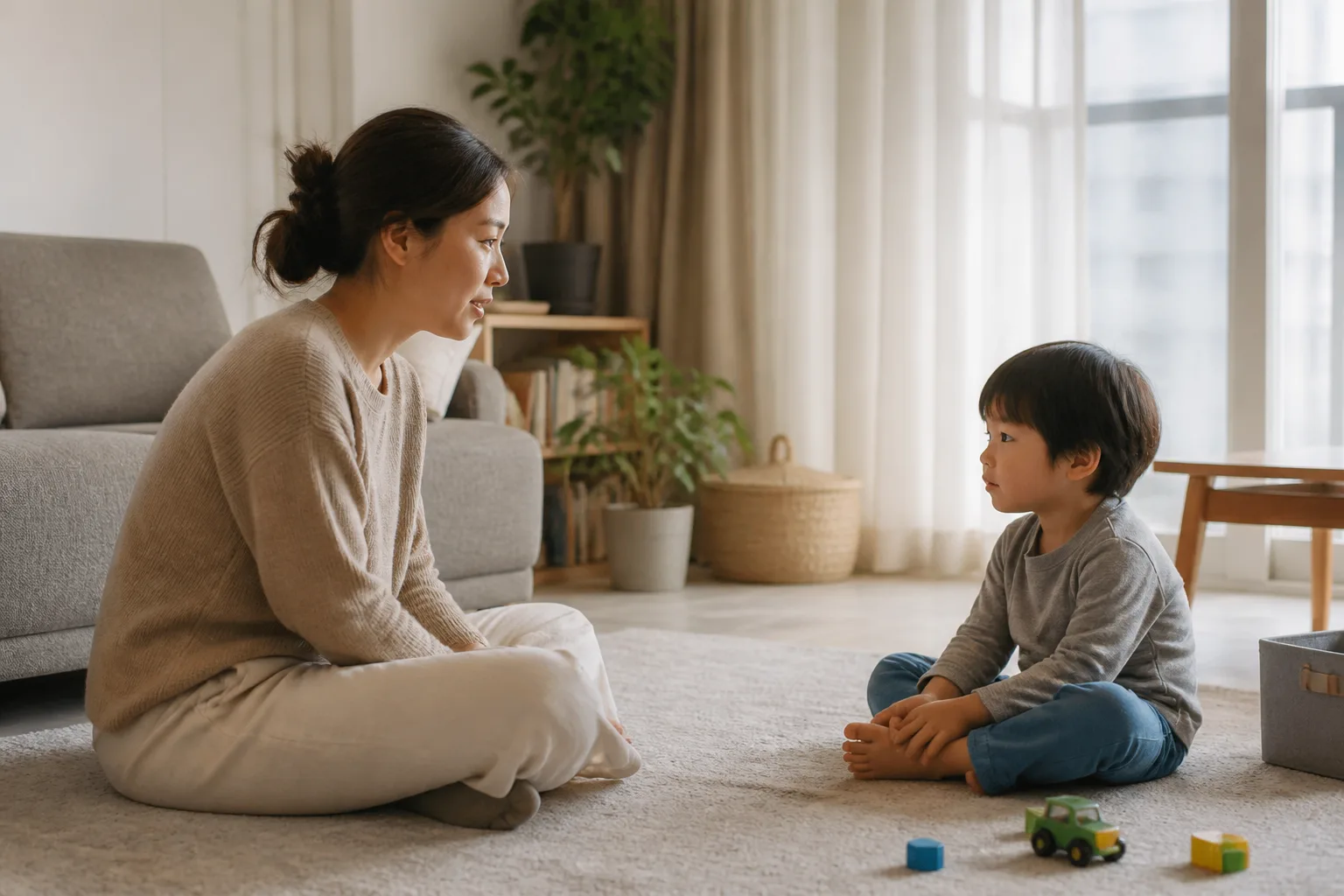
When a child steps back around relatives or does not answer a new teacher right away, a parent may read the moment as a grade on their parenting. Children vary in how slowly they warm up to unfamiliar people and situations. Before deciding whose fault it is, separate what your child finds hard from what they can do.
Key point
Do not assume your child's shyness is your fault. Watch whether they can join the relationships and activities they want, and whether distress or avoidance disrupts daily life. Respect their pace and seek advice about anxiety or difficulty doing things they used to manage.
What to remember
- Write down the thought "I caused this" separately from the behavior you see.
- Instead of forcing a greeting, presentation, or hug, briefly ask what support your child needs.
- Seek help when ongoing anxiety gets in the way of school, play, or daily life, or when there are developmental or hearing concerns.
Shyness is not a grade on your parenting
Thoughts such as "I did not see my friends enough" or "I never spoke up first" can feel like facts when you are anxious. But one scene cannot establish a parent's social skills, attachment, or parenting style as the cause. A child's caution around strangers and the time needed to warm up can vary with temperament, situation, fatigue, and age.
Anxiety around strangers can be a common developmental response beginning in infancy. Children also vary in how shy they are and how quickly they become comfortable. Do not treat shyness itself as a defect that must be fixed.
Separate your worry from what your child did
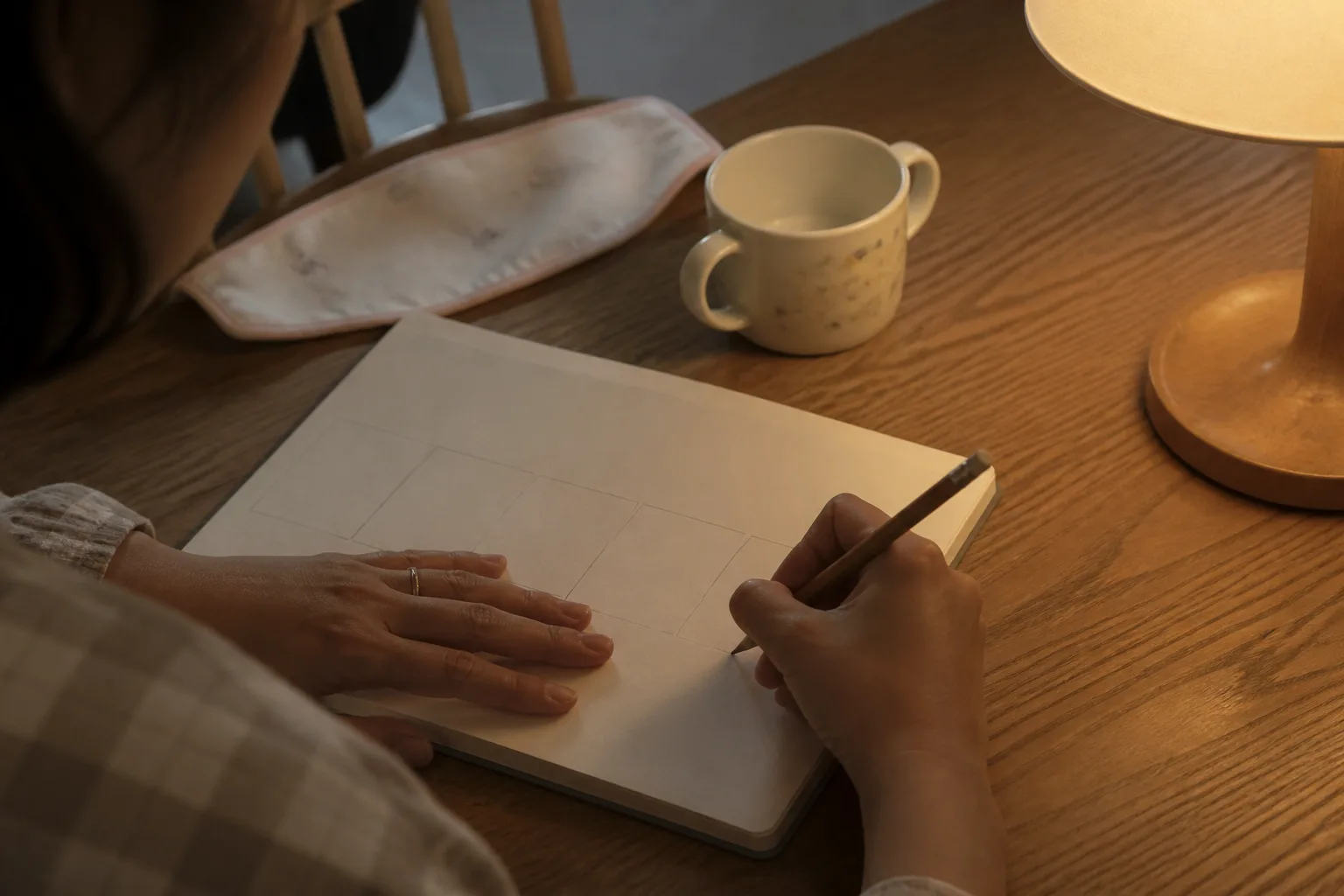
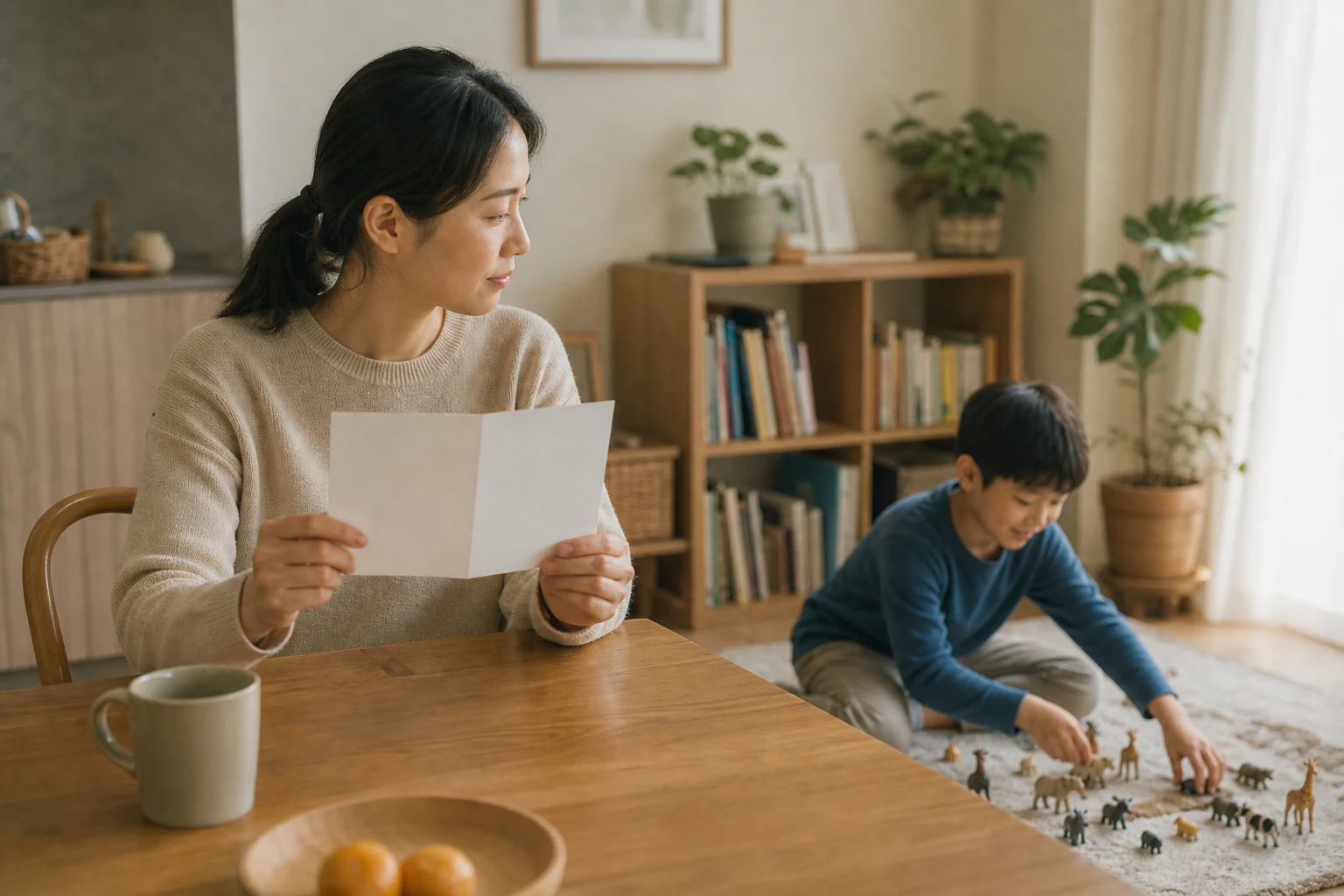
On the left, write your interpretation: "Maybe I have ruined my child" or "They will fall behind other children." On the right, record observable facts without judgment: "Stood beside me in the new place," "Smiled during a favorite game," or "Said their stomach hurt after we got home."
Then look at whether your child can take part in activities they want, has someone to ask for help, or experiences enough avoidance and distress to interfere with school, play, or family life. This keeps your prediction separate from what happened to your child.
Ask what support would help instead of pushing participation
Do not try to remove shyness by forcing your child to greet, present, or hug. Ask briefly, "Would you like to stay here with me, or find a quiet place for a moment?" A nod or gesture can be an answer when speaking is hard.
There is also no need to decide for your child by saying, "My child is too shy to do that." Give them time to respond. When needed, tell a teacher or caregiver which words, people, and settings help your child feel comfortable.
Look at both participation and distress
Do not create a treatment goal simply because a child likes time alone or speaks little at first. But if your child cannot enter even an activity they want, shows intense fear, stomachaches, or headaches around unfamiliar situations, or has a shrinking daily life, do not dismiss it as ordinary shyness.
If anxiety and fear keep interfering with school, play, or family life, talk with your child's clinician. The aim is not to make your child outgoing. It is to understand their distress and any difficulty doing things they used to manage.
Check whether another concern is involved
Note whether your child is quiet only in unfamiliar settings or is also talking, playing, and connecting less at home. Note possible trouble hearing, bullying, or discrimination separately. Sharing your child's words and physical signs with the school is more useful for finding support than the broad statement that your child is very shy.
When language, hearing, or developmental concerns are also present, or anxiety keeps growing and blocks school or play, contact the pediatrician, school, or a mental health professional. Asking about an evaluation can help you understand the current difficulty without labeling your child.
Parents can get help with self-blame, too
If guilt about your child's shyness repeatedly keeps you awake, leads you to avoid every family gathering, or makes you seek constant reassurance from your child, you may need support too. Show the two-column notes to someone you trust, and describe the repeated situations and thoughts in counseling.
Support for a child and support for a parent can happen together. Today, you do not have to find the cause. It is enough to write down one moment when your child felt comfortable and one that was hard.
Worksheet
What I saw and what I feared in an unfamiliar setting
Write down your guess about the cause separately from your child's behavior and the help they may need.
- My interpretation
- The thought that made it feel like my fault
- What happened
- Your child's words, gestures, and actions
- What was possible
- Whether your child joined a wanted activity or relationship
- Signs help is needed
- Distress, avoidance, physical symptoms, or need for consultation
Notes
- This worksheet does not diagnose shyness or parental anxiety.
- The worksheet will not fit every situation. If writing deepens your interpretations, keeps you awake, or makes you inspect every expression on your child's face, stop recording. Make room first for ordinary play with your child and rest for yourself.
- Do not decide the cause of shyness or your child's personality from one or two situations.
- Seek help if intense anxiety keeps interfering with daily life or there are developmental or hearing concerns or bullying.
References
- American Academy of Pediatrics: Helping a child who is anxious around strangers
- American Academy of Pediatrics: Shyness in children
- American Academy of Pediatrics: Childhood fears and anxiety
This is general guidance for parental observation. It does not replace diagnosis, treatment, or investigation of an anxiety disorder, language, hearing, or developmental difficulty, or school bullying.