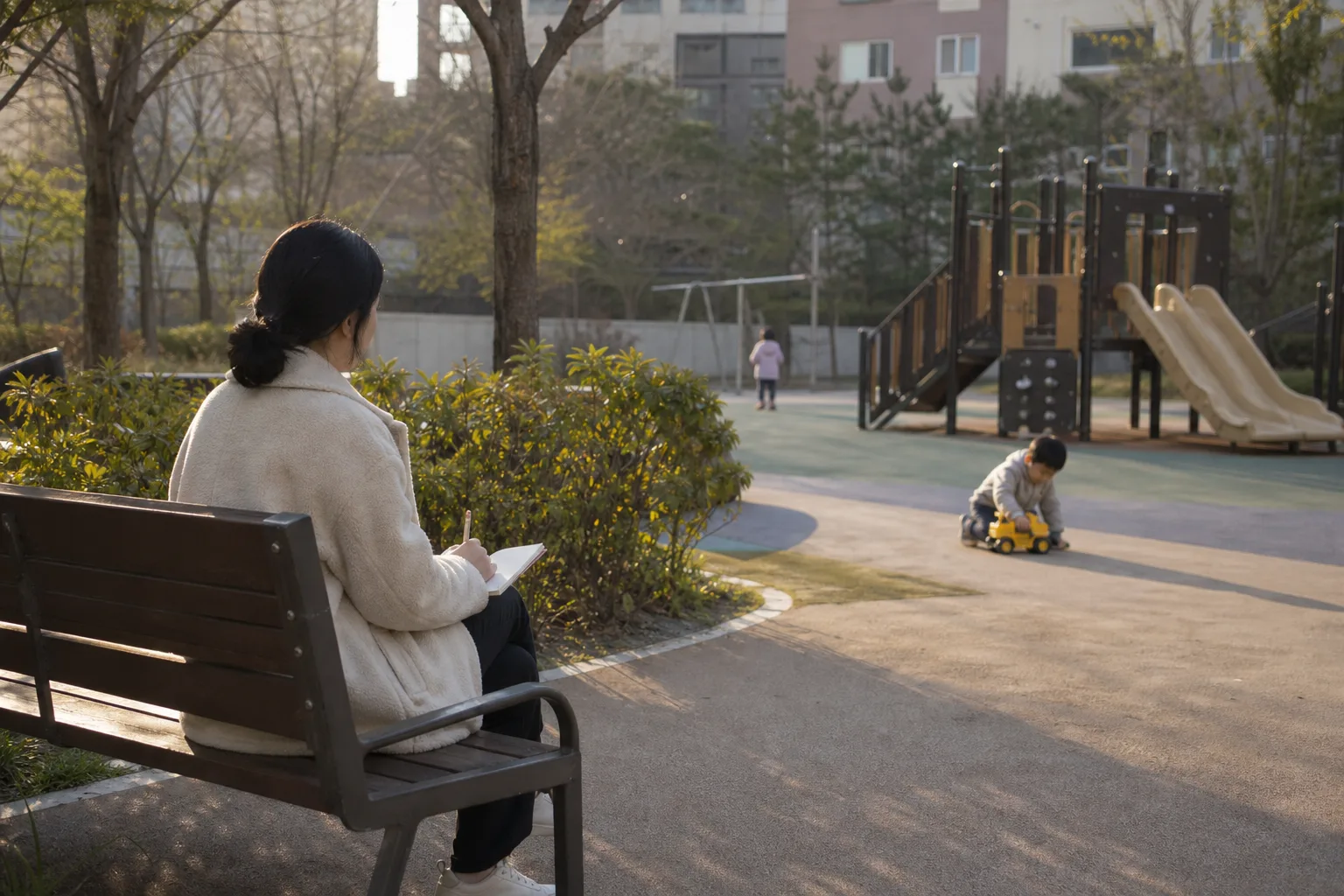
Once a new home and school are chosen, parents may hope their child adjusts quickly. When a child reports a stomachache before school, has more trouble falling asleep, or avoids talking about friends, a parent may worry that the child is not adjusting. Before giving the response a single label, separate the scenes that have actually changed in the child's day.
Key point
Compare sleep, meals, school attendance, physical discomfort, play, and friendships with the child's usual pattern, and keep familiar daily sequences when possible. Do not wait if you suspect bullying or abuse, the child mentions self-harm, or ongoing school refusal and major changes disrupt daily life. Contact school, medical, and protective support.
What to remember
- Choose one scene to compare with life before the change, and briefly record sleep, meals, and school attendance.
- Help your child identify an adult to ask for help and a quiet place to rest at the new school.
- For major changes in daily life, mention of self-harm, or suspected bullying or abuse, ask for help right away instead of gathering more records.
Look at scenes instead of scoring adjustment
Instead of asking broadly, "Are you doing better?" look at scenes in the day: "How did your child look while putting on shoes this morning?" "How much lunch did your child eat?" "What did your child do after coming home?" Worry, irritability, clinginess, and changes in sleep and eating may happen after a move, but each child recovers at a different pace.
Briefly record facts, such as whether the child had a stomachache before school, who was nearby during recess, and when the child fell asleep. You do not need to fill every item each day or score whether things improved.
Create a safe place in the new routine
Keep sequences for waking, meals, and bedtime as steady as possible. Choose together where your child's things will go in the new home. At school, identify at least one adult the child can ask for help, such as the main teacher, counselor, or school nurse. Also find a quiet place where the child may rest.
You can ask, "Who could you tell if things feel hard?" and, "Where could you stay briefly if recess is noisy?" Do not force many new friendships or end contact with old friends. Time with familiar people does not mean the child rejects the new setting.
Share specific scenes with the school
Instead of telling a teacher only, "I think adjustment is hard," share facts you have seen, such as a stomachache before school, a skipped lunch, or time alone at recess. Ask whether behavior differs at school and home, and whether a certain class, noise, seat, or friendship is difficult.
Bullying, discrimination, academic strain, or a difficult sensory setting can hide inside the phrase "not adjusting." Do not quickly cover your child's words with, "Everything will be fine," or compare the child with friends from the old school. Check with the school about what actually happened.
Look at how hard daily life is, not only how long it has lasted
Anxiety in a child may appear as physical complaints, sleep changes, or irritability. Do not simply wait if symptoms get worse or keep interfering with school and home life. Ongoing school refusal, a major change in eating or sleeping, or mention of self-harm calls for immediate support from a pediatrician, mental health service, and the school's protection process.
If you suspect abuse or bullying, do not tell your child to endure it or solve it alone. Report the facts to a safe adult and the person responsible for protection at school. Use local emergency help if there is immediate danger. This is a separate safety issue from conversations about adjustment.
Do not demand answers when reviewing the day
At the end of the day, you might ask, "When did things feel most unfamiliar today?" or, "Is there one thing I can help with tomorrow?" Accept a drawing, play, or a short answer instead of speech. Do not lead your child toward the positive answer you want to hear.
Change only one thing at a time based on the record. You might start morning preparation earlier, identify an adult to greet at school, or add quiet time after school. The goal is to reduce strain in daily life, not test adjustment. When your own worry grows, return to the facts shared with the school. Do not question your child every day about whether they have adjusted.
Worksheet
Scenes that changed in a new setting
Briefly record only the facts you need to share with the school.
- Daily life
- Changes in sleep, meals, and school attendance
- School
- Classes, recess, and an adult who can help
- Sense of safety
- Comfortable places and anxious moments
- Report now
- Bullying, mention of self-harm, or major changes in daily life
Notes
- Seek help without waiting to gather more records if safety is a concern or eating, sleeping, or attending school becomes very difficult.
- Records will not fit every family. If daily notes are a burden, reduce them to about twice a week. If your child feels watched by the record, do not write it in front of the child. Keep it as a parent's private note.
References
- National Health Service: Anxiety in children
- National Health Service: Anxiety disorders in children
- American Academy of Pediatrics: Back-to-school tips for families
This is general guidance for observing adjustment after a change. It does not replace diagnosis or treatment for anxiety, bullying, abuse, or risk of self-harm.