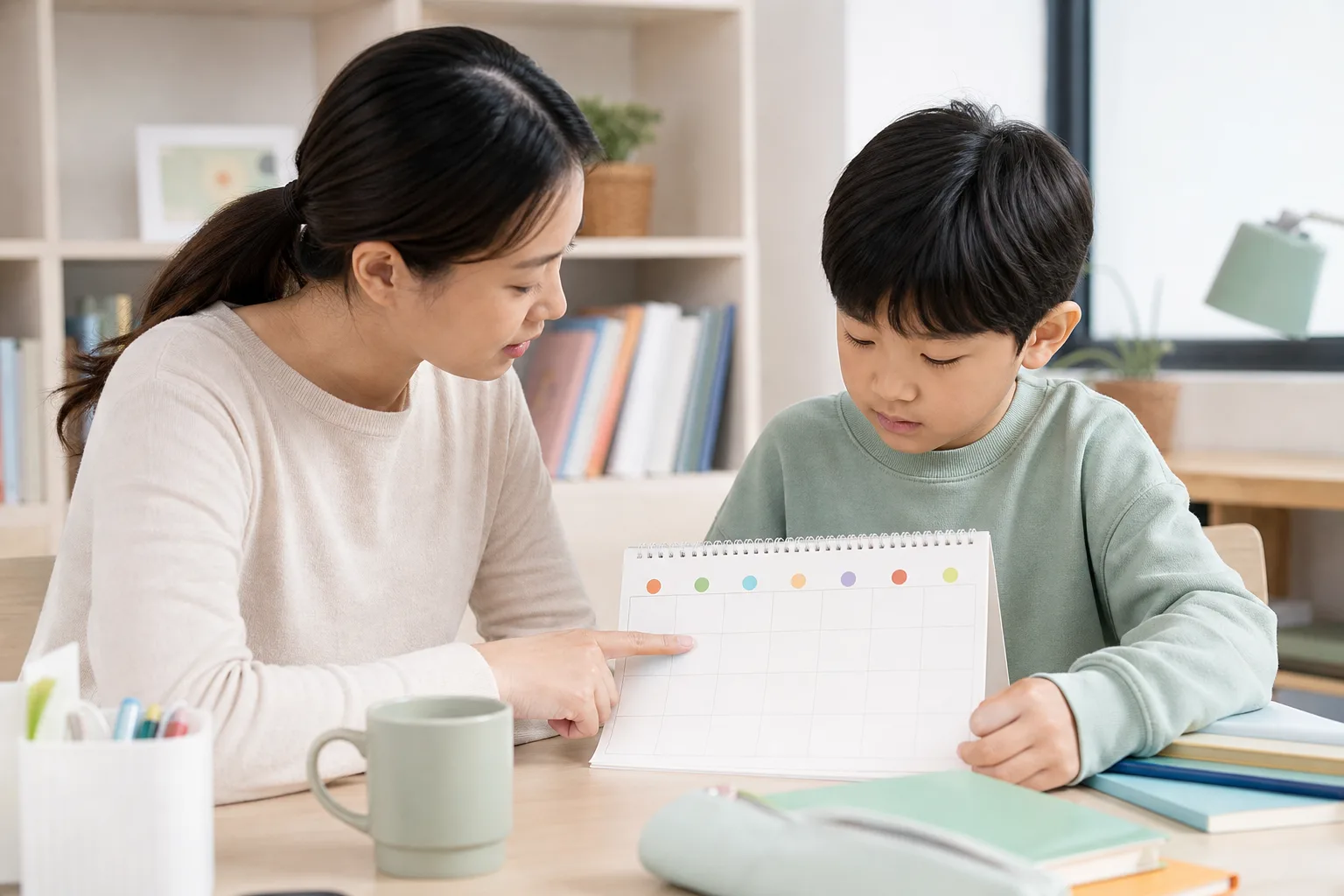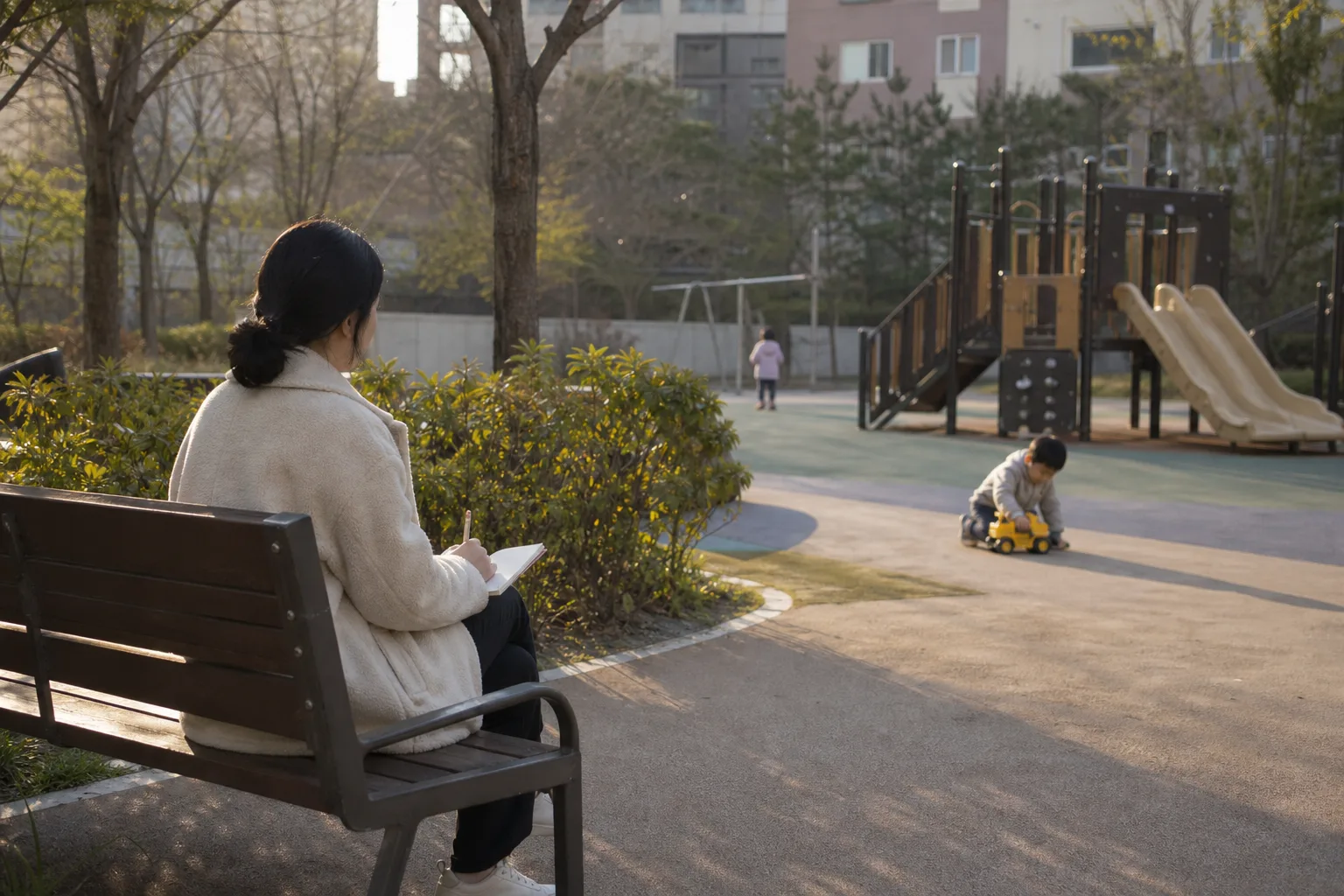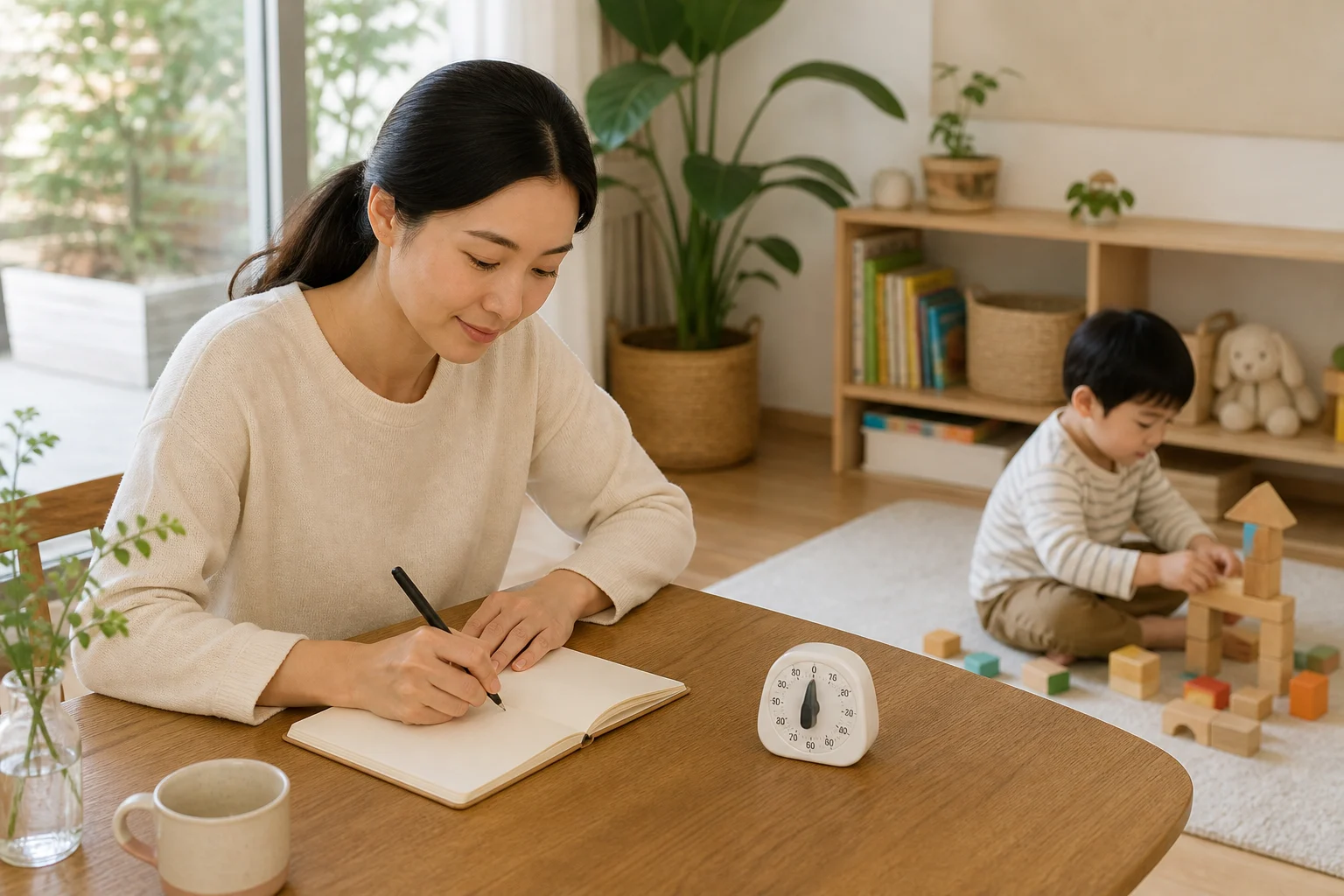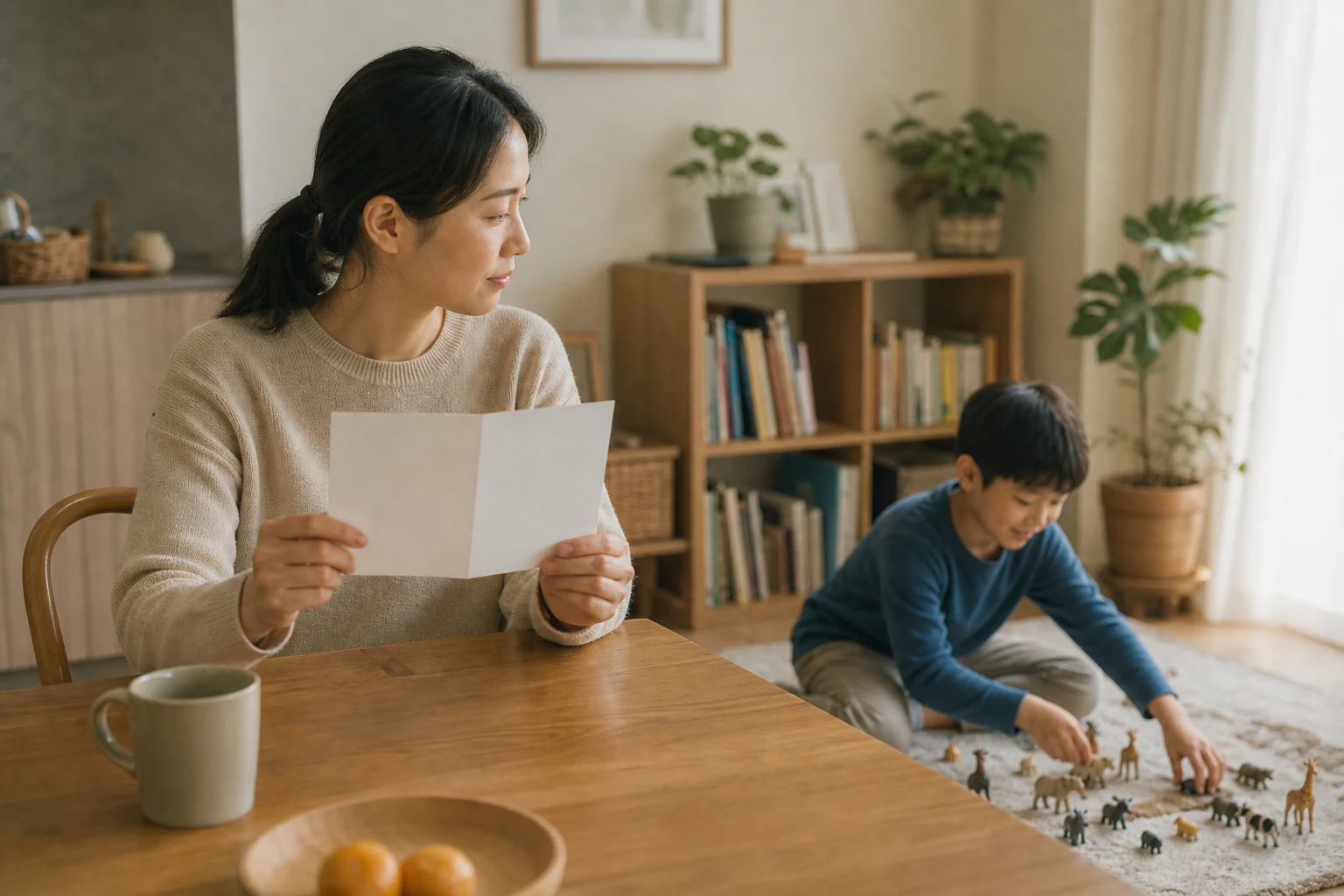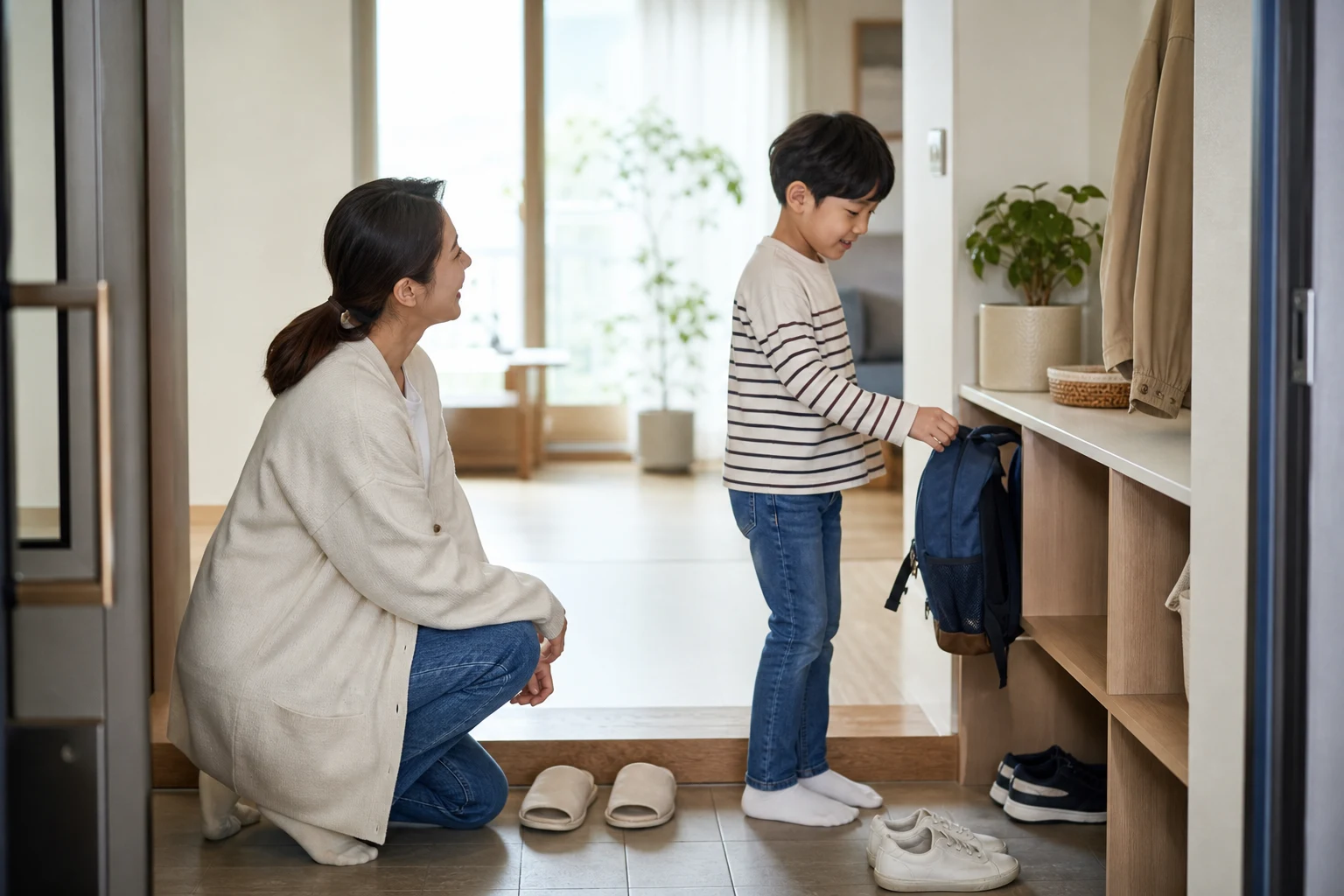
It can hurt when you come home and your child seeks another caregiver or does not want you to hold them. But a preference in one moment can change with tiredness, the situation, and age. Do not treat your child's trust in several adults as a parenting failure or a contest for affection. Make the scene after coming home a little simpler.
Key point
When you come home, greet your child at eye level. Briefly notice what the child wants now, then offer a short activity together. If the child says no, do not force it to continue.
What to remember
- Warm relationships with several caregivers can be part of a child's care network.
- Do not demand a hug, answer, or eye contact. Wait for a cue your child can offer.
- Seek professional help first for ongoing withdrawal, extreme fear, unexplained injuries, or concerns about neglect or abuse.
Do not score the relationship from one preference
You cannot conclude that your child loves you less or has a weak attachment because the child goes to a grandparent first after child care or looks for a teacher. Wariness of strangers, separation responses, and seeking a certain person can change with tiredness, that day's schedule, and familiar care routines. Warm relationships with several people can be part of a child's care network.
A relationship grows through daily interactions such as eye contact, talking, and responding to the child's cues. These moments are not a scorecard for who is loved more. Start by refusing to treat a caregiver your child trusts as a rival.
At the door, greet instead of making a demand
When you come in, get to your child's eye level and say briefly, "You are home. I am here." Welcome your child if they come over right away. If the child wants to stay beside another caregiver, allow that choice too. Do not demand an answer with a question such as, "Do you like Grandma more than Mom?" Do not turn a hug or kiss into a test.
Agree with the other caregiver on words that avoid competition in front of the child. For example: "You are home now, so wash your hands with Mom, and we will say hello to Grandma later." If your child refuses, give some space and try talking again later.
Try only three things after coming home
First, greet your child at eye level. Second, briefly watch for a cue, such as putting down a bag, looking for water, or wanting to be alone. Third, offer a short activity the child can choose, such as reading one page, playing with a few blocks, or washing hands. If the child does not accept, do not push. Leave another chance for later.
On some days, the greeting may be enough. On others, it may lead to play. Do not fill a set amount of time or use your child's response to judge the relationship.
Let your child lead the short time together
Instead of asking one question after another about the day, follow one object or movement your child brings in. Describe what you see: "You want to put that picture here," or, "It looks like you want water first." If your child wants to, join one activity. A short and predictable meeting may be more realistic on some days than a long special activity led by the caregiver.
Illness, tiredness, sensory strain, or the family schedule may make your child want to rest alone. Connection does not require a lot of talking or playing together every time. The purpose is to give your child a safe way to rest and come close again.
If your child seems very afraid or has signs of injury, check safety first
If your child remains withdrawn, is extremely afraid of a certain caregiver, has an unexplained injury, or you are concerned about neglect or abuse, do not try to solve it through relationship play. Check the child's safety and contact local child protection, medical, or mental health support. Do not reduce anything the child says about safety to a contest or relationship issue.
Even without these signs, you can share what you observed with your child's medical professional or care setting if the concern lasts. Report when it happened, who was present, and what responses continued instead of only saying, "My child does not look for me." This makes the question for the consultation clearer.
Worksheet
Steps for reconnecting after coming home
Do not time the process. Choose only the moments that fit your child's response.
- Greet at eye level
- Say briefly, "You are home. I am here."
- Watch for cues
- Notice whether your child chooses water, rest, another caregiver, or time alone
- Make a short offer
- Offer one page of a book, a few blocks, or washing hands
- Respect a no
- Do not demand a hug, answer, or shared activity. Leave another chance
- Safety boundary
- Seek professional help for extreme fear, injuries, or concerns about neglect or abuse
Notes
- Do not use time together after coming home to assess attachment or try to change your child's preference.
References
- American Academy of Pediatrics: Three ways to bond with your baby
- American Academy of Pediatrics: Emotional and social development from 8 to 12 months
- Centers for Disease Control and Prevention: Tips for special playtime
This is general guidance for reconnecting after coming home. It does not replace an attachment assessment, abuse assessment, or mental health diagnosis.