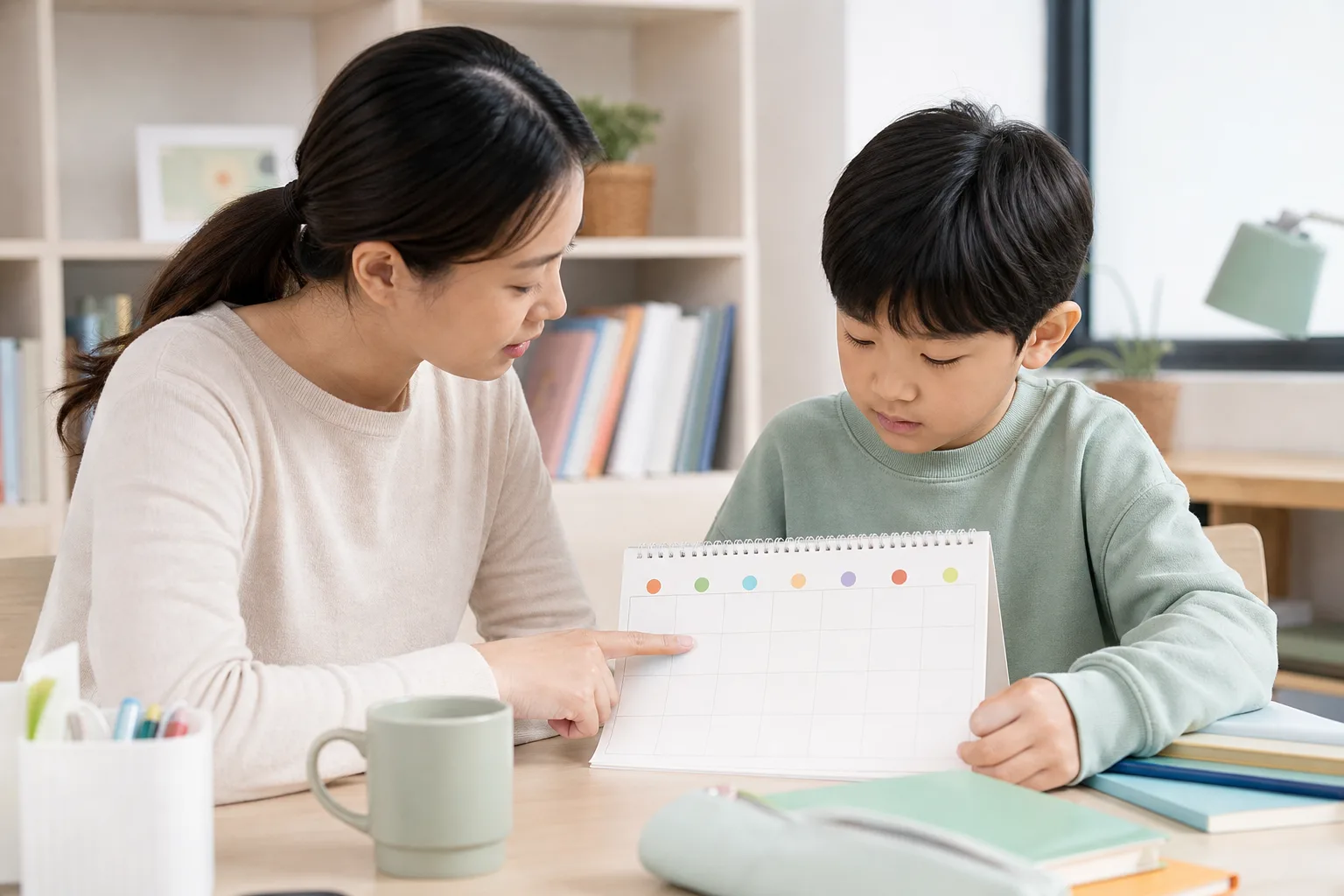
Once the argument stops, check that you and your child are safe, then say, "It was not your fault. The adults will handle this." Even if your child returns to play or says nothing, they may still be thinking about what they heard and saw. Check whether they are safe now and explain that solving the argument is not their job.
Key point
After parents argue, first check that you and your child are safe. Once you are safe, say three brief, age appropriate things: "It was not your fault," "The adults will handle this," and, "You are safe now." Do not place your child in the middle, ask them to take sides, or make them keep secrets. Follow through by lowering voices and moving the adult conversation away from the child.
What to remember
- Explain that the child is not responsible and the adults will handle the issue, and check whether the child is safe now.
- Do not explain the other parent's faults or details about money and the relationship to your child.
- When there is fear, control, threats, or violence, find a safe place and professional support before trying to bring everyone together.
Settle the moment with three sentences first
Have this conversation once you and your child are in a safe place and threats have stopped. If you cannot confirm safety, do not say, "You are safe now." Find a safe place and help first. Once you are safe, speak calmly as soon as you can. You can say, "The adults were using loud voices earlier. It was not your fault." Then say, "The adults will handle that problem." Finish with, "You are safe now. You can ask me if you have questions."
Match the length to your child's age. For a young child, "It was not your fault. Mom and Dad will handle it. You are safe now" may be enough. When an older child asks questions, briefly answer the facts you know and repeat that the child is not responsible for soothing an adult or deciding the outcome.
Separate what to explain from what to keep in the adult conversation
Explain future safety and any changes in daily life. For example, say, "We will each calm down before talking again tonight," or, "Your trip to school and dinner routine will stay the same." Government guidance notes that frequent, intense, unresolved conflict between parents can affect a child's emotions, behavior, and school life.
Leave out blame toward the other parent, details about money and the relationship, and questions such as, "Whose side are you on?" Do not ask your child to carry messages or keep secrets. Worrying about or feeling angry with one parent may be a natural reaction, but do not push the child into the role of judge.
Attach a next action to the apology
If a parent says only, "I am sorry," while the same scene repeats, a child may struggle to predict whether the next argument will be safe. Add one action you can take: "I am sorry I yelled. Next time, we will talk where you cannot hear us, and I will pause if my voice gets loud."
You do not need to stage a perfect reconciliation in front of your child. Stopping the conversation, calming down separately, and not continuing blame where your child can hear turns the promise into action. If your child stays unusually close afterward or asks again at bedtime, repeat the same three short sentences.
Answer questions with facts and explain what adults will handle
Your child may ask, "Are you separating?" or, "Did you fight because I was loud?" Instead of promising an uncertain future, answer, "You did not cause it. It is something the adults need to discuss. I will listen to what worries you." If you do not know the answer, say, "I cannot answer that right now, but I will tell you first if something in your daily life will change."
Do not interrogate your child or ask them to relay a statement because what they said sounds unfavorable to one parent. Once a child has to record and repeat one parent's position, it becomes hard for them to step out of the argument. Ask whom your child would like to talk to and whether they want some time alone.
Follow up by changing the time and place of the argument
Rather than promising never to disagree again, agree on a signal to stop an argument when your child is present. If one person says, "Let's talk later," postpone the discussion until you are in another room or the child is not present. Tell your child, "You do not have a job to do when adults are talking."
It can help to check in briefly a few days later. Ask, "How did you feel after we raised our voices?" Accept words, a drawing, or play as a response. Parents also need to agree that they will not use the child's answer as evidence for deciding who was at fault.
Do not group fear and violence with ordinary parental conflict
If one person is too afraid to speak, or there is controlling behavior, threats, or physical, sexual, or financial abuse, do not treat it as an ordinary disagreement for both people to resolve together. U.K. government guidance also distinguishes domestic abuse by looking for fear, power imbalances, and controlling behavior and calls for a separate safeguarding process when abuse is a concern. A child can also be a victim of domestic abuse.
If there is immediate danger, move yourself and your child to a safe place and use local emergency help. Do not recommend joint counseling or a reconciliation conversation with a dangerous person. When fear repeats, a child's safety is in question, or violence has occurred, tell a trusted local protection organization, health care professional, or domestic abuse service about the current situation and make a safety plan.
Worksheet
Three sentences and a next action after an argument
Write the words you will say to your child separately from the action the adults will take.
- Not the child's fault
- A short sentence that fits your child
- Adult responsibility
- A sentence saying the adults will handle it
- Safety check
- Words that explain current safety
- Next action
- A signal to move the conversation away from the child
Notes
- Do not ask a child to mediate the argument, carry messages, keep secrets, or choose a side.
- When there is violence or a threat, securing safety and getting professional support comes before a conversation about repairing the relationship.
References
- U.K. government: How parental conflict affects children
- U.K. government: Distinguishing parental conflict from domestic abuse
- U.K. Department for Education: Safeguarding children in domestic abuse situations
This is general guidance for talking after conflict between parents. It does not replace a safety plan or legal or medical advice for domestic abuse, child abuse, or threats.