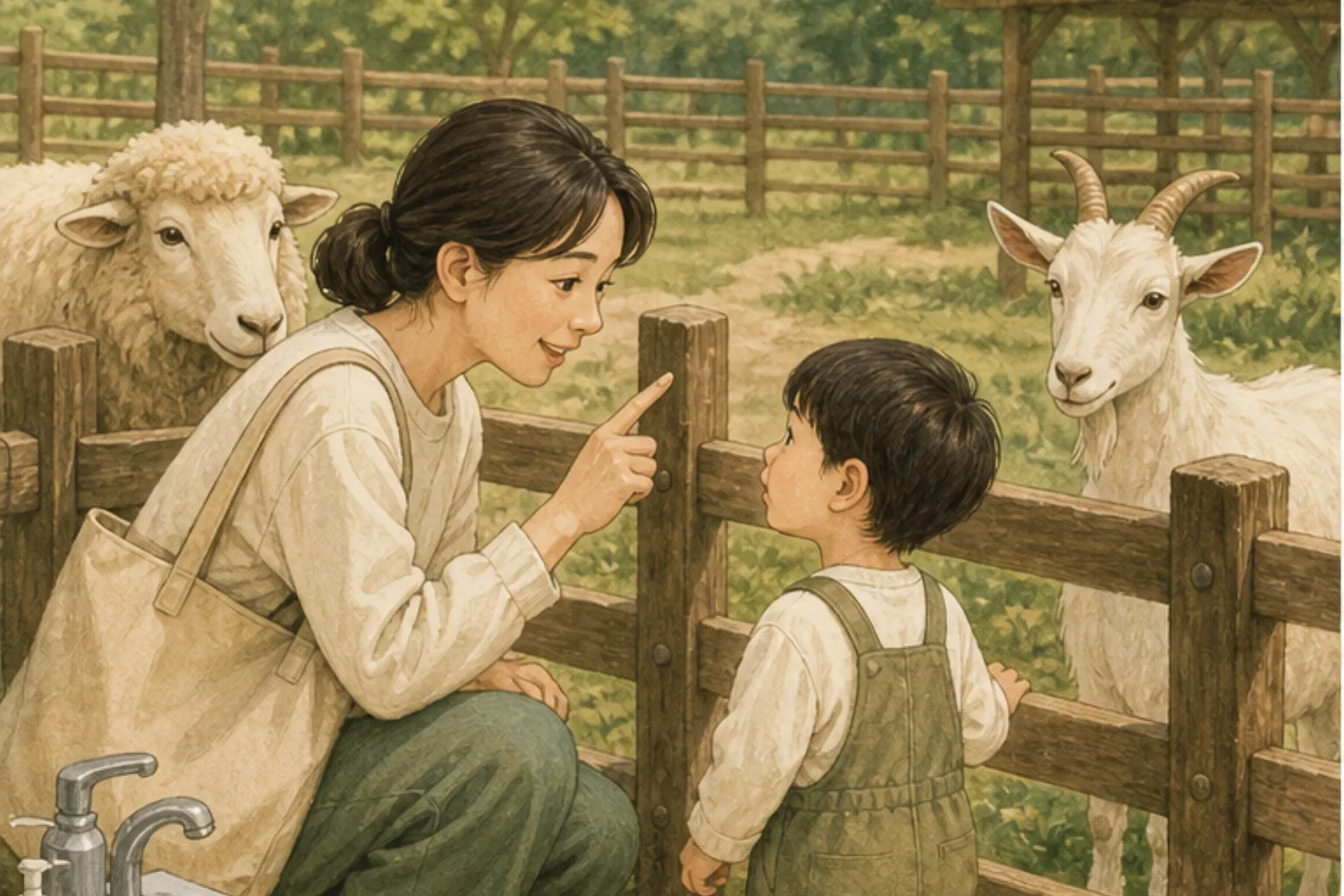
At a zoo or farm, start by telling your child, "We'll watch from the places staff show us, then wash our hands when we leave the animal area." Handwashing is needed even without touching an animal. Children under 5 should avoid touching reptiles, amphibians, and poultry such as chickens and ducks.
Key point
Choose activities that suit your child's age. Stay beside them and help them follow the venue's rules, then wash hands and eat outside the animal area.
What to remember
- Decide about animal contact based on your child's wishes, age, and the venue's rules.
- Do not eat in animal areas. Wash hands after leaving, even if you did not touch an animal.
What to check before promising an animal-feeding activity
Check which animals are involved and the eligible ages. Children under 5 should avoid contact with reptiles, amphibians, and poultry. Older children also need a caregiver nearby. Even animals that look clean can carry germs, and germs can remain in the areas where animals live.
Keep watching from a distance as an option
If your child steps back, do not pull them toward an animal. Ask, "Shall we watch from here?" and wait at a comfortable distance. If animals are hiding or an activity is on a break, be honest: "We might not get to see them today."
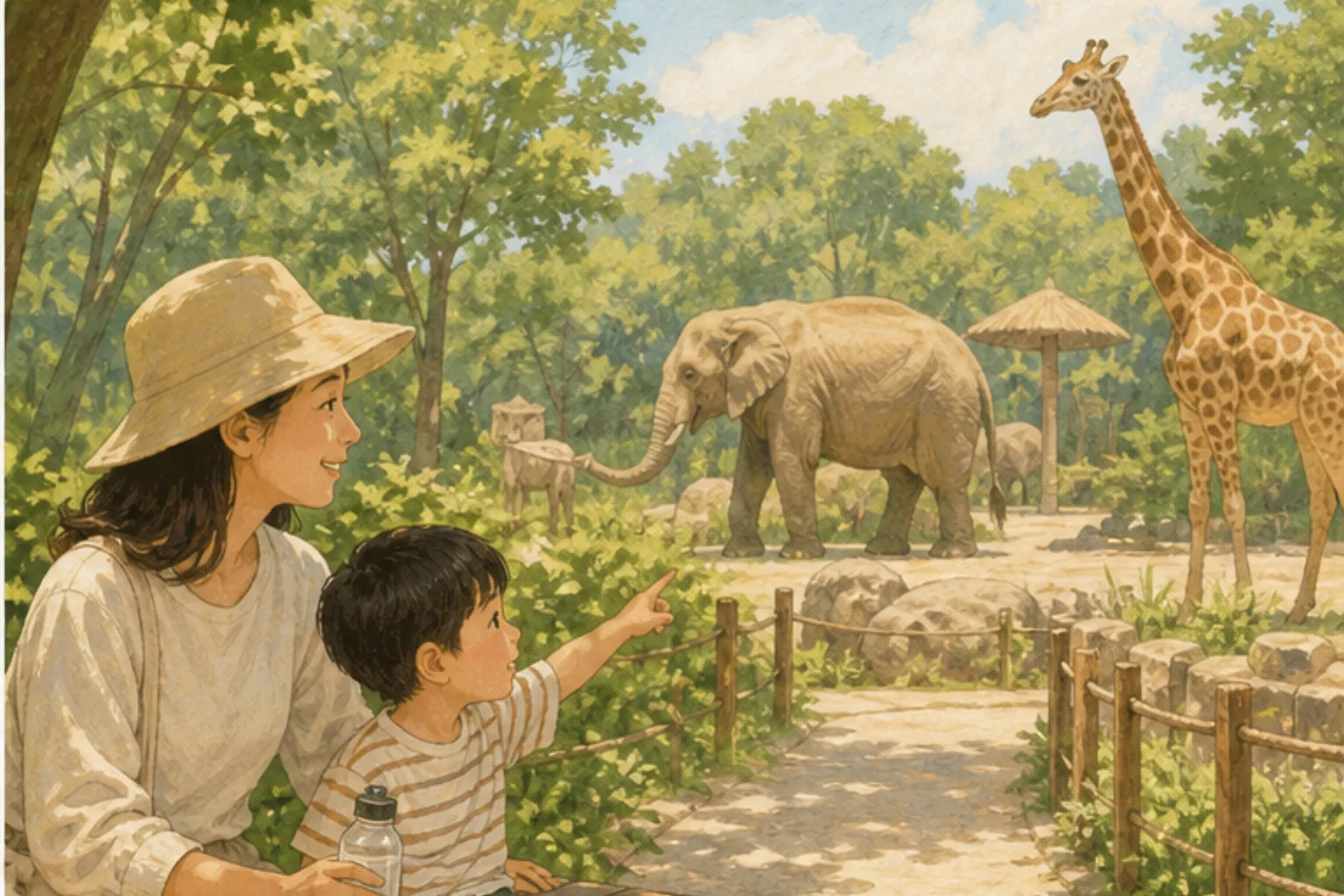
Even if your child wants to touch an animal, take part only as staff allow. Stay behind fences and viewing lines, and do not give animals your own snacks. If feed is provided, first ask which animals may have it and how to offer it.
Find the snack area and handwashing facilities first
Do not eat or drink in animal areas. Watch that your child does not sit on the ground or put their hands in their mouth. Keep items that touch the mouth, such as cups and toys, outside animal-contact areas. Find somewhere outside those areas to park the stroller, too.
After leaving, wash hands with soap and running water even if you did not touch an animal or wore gloves. Help young children wash. If soap and water are unavailable, use hand sanitizer containing at least 60% alcohol for now, then wash with soap and water as soon as you can.
Drop animal-contact activities first if your child is afraid or tired
If smells or sounds upset your child, or they keep asking to be carried, leave the animal area and rest instead of adding another contact activity. Wash hands before bringing out snacks to comfort them. After the visit, you do not need to promise, "Next time we'll definitely touch an animal."
If your child is bitten or scratched
Tell staff, wash the wound thoroughly with soap and water, and consult a healthcare professional. If a bite or scratch happens abroad, seek medical care immediately even for a small wound. Explain when and where it happened and which animal was involved.
Worksheet
Short things to say before and during the visit
Do not ask your child to memorize these. Use one sentence at the relevant place.
- At the entrance
- "Let's ask staff where we can watch today."
- When your child is afraid
- "You don't have to touch. Let's watch from where you feel comfortable."
- When your child asks for a snack
- "We won't eat here. We'll go outside, wash our hands, then eat."
- When leaving
- "Even though we only looked, let's wash our hands before we go."