For a first forest or park visit with your child, choose a short stretch near the entrance and decide where to turn back. Save time and energy for the return, too. This guide is for families on maintained walking paths, not mountain routes or closed trails.
Key point
Check the path and the way back, then start with a short walk. Turn back before walking becomes difficult for your child or the weather gets worse.
What to remember
- Look at your first destination and the return route together.
- For a stroller or mobility aid, check the surface and stairs along the route.
- If you hear thunder, stop the walk and move to safe shelter indoors.
What to check on the map before distance
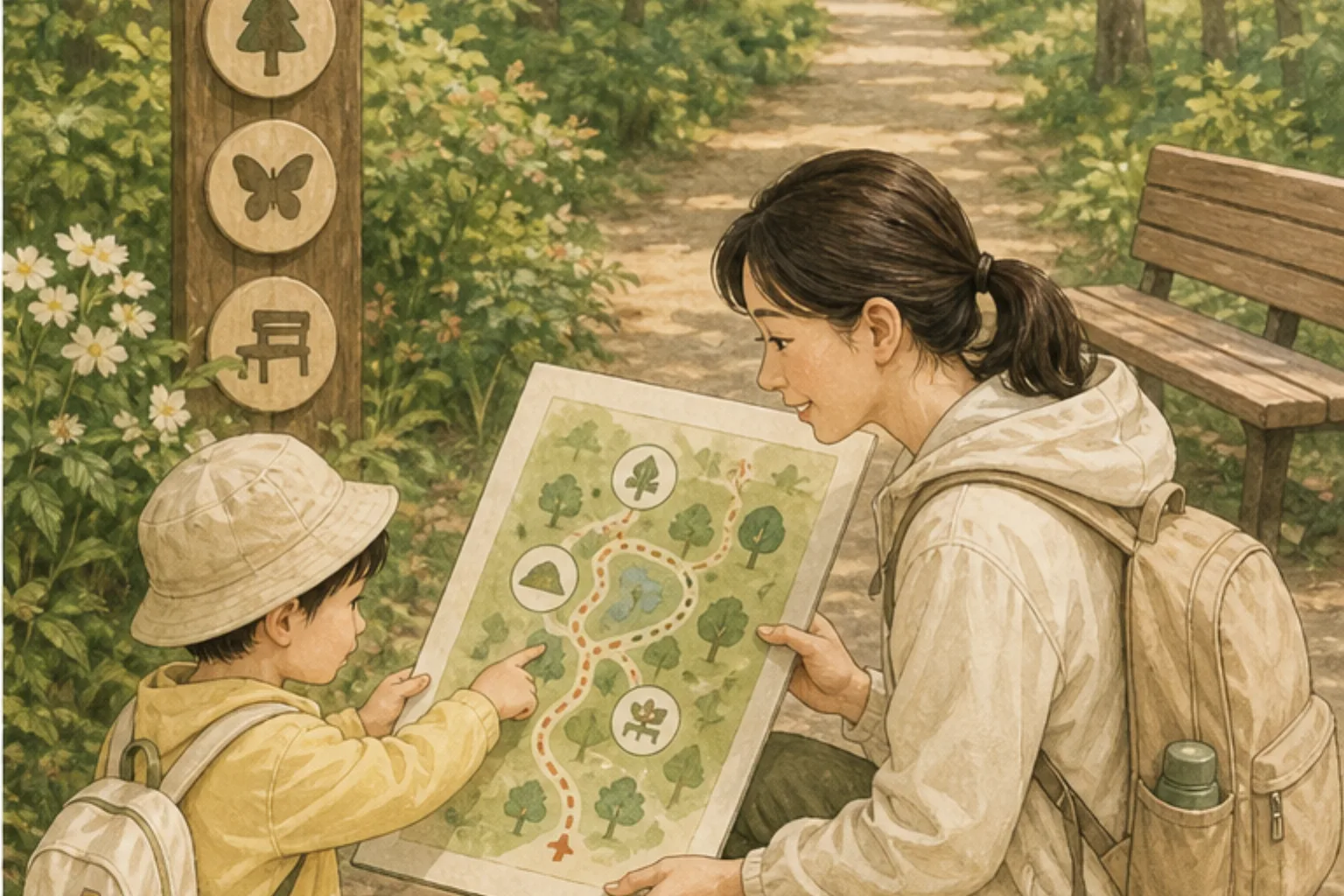
For a first visit, try a path that stays close to the visitor center or restrooms. A loop may be hard to shorten halfway through, so compare it with a short out-and-back walk. Look at stairs, slopes, and surfaces rather than relying only on an "easy trail" label.
If you use a stroller or mobility aid, ask staff whether you can travel the whole route without barriers, not just get through the entrance. Naming the stretch you plan to use makes the question easier to answer: "We'd like to reach the first rest area. Are there any stairs or blocked sections?"
Think through the return before setting out
Consider how you would get back if your child falls asleep or cannot walk any farther. If the distance would be too far to carry them back, choose a shorter stretch from the start. Pack water, an outer layer, and any spare clothes you need. Divide the bags so you still have hands free to help your child.
Choose a recognizable place, such as a junction or sign, as the first destination. Tell your child, "Let's go as far as that sign, then decide whether to turn back." Even if they want to keep walking, consider the return route and remaining time.
Follow what your child notices while walking slowly
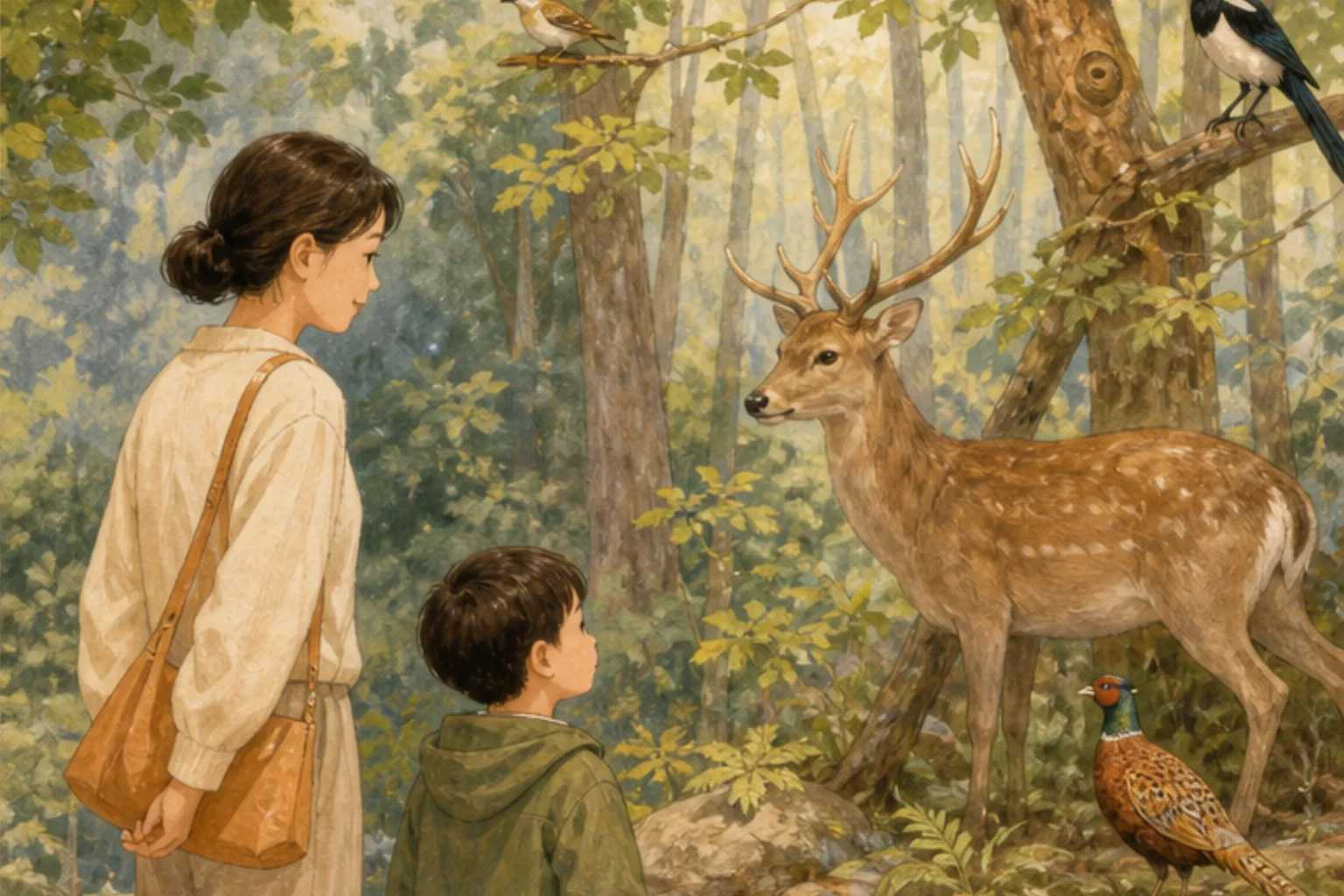
If your child studies a leaf or stops walking, do not immediately hurry them along. Look together from a safe spot that does not block the path. Follow what they point to instead of quizzing them on names. Follow local rules about touching or collecting things.
But if your child keeps tripping, says their feet hurt, or feels cold in wet clothes, prepare to return instead of adding an observation game. When they say "I don't want to," first check whether they are bored with the path or physically uncomfortable. Do not make reaching the destination an exercise in enduring pain.
Reconsider even a short route when the weather worsens
Before visiting, check local weather and path conditions. If rain is forecast, shorten the walk to a stretch with an easy return or choose another date. If the path becomes slippery or visibility worsens, turn back even if you have not reached your planned stopping point.
A gazebo is not a lightning shelter
If you hear thunder, stop outdoor activities. Go into a building with walls and a roof, or a hard-topped vehicle with the windows closed. Do not wait under a tree or an open-sided gazebo just to stay out of the rain. If thunderstorms are possible and there is no safe shelter nearby, plan not to set out.
Worksheet
Plan the walk out and back
This is not a distance or step-count target. Use it to agree on a plan for an unfamiliar path.
- Where to go
- What is the first destination, and what is the path to it like?
- How to return
- Will we come back the same way? Who will help, and how, if walking becomes difficult?
- When to finish early
- What changes in our child's condition, weather, or remaining time will tell us to turn back?
Notes
- Stay out of closed areas even if the path looks short. If you are injured or lost and cannot return on your own, do not force yourself to keep moving. Ask the site managers or emergency rescue services for help.